
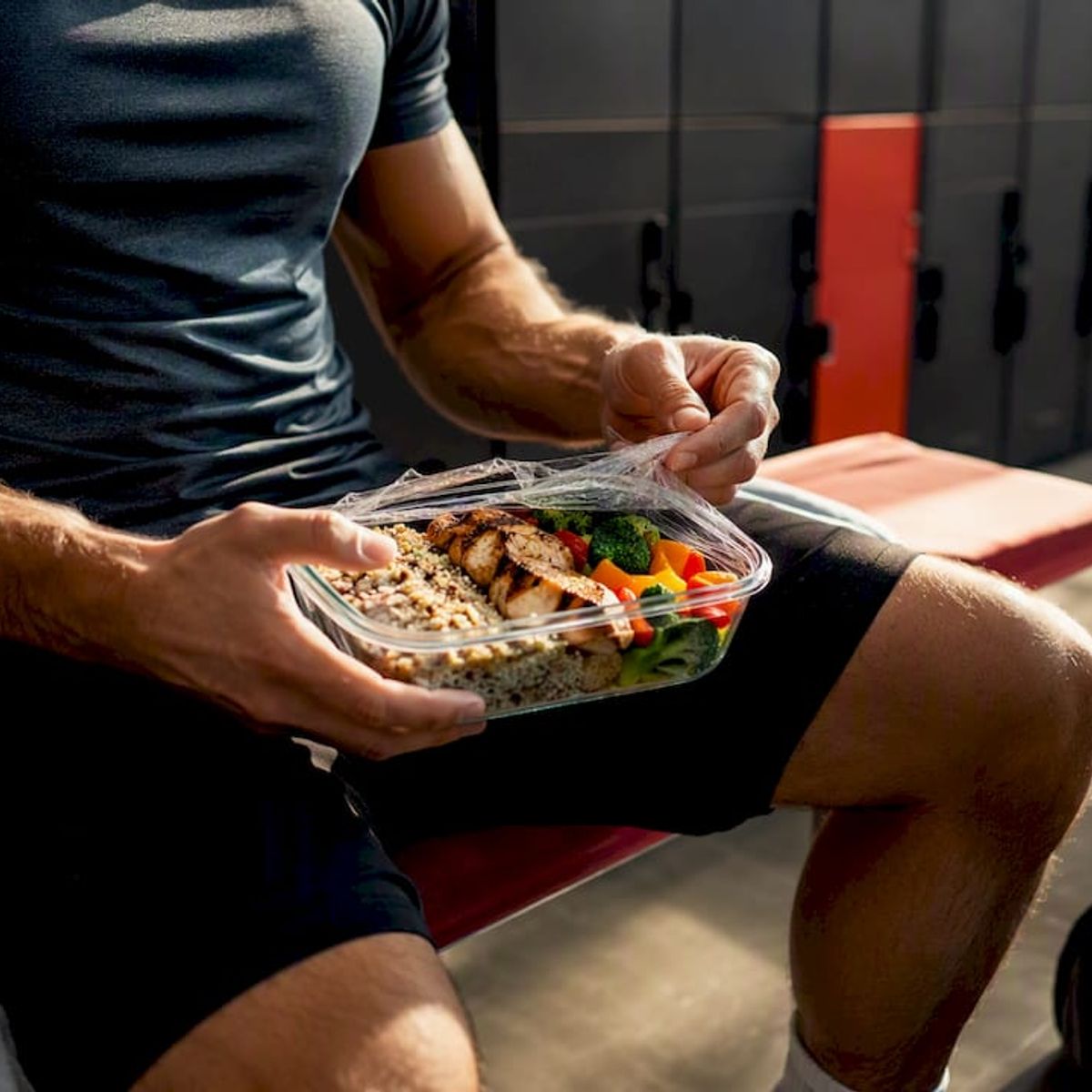
Meal Timing for Workouts: Simple Rules for Muscle Growth
Meal timing for workouts, more formally called nutrient timing, is the practice of strategically scheduling what you eat and when relative to your training sessions to support muscle protein synthesis, glycogen replenishment, and recovery. The honest verdict: your total daily protein and calories matter far more than hitting a precise 30-minute window, but practical timing rules still make a real difference when your meals are spaced far apart or your sessions are long and intense.
Quick action rules you can use this week:
- If your last meal was more than 3–4 hours before training, aim for 20–40 g of high-quality protein close to your session (before or after).
- If you ate a solid mixed meal within 2–3 hours of training, post-workout protein is lower priority — amino acids are still circulating.
- Eat something 1–4 hours before training: carbs for fuel, moderate protein, low fat and fiber to protect your stomach.
- After intense sessions lasting more than 60–90 minutes, pair protein with carbs within about 60 minutes to restore glycogen.
- Hit your daily protein target (roughly 1.2–1.5 g per kg of body weight) before worrying about the exact minute you drink your shake.
Key Takeaways
Total daily protein intake is the strongest predictor of muscle growth, and practical timing windows matter most when your last meal was more than 3–4 hours before training.
PointDetails
Total protein is the priority
Aim for a sufficient daily protein intake before fine-tuning timing.
The 3–4 hour rule
If your last meal was more than 3–4 hours ago, consume 20–40 g of protein close to your session.
Pre-workout window
Eat 1–4 hours before training: carbs for fuel, moderate protein, low fat and fiber.
Post-workout protein dose
20–40 g of high-quality protein after training; add carbs after sessions longer than 60 minutes.
Level Up Gym nutrition coaching
Personalized meal plans and timing strategies built around your training schedule at Stratford and Bridgeport, CT.
Table of Contents
- What meal timing for workouts actually means
- What the science says about protein timing and muscle growth
- How to eat before a workout: timing, portions, and what to avoid
- When intra-workout fueling actually helps
- What to eat after a workout: protein, carbs, and rehydration
- Why total daily protein matters more than perfect timing
- Sample meal schedules for morning, midday, and evening workouts
- How the rules change for special situations
- Common meal-timing myths and what actually kills your gains
- Your practical checklist for this week
- A coach’s perspective on making meal timing actually work
- Level Up Gym’s nutrition coaching puts the plan into action
- Sources
- FAQ
What meal timing for workouts actually means
Nutrient timing is not a single rule. It is a framework covering three windows: pre-workout (what you eat before training), intra-workout (what you consume during), and post-workout (what you eat after). Each window has a different physiological job.
The pre-workout window is about energy availability. Carbohydrates top off muscle glycogen, the fuel your muscles burn during resistance and high-intensity work. Protein eaten before training raises circulating amino acids, which are available for muscle protein synthesis (MPS) during and after the session.
The post-workout window is about recovery. MPS peaks in the hours after resistance training, and providing amino acids during that period supports the repair and growth of muscle tissue. Carbohydrates help restore glycogen depleted during the session, which matters most after long or high-volume work.
The core concept: Timing is not a substitute for adequate total intake. It is a fine-tuning tool that becomes meaningful when meals are spread far apart, sessions are long, or you are training multiple times per day. For most adults training once daily with regular meals, the gap between “perfect timing” and “good enough timing” is small.
Timing matters most in three situations: when your last meal was more than 3–4 hours before training, when you are doing two-a-day sessions with less than 8 hours between them, or when you are competing and need peak performance on a specific day. For everyone else, consistency in daily intake is the higher-leverage habit.
What the science says about protein timing and muscle growth
The research on meal timing is more nuanced than most gym-floor conversations suggest, and the headline finding surprises a lot of people.
A systematic review and meta-analysis of randomized controlled trials found no meaningful effect of protein timing on total lean body mass. Consuming protein within roughly 15 minutes pre- to about 2 hours post-exercise did not significantly change lean mass outcomes compared to eating the same total protein at other times. One sub-analysis did find a small benefit for leg press strength favoring pre-exercise protein, but the sample was limited and the effect modest.
A separate meta-regression across many RCTs reached the same conclusion from a different angle: total protein intake, not peri-workout timing, was the strongest predictor of hypertrophy. Once researchers controlled for how much total protein participants were eating, the timing effect disappeared.
What this means in practice: If you are consistently hitting your daily protein target, obsessing over a 15-minute post-workout window adds very little. The window matters when your overall intake is already dialed in and you are looking for marginal gains, or when you have gone 4+ hours without eating.
That said, the picture is not entirely flat. A network meta-analysis of 116 trials involving 4,711 participants found that post-exercise and nighttime protein were among the more effective timing strategies for certain measures of muscle mass and strength (moderate certainty), and that milk proteins performed particularly well across outcomes. So timing is not irrelevant — it just ranks below total intake in the hierarchy of priorities.
Isotope tracer research adds another layer: the anabolic response to protein ingestion can be sustained for several hours when overall intake is sufficient and meals are reasonably distributed. This challenges the old idea that you need a small, immediate dose right after training to “catch” the anabolic window. A pre-workout meal eaten 1–2 hours before training often keeps amino acids elevated well into the recovery period, which is exactly the point Aragon and Schoenfeld have made in their review work: the fear of a narrow anabolic window is overstated, especially when you have eaten before training.
Practical takeaway: Prioritize total daily protein. Then use timing as a practical tool for the situations where gaps are large or sessions are demanding.
How to eat before a workout: timing, portions, and what to avoid
The Academy of Nutrition and Dietetics recommends fueling 1–4 hours before workouts, and that range exists for a reason: individual digestive tolerance varies widely. Some people train fine 90 minutes after a full meal; others need 3 hours or they cramp. You need to find your own window, and the only way to do that is to test it during training sessions, not on race day or a competition.
Macronutrient priorities before training:
- Carbohydrates are the primary fuel. Prioritize them, especially for high-intensity resistance training, HIIT, or boxing sessions.
- Protein at a moderate dose (20–30 g) raises amino acid availability during training.
- Fat and fiber slow gastric emptying. Keep both low in the 60–90 minutes before intense sessions to reduce GI discomfort.
Meal examples by lead time:
Lead TimeMeal or SnackApproximate Macros
3–4 hours before
Grilled chicken, rice, and roasted vegetables
40 g carbs, 30–40 g protein, moderate fat
1.5–2 hours before
Greek yogurt with banana and a drizzle of honey
35 g carbs, 15–20 g protein, low fat
30–60 minutes before
Rice cake with peanut butter and a small banana
25 g carbs, 5–8 g protein, low fat
Under 30 minutes
Half a banana or a small handful of gummies
15–20 g fast carbs, minimal protein/fat
The closer you are to training, the simpler and smaller the meal should be. A full plate of pasta 20 minutes before a hard session is a recipe for discomfort, not performance.
Common pitfalls:
- Eating a large, high-fat meal within 60–90 minutes of training.
- Trying a new food or supplement for the first time on an important training day.
- Skipping pre-workout food entirely for a long, intense session and then wondering why performance drops in the second half.
Pro Tip: Test your pre-workout meals during lower-stakes training sessions first. UCLA Health notes that novel heavy meals before hard training frequently cause GI distress. Find what works for your stomach before it matters.
For readers who train across both strength and endurance modalities, the carbohydrate needs shift significantly depending on session type. The differences between strength and endurance training affect how much glycogen you burn and therefore how aggressively you need to carb-load before a session.
When intra-workout fueling actually helps
For most gym sessions lasting under 60–75 minutes, you do not need to eat during training. Your pre-workout meal covers it. Intra-workout fueling becomes genuinely useful in three situations:
- Sessions lasting more than 60–90 minutes at moderate-to-high intensity (long endurance runs, high-volume resistance circuits, boxing sparring rounds).
- Two-a-day training with less than 8 hours between sessions, where glycogen restoration between workouts is incomplete.
- High-volume resistance training where total work output is very high and you notice performance dropping in later sets.
Practical intra-workout options:
- Sports drinks (6–8% carbohydrate concentration) for sessions over 75 minutes.
- Energy gels or chews: 20–30 g of fast carbs per 45–60 minutes of sustained effort.
- A small banana or a handful of gummies if you prefer whole food and your stomach tolerates it.
- BCAAs: useful as a low-calorie option during fasted training to blunt muscle protein breakdown, though their advantage over whole protein sources is modest when total daily protein is adequate.
- Electrolyte tabs or powder in water for sessions over 60 minutes in warm conditions.
One practical note: whatever you choose, test it during training before relying on it in a high-stakes session. GI tolerance for intra-workout carbs varies, and some people find gels or concentrated drinks cause cramping during intense effort. Water remains the baseline for any session.
What to eat after a workout: protein, carbs, and rehydration
Post-workout nutrition has three jobs: supply amino acids for MPS, restore glycogen, and replace fluids lost through sweat.
How much protein do you need after training?
Protein dose guidance: Aim for 20–40 g of high-quality protein after training. The lower end (20–25 g) covers most adults in a moderate-weight range; larger individuals or those in aggressive hypertrophy phases benefit from the higher end.
Protein sources that work well post-workout include Greek yogurt, cottage cheese, eggs, chicken, canned tuna, a whey or casein shake, or edamame for plant-based options. The network meta-analysis of 116 trials found milk proteins performed particularly well, which makes dairy-based options a practical default when they fit your diet.
Carbs for glycogen restoration
After a short, low-intensity session (30–45 minutes of moderate lifting), glycogen depletion is modest and your next regular meal handles restoration fine. After a long, high-intensity session (60+ minutes of hard effort), pairing carbs with protein within about 60 minutes accelerates recovery, particularly if you train again within 24 hours.
A rough guide: 0.5–1 g of carbohydrate per kg of body weight in the first hour after intense sessions. For a 75 kg person, that is roughly 37–75 g of carbs, which could be a cup of cooked rice, a large banana, or a bowl of oats.
Rehydration
- Weigh yourself before and after training if you want precision. Each pound lost is roughly 16 oz (about 500 ml) of fluid to replace.
- Aim to replace 125–150% of fluid lost over the 2–4 hours after training.
- Add sodium (from food or electrolyte tabs) to retain the fluid you drink, especially after sweaty sessions.
Post-workout priority checklist:
- 20–40 g high-quality protein within 1–2 hours (sooner if your last meal was 3+ hours ago).
- Carbs scaled to session intensity and next-day training schedule.
- Begin rehydrating immediately; do not wait until you feel thirsty.
- If your last meal was within 2–3 hours of training, a full post-workout meal is not urgent — a moderate snack works.
Why total daily protein matters more than perfect timing
Here is the hierarchy that the research consistently supports: total daily protein intake is the strongest predictor of muscle growth, and timing is a secondary tool that helps you use that protein more effectively.
The meta-regression by Schoenfeld and colleagues made this explicit: when total protein intake was controlled for, the timing effect on hypertrophy disappeared. The systematic review in the Journal of Nutrition reinforced this, finding that approximately 1.2–1.5 g of protein per kg of body weight per day supports lean mass preservation and growth in healthy adults.
Distributing that protein across 3–4 meals is more effective than eating most of it in one or two sittings. Spreading intake allows each meal to maximally stimulate MPS, since there is a ceiling on how much a single dose can drive synthesis. For a deeper breakdown of how to plan protein across the day, the guide to protein intake at Level Up Gym covers the practical math in detail.
Protein distribution example by body weight:
Key distribution principles:
- Spread protein across 3–4 meals rather than front- or back-loading.
- Each meal should contain at least 20 g of high-quality protein to meaningfully stimulate MPS.
- Older adults need higher per-meal doses (30–40 g) because anabolic sensitivity to protein decreases with age, a pattern the Journal of Nutrition systematic review identifies across age subgroups.
- Total calories matter too. Eating in a severe caloric deficit blunts MPS regardless of how well you time your protein.
Sample meal schedules for morning, midday, and evening workouts
Knowing the principles is one thing. Having a template you can actually follow on a Tuesday morning is another. These schedules assume a 75 kg adult targeting roughly 105 g of protein per day across 3–4 meals.
Sample meal-timing templates:
Training SlotPre-WorkoutDuringPost-WorkoutEvening Meal
Morning fasted (6 AM)
None or BCAA/small banana
Water or electrolytes
Protein shake + oats (30 g protein) by 7:30 AM
Chicken, rice, vegetables (30–40 g protein)
Morning fed (7 AM)
Greek yogurt + banana at 5:30 AM
Water
Eggs + toast + fruit by 8:30 AM
Salmon, sweet potato, greens
Lunchtime
Oats + protein powder at 10 AM
Water or sports drink if >75 min
Chicken wrap or cottage cheese + rice cakes by 1:30 PM
Ground beef, pasta, salad
Evening (6 PM)
Rice + chicken at 4 PM
Water
Protein shake or Greek yogurt by 7:30 PM
Larger dinner: fish, potato, vegetables
Quick substitutions for vegans and dairy-free diets:
- Replace whey protein with pea protein isolate or soy protein (both are complete or near-complete amino acid profiles).
- Swap Greek yogurt for coconut yogurt + hemp seeds to add protein.
- Use edamame, tempeh, or lentils as whole-food protein sources in meals.
- For post-workout carbs: oats, rice, fruit, and sweet potato all work regardless of dietary preference.
Pro Tip: Prep two or three portable options at the start of the week so you are not making decisions when you are hungry and pressed for time. A pre-workout snack strategy built around convenience reduces the chance you skip fueling entirely on a busy day.
For a typical gym-goer training three times per week, the simplest weekly approach is: eat a balanced meal 2–3 hours before each session, have a protein-rich meal or snack within 1–2 hours after, and hit your daily protein target on rest days too. Recovery happens on rest days as much as training days, and protein synthesis continues well beyond the training session itself.
How the rules change for special situations
The standard guidance assumes one training session per day, a moderate caloric intake, and a healthy adult. Several common situations require adjustments.
Fasted training
Training first thing in the morning without eating is common and not inherently harmful for moderate-intensity sessions. For sessions under 45–60 minutes at moderate intensity, fasted training is acceptable. For longer or more intense sessions, a small pre-workout dose of protein (20–25 g) or fast carbs (15–25 g) reduces muscle protein breakdown and supports performance without causing GI issues. BCAAs are a lighter option if solid food is not practical that early.
Weight loss vs. hypertrophy
- Weight loss: Caloric deficit is the primary driver. Timing matters less, but keeping protein high (1.4–1.6 g/kg) preserves muscle while you lose fat. Prioritize protein at each meal and do not skip pre-workout food, which tends to reduce training quality and total caloric burn.
- Hypertrophy: Caloric surplus (modest, 200–300 kcal above maintenance) combined with adequate protein and consistent training drives growth. Timing becomes slightly more relevant here because you have more total food to distribute, and spreading it strategically around training makes sense.
- Body recomposition (simultaneous fat loss and muscle gain): Protein timing matters more here than in either pure scenario above. Eating protein close to training and distributing it evenly across the day helps preserve muscle in a deficit while training stimulus drives growth.
Older adults
Anabolic sensitivity to protein declines with age. Older adults need a higher per-meal protein dose (30–40 g) to achieve the same MPS response that 20–25 g produces in younger adults. This is well-documented in the Journal of Nutrition systematic review. Leucine content matters too: dairy proteins and eggs are high in leucine, which is the amino acid most responsible for triggering MPS.
Multiple sessions per day
Numbered adjustment sequence for two-a-day training:
- Eat a carb-and-protein meal within 30–60 minutes of finishing the first session.
- Aim for at least 1 g of carbohydrate per kg of body weight between sessions to partially restore glycogen.
- Space sessions at least 3–4 hours apart when possible to allow partial recovery.
- Hydrate aggressively between sessions; dehydration compounds fatigue faster than glycogen depletion.
- Keep the second session’s pre-workout meal light if the gap is under 3 hours.
For readers managing hybrid training schedules that mix strength and cardio, the guide to balancing strength and cardio sessions covers session sequencing in more detail.
Common meal-timing myths and what actually kills your gains
A lot of gym culture around meal timing is built on ideas that research has largely walked back. Here is what the evidence actually says.
Myth vs. fact:
- Myth: You have a 30-minute anabolic window after training, and missing it wastes the session. Fact: Aragon and Schoenfeld’s review work shows the window is far wider, especially when you ate before training. Amino acids from a pre-workout meal are still circulating post-session.
- Myth: Skipping your post-workout shake ruins your gains. Fact: One missed shake does not meaningfully affect long-term hypertrophy. Chronic under-eating does.
- Myth: Eating carbs after 6 PM causes fat gain. Fact: Total daily caloric balance determines fat storage, not the clock. Evening carbs after training are fine and often useful for glycogen restoration.
- Myth: More protein per meal always means more muscle. Fact: There is a ceiling on how much protein a single meal can drive MPS. Spreading intake across 3–4 meals is more effective than eating 100 g in one sitting.
- Myth: Fasted cardio burns significantly more fat. Fact: Total daily energy expenditure and caloric deficit determine fat loss. Fasted cardio may slightly increase fat oxidation during the session, but the effect on body composition over time is minimal.
What actually limits your progress:
- Insufficient total protein. Eating 60 g of protein per day when you need 120 g is the single biggest nutritional limiter for muscle growth.
- Chronic caloric deficit. Eating too little for too long suppresses MPS and hormonal output regardless of timing.
- Inconsistent training. No nutrition strategy compensates for skipping sessions. The training stimulus drives the adaptation; nutrition supports it.
- Poor sleep. Growth hormone and testosterone peak during deep sleep. Chronic sleep deprivation blunts recovery more than any timing error.
- Dehydration. Even mild dehydration (2% of body weight) reduces strength output and cognitive performance during training.
Your practical checklist for this week
Use this as a starting point, not a rigid protocol. Adjust based on your schedule and how your body responds.
This week’s implementation checklist:
- [ ] Calculate your daily protein target: multiply your body weight in kg by 1.4 (or 0.64 g per pound).
- [ ] Plan 3–4 meals per day, each containing at least 20–25 g of protein.
- [ ] Schedule a meal or snack 1–4 hours before each training session.
- [ ] If your last meal before training was more than 3–4 hours ago, have 20–40 g of protein within 1–2 hours after.
- [ ] After sessions lasting more than 60 minutes, add 0.5–1 g of carbs per kg of body weight to your post-workout meal.
- [ ] Drink water before, during, and after every session; add electrolytes for sessions over 60 minutes.
- [ ] Test your pre-workout meal timing during a regular training session this week, not on an important day.
Portable packing list for gym sessions:
- Protein source: Greek yogurt pouch, hard-boiled eggs, protein bar, or a pre-mixed shake.
- Fast carb option: banana, rice cakes, or a small bag of gummies.
- Electrolyte tabs or a small bottle of sports drink for longer sessions.
- A water bottle (at least 20 oz / 600 ml for sessions under 60 minutes; 32 oz / 950 ml for longer).
Daily routine setup sequence:
- Prep your post-workout protein the night before so it is ready without decision-making.
- Set a reminder 90 minutes before your session to eat your pre-workout meal.
- Log your protein intake for 3–5 days to see whether you are actually hitting your target.
- Adjust meal timing by 15–30 minutes at a time based on how you feel during training.
A coach’s perspective on making meal timing actually work
The gap between knowing the rules and following them on a Wednesday evening after a long workday is where most people lose ground. From coaching experience at Level Up Gym, the clients who make the most consistent progress are rarely the ones with the most precise timing protocols. They are the ones who have two or three reliable meals that are easy to prepare, portable enough to bring to the gym, and palatable enough to eat even when appetite is low.
The science on timing is genuinely useful, but it is most useful as a framework for building habits, not as a minute-by-minute schedule to stress over. When a client comes in having eaten nothing since breakfast and it is now 6 PM, the priority is not calculating the optimal protein dose. It is getting something in before training and something solid after. The nutrient timing review that established the 3–4 hour decision rule exists precisely because real life does not always allow for perfect spacing.
One practical behavior change that consistently helps: test your pre-workout foods during lower-stakes sessions. Try the banana and rice cake combo on a Tuesday evening session, not before a Saturday morning competition or a personal-record attempt. Find what sits well in your stomach, then make it your default. That single habit removes more friction than any supplement protocol.
Level Up Gym’s nutrition coaching puts the plan into action
Reading the research is one thing. Having a coach build the plan around your schedule, your training load, and your actual food preferences is another. Level Up Gym’s meal planning and nutrition coaching service is built for adults who want the timing and protein strategies in this article applied to their specific routine, not a generic template.
Coaches at Level Up Gym work with members across Stratford and Bridgeport, CT to build personalized meal plans that account for training type (boxing, hybrid, strength), session timing, and real-world schedule constraints. The service includes personalized meal plans with training-safe recipes, protein distribution guidance matched to your body weight and goals, and accountability check-ins to keep adherence high. Whether you are training for fat loss, muscle growth, or performance, the coaching is structured around your actual sessions, not a one-size-fits-all protocol.
If you are already training with Level Up Gym’s hybrid training programs, adding nutrition coaching is the logical next step to make sure your food is working as hard as your sessions. Book a consultation at levelupgym.app to get started.
Sources
- Does Protein Ingestion Timing Affect Exercise-Induced Adaptations? A Systematic Review with Meta-Analysis - PMC
- The effect of protein timing on muscle strength and hypertrophy: a meta-analysis | Journal of the International Society of Sports Nutrition | Springer Nature Link
- The Role of Protein Intake and its Timing on Body Composition and Muscle Function in Healthy Adults: A Systematic Review and Meta-Analysis of Randomized Controlled Trials - The Journal of Nutrition02189-7/fulltext)
- Eatright
FAQ
What is meal timing for workouts?
Meal timing for workouts, also called nutrient timing, is the practice of scheduling when you eat relative to your training sessions to support muscle protein synthesis, glycogen replenishment, and recovery. Total daily protein and calories are the higher priority; timing becomes most relevant when meals are spaced more than 3–4 hours apart from training.
Does post-workout timing actually matter?
It matters most when your last meal was more than 3–4 hours before training. A meta-analysis of RCTs found no significant effect of strict protein timing on lean body mass when total protein was matched, but consuming 20–40 g of protein within 1–2 hours after training is a practical default that covers most situations.
What is the 3-3-3 rule for eating?
The 3-3-3 rule is not a standardized nutrition science framework, and definitions vary across sources. In a gym context, a common version refers to eating every 3 hours, targeting 3 macronutrients per meal, and consuming 3 meals plus snacks. The more evidence-backed guideline is the 3–4 hour decision rule: if your last meal was more than 3–4 hours before training, prioritize protein close to your session.
What kills muscle gains the most?
Chronic under-eating and insufficient total protein are the biggest nutritional threats to muscle growth. Missing a post-workout shake occasionally has minimal impact; consistently eating well below your daily protein target does. Poor sleep and inconsistent training compound the problem significantly.
What is the 3-3-3 rule at the gym?
The “3-3-3 rule” at the gym is an informal coaching shorthand with no single universal definition. Some coaches use it to mean 3 sets, 3 exercises, 3 days per week for beginners. In a nutrition context, it most often refers to eating every 3 hours or the 3–4 hour pre/post-workout decision window described in nutrient timing guidance.
Recommended
- The Role of Nutrition in Training: 2026 Guide — Level Up Gym | Level Up Gym
- Why Muscle Matters for Fat Loss: A Practical Guide — Level Up Gym | Level Up Gym
- Fit a Workout Into Your Full-Time Schedule — Level Up Gym | Level Up Gym
- Strength Train Three Days Weekly: Build Muscle That Lasts — Level Up Gym | Level Up Gym