Add 926 Steps a Day With Online Fitness Accountability
The most effective online fitness accountability combines consistent self-monitoring, explicit measurable goals, and regular human feedback, often delivered by phone or video. Research on physical activity interventions shows this mix outperforms tracking alone, producing modest but real gains in daily movement. The rest of this guide breaks down the evidence, the practical setups that use it, and how to pick one that fits your schedule and budget.
TL;DR:
- Daily or near-daily check-ins produce better outcomes than weekly ones, but the optimal frequency depends on the individual and the program’s structure.
- Programs that include clear goal setting with measurable targets, scheduled contacts, social support, and logistical planning tend to maintain engagement and show better long-term adherence.
- Human contact consistently outperforms automated notifications or software-only solutions, with scheduled reviews being crucial for sustained progress.
- Data privacy and transparency about how personal information is handled are essential when choosing online accountability tools or programs.
Level Up Gym
Build Accountability Into Training
Level Up Gym offers coached fat loss, strength, and boxing for Fairfield County adults, with beginners welcome and no contracts.
Table of Contents
- Why accountability works: the evidence behind it
- Core components of effective online accountability systems
- Practical online methods and tools you can use today
- How to choose the right online accountability setup for you
- How Level Up Gym puts online accountability into practice
- Privacy and data security considerations for online tracking
- What successful online accountability programs have in common
- What the research gets wrong about accountability
- Get human-led accountability without the guesswork
- Sources
- FAQ
Why accountability works: the evidence behind it
Self-monitoring alone helps, but it has a ceiling. A meta-analysis of physical activity interventions found that combining self-monitoring with other components, especially phone or video counseling, produced roughly 926 more steps per day at postintervention than self-monitoring by itself, with human counseling showing the largest effect of any added component.
Adding phone or video counseling to a self-tracking habit produced an average gain of about 926 steps per day, the strongest boost of any tested addition. That number matters because it isolates what a tracker cannot do on its own: a human noticing when you slip and asking why.
Trackers still earn their place. A separate review of physical activity monitors found a moderate effect on movement, equivalent to about 1,235 daily steps in pooled estimates. Feedback compounds that effect further. A systematic review of feedback interventions found a pooled effect on physical activity of d = 0.29, with some evidence suggesting human feedback may outperform algorithmic feedback in certain cases, though results were mixed.
The mechanism behind all three findings is straightforward. Self-monitoring builds awareness of your own behavior. Goal-setting gives that awareness a target. Feedback, particularly from a person rather than an app notification, creates the social pressure and problem-solving that turns awareness into action. This is often called supportive accountability: someone else expects a report from you, so you show up.
None of this proves permanence. Most trials measure outcomes over weeks or months, and net effects tend to shrink at follow-up once the structured intervention ends. Study designs vary widely in intensity, contact frequency, and population, so a single average effect size hides a lot of individual variation. Accountability improves your odds. It does not guarantee you will still be training a year from now without maintaining some version of the system.
Core components of effective online accountability systems
Any online setup, whether it is a paid coaching program or something you build yourself, works better when it includes the same handful of ingredients.
- Self-monitoring: logging workouts, steps, or weight through an app, journal, or wearable so you can see patterns instead of guessing.
- Measurable goals: a goal only works when it has a number, a deadline, and a way to measure progress, such as “walk 8,000 steps daily by the end of the month.”
- Scheduled human feedback: a recurring phone or video check-in where someone reviews your data and asks what got in the way.
- Social support: a group, buddy, or community that adds peer pressure and shared momentum on top of one-on-one accountability.
- Logistical planning: prepping gear, blocking calendar time, and removing friction points before motivation is tested.
Frequency matters more than most people assume. Daily or near-daily feedback has been linked to better self-monitoring and stronger outcomes in some studies, though the optimal dose is still understudied and probably depends on the person. Weekly check-ins are the common middle ground: frequent enough to catch problems early, light enough to sustain.
Public health guidance backs the combination approach directly. The CDC’s individual supports strategy recommends pairing technology like activity monitors with coaching and tailored messaging rather than relying on either alone.
Closing the gap between intending to exercise and actually doing it is mostly a logistics problem. Preparing workout clothes the night before, scheduling sessions like appointments, and stacking a new habit onto an existing routine all reduce the friction that turns a good intention into a skipped session, a point the ACSM’s guidance on following through with fitness goals makes directly. Our own breakdown of goal-setting best practices walks through how to structure micro-goals week by week.
Pro Tip: Pick one measurable goal and one weekly check-in before you touch a new app. The system matters more than the software.
Practical online methods and tools you can use today
You have several ways to build accountability into your week, and they differ mainly in cost, contact frequency, and how much structure you need.
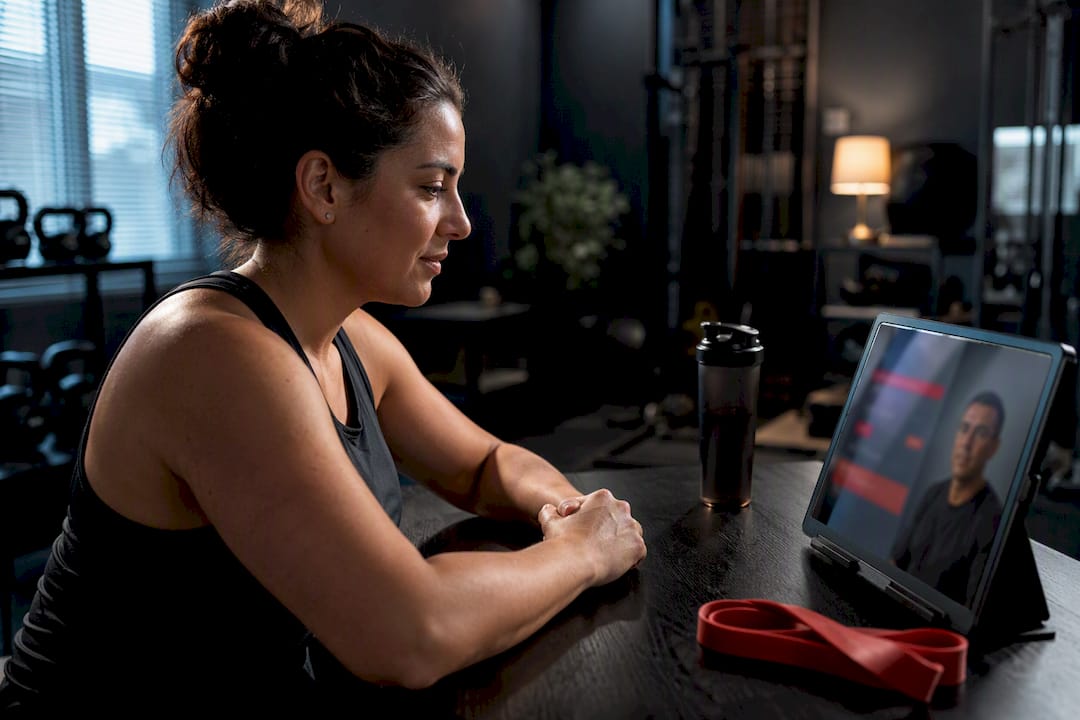
- One-on-one remote coaching: A coach reviews your logs and holds a scheduled call or video session, usually weekly, to adjust your plan and troubleshoot obstacles. This suits people who want direct feedback and a written plan without joining a gym in person.
- Small-group or hybrid coached programs: A coach manages several clients at once, often with shared check-ins plus individual attention, which lowers cost while keeping human feedback in the loop.
- Community hubs and structured challenges: Groups built around a shared start date and a clear rule set, such as a step count or workout streak, work best with a moderator who posts prompts and calls out inactivity early.
- Trackers and fitness apps: Useful for logging steps, workouts, or macros, but the evidence suggests they perform best when someone reviews the data with you rather than sitting untouched on your phone.
- Buddy pairs and body-doubling: Two people committing to the same schedule and reporting in after each session, a low-cost option that works if both people agree on a fixed check-in time and stick to it even on bad weeks. A practical guide to accountability partners covers how to set the ground rules.
Cost and contact frequency move together. Free apps and buddy systems cost nothing but rely entirely on your own discipline to keep the loop running. Paid one-on-one coaching costs more but adds a person whose job is to notice when you go quiet. Group programs sit in between, trading some personalization for a lower price and built-in peer support. A group accountability guide offers a template for starting or joining one if community is your main gap.
Whichever route you choose, keep expectations realistic. The research points to steady, modest gains, not dramatic overnight change. A tracker paired with a monthly check-in will likely move you less than the same tracker paired with weekly human feedback, simply because the feedback happens more often.
How to choose the right online accountability setup for you
Before committing money or time, run any option through the same checklist you would use to vet a service provider.
- Contact frequency: how often will a real person review your progress, weekly, biweekly, or only on request?
- Personalization: does the plan adjust to your schedule and starting fitness level, or is it a generic template?
- Goal clarity: can you state your current goal in one sentence with a number and a deadline?
- Metrics tracked: which numbers matter (steps, sessions completed, weight, strength) and who reviews them?
- Cost and trial options: is pricing transparent, and can you try a session before committing long term?
Programs built around vague promises rather than measurable check-ins show weaker adherence outcomes, aligning with the finding that feedback interventions produced a measurable effect of d = 0.29 on physical activity, meaning structure and feedback, not motivation alone, drive results.
During a consult, ask directly how often you will speak to a human, what happens if you miss a check-in, and how progress gets measured. A satisfactory answer names a specific cadence and a specific metric. A vague answer, like “we’ll check in when needed” or “just stay motivated,” is a sign the program leans on marketing rather than structure. Our guide on working with a fitness coach lists more questions worth asking before you sign up.
How Level Up Gym puts online accountability into practice
Level Up Gym is a hybrid training and boxing gym with locations in Stratford and Bridgeport, Connecticut, and its online offerings map onto the same components the research supports.
- Online training: remote coaching sessions that give clients a scheduled point of human contact instead of an app running alone.
- Meal planning: nutrition coaching that pairs with workout tracking so accountability covers both sides of progress.
- 6-Week Onramp: a structured starter program for beginners who want an initial plan with built-in check-ins rather than open-ended membership.
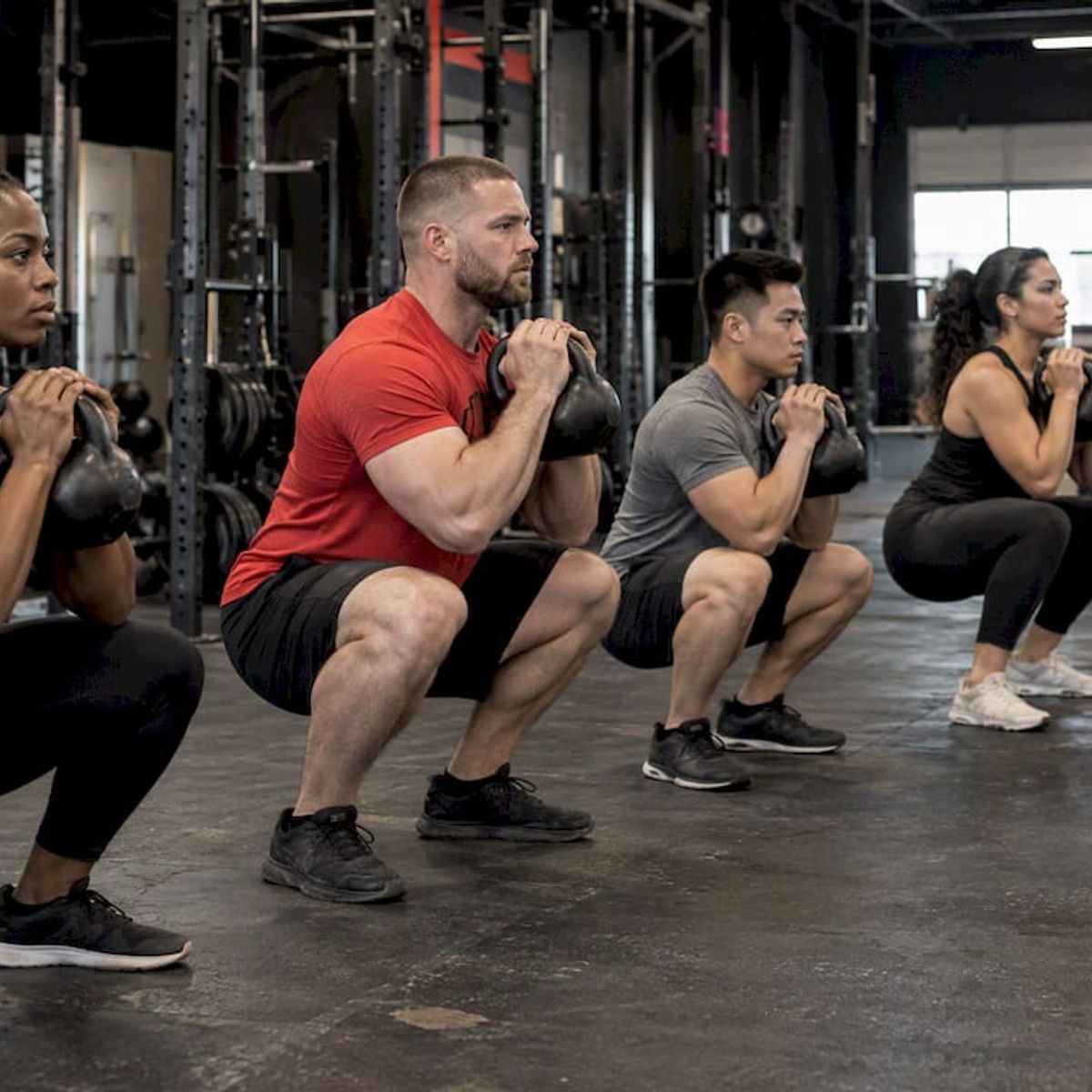
- Coaches lead capped-size classes so feedback stays personal rather than generic.
A typical client workflow starts with a free class or consult, moves into a written, individualized plan, and continues with scheduled remote check-ins alongside tracker use, the same sequence the evidence favors: monitor, set a target, get human feedback on a schedule. Our post on the real results accountability drives covers how that workflow plays out for members over time.
Privacy and data security considerations for online tracking
Any online accountability setup asks you to hand over personal data, workout logs, body weight, sometimes location and heart rate, so it is worth knowing where that information goes before you sign up.
Check whether the app or platform states its data retention policy and whether it sells or shares data with third parties for advertising. A program that will not answer a direct question about data sharing is a reasonable one to skip.
Video check-ins carry their own considerations. Confirm the platform uses encrypted video calls and ask whether sessions are recorded or stored, and for how long. If a coach or platform asks for sensitive health information beyond what is needed to build your plan, such as detailed medical history unrelated to your goals, ask why it is required.
Wearables and fitness apps often sync to third-party accounts by default. Reviewing app permissions and disconnecting integrations you do not use limits how many places your data lives. None of this eliminates risk entirely, but a program that is transparent about its data practices and lets you control what you share is a safer long-term partner than one that treats the question as an afterthought.
What successful online accountability programs have in common
Programs that work over time share a similar shape, regardless of price point: consistent contact, a small set of tracked numbers, and clear consequences for missed check-ins.
Structured challenges built around a fixed start date and a simple metric, like a 30-day step streak with a group chat and a moderator who follows up on inactivity, tend to hold participants longer than open-ended, unmoderated groups. The presence of a person checking in, even briefly, is the recurring feature across the interventions the research reviewed, not the specific app or platform used.
One-on-one coaching relationships that combine a written plan with scheduled calls show the same pattern at a smaller scale: a client sets a goal, logs progress, and reports to a coach on a fixed cadence. The success does not come from any single tool but from the combination staying consistent for weeks rather than being abandoned after the first setback.
The common failure mode across less successful setups is the opposite: tracking with no review, goals without deadlines, or group challenges that lose their moderator after week one and quietly stop functioning.
What the research gets wrong about accountability
The fitness industry treats accountability like a feature you can bolt onto any app, a leaderboard here, a push notification there. The evidence says otherwise. The largest effects in these studies come from human contact, not from clever software, and most people underestimate how much a scheduled call from a real person outperforms an automated reminder.
The bigger mistake is treating tracking as accountability. Logging your steps is data collection, not a plan. The gap between intending to work out and actually doing it closes through boring logistics: a set time on the calendar, gear ready the night before, and someone expecting a report from you. That is less exciting than a new app, and it works better.
If you take one thing from this guide, prioritize the human check-in over the tracker. Pick the cheapest version of that check-in you can sustain, whether it is a coach, a buddy, or a group, and build the logistics around it before you shop for software.
— Malcolm
Get human-led accountability without the guesswork
Level Up Gym’s online training pairs remote coaching with the tracking and habit planning the research points to: a written plan, scheduled check-ins, and a coach who notices when you go quiet.
If you want a structured starting point rather than building your own system, the 6-Week Onramp gives you a coached plan with built-in check-ins from day one. Bring your current goals, your weekly schedule, and any tracking data you already have (steps, workouts, or weight logs) so your first session starts with real numbers instead of guesswork. You can also explore online personal training and remote coaching directly to see how the check-in structure works before committing.
Sources
- Do physical activity interventions combining self-monitoring with other components provide an additional benefit compared with self-monitoring alone? A systematic review and meta-analysis
- Strategies for Individual Supports | Physical Activity | CDC
FAQ
What is the best fitness app for accountability?
No single app outperforms the others; what matters more is whether the app connects to human feedback, such as a coach or group who reviews your logs on a schedule. A tracker paired with a weekly check-in from a person tends to outperform any app used alone.
What is the 3-3-3 rule for a workout?
The 3-3-3 rule is not a term used in the systematic reviews or public health guidance covered here, and definitions vary depending on the source. If you have seen it referenced elsewhere, treat it as informal advice rather than an established framework.
How much does it cost to hire an accountability coach?
Costs vary widely depending on format and frequency of contact. At Level Up Gym, one-on-one personal training runs $149.99 to $359.99 per week, while small-group personal training runs $74.99 to $174.99 per week per person.
Who is the best online weight loss coach?
There is no single best coach; the research supports choosing a coach or program based on contact frequency, personalization, and clear goal tracking rather than brand reputation alone. Look for programs that combine self-monitoring, measurable goals, and regular human feedback, the combination shown to produce the strongest results.