Quick Gym Sessions Between Classes for Students
Use a 5 to 20 minute window between classes for a time-based bodyweight or interval circuit, not a random set of exercises you cut short when the clock runs out. That single shift, planning around time instead of reps, is what makes a session actually finish.
Every quick session should include:
- A time window you commit to (5, 10, 15, or 20 minutes, decided before you start)
- One primary movement pattern (a squat, a push, a carry, or a sustained walk)
- Built-in warm-up and cool-down folded into the first and last minute, not tacked on separately
This approach comes straight from ACE Certified trainer programming, and it lines up with CDC guidance that short bouts of movement count toward your weekly activity target. Level Up Gym’s coaches use the same logic with clients who train around work and school schedules.
Key Takeaways
Short, time-based workouts of 5 to 20 minutes deliver real cardio, strength, and mental-health benefits when they include a built-in warm-up, one primary movement, and a fixed end time.
PointDetails
Pick a time window first
Decide 5, 10, 15, or 20 minutes before you start so the session always finishes.
Use time-based sets
AMRAP, EMOM, and Tabata formats guarantee a complete workout regardless of interruptions.
Fold in warm-up and cool-down
Build them into your first and last minute instead of skipping them under time pressure.
Short sessions count toward weekly goals
CDC guidance confirms brief activity bouts add up toward weekly activity targets.
Try a guided format
Level Up Gym’s hybrid training sessions in Stratford and Bridgeport use the same short-session structure with a coach running it.
Table of Contents
- Eight Quick Workouts You Can Do Between Classes
- Two Ready-to-Run Routines You Can Copy Today
- How to Plan Any Session Around Your Class Schedule
- What to Bring for a Between-Class Workout
- Why Short Workouts Actually Work for Students
- What Actually Sticks With Student Clients
- Guided Short Sessions at Level Up Gym
- Sources
- FAQ
Eight Quick Workouts You Can Do Between Classes
You don’t need a gym membership to make this work, though a few of these are easier with one. Here are eight options sorted by what campus gives you: sidewalks, stairwells, a bench, or a patch of grass.
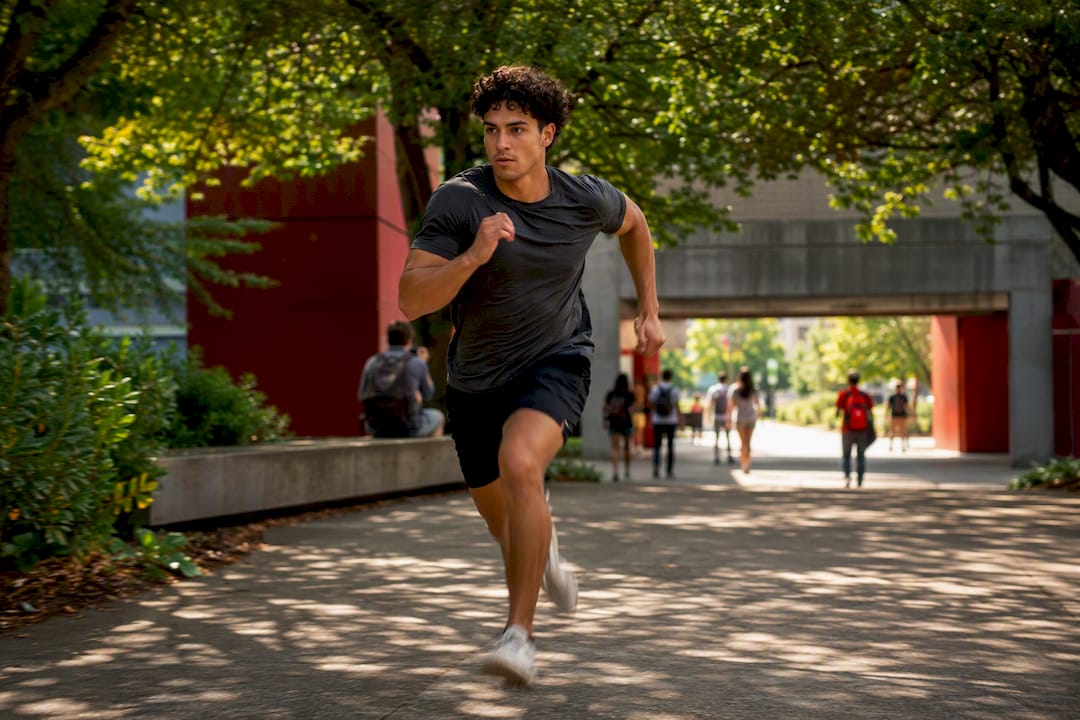
Power walk or brisk campus walk. Ten to fifteen minutes, done on your actual route to class. Push the pace to a 7 or 8 out of 10 effort instead of strolling. Benefit: cardio plus a mental reset before you sit down again. Modification: add short 30-second surges every two minutes if you want more intensity.
Stair climbing. A short session in a campus stairwell or parking structure involves steady climbing with walking down to recover, repeated as time allows, providing cardio and leg strength benefits. Modification: skip a step for more difficulty, or take single steps if your knees need it easier.
Bodyweight HIIT circuit. Short bodyweight circuits of about ten minutes can be done in various spaces, rotating exercises like squats, push-ups, and mountain climbers with intervals of work and rest to combine strength and cardio. Modification: knee push-ups or slower tempo squats for an easier version.
AMRAP mini-circuit. AMRAP mini-circuits of several minutes use a few exercises repeated as many times as possible within the available time, ensuring a complete workout regardless of schedule changes.
EMOM micro-set. Ten minutes. Every minute, complete a set number of reps (say, 10 burpees or 15 air squats), resting with whatever time is left in that minute. Benefit: built-in pacing that prevents burnout before class starts.
Desk or seated micro-exercises. Micro-exercises performed seated at a desk or table for brief periods support circulation and focus without significant exertion, suitable for short breaks between activities.
Mobility or yoga flow. Short mobility or yoga flows performed in a quiet space help loosen stiff muscles and improve flexibility during breaks in a busy schedule.
Backpack or band resistance work. Using simple items like a loaded backpack or resistance bands for strength exercises allows small resistance workouts in limited spaces without gym equipment.
Pro Tip: Keep a resistance band in your bag permanently. It weighs nothing, costs under $15, and turns almost any of these routines into a strength session instead of just cardio.
Two Ready-to-Run Routines You Can Copy Today
The 10-minute routine (bodyweight, one spot):
- Minutes 0 to 1: Warm-up. March in place, arm circles, bodyweight squats at half speed.
- Minutes 1 to 8: AMRAP. Ten squats, eight push-ups, ten mountain climbers, repeat as many rounds as possible.
- Minutes 8 to 10: Cool-down. Standing quad stretch, deep breathing, walk it out.
Beginner: slow the pace and take push-ups to your knees. Advanced: add a jump to the squat. Safety note: stop the circuit early if your form starts breaking down. Quality beats one more round.
The 15-minute routine (mixed cardio and strength, EMOM format):
- Minutes 0 to 2: Warm-up with dynamic stretches and light jogging in place.
- Minutes 2 to 12: EMOM. Minute 1: 12 burpees. Minute 2: 15 lunges per leg. Alternate for five rounds.
- Minutes 12 to 15: Cool-down. Hamstring stretch, hip flexor stretch, slow breathing.
Intermediate: this pace as written. Beginner: cut burpees to step-back burpees. This format draws on the same 14-minute interval concept ACE trainers use for time-crunched clients, just stretched to fit a slightly longer gap.
How to Plan Any Session Around Your Class Schedule
- Fold warm-up and cool-down into your first and last circuit instead of treating them as separate steps. Start slower, end slower, and you save a full minute or two.
- Use time-based sets, not fixed reps. AMRAP, EMOM, and Tabata formats guarantee a finished session no matter how your class runs late, which ACE programming guidance recommends specifically for busy schedules.
- Watch your effort, not just your reps. If you’re gasping and can’t hold form, drop intensity rather than push through sloppy movement.
Pro Tip: Pick your circuit before you leave your last class. Deciding on the walk over saves the two minutes most people waste standing around figuring out what to do.
What to Bring for a Between-Class Workout
You need almost nothing, but a few small items make a real difference:
- Real athletic shoes, not the boots or sandals you wore to your morning lecture
- A resistance band (under $15) for the backpack and band routines above
- A water bottle and small towel so you’re not walking into your next class drenched
- Your backpack itself, loaded with textbooks, doubles as free resistance for squats and carries
If you’re near an actual gym between classes, a quick stop makes gear irrelevant. Programming short workouts around one or two tools cuts transition time, the biggest time-waster in any short session.
Why Short Workouts Actually Work for Students
The CDC’s adult activity guidelines confirm that short bouts of movement count toward your weekly totals, so a 10-minute session between classes is not a lesser workout. It’s a real contribution.
A meta-analysis of 34 studies covering 8,020 university students found physical activity significantly improved mental health, anxiety, stress, and sleep quality among that exact population. A separate network meta-analysis found that dance and rhythmic movement sessions ranked especially well for improving depressive symptoms in college students, ahead of some high-intensity-only formats. That’s part of why mobility and flow options belong on your rotation, not just HIIT.
“Shorter workouts, twenty minutes or less, are often more sustainable and support better adherence for busy clients.” That’s the core finding behind ACE’s programming guidance for time-crunched schedules, and it applies directly to a student walking between two lecture halls.
What Actually Sticks With Student Clients
Most students don’t fail at short workouts because the exercises are wrong. They fail because they never decide in advance what they’re doing, so the ten minutes disappears into scrolling or standing around. The students who stick with it turn a walk to class into deliberate power-walk intervals, or swap a coffee-shop line for a five-minute mobility flow on the quad. Neither takes extra time out of the day.
Pick one sample routine above and run it during your longest gap this week. Adjust the minute counts to match your actual schedule, not the other way around.
Guided Short Sessions at Level Up Gym
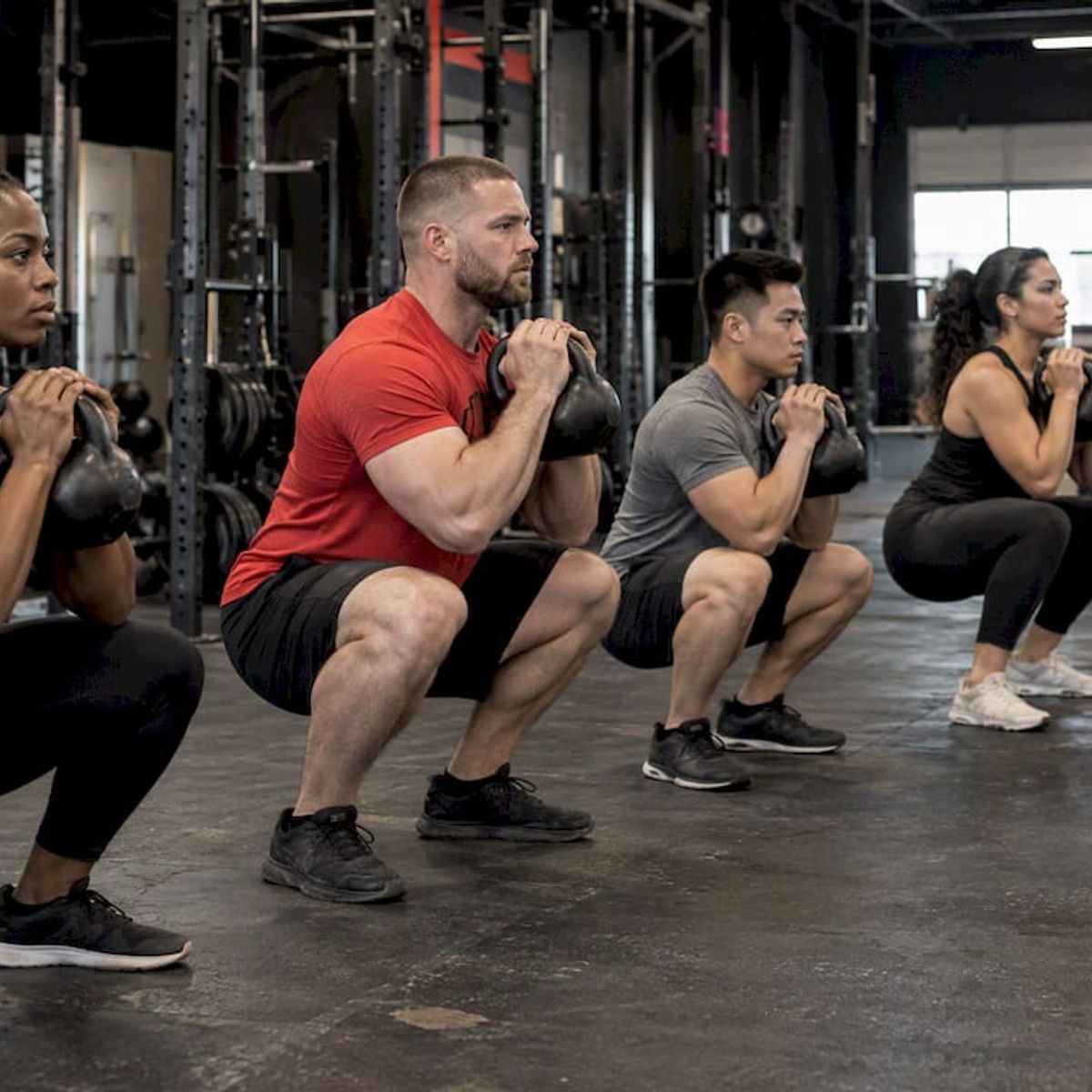
If you’d rather have a coach build the circuit for you, Level Up Gym runs hybrid training and group sessions in Stratford and Bridgeport designed around exactly this kind of time-crunched format, no long-term contract required to try it.
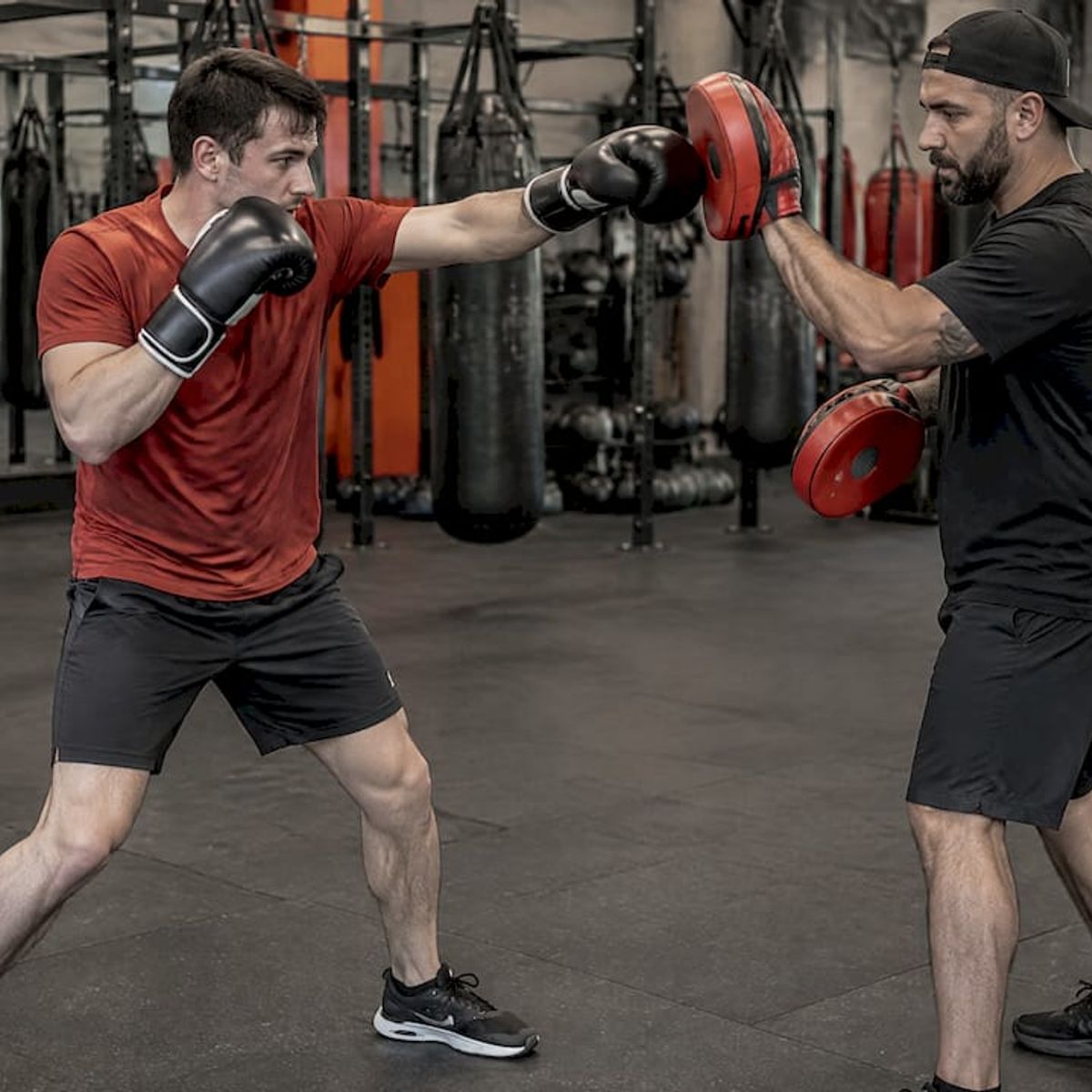
Sessions blend boxing, strength work, and conditioning into formats that respect a tight schedule, and the hybrid training programs page breaks down what a typical short session looks like. If you’re not near either location, Level Up Gym also offers online and remote training so the same time-based programming works from a dorm room. Book a session and see how a coached 20-minute window compares to doing it alone between classes.
Sources
- Get it Done! 4 Fast and Effective Workouts From ACE Experts | ACE Certified (Feb 2024)
- Physical Activity Basics: Guidelines for Adults | CDC
- Effectiveness of physical exercise on mental health among university students: a systematic review and meta-analysis | Frontiers in Psychology (2025)
- Effectiveness of different exercise interventions on depressive symptoms among college students: a network meta-analysis | BMC Public Health (2025)
This article is general information, not a substitute for advice from a qualified doctor. Consult a qualified healthcare professional about your own circumstances before acting on anything here.
FAQ
What is a quick workout I can do at the gym?
A time-based bodyweight or interval circuit, like a 10-minute AMRAP of squats, push-ups, and mountain climbers, is one of the most efficient options because it guarantees a finished session in the time you have.
What is the 3-3-3 rule in gym?
Definitions vary online, but it commonly refers to a simple structure of three exercises, three sets, and three-minute rest windows; it isn’t a standard framework backed by major fitness organizations.
What is the 2-2-2 rule in gym?
Like the 3-3-3 rule, this is an informal shorthand some trainers use for pacing (often two exercises, two rounds, roughly two minutes each) rather than an established, universally recognized standard.
What is the 5-3-1 rule in gym?
The 5-3-1 method refers to a strength-training program built around percentage-based lifts across four-week cycles. It’s a longer-term structure, not a quick between-class format.
How long should a between-class workout be?
Most effective sessions run 5 to 20 minutes, matching typical gaps between college classes, and both ACE trainer guidance and CDC activity recommendations support short bouts as genuinely productive.