10 Signs You Need a Personal Trainer (and What to Do)
If you feel lost at the gym, have stalled for more than four weeks, or keep skipping workouts, those are clear signs you need a personal trainer. The short version: hire one if you check three or more of the signals below. Your immediate next step is to book a trial assessment session and expect a 45–60 minute conversation covering your health history, a movement screen, and a light baseline workout before any real programming begins.
Quick self-assessment checklist:
- You wander the gym floor with no clear plan
- Progress has stalled for several consecutive weeks
- You feel pain (not soreness) during or after exercises
- You’ve quit and restarted a routine more than twice this year
- You have a specific event, race, or weight-loss target with a deadline
- You’re returning from injury or managing a chronic health condition
- You only have a short amount of time per session and need every minute to count
ACE (American Council on Exercise) notes that identifying with multiple of these warning signs suggests you’re likely losing time and progress without professional supervision. NASM (National Academy of Sports Medicine) adds that a proper first session focuses on assessment rather than intensity — a PAR-Q intake form, movement screening, and a plan discussion. Level Up Gym structures its onboarding the same way.
Table of Contents
- 1. You feel lost or intimidated at the gym
- 2. Your progress has stalled for four or more weeks
- 3. You haven’t learned safe form, or you feel pain during exercises
- 4. You can’t stick to a consistent routine
- 5. You have a specific, time-bound, or ambitious goal
- 6. You’re returning from injury, managing a health condition, or have mobility concerns
- 7. You only have 30–45 minutes per session
- 8. How to find and hire the right personal trainer
- 9. Why trainers actually change outcomes
- Key Takeaways
- What working with a good trainer actually feels like
- Level Up Gym is built for exactly this
- FAQ
- Research sources and further reading
1. You feel lost or intimidated at the gym
This one shows up in a specific way: you walk in, look around, pick a machine that seems safe, do a few sets, and leave feeling like you probably missed something. Free weights stay untouched. You copy a random video you half-remember. Nothing feels connected to an actual goal.
Beginner coaching fixes this faster than any YouTube playlist. A trainer teaches the fundamental movement patterns (squat, hinge, push, pull, carry) in the right order, which cuts anxiety and builds a realistic 4–8 week foundation. The gym stops feeling like someone else’s territory.
Pro Tip: At your first session, ask the trainer to explain the “why” behind each exercise they program. Understanding the purpose of a movement accelerates learning and makes you far less likely to abandon it.
2. Your progress has stalled for four or more weeks
A multi-week plateau across any measurable marker — scale weight, strength numbers, body composition, or cardio capacity — is the standard threshold where a program audit becomes necessary. One bad week is noise. Four consecutive weeks is a pattern.
The usual culprits are poor progressive overload (adding the same weight every session until you can’t), inconsistent tracking, and mismatched recovery. Most people respond by working harder. That’s rarely the fix.
NASM experts emphasize benchmark-driven progress and systematic reassessment rather than simply increasing volume. A trainer audits your program objectively — checking intensity, frequency, exercise selection, and sleep and nutrition habits — and adjusts the variables that are actually limiting you.
Pro Tip: Before your audit session, write down your last four weeks of workouts and any nutrition patterns you’ve tracked. The more data you bring, the faster a trainer can pinpoint the problem.
Plateau benchmark: Four consecutive weeks of stalled progress across performance, body composition, or scale weight is the point where programming or recovery needs a professional review.
3. You haven’t learned safe form, or you feel pain during exercises
There’s a meaningful difference between delayed onset muscle soreness (DOMS), the familiar ache that peaks 24–48 hours after a hard session, and sharp or joint-specific pain that repeats every time you load a particular movement. DOMS is normal. Repeating pain is a red flag.
Common form errors that quietly cause problems:
- Rounding the lower back during deadlifts or Romanian deadlifts
- Knees caving inward on squats and lunges
- Shrugging the shoulders during overhead or bench pressing
- Letting the hips drop or pike during planks and push-ups
- Hyperextending the lower back on cable rows
If any movement consistently produces joint pain, stop it immediately. Book a movement-assessment session and tell the trainer exactly where and when it hurts. A quality trainer will also flag when a symptom warrants a referral to a physical therapist or physician before continuing.
Pro Tip: Film yourself doing the painful movement from the side and front before your assessment. Trainers can spot errors in seconds from video that would take several live reps to catch.
4. You can’t stick to a consistent routine
Skipping a scheduled workout occasionally is human. Doing it every week, promising yourself you’ll start again Monday, and cycling through the same two-week burst-and-quit pattern is a behavioral signal worth taking seriously.
Accountability is one of the primary benefits trainers provide, and it works through structure rather than willpower. Scheduled sessions with a real person waiting for you carry a social cost for canceling that a solo gym visit simply doesn’t. Trainers also shorten sessions to fit real schedules, build in progress reviews so you can see movement, and use habit-focused coaching to address the actual barriers (usually time, energy, or confidence, not laziness).
A 4–6 week coached block with fixed session times and built-in check-ins is the most direct way to break the restart cycle.
5. You have a specific, time-bound, or ambitious goal
Some goals genuinely require periodized programming. Others just feel like they do. Here’s how to tell the difference: if the goal has a deadline and a performance or body-composition standard attached, you need a structured plan with checkpoints, not a general fitness routine.
Common examples that warrant professional programming:
- Running a 5K in 12 weeks with no current running base
- Losing 20+ pounds before a wedding or reunion in 16 weeks
- Adding 50 pounds to a squat or deadlift max within a training cycle
- Competing in a first boxing match or obstacle race
- Dropping two clothing sizes for a specific event
DIY approaches fail ambitious goals because they lack periodization (planned phases of volume and intensity), event-specific drills, and objective checkpoints to catch problems early. Book a goal-specific consult, bring your deadline, and ask the trainer to build a timeline with measurable benchmarks at weeks 4, 8, and 12. Setting realistic fitness goals from the start is what separates people who hit their target from people who get close and stall.
6. You’re returning from injury, managing a health condition, or have mobility concerns
This is the sign where skipping a trainer carries the highest actual risk. Returning to exercise after a back injury, knee surgery, or a cardiac event without professional oversight isn’t just inefficient — it can set recovery back significantly.
Key steps before and during this process:
- Complete a PAR-Q (Physical Activity Readiness Questionnaire) with the trainer before your first session
- Get medical clearance from your physician or physical therapist if you’ve had surgery or a significant injury in the past 12 months
- Ask the trainer directly about their clinical experience with your specific condition
- Request a movement screen in the first session to identify compensations and mobility restrictions
- Confirm the trainer’s referral process if a symptom appears during training
Quality trainers coordinate with physical therapists and physicians, modify exercises to work around limitations, and progress load conservatively. The goal in early sessions is to build a safe baseline, not to prove fitness.
7. You only have 30–45 minutes per session
Time scarcity is a legitimate training constraint, not an excuse. The problem is that most self-programmed workouts aren’t built for short windows — they’re built for an ideal 60–75 minute session that rarely happens, so the last third gets cut every time.
Signs that time efficiency is the core issue:
- You regularly have only 30–45 minutes available per session
- Your weekly availability shifts week to week
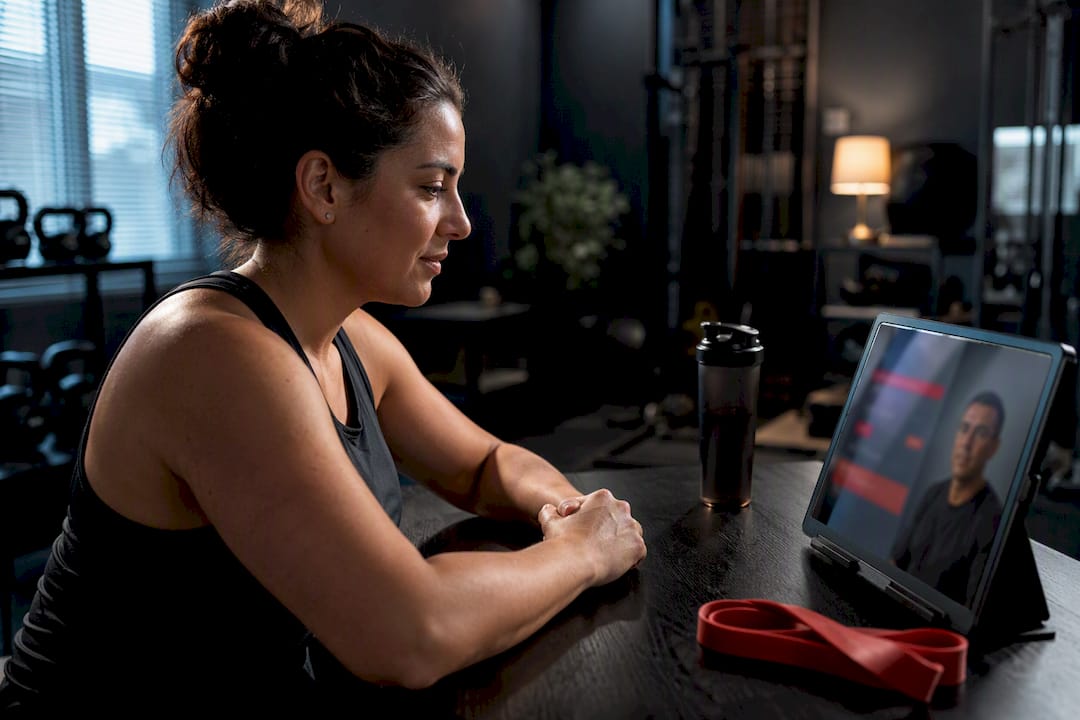
- You need programming that works at home, at a hotel gym, or remotely
A trainer designs around your actual schedule, not an ideal one. A well-structured 40-minute session typically runs: 5-minute check-in and mobility activation, 25 minutes of compound strength circuits (two or three movements paired to cut rest time), and 8–10 minutes of conditioning or corrective work. Ask specifically about hybrid or remote programming options if your schedule is irregular.
8. How to find and hire the right personal trainer
Credentials matter, but they’re a floor, not a ceiling. Look for certifications from NCCA-accredited organizations: NASM, ACE, and ACSM are the three most recognized in the U.S. Beyond the cert, relevant specialty experience (post-rehab, weight loss, sport-specific) and continuing education hours tell you whether a trainer keeps current.
Ten questions to ask at your consult:
- What does your assessment process look like in the first session?
- How do you track and measure my progress over time?
- What’s your cancellation and rescheduling policy?
- Can you provide nutrition guidance, and what are your qualifications for that?
- Do you offer trial sessions before committing to a package?
- How often do you reassess and adjust the program?
- Have you worked with clients who have my specific goal or condition?
- What session formats do you offer (1-on-1, small group, virtual)?
- How do you handle it if I’m not progressing as expected?
- What do you expect from me between sessions?
On nutrition: NASM is clear that trainers can offer general nutrition principles but cannot legally prescribe individualized medical meal plans unless they hold additional credentials. A Registered Dietitian handles medical nutrition therapy. Ask about this distinction upfront.
Session formatBest forTypical lengthKey consideration
1-on-1 personal training
Complex goals, injury rehab, beginners
45–60 min
Highest cost; maximum individual attention
Small-group training
Accountability + cost efficiency
45–60 min
Lower per-session cost; coached, not generic
Hybrid/virtual
Irregular schedules, travel, remote access
30–45 min
Requires self-discipline between check-ins
Financially, single sessions in the U.S. typically run higher per session than packages. Multi-session packages and monthly coaching arrangements lower the per-session cost meaningfully. Ask about package options before committing to a single-session rate.
Pro Tip: Always ask for a trial or assessment session before buying a package. A single session tells you more about trainer fit than any review or credential.
9. Why trainers actually change outcomes
ACE summarizes the evidence clearly: professional supervision improves movement efficiency, maximizes safe effort, and increases long-term exercise adherence beyond what motivation alone produces. That last part is the one most people underestimate. Motivation fluctuates. A structured program with a coach who tracks your numbers doesn’t.
The pipeline a quality trainer runs looks like this: baseline assessment (movement screen, health history, initial metrics) → data-driven programming → sessions with real-time form correction → reassessment every 4–6 weeks → program adjustment based on results. That reassessment cadence is what separates coached progress from guesswork.
Harvard Health notes that high-quality trainers prioritize client experience in early sessions, building confidence through appropriate intensity rather than overwhelming the client. The first few weeks are about building the habit and the movement foundation, not proving how hard you can work.
What the research shows: ACE’s evidence review finds that supervised training produces measurable gains in movement quality and adherence — not just short-term motivation.
Key Takeaways
Hiring a personal trainer makes the most sense when you match three or more clear signals: stalled progress, unsafe form, chronic inconsistency, a time-bound goal, or a health condition that requires supervised exercise.
PointDetails
Plateau threshold
Four consecutive weeks of stalled progress signals a program audit is needed.
First session format
Expect 45–60 minutes of intake, movement screening, and light exercise — not a hard workout.
Credential baseline
Look for NCCA-accredited certs: NASM, ACE, or ACSM, plus relevant specialty experience.
Multiple signs = higher need
Checking two or more signals substantially increases the benefit of hiring a trainer, per ACE.
Level Up Gym option
Level Up Gym (Stratford and Bridgeport, CT) offers small-group personal training and a 6-week beginner onramp for new clients.
What working with a good trainer actually feels like
The first session is almost always quieter than people expect. There’s a lot of conversation — health history, goals, lifestyle, past injuries — followed by a movement screen where the trainer watches you squat, hinge, and push through basic patterns. The actual exercise portion is deliberately light. That’s not a warmup for the real session; that IS the session. The goal is baseline data and a plan, not soreness.
Early progress tends to show up in unexpected places first: better sleep, less lower-back tightness, more energy on non-training days. Scale weight and strength numbers usually follow in weeks 3–6, depending on starting point and consistency. Reassessment at the 4–6 week mark is when the program gets meaningfully adjusted based on what’s actually working.
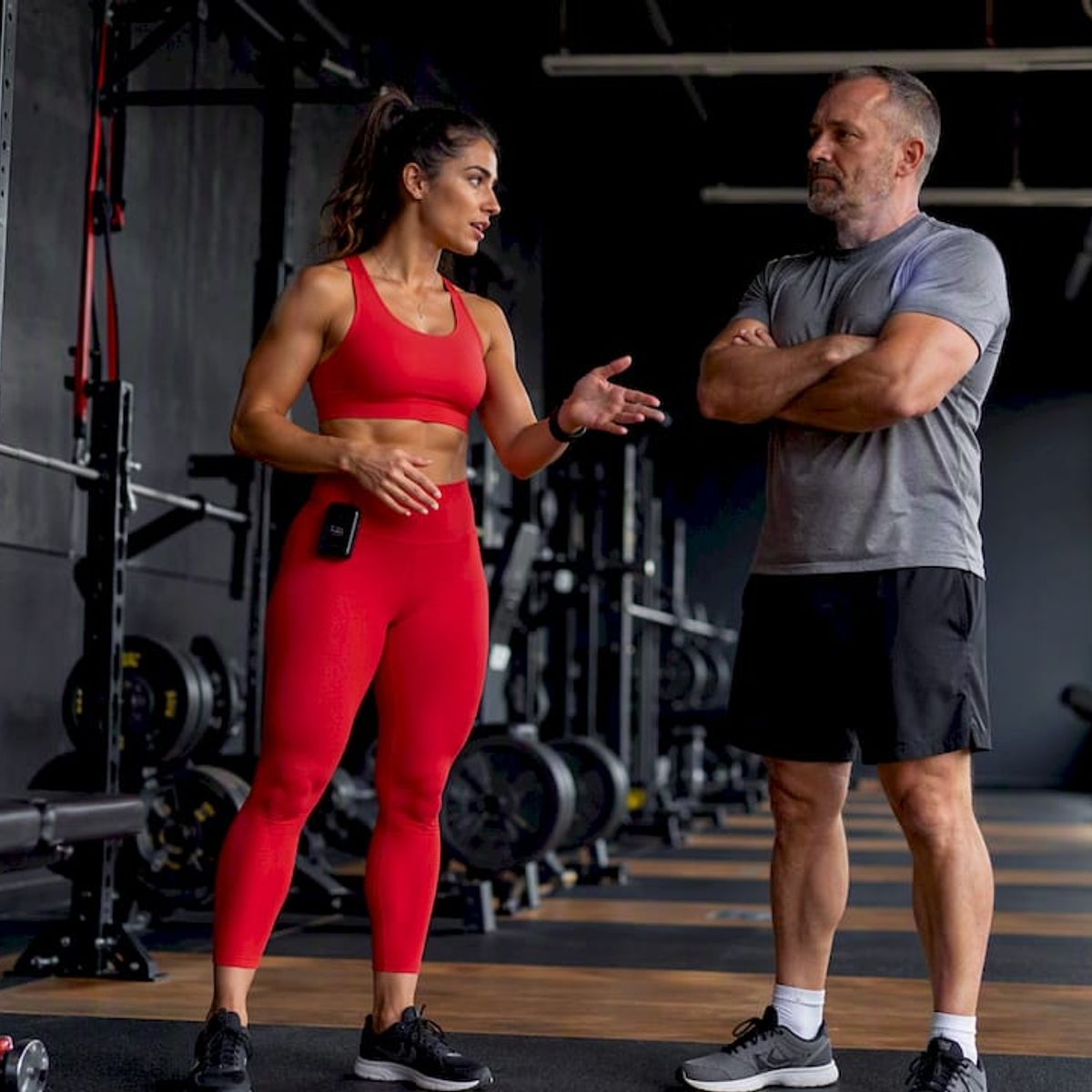
Judging fit is straightforward. A good trainer asks more questions than they answer in the first session, explains the reasoning behind exercise choices, and adjusts intensity based on how you’re responding — not based on a fixed script. If you leave a session with no idea why you did what you did, that’s useful information.
Level Up Gym is built for exactly this
Most people reading this article don’t need a luxury personal training studio. They need coached, structured sessions that fit a real schedule, a trainer who actually tracks their progress, and a gym that doesn’t feel intimidating from day one.
Level Up Gym in Stratford and Bridgeport, CT offers small-group personal training that gives you the coaching attention of a 1-on-1 session at a fraction of the cost, plus hybrid training programs that combine strength, conditioning, and boxing in a format built for people with real time constraints. New members start with a 6-week beginner onramp designed specifically to build the foundation before intensity increases. No contract required.
If weight loss is the primary goal, Level Up Gym’s Stratford weight-loss program pairs structured training with nutrition coaching and meal planning support. Book a trial session or assessment at either location to see the programming and meet the coaches before committing to anything.
FAQ
How many signs do I need before hiring a personal trainer?
ACE recommends treating three or more concurrent warning signs as a strong indicator that professional supervision will save you time and improve results.
What happens at the first personal training session?
Expect a 45–60 minute session focused on a PAR-Q health intake, movement screening, and a light baseline workout — not a hard training session. The goal is data collection and plan discussion.
Do I need medical clearance before starting with a trainer?
If you’ve had surgery, a significant injury, or a chronic health condition in the past 12 months, get physician or physical therapist clearance first. A quality trainer will ask about this during intake and may require it.
Can a personal trainer help with nutrition?
Trainers can provide general nutrition principles and guidance, but NASM clarifies they cannot legally prescribe individualized medical meal plans without additional credentials. For medical nutrition therapy, a Registered Dietitian is the appropriate professional.
How long before I see results with a personal trainer?
Early changes in energy, sleep quality, and movement comfort often appear within the first 2–3 weeks. Measurable strength and body-composition shifts typically show up between weeks 4–6, with reassessment at that point driving the next phase of programming.
Research sources and further reading
- 4 Signs You Need to Hire a Personal Trainer — ACE
- Evidence to Support the Effectiveness of Personal Training — ACE
- Top 10 Benefits of Personal Training — ACE
- NASM CPT Podcast: First Sessions and Program Audits
- Personal Training FAQs — NASM
- How a Personal Trainer Can Enhance Your Workouts — Harvard Health
- How to Work with a Fitness Coach Effectively — Level Up Gym
- The Real Role of Personal Coaching in the Gym — Level Up Gym
Recommended
- The Real Role of Personal Coaching in the Gym — Level Up Gym | Level Up Gym
- How to Work with a Fitness Coach Effectively — Level Up Gym | Level Up Gym
- Types of Strength Training Programs: Pick the Right One Fast — Level Up Gym | Level Up Gym
- The Mental Health and Fitness Link: Boxing and Hybrid Training — Level Up Gym | Level Up Gym