Why 69% Adherence Matters for Small Group Training Benefits
Small group training delivers structured cardio and strength work, built-in motivation, and real social support, three benefits that show up consistently when the program is well run. Research finds the average edge over solo training is modest, and attendance and program quality matter more than the format itself. Both the CDC and coaches at Level Up Gym point to the same conclusion: consistency beats the label on the class schedule.
TL;DR:
- Small group training offers practical benefits, but the physical and psychological gains depend more on program quality and consistency than on the format size.
- Social support, accountability, and structured scheduling significantly improve adherence, especially when programs include a welcoming environment and proactive coaching.
- Research shows little overall difference in health benefits between group-based and individual training, with small edges in functional outcomes when programs are well coached and consistently attended.
- Class size, coaching quality, and individual goals should guide the choice between small groups, large classes, or one-on-one training, as each has distinct trade-offs in personalization and cost.
- To get started, beginners should seek programs with certified coaches, clear modifications, and initial screening, and consider trial classes to ensure comfort and alignment with their goals.
Level Up Gym
Build Consistency With Coaching
Level Up Gym combines hybrid training and boxing for adults seeking coached fat loss, strength, or boxing in a welcoming setting.
Table of Contents
- Physical benefits: what small group training typically delivers
- Motivation, accountability, and adherence: why groups help people stick with exercise
- Social and psychological benefits: belonging, identity, and support
- How small group training differs from large classes and 1:1 training
- Evidence summary: what the research shows and its limits
- Practical tips from coaches: how to choose small group training
- Level Up Gym perspective: how we design small group classes
- How to try small group training with Level Up Gym
- Sources
- FAQ
Physical benefits: what small group training typically delivers
The physical payoff from small group training is the same payoff you get from any well-dosed exercise: better sleep, steadier mood, and lower blood pressure within days, plus a longer-term drop in the risk of heart disease, stroke, and type 2 diabetes. The CDC recommends 150 minutes of moderate aerobic activity or 75 minutes of vigorous activity per week, plus muscle-strengthening work on at least two days.
A typical small group session is built to hit those numbers without a participant tracking anything themselves. A coach might program 8 to 12 reps for 1 to 3 sets on major lifts, rotate through conditioning intervals, and close with mobility work, the same structure CDC guidance uses as a muscle-strengthening benchmark.
What actually produces the benefit is not the group format itself. It is the activity selected, how it progresses week to week, and whether the person shows up consistently. A group class with sloppy programming will underperform solo training done well, and the reverse is just as true.
A well-run small group session typically includes:
- A warm-up and movement screen to flag pain or mobility limits before loading anything heavy.
- Strength work at a planned rep and set range, often 8 to 12 reps for 1 to 3 sets.
- Conditioning intervals scaled to fitness level rather than a single pace for everyone.
- A cool-down or mobility block to close the session.
Motivation, accountability, and adherence: why groups help people stick with exercise
A 2016 mixed-methods review of community group-exercise programs lasting six months or longer found a mean adherence rate of 69.1%, with social connectedness, program design, and instructor behavior named as the biggest factors in whether people kept showing up. Groups work because they build structure around willpower instead of relying on it.
The mechanisms are practical, not mystical:
- A fixed class time removes the daily decision of when to train.
- Peers who expect you there create a mild social cost for skipping.
- A coach who notices your absence closes the gap that willpower alone leaves open.
Emotional support changes how much people actually do. One trial analysis in older adults linked higher baseline emotional support to 5.56 additional exercise sessions completed and better odds of hitting recommended activity dosage. Support also looks different across groups: research on group-exercise membership found women reported multiple forms of support tied to weekly activity, while a scoping review in older adults found companionship support was consistently influential, even though the surrounding evidence is mixed by study design.
Social and psychological benefits: belonging, identity, and support
Social support in a training group is not one thing. Researchers break it into distinct types, and each shows up differently in a small-group class.
- Companionship support is simply training alongside people you recognize, the lowest-effort form of support and often the stickiest.
- Emotional support is encouragement during a hard set or a tough week, the kind linked to completing more sessions in trial data.
- Informational support is a training partner or coach correcting your form or suggesting a modification.
- Instrumental support is practical help, a ride to class or a swapped schedule so you can make the session.
- Validation support is feedback that confirms you belong in the room, which matters most for newcomers.
A 2022 study of 506 adults tied group-exercise membership to both social support and a developing exercise identity, the sense of being “someone who trains.” That identity shift tends to predict more weekly activity over time, not just better mood on training days.
None of this is guaranteed. A clique-heavy class or a coach who ignores beginners can erase these benefits just as fast as a good one creates them. The group has to be worth belonging to.
How small group training differs from large classes and 1:1 training
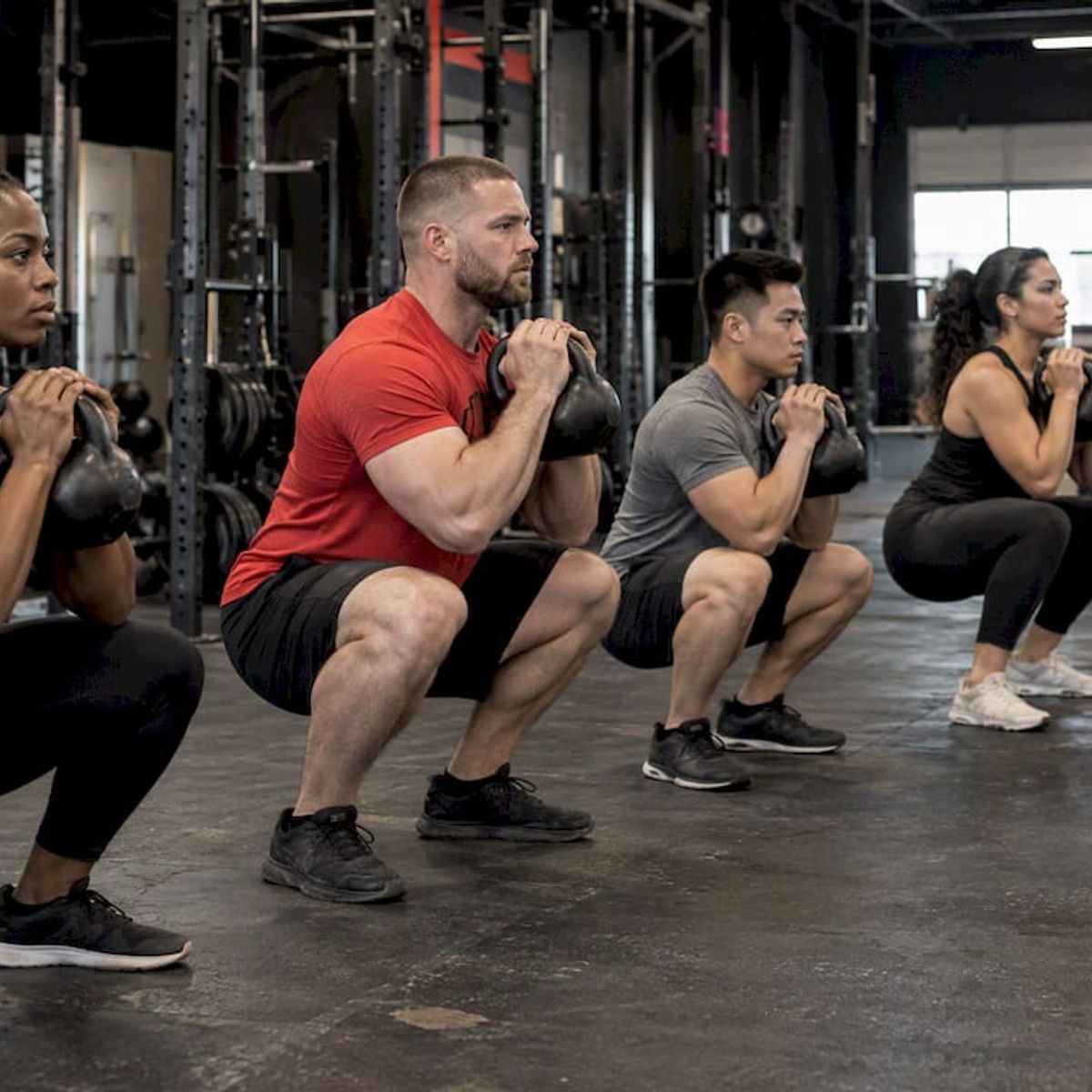
Small group training usually caps attendance somewhere between four and twelve people, with semi-private formats running two to four clients per coach. Large group classes can run 20 or more participants with one instructor, while 1:1 training is exactly what it sounds like, one coach and one client.
The trade-offs are straightforward:
- Personalization drops as class size grows, since a coach watching twelve people cannot correct form as often as one watching three.
- Cost drops as class size grows, which is why large classes are typically the cheapest per session and 1:1 training the most expensive.
- Social dynamics shift with size, a tight small group tends to build stronger relationships than a rotating cast of twenty strangers.
Before picking a format, ask yourself four questions: What’s the actual goal, fat loss, strength, or skill work like boxing technique? How much hands-on feedback do you need to train safely? What’s the budget? And do you want the social pull of training with the same small group of people each week?
Evidence summary: what the research shows and its limits
A 2026 systematic review and meta-analysis covering 71 studies and 523 effect sizes found no significant overall advantage for group-based interventions over individual ones across physical activity, psychosocial, or general health outcomes. The exception came after removing statistical outliers: group-based programs showed a small but significant advantage for functional outcomes specifically.
That advantage was small: g = 0.164 (95% CI 0.032 to 0.297, P = .015), according to the review, meaning group formats edge out individual training on functional measures like daily movement capacity, but not by a wide margin.
A small group that shows up consistently, trains with sound programming, and offers real feedback will outperform a 1:1 setup that is inconsistent or poorly coached, and vice versa. The research does not crown one format as superior; it rewards whichever format a person actually sustains.
Practical tips from coaches: how to choose small group training
Before joining a class, ask a few direct questions: What’s the coach’s certification? What’s the maximum class size? Is there a screening process before you start lifting or boxing? How do they modify a movement for someone with a knee or shoulder issue? And how does the program progress over four, eight, or twelve weeks?
ACSM guidance on reducing intimidation in group settings points to a few onboarding habits that separate a welcoming program from an intimidating one:
- Introductions on day one, so newcomers are not training among strangers.
- A quick demonstration of each movement before the group starts.
- A stated “here’s how we modify this” policy, said out loud, not assumed.
- Proactive check-ins from the coach during the first few sessions.
Pro Tip: Pick a fixed class time and put it on your calendar before you pick the gym. The slot matters as much as the program.
Logistics close the gap between intention and attendance: pack your bag the night before, plan sleep around early sessions, and track attendance for the first month rather than trying to chase a performance number too soon.
Level Up Gym perspective: how we design small group classes
Small group programs that follow mechanisms research points to include capped class sizes, certified coaches who can correct technique, and a hybrid model that pairs strength and conditioning with real boxing coaching rather than cardio-boxing. New members ideally start with a free class or consult and a written plan, and beginner-focused onramp programs exist to help turn first-session motivation into a repeatable habit before momentum fades.
— Malcolm
How to try small group training with Level Up Gym
If you want the structure and support described above without committing to a long-term contract, Level Up Gym’s small group personal training program caps class size so coaches can actually watch your form, not just your attendance. The 6-Week Onramp is built for anyone starting from zero, pairing a written plan with a beginner-friendly pace at either the Stratford or Bridgeport, CT locations.
A first visit typically includes a short screening conversation, a tour of the space, and a scaled-down version of that day’s session so you can see how coaches modify movements on the spot.
- Start with a free class or consult before committing to anything.
- Bring workout clothes and sneakers; coaches provide modifications for any injury or limitation you mention.
- Ask about small group PT pricing or the 6-Week Onramp if you want a structured starting point.
Sources
- PubMed: 2026 systematic review/meta-analysis (group-based interventions)
- Adherence to community based group exercise interventions for older people: A mixed-methods systematic review (2016)
- Group-exercise membership associated with social support and exercise identity (2022)
- CDC: What counts as physical activity / muscle-strengthening guidance
- ACSM: How to reduce intimidation for new clients in group exercise classes
FAQ
What are the benefits of taking small group classes?
Small group classes combine structured cardio and strength programming with built-in accountability and social support, which research links to better adherence than training alone. The main advantage is consistency: fixed schedules and peer presence make it easier to keep showing up week after week.
What is the 5 5 5 30 rule?
This is not a term used in the exercise science or guidance covered here, and definitions circulating online vary without a single authoritative source. The CDC’s established guidance of 150 minutes of moderate activity weekly plus strength training on two or more days is the benchmark worth following instead.
Is becoming a certified personal trainer worth it?
Whether certification is “worth it” depends on your goals and market, and that is outside what this article’s sources cover. What the evidence does support is that a coach’s screening, modification skills, and check-in habits, the kind ACSM outlines, directly affect how well clients stick with a program.
How does small group training compare to one-on-one coaching?
Small group training trades some individual attention for lower cost and added social support, while one-on-one coaching offers the most direct feedback on form and pacing. Neither format is proven superior overall; a 2026 meta-analysis found only a small, significant edge for group formats on functional outcomes specifically.
What should a beginner expect in their first small group class?
Expect a screening conversation, introductions, and a demonstration of each movement before the group starts working, practices ACSM recommends to reduce first-day intimidation. A good coach will also state upfront how movements get modified for injuries or limited mobility.