
Stay Consistent: Beginner Friendly Gym Classes Boost Attendance to 64%
Start with a beginner strength class, low-impact cardio, gentle yoga, or a small-group beginner boxing session. All four are built for people who have never stepped foot in a gym, and each runs 30 to 60 minutes with an instructor who expects you to ask questions. Pick one, show up to a single session, and judge it from there. That’s the whole decision. Programs like Level Up Gym’s beginner onramp exist specifically for this first step.
TL;DR:
- Choosing a class labeled specifically for beginners, small-group coaching, and a no-contract option increases your chances of sticking with the program long-term.
- Classes with active instructor engagement, clear modifications, and built-in pacing help new gym-goers build confidence and avoid injury.
- Attending two to three beginner sessions per week for four to eight weeks typically results in noticeable improvements in stamina and fitness.
- Introducing yourself early, asking for modifications, and arriving prepared with gear and before class starts reduces first-day anxiety.
- Focus on attendance and consistency rather than high-intensity workouts or performance goals during the initial stage to establish a sustainable habit.
Table of Contents
- What Are the Best Beginner-Friendly Gym Classes?
- Why Group Classes Help Beginners Stick With It
- How to Choose the Right Beginner Class Fast
- What to Expect in Your First Class
- How Level Up Gym Supports First-Time Gym-Goers
- Getting Past the Anxiety of Your First Class
- Tracking Progress Without Overcomplicating It
- Talking to Your Instructor About Your Fitness Level
- The Case for Starting Simple, Backed by the Evidence
- Your Next Step With Level Up Gym
- Sources
- FAQ
What Are the Best Beginner-Friendly Gym Classes?
Every beginner-friendly class shares one trait: the instructor teaches movement from the ground up instead of assuming you already know it. That’s the real definition of “beginner friendly,” and it’s different from an “all-levels” label, which usually just means nobody gets turned away at the door. Here’s what each format actually looks like once you’re inside it.
Gentle or beginner yoga focuses on breathing, basic poses, and mobility rather than advanced flexibility. Intensity runs low, modifications are built into almost every pose (blocks, straps, chairs), and classes typically run 45 to 60 minutes. Try this if you’re dealing with tight hips, a desk job, or general stress and want something that doesn’t spike your heart rate.
Beginner strength classes teach squat, hinge, push, and pull patterns using dumbbells, resistance bands, or just body weight before anyone touches a barbell. Intensity sits at low to medium, and a good instructor will spend the first few sessions on form cues rather than reps. Classes run 30 to 45 minutes. Try this if your goal is functional strength for everyday life, not just aesthetics.
Low-impact cardio keeps both feet closer to the ground and swaps jumping for stepping, marching, or resistance-based movement. Branded low-impact programs are built specifically to let people scale intensity up or down within the same class, which is useful if you’re returning after an injury or just don’t want the pounding. Sessions usually last 30 to 45 minutes.
Dance and cardio classes teach choreography in small, repeated chunks so newcomers can follow along without dance experience. Studio programs that specialize in this format report a large share of first-time students in any given class, and the good ones break every move down before speeding it up. Try this if you want cardio that doesn’t feel like a treadmill.
Pilates builds core strength and posture through slow, controlled movement, often on a mat with light equipment. Intensity is low but demanding in a different way, since the muscles under tension are small and easy to overwork if you rush. Classes run 45 to 60 minutes. Try this if you sit most of the day and want core strength without joint stress.
Circuit-style beginner classes rotate through stations of light exercises with rest built in, which makes them forgiving for people who aren’t sure what their fitness level even is yet. Medium intensity, heavy on modifications, usually 30 to 45 minutes. Try this if you want a bit of everything (strength, cardio, mobility) before narrowing down a focus.
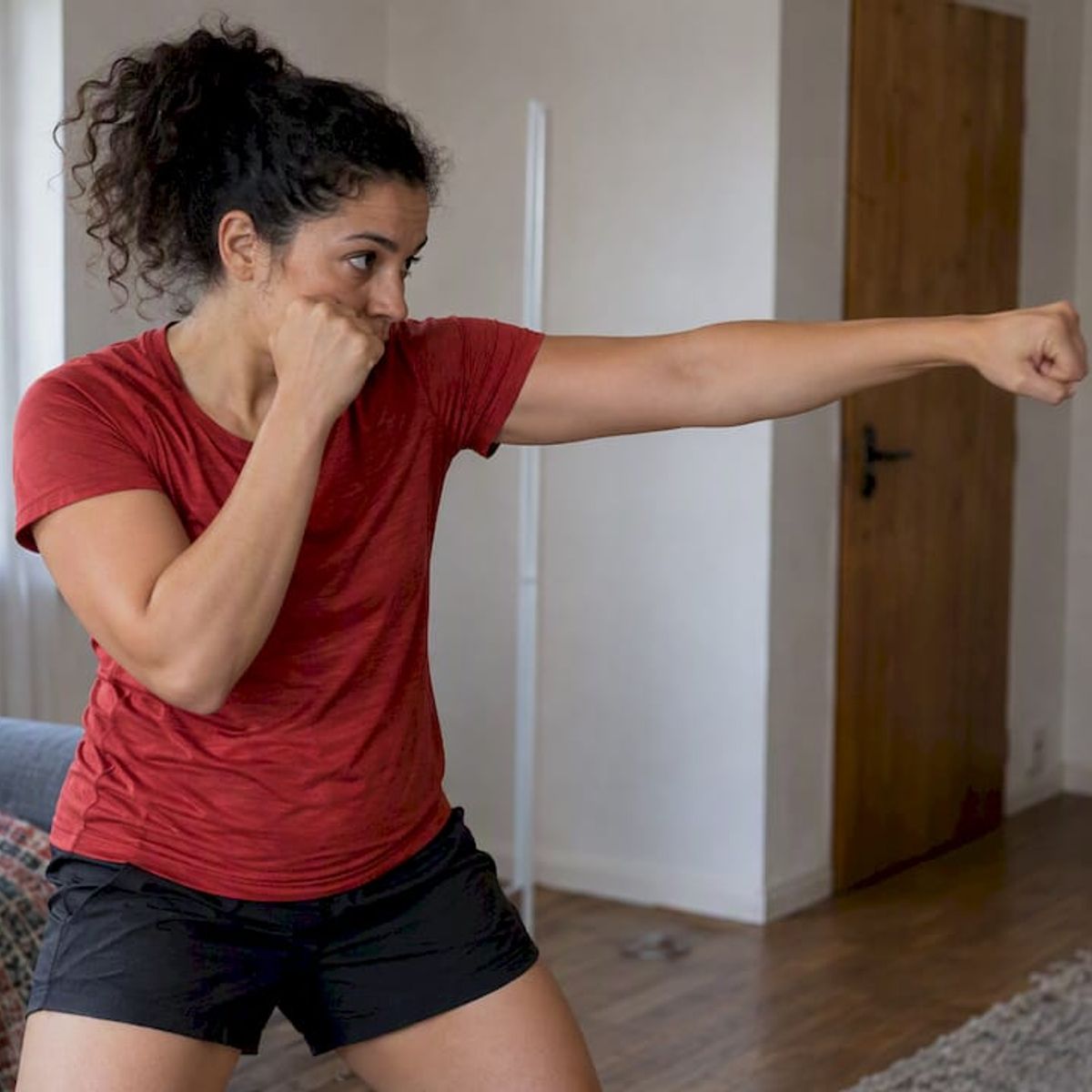
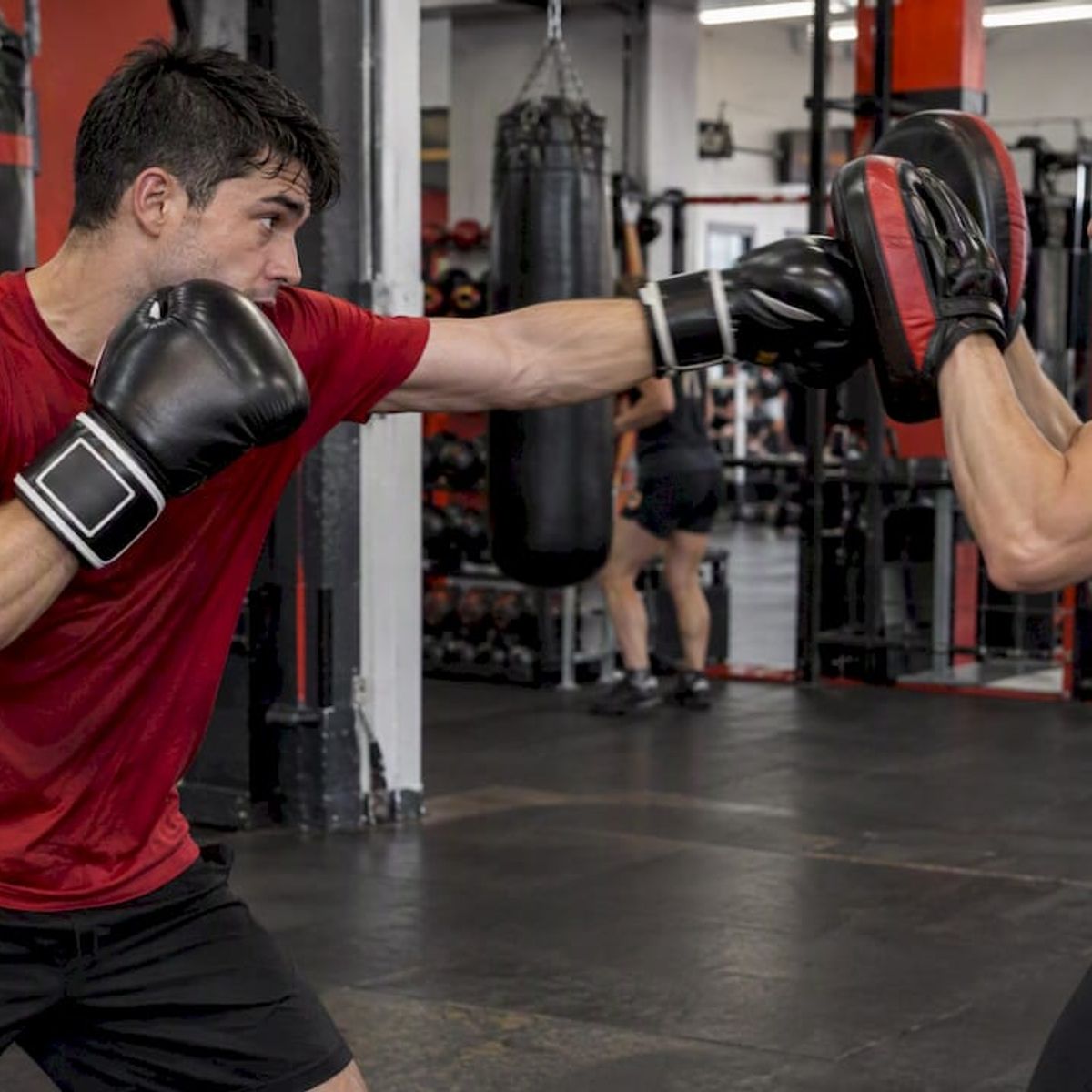
Beginner boxing teaches stance, jab, cross, and footwork against pads or a bag, with a coach correcting form in real time. It’s a better beginner entry point than most people expect: intensity feels high because you’re moving constantly, but the actual technical load is low and coach-paced. Small-group formats like beginner boxing training at Level Up Gym run 45 to 60 minutes and combine skill coaching with conditioning, which covers two goals in one session.
None of these formats requires prior experience, and none of them should leave you guessing what to do next. If a class description doesn’t tell you who it’s for, that’s information too.
Why Group Classes Help Beginners Stick With It
Beginners who train in a group tend to stay consistent longer than those who go it alone, and the research behind that isn’t vague. A 2025 community gym survey found that large-group exercisers (12 or more people) reported satisfaction of 8.8 out of 10, and 64% of them attended three or more times per week. That’s a meaningfully higher attendance rate than most people manage solo.
“Group exercise membership is associated with multiple forms of social support, and exercise identity mediates the relationship between that support and weekly physical activity,” according to research on group exercise and social support.
That finding names five specific kinds of support: emotional, validation, informational, instrumental, and companionship. Translate that into plain terms and it looks like this: someone notices when you show up, someone tells you your form looks better this week, someone answers your question about which weight to grab, and someone spots you when a move gets hard. A solo workout gives you none of that by default.
Meta-analytic research on group exercise backs this up further: groups that build in cohesion, meaning the instructor actively fosters connection between members, show larger adherence and social-interaction benefits than either standard classes or home programs. This matters for how you pick a class. Look past the workout format and pay attention to whether the instructor learns names, checks in with new faces, and creates any sense of shared effort. A class that does that is doing more for your long-term consistency than a slightly harder workout would.
The practical takeaway: if you’re choosing between two beginner classes that look similar on paper, pick the one where people actually talk to each other before and after. That’s not a minor perk. It’s the mechanism that keeps beginners coming back past week three, which is historically when most people quit.
How to Choose the Right Beginner Class Fast
You don’t need to audit every gym in town. A five-minute read of a class description, plus one conversation with the front desk, tells you almost everything you need to know.
- Check the label carefully. “Beginner,” “foundations,” and “gentle” mean the class was designed for you. “All-levels” means beginners are tolerated, not centered.
- Ask about class size. Ten to fifteen people with one instructor allows real coaching. Thirty-plus people usually means you’re following along and hoping for the best.
- Ask how the instructor coaches, not just what the workout is. A community fitness guide from the YMCA recommends confirming upfront whether instructors demonstrate modifications, since that’s the detail that separates a class built for newcomers from one that just admits them.
- Look for built-in pacing. Good beginner classes have breaks, water stops, and a visible structure, not 45 straight minutes of high intensity.
- Confirm the length and schedule fit your week. A 30-minute class you can attend twice weekly beats a 60-minute class you’ll skip half the time.
- Ask what equipment you need. Most gyms provide mats and light weights. Confirm before you show up empty-handed or over-packed.
- Look for a trial option. A single-class pass or a discounted first week lets you test the format without committing.
Watch for three red flags. An “all-levels” class with zero mentioned modifications is often run by and for people who’ve been training for years, and research on mixed-level group coaching points out that these classes frequently default to the most experienced participants in the room. Nonstop high-intensity cueing with no rest breaks is a sign the instructor isn’t pacing for newcomers. And any class that skips a warm-up or cool-down is cutting corners on injury prevention, full stop.
Pro Tip: Book the cheapest, shortest version of a class before committing to a membership. A single $15 to $25 drop-in class tells you more about instructor style and group vibe in 45 minutes than any website description ever will.
What to Expect in Your First Class
Almost every beginner class follows the same skeleton: five to ten minutes of warm-up, 20 to 40 minutes of main work, and five to ten minutes of cool-down. Total class length usually falls between 30 and 60 minutes, which is short enough that pacing yourself for the whole session is realistic even on your first try.
On gear: most gyms supply mats, light dumbbells, and resistance bands, so you don’t need to buy anything before your first visit. Bring a water bottle, a small towel, and shoes with real support (running shoes work; slip-ons don’t). Check with the front desk if you’re unsure what’s provided.
A few things that make the first session smoother:
- Tell the instructor you’re new before class starts, not during it. A ten-second heads-up lets them watch your form and offer modifications without singling you out mid-workout.
- Take every modification offered, even if it looks easy. Building the movement pattern correctly at low intensity beats muscling through it wrong.
- Expect to feel awkward for about two classes. That’s normal, not a sign you’re in the wrong place.
- Hydrate before class, not just during it, and stretch lightly after rather than immediately leaving.
- If something hurts (not “burns,” but sharp or joint-level pain), stop and ask for an alternative on the spot.
None of this requires athletic background. It requires showing up and being honest with the instructor about where you’re starting from.
How Level Up Gym Supports First-Time Gym-Goers
Level Up Gym built its beginner track around the exact gaps that make new gym-goers quit early: unclear coaching, oversized classes, and contracts that punish you for trying something out. The 6-week beginner onramp walks new members through foundational movement, boxing basics, and conditioning in a small-group setting before they’re expected to keep pace with regular classes.
Every checklist item covered above maps directly onto how these programs run. Class size stays small enough for real coaching, not crowd control. Small-group personal training sessions build in modifications from day one instead of bolting them on when someone struggles. And because membership is no-contract, you can test a class or two without signing away three months on a format you haven’t tried yet.
Malcolm, the author of this guide, holds no personal training certification and isn’t claiming firsthand coaching experience here. The perspective in this article is editorial, built from the research and practical guidance covered above, not from personal client work.
Getting Past the Anxiety of Your First Class
The fear of looking out of place is the single biggest reason beginners skip that first class, and it’s almost never justified once you’re actually in the room. Every regular in a beginner class was new once, and most instructors specifically watch the door for first-timers to welcome.
A few concrete ways to lower that anxiety before it stops you from booking anything. Arrive 10 minutes early so you’re not walking in during warm-up and scanning for a spot under pressure. Pick a spot near the back or side for your first class if being watched makes you tense; nobody will think less of it. Message the gym ahead of time (most have a contact form or front desk phone) and simply say you’re new and nervous. Staff deal with this constantly and will often pair you with a specific class or instructor suited to first-timers.
The bigger mental shift is treating the first class as a scouting trip, not a test. You’re not there to keep up. You’re there to see if the format, the pacing, and the people feel right. If it doesn’t click, try a different class type next week. That’s not failure. That’s exactly how you’re supposed to find the right fit.
Tracking Progress Without Overcomplicating It
Beginners often set goals that are too vague (“get fit”) or too aggressive (“lose 20 pounds in a month”), and both versions fall apart within a few weeks. A better approach: track attendance before you track performance.
For your first month, the only number worth watching is how many classes you actually attended versus how many you planned. Two classes a week, consistently, beats four classes a week that you can only sustain for ten days. Once attendance feels automatic, add one simple performance marker specific to your class type: how many push-up modifications you completed, how long you held a plank, or how many rounds you finished on the bag in boxing.
Realistic timelines matter here. Most beginners notice a real difference in stamina and confidence somewhere between four and eight weeks of consistent attendance, not the first week. Write your goals down somewhere you’ll actually see them, and revisit them monthly rather than daily. If you’re not sure how to structure that check-in, a resource like Prism Counseling & Coaching’s fitness coaching guidance covers how behavior-focused coaching supports this kind of goal tracking beyond just the workout itself.
Talking to Your Instructor About Your Fitness Level
Instructors can’t read your limitations off your face. If you have a bad knee, a recent injury, or you simply haven’t exercised in years, that information needs to come from you, out loud, before the class starts.
Keep it brief and specific: “I have a lower back issue, so I might need to skip anything with spinal twisting” tells an instructor exactly what to watch for. Vague statements like “I’m not very fit” give them nothing to act on. Most instructors will check in with you once or twice during the session after that conversation, which is a sign they’re actually tracking your input, not just being polite.
If a class doesn’t leave room for that conversation, whether the instructor arrives late, starts immediately, or is clearly focused on running the room rather than the individuals in it, that’s useful information about whether the class fits your needs long-term.
The Case for Starting Simple, Backed by the Evidence
The research here doesn’t leave much room for debate: group settings build adherence through social mechanisms, not willpower, and the 64% attendance rate among large-group exercisers proves it’s not a fringe effect. Conventional advice tells beginners to “find what works for you,” which is true but useless without a starting point.
What the evidence actually supports is narrower and more useful: pick a class labeled specifically for beginners, keep the group small enough for real coaching, and give it two to three sessions before judging it. Most people overthink the format choice and underthink the coaching quality, when it’s the coaching (not the workout style) that determines whether you’ll still be showing up in month two.
If there’s one place conventional wisdom falls short, it’s the assumption that harder equals better for a first-timer. It doesn’t. Consistency at low-to-moderate intensity beats one brutal session followed by two weeks of soreness and avoidance every time.
— Malcolm
Your Next Step With Level Up Gym
If you’ve read this far and still aren’t sure which class to try, skip the research and just book something small. Level Up Gym is built for exactly that decision: no long-term contract, no assumption that you already know what you’re doing, and coaches who treat your first session as the whole point, not an inconvenience.
New members typically start with a single trial class or the 6-week beginner onramp, which pairs small-group coaching with a set progression so you’re not guessing what to do week to week. Pricing runs in a few simple shapes: a single-class drop-in, a short class pass for testing multiple formats, and a newcomer rate on the onramp itself. If boxing is what pulled you in, the free boxing class in Stratford, CT is the lowest-friction way to see if the format clicks before you commit to anything. Book one session, show up, and decide from there whether Level Up Gym’s group training classes fit your week.
Sources
- Group exercise membership, social support and exercise identity
- The Impact of Individual Exercise Versus Large and Small Group Exercise in Community-Dwelling Adults
- Meta-analytic evidence on group exercise contexts and outcomes
FAQ
What gym classes are good for beginners?
Beginner strength, low-impact cardio, gentle yoga, Pilates, and beginner boxing are the most beginner-friendly formats, since each teaches movement from scratch and builds in modifications.
What is the best gym class for beginners?
There’s no single best class; the right pick depends on your goals, but beginner-labeled strength or boxing classes with small group sizes tend to offer the most direct coaching for first-timers.
What is the most beginner-friendly gym?
Look for a gym that runs a structured beginner program, such as a multi-week onramp, offers small-group coaching, and doesn’t require a long-term contract; Level Up Gym’s beginner onramp is built around those exact features.
What is the 3-3-3 rule in gym?
Definitions of the 3-3-3 rule vary across fitness communities, and it isn’t a standardized training principle, so treat any specific version you find online as one trainer’s personal framework rather than an established rule.
How long do beginner gym classes usually run?
Most beginner classes run 30 to 60 minutes, structured around a warm-up, main workout segment, and cool-down.