
Boxing and Strength Training: The Science-Backed Method
Yes, you can lift weights and box in the same week, and the research says you should. The mix of maximal strength, plyometrics, and boxing-specific conditioning increases punch force, extends how long you stay sharp in later rounds, and lowers injury risk when the sequencing is right.
The evidence isn’t vague on this. A four-week repeated sprint training (RST) protocol on the heavy bag raised peak punch velocity by roughly 7.3% and total punches thrown in 30 seconds by nearly 17%. A blood flow restriction training trial in elite amateur boxers produced double-digit strength gains using loads as light as 20 to 30% of a 1-rep max, alongside a jump in peak punch force across every punch type tested. And USA Boxing’s own International Open Strength & Conditioning Plan already builds structured lifting into a national-team schedule, so this isn’t some fringe idea gym coaches invented to sell more sessions.
Here’s what to do with that information starting this week:
- Lift 2 to 3 times weekly, never on back-to-back days with hard sparring.
- Prioritize squat, hinge, and pulling patterns over isolation work.
- Add one short plyometric block (10 to 15 minutes) after a strength session, not before boxing technical work.
- Track one number weekly, whether that’s bar speed, a jump height, or bag power, so progress isn’t a guess.
- Leave 6 to 8 hours between a heavy lower-body session and pad work if you can.
Key Takeaways
Combining boxing and strength training works when maximal strength, power development, and boxing-specific conditioning are sequenced deliberately across a periodized plan.
PointDetails
Lift 2 to 3 times weekly
Prioritize squat, hinge, push, pull, single-leg, and rotational core patterns over isolation work.
Sequence sessions by priority
Do technical boxing first when skill matters most; lift first when power output is the goal.
Use RST and INT for fast gains
Both protocols showed measurable punch velocity and power improvements in 3 to 4 weeks.
Taper before competition
Cut training volume by 40 to 60% in the final two weeks while keeping some intensity present.
Get coached programming at Level Up Gym
The hybrid training program at Level Up Gym blends boxing classes with structured strength phases matched to your training age.
Table of Contents
- Why Strength Training Improves Boxing Performance
- Core Movement Pillars Every Boxer Should Train
- How Do You Schedule Lifting Around Boxing Sessions?
- Sport-Specific Methods That Transfer to Punching
- What Does a Beginner vs Advanced Weekly Plan Look Like?
- How Do You Test and Track Boxing Strength Progress?
- Warm-Ups, Recovery, and Injury Prevention Basics
- An Evidence-Based 8-Week Strength Plan for Boxers
- What Coaches Get Wrong About Combining Strength and Boxing
- Get a Coached Boxing and Strength Program at Level Up Gym
- Sources
- FAQ
Why Strength Training Improves Boxing Performance
Punch power comes from the ground up, not the shoulder out. The kinetic chain runs from foot drive through hip rotation, trunk stiffness, and finally the arm, and a weak link anywhere in that sequence caps how hard you can hit no matter how much you drill technique. That’s the physiological argument for lifting: you’re not building show muscle, you’re reinforcing the chassis that transmits force into your fist.
Rate of force development (RFD), how quickly you can produce force rather than how much you can eventually produce, matters more for punching than raw 1RM strength. A punch lands in under 200 milliseconds. There’s no time to grind out force the way you might in a slow squat. This is why boxing-specific strength work leans on speed of contraction and neuromuscular timing over pure hypertrophy training.
The data backs the transfer. That same RST study on elite male boxers didn’t just improve conditioning; it lifted bench-press mean propulsive power by about 20.4%, a pure strength-quality marker, from a protocol built entirely around bag work. A broader scoping review of strength training in boxers found that both short-term and long-term interventions generally improved punching performance and physical fitness, though it flagged that much of the underlying research is still methodologically thin. That caveat matters. The direction of the evidence is consistent; the certainty of any single number isn’t bulletproof yet.
- RFD training beats slow-grind strength training for punch-specific transfer.
- Lower-body and trunk force production underwrites arm speed, not the reverse.
- Neuromuscular adaptations (nervous system efficiency) often show up before visible muscle changes.
- Mixed evidence quality means you should treat percentage gains as directional, not guaranteed.
Core Movement Pillars Every Boxer Should Train
You don’t need twenty exercises. You need six categories covered consistently, with the right load and rep scheme for what phase you’re in.
Squat and hip extension builds the leg drive behind every power punch. Back squats, trap-bar deadlifts, and Bulgarian split squats all qualify. This is the pillar most boxers underuse, largely out of fear of getting slow, which the research doesn’t actually support when volume is managed.
Hinge patterns (conventional deadlift, kettlebell swing, Romanian deadlift) train the posterior chain that stabilizes your stance during rotation. Skip this and your hips leak power sideways instead of transferring it forward.
Upper-body push (bench press, medicine ball chest throws, push press) trains the pressing strength behind straight punches. Medicine ball throws matter more than people assume. They train the ballistic release that a slow bench press simply can’t replicate.
Upper-body pull (pull-ups, bent-over rows, face pulls) balances the shoulder joint against thousands of repetitive punching motions. This is your injury-prevention pillar as much as your performance pillar.
Single-leg strength (step-ups, lunges, single-leg RDLs) mirrors the split stance you fight in. Bilateral squats alone won’t fix a wobbly lead leg on a slip.
Rotational and anti-rotation core work (cable chops, Pallof presses, landmine rotations) trains the trunk to transmit hip torque into the shoulder without leaking energy through a loose midsection.
If you’re training at home or with limited equipment, dumbbells, resistance bands, and bodyweight step-ups cover four of the six pillars adequately.
Pro Tip: Most lifters lose punch transfer not from picking the wrong exercise but from moving the bar too slowly on power-focused sets. If the goal is speed, load light enough that the bar actually accelerates through the whole range of motion.
How Do You Schedule Lifting Around Boxing Sessions?
Beginners do well with 2 strength sessions and 3 to 4 boxing sessions weekly. Intermediate and advanced athletes can push to 3 strength sessions alongside 4 to 6 boxing sessions, as long as recovery windows are respected and one strength day stays lighter.
Sequencing matters as much as frequency. If you’re lifting and boxing on the same day, do technical or skill-heavy boxing work first when precision matters most, then lift, since fatigue degrades technique faster than it degrades raw strength output. If the priority is power output in the lift itself, flip it: lift first while fresh, then do lower-intensity boxing conditioning afterward. Two-a-day athletes generally do best with strength in the morning and boxing in the evening, leaving at least 6 hours between sessions.
Session OrderBest ForRecovery Gap Needed
Boxing technical AM, strength PM
Skill-focused fight camp phases
4–6 hours
Strength AM, boxing PM
General prep, power-focused blocks
6–8 hours
Strength and boxing same session
Time-limited schedules
Strength first if power-focused
Separate days entirely
High-volume competition prep
24+ hours between hard sessions
Programming parameters shift by goal.
Pro Tip: If your legs feel dead during sparring for more than 48 hours after a lower-body session, you’re carrying too much volume too close to competition. Cut sets before you cut intensity.
Sport-Specific Methods That Transfer to Punching
Four evidence-backed methods stand out for direct carryover to punching performance, each suited to a different phase of your training year:
- Repeated sprint training (RST) on the bag. A four-week protocol of short, maximal bag intervals with brief recovery improved peak punch velocity, punch volume, and even bench-press power in elite boxers. A usable version: 6 to 8 rounds of 10-second all-out bag combinations with 20-second rest, twice weekly.
- Integrative Neuromuscular Training (INT). Combining resistance work, plyometrics, core stability, and speed drills in a single short block produced measurable gains in bench press, squat, vertical jump, and cumulative punching power in just three weeks. This works well as a pre-camp sharpening block when you don’t have time for a full strength cycle.
- Variable and complex resistance training (VRT/CRT). Pairing a heavy lift with a lighter, explosive version of a similar movement (think heavy squat followed by jump squat) produced larger strength and punch-performance gains than constant-resistance training alone.
- Blood flow restriction training (BFRT). Using a pneumatic cuff at 40 to 50% occlusion with light loads (20 to 30% of 1RM), an eight-week trial in elite amateurs produced larger upper-limb strength gains and notable increases in peak punch force than heavier-load training alone.
Use RST and INT during general preparation when volume tolerance is high. Save VRT/CRT for a dedicated power block once a strength base exists. BFRT earns its keep during high-boxing-volume weeks or when a joint is cranky and heavy loading isn’t smart, though it should be applied under qualified supervision given the equipment and pressure settings involved.
- RST: best for in-season conditioning without losing punch speed.
- INT: best for short pre-camp blocks (2 to 3 weeks).
- VRT/CRT: best for dedicated off-season power development.
- BFRT: best as a low-load option during joint-sensitive or high-volume phases.
For readers who want a deeper technical breakdown of how reactive and neuromuscular training methods overlap with this list, this guide on reactive neuromuscular training is worth a read.
What Does a Beginner vs Advanced Weekly Plan Look Like?
A beginner with under a year of structured training does best with 2 strength days and 3 boxing days weekly. Intermediate athletes with one to three years of training age can handle 3 and 4, respectively. Advanced fighters approaching competition often run 3 strength sessions alongside 5 to 6 boxing sessions, with one strength day converted to a maintenance dose during fight week.
LevelStrength DaysBoxing DaysSample Session Focus
Beginner
2
3
Mon: full-body strength (squat, row, push). Wed: technical boxing. Fri: strength + light plyo. Sat: bag conditioning.
Intermediate
3
4
Mon: max strength lower body. Tue: boxing technical + pads. Thu: upper push/pull + core. Fri: sparring or bag RST. Sat: power/plyo session.
Advanced
3
5–6
Mon: max strength (squat/deadlift focus). Tue AM strength/PM technical. Wed: sparring. Thu: power/complex training. Fri: bag RST intervals. Sat: light technical + mobility.
Intermediate lifters can add a fourth strength day or extend rounds in RST blocks after 4 weeks if recovery markers (sleep, resting heart rate, session quality) stay stable. Advanced athletes typically scale down, not up, as competition nears, trading strength volume for skill sharpness and recovery.
How Do You Test and Track Boxing Strength Progress?
The most practical tests for boxers don’t require a sports science lab. A 3 to 5 rep max on bench press or trap-bar deadlift tracks maximal strength without the injury risk of a true 1RM attempt. A countermovement jump (CMJ), measured with a phone app or even just a wall mark, tracks lower-body power and neuromuscular readiness in under two minutes. A simple upper-body fatigue test, such as max push-ups in 30 seconds or a short assault bike sprint, gives a rough proxy for anaerobic capacity when a Wingate test isn’t available.
- Test 1RM or 3–5RM strength every 4 to 6 weeks, not weekly.
- Run a CMJ check every 1 to 2 weeks as a quick readiness marker.
- Track total punches thrown in a fixed 30-second bag interval monthly as a punch-output proxy.
- Log session RPE daily (sessional RPE times duration) to catch creeping fatigue before it becomes an injury.
Realistic timelines matter here. The RST research showed meaningful punch velocity and volume gains in just four weeks, and the INT research showed comparable strength and power gains in three weeks. Expect visible short-term gains in the 4-week range for conditioning and speed markers, with more durable strength adaptations building over 8 to 12 weeks. The scoping review of boxing strength research is worth remembering here too: individual studies show strong effects, but the overall body of evidence carries real limitations, so treat any single percentage as a promising signal rather than a guarantee.
Warm-Ups, Recovery, and Injury Prevention Basics
Three things protect a boxer who lifts: a progressive warm-up, targeted mobility work, and planned recovery that respects how much load the shoulders and lower back are absorbing across both sports.
A five-minute warm-up sequence should move through activation (band pull-aparts, glute bridges), dynamic mobility (leg swings, thoracic rotations), and potentiation (a few submaximal jumps or light explosive reps) before any heavy lifting or hard bag work begins. Skipping straight to heavy squats or hard sparring off a cold body is one of the more preventable causes of soft-tissue injury in combined training.
Recovery outside the gym carries as much weight as anything programmed inside it. Sleep, adequate protein intake, and basic soft-tissue work (foam rolling, targeted stretching) all support the joint tissue that’s taking a beating from both punching and lifting.
- Persistent shoulder pain during pressing or jabbing that doesn’t resolve within 48 hours.
- Low-back tightness that worsens across the week instead of easing after a rest day.
- Declining bar speed on the same load week over week, a common early overtraining signal.
Pro Tip: Brace your core before every heavy lift the same way you’d brace before taking a body shot. That single cue fixes more lower-back issues in lifting boxers than any mobility drill.
An Evidence-Based 8-Week Strength Plan for Boxers
This template fits an intermediate boxer with a base level of lifting experience heading into an 8-week prep window, structured around a periodized model similar to what’s recommended in professional boxing strength and conditioning research: weeks 1 to 3 build strength accumulation, weeks 4 to 6 shift toward power and punch transfer, and weeks 7 to 8 taper into competition readiness.
WeeksEmphasisStrength SessionsSample Session
1–3
Strength accumulation
3/week
Squat 4x5, bench 4x5, row 4x8, core circuit
4–6
Power and transfer
3/week
Jump squat 4x5, medicine ball throw 4x6, VRT bench complex, RST bag intervals
7–8
Taper and peak
2/week, reduced volume
Light explosive lifts at 50% load, CMJ testing, technical sharpening
The taper phase matters more than most boxers give it credit for. Reducing training volume by roughly 40 to 60% in the final two weeks before competition, while keeping intensity present in small doses, preserves strength and power adaptations without the residual fatigue that dulls hand speed on fight night.
Athletes without full gym access can substitute goblet squats, resistance-band rows, and plyometric jumps for barbell work in weeks 1 to 3, and lean harder on medicine ball throws and bodyweight plyometrics during the power phase. Run a CMJ and a 3 to 5RM check at week 4 to confirm the plan is working; if power output has stalled, trim boxing volume slightly rather than adding more lifting on top of an already fatigued system.
What Coaches Get Wrong About Combining Strength and Boxing
The biggest mistake in gyms isn’t too much lifting. It’s the opposite: chasing hypertrophy-style bodybuilding splits while avoiding true maximal-strength work out of fear it will make fighters slow. Survey research on boxing coaches backs this up directly. Most practitioners agree that maximal strength improves punching power, yet many still program it infrequently, largely because volunteer trainers lack formal strength and conditioning credentials and default to what feels safe.
That fear is misplaced when strength work is programmed for neural adaptation rather than mass. It sharpens the nervous system’s ability to recruit motor units fast, which is exactly the RFD quality that shows up in a heavier straight right.
The second common error is measurement, or the lack of it. Coaches often program by feel instead of tracking anything concrete, so a fighter can plateau for months without anyone noticing until a fight performance exposes it. A five-minute CMJ check every two weeks solves this cheaply.
The third error shows up around fight camp: coaches either drop strength training entirely in the final month, losing hard-earned adaptations, or keep full volume right up to fight week and show up drained. The fix sits in the middle. Trim volume by roughly half in the final two weeks, keep intensity present in small, sharp doses, and let boxing skill work take priority as the fight approaches.
Get a Coached Boxing and Strength Program at Level Up Gym
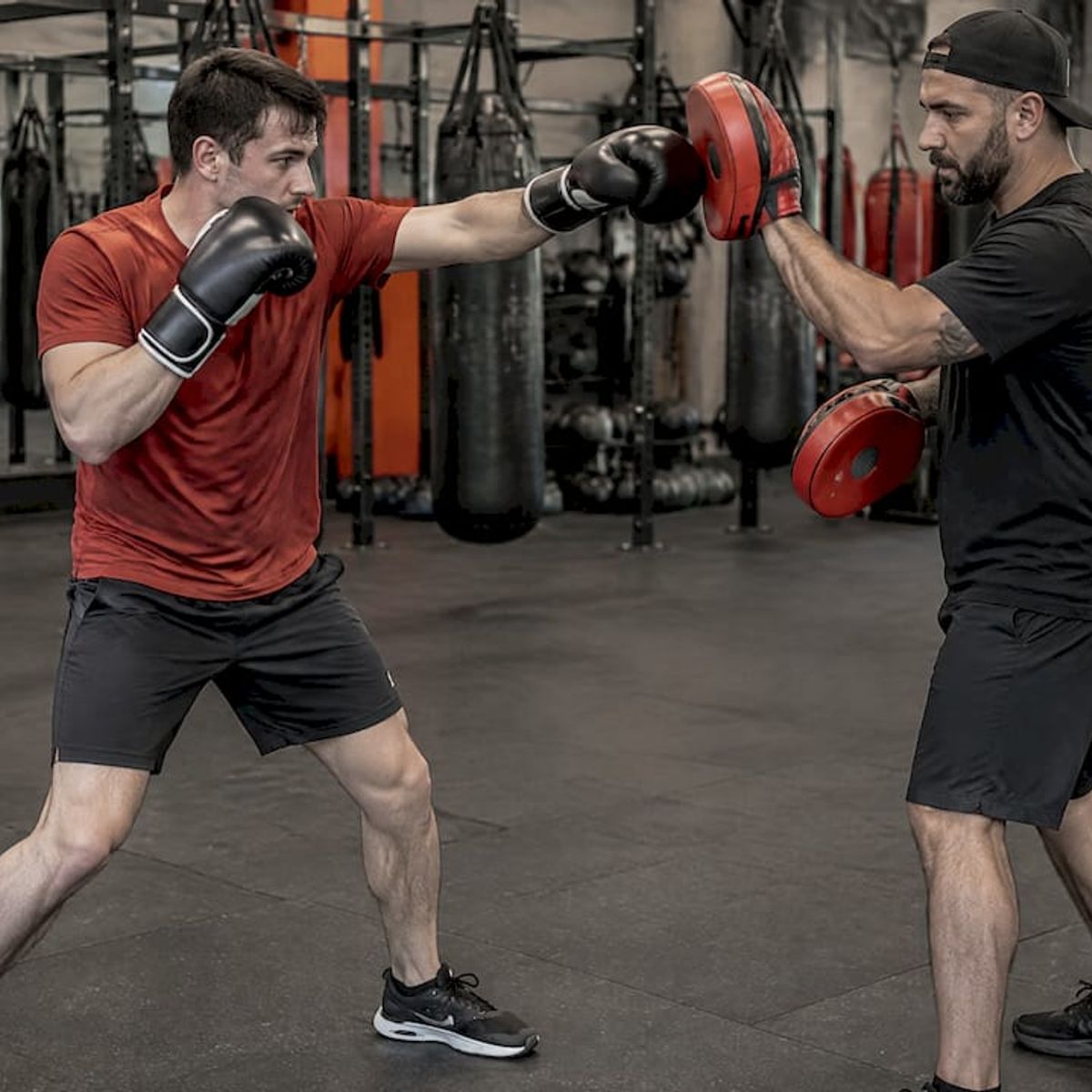
Building your own periodized plan from research papers takes time most boxers don’t have between work, sparring, and everything else life demands. Level Up Gym runs a coach-led hybrid training program that blends boxing skill work with structured strength phases like the ones covered here, so you’re not guessing at load, sequencing, or when to taper.
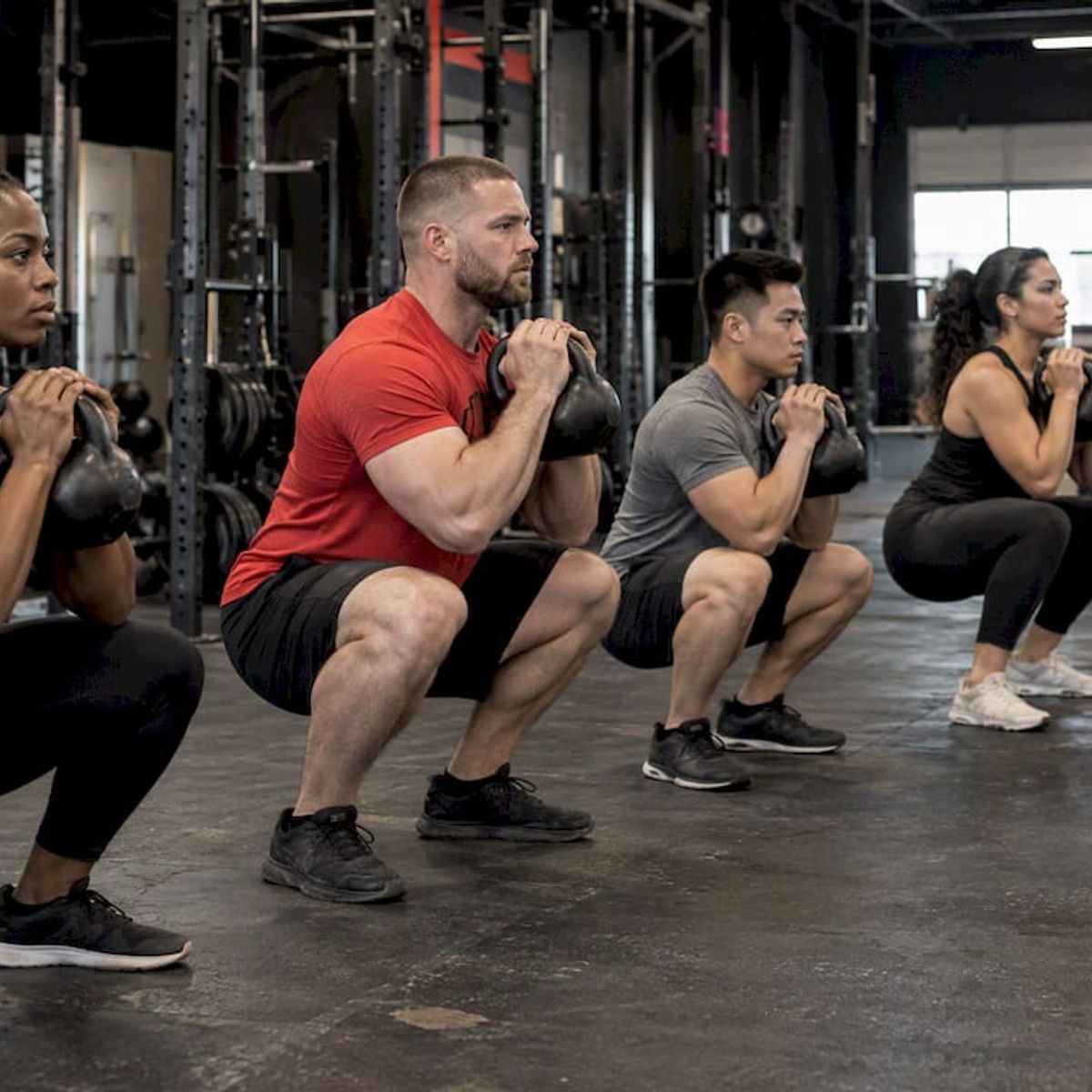
The hybrid training program pairs boxing classes with strength-focused sessions built around the same movement pillars, squat, hinge, push, pull, single-leg, and rotational core work, covered above. If you’d rather build strength in a smaller-group setting with more individual coaching attention, the small-group personal training option adjusts load and progression to your specific training age. New to lifting altogether? The 6-week beginner onramp removes the guesswork on exercise selection and lets you start without a long-term commitment. Athletes in Fairfield County can find in-person sessions at Stratford or Bridgeport. Book a session and get a program built around where you actually are, not a generic template pulled off the internet.
Sources
- The effects of 4 weeks of sport-specific repeated sprint training on upper-body strength quality, anaerobic capacity and punching ability of elite male boxers
- Blood flow restriction training enhances punching force and upper body strength in elite boxers: a randomized trial
- Acute and Chronic Effects of Muscle Strength Training on Physical Fitness in Boxers: A Scoping Review
- Effects of variable and constant resistance within complex training on muscle strength and punch performance
- Effects of a 3-week Integrative Neuromuscular Training on the physical fitness and punching ability of male boxers
FAQ
Can I Lift Weights and Do Boxing in the Same Program?
Yes. Research on elite boxers shows strength training and boxing-specific conditioning improve together when sessions are sequenced properly, with technical work prioritized when skill quality matters most and lifting timed around adequate recovery windows.
What Is the 3-3-3 Rule for Workouts?
The 3-3-3 rule doesn’t have one fixed definition; it’s used loosely for a minimalist 3-days-a-week structure, a circuit format of 3 circuits times 3 moves times 3 sets, or simply a weekly split with 3 strength days. Pick the version that fits your schedule and recovery capacity rather than treating it as a rigid standard.
Does Boxing Training Already Include Strength Work?
Traditional boxing gyms often emphasize bag work, pad drills, and bodyweight conditioning, but that alone rarely builds the maximal strength and rate of force development that dedicated resistance training provides. Programs like the hybrid model at Level Up Gym build lifting directly into the weekly schedule alongside boxing classes.
Did Mike Tyson Train With Weights?
Public accounts of Mike Tyson’s training under Cus D’Amato describe an emphasis on calisthenics, conditioning, and boxing-specific drills more than heavy barbell lifting, reflecting the training norms of that era rather than current sport-science recommendations. Modern boxing programming, backed by the research above, leans more heavily on structured strength work than the old-school bodyweight-only approach.
How Long Until I See Results From Combining Strength and Boxing?
Short-term gains in punch speed and volume have shown up in as little as 4 weeks in controlled studies, while more durable strength and power adaptations typically build over 8 to 12 weeks of consistent training.
Recommended
- Strength vs Endurance Training: Key Differences Explained — Level Up Gym | Level Up Gym
- The Mental Health and Fitness Link: Boxing and Hybrid Training — Level Up Gym | Level Up Gym
- Boxing Workout for Fat Loss: Your 2026 Guide — Level Up Gym | Level Up Gym
- Shadow Boxing Workout: A Complete Beginner’s Guide — Level Up Gym | Level Up Gym