
Shadow Boxing Workout: A Complete Beginner’s Guide
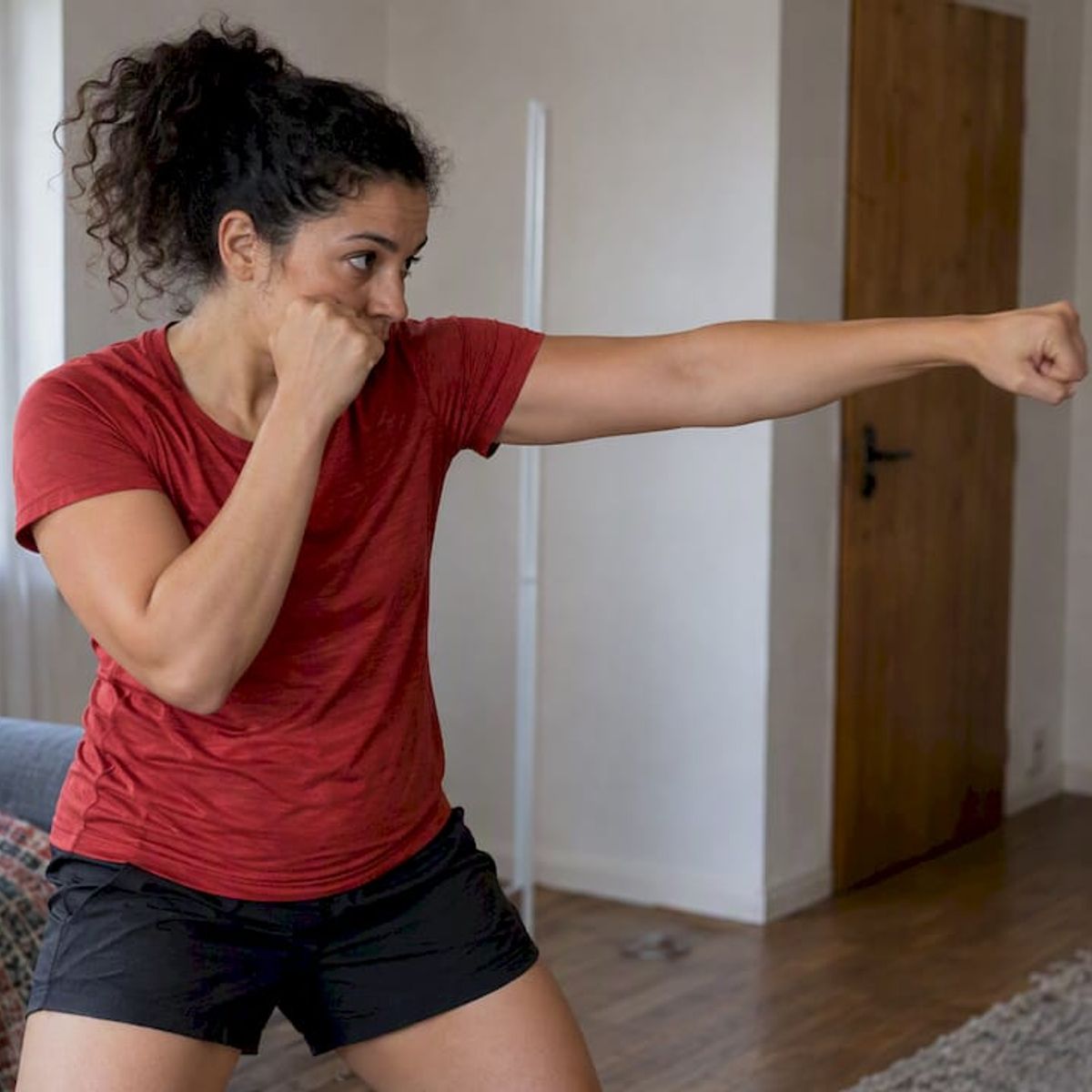
A shadow boxing workout is a solo training method where you throw punches, move your feet, and practice defensive maneuvers against an imaginary opponent. No equipment, no partner, no excuses. Boxing trainers and fitness experts recognize it as the most foundational drill in the sport, used by beginners and professionals alike. At Level Up Gym in Stratford and Bridgeport, CT, shadow boxing sits at the core of every boxing and hybrid training program. A typical session runs 15–30 minutes, divided into 3-minute rounds that mirror the format of real boxing competition.
What is a shadow boxing workout and why does it matter?
Shadow boxing is defined as a solo practice of boxing movements performed without a bag, partner, or equipment. The industry term is “shadowboxing,” and it functions as both a technical drill and a full-body conditioning workout. It engages the entire body while allowing you to practice combinations, footwork, and defense without distraction. That combination makes it uniquely effective. You can train your technique with a precision that hitting a bag simply does not allow.
Boxing coaches call shadowboxing the backbone of all boxing training because it lets you slow down, isolate errors, and correct them before bad habits become permanent. A heavy bag gives you resistance feedback. A mirror gives you truth. Shadow boxing gives you both the time and the freedom to fix what is wrong. That is something no other drill offers at zero cost.
What are the primary benefits of shadow boxing for fitness?
Shadow boxing delivers a wide range of physical and mental benefits that go well beyond basic cardio.
- Cardiovascular conditioning. Shadow boxing functions as high-intensity interval training, alternating bursts of fast combinations with active recovery footwork. Even 10–15 minute sessions develop the fast-twitch muscle fibers responsible for explosive speed.
- Full-body muscle engagement. Every punch activates your core, hips, shoulders, and legs simultaneously. You do not need a single piece of equipment to get a demanding total-body workout.
- Muscle memory and technique. Repeating the jab, cross, hook, and uppercut in a controlled setting builds automatic movement patterns. Those patterns transfer directly to bag work and sparring.
- Mental focus and fight IQ. Visualizing an opponent forces your brain to make tactical decisions in real time. Mental toughness and reaction speed both improve when you simulate real fight scenarios rather than throwing random punches.
- Stress relief. The rhythmic, physical nature of shadow boxing triggers endorphin release. Many practitioners report a measurable mood shift after even a short session.
Pro Tip: If you want to check whether shadow boxing qualifies as a real cardio workout, wear a heart rate monitor during your next session. Most people are surprised by how high their heart rate climbs during a focused 3-minute round.
Balancing shadow boxing with strength work is a skill in itself. Level Up Gym’s guide on strength and cardio balance explains exactly how to fit boxing drills into a weekly training plan without burning out.
Which shadow boxing techniques should beginners focus on first?
The six foundational punches form the core of every shadow boxing session. These are the jab, cross, left hook, right hook, left uppercut, and right uppercut. Learning them in order gives you a logical progression from the simplest strike to the most complex. The jab is your range-finder. The cross is your power shot. Hooks and uppercuts come later, once your stance and guard are solid.
Alongside the punches, beginners need to practice three basic defensive movements:
- Slipping. A small lateral head movement that takes you off the line of an incoming punch.
- Rolling. A circular shoulder and head motion that lets punches pass over or under you.
- Ducking. Bending at the knees to drop below a hook or overhand shot.
Stance and guard position underpin everything else. Stand with your feet shoulder-width apart, your lead foot pointing forward, and your hands up near your cheekbones. Your chin stays tucked. Your elbows protect your ribs. Getting this right before you throw a single punch is the single most important thing a beginner can do.
Rhythm matters as much as power. Punches should be snapped and controlled with proper hip rotation, not muscled through with brute force. Think of each punch as a whip, not a push.
Pro Tip: Practice in front of a mirror. A mirror reveals subtle errors in guard height, hip rotation, and stance that you simply cannot feel on your own. Five minutes of mirror work corrects more than an hour of unsupervised drilling.
If you are brand new to boxing movement, Level Up Gym’s breakdown of your first month of boxing walks through stance, guard, and basic punch mechanics in plain language.
How to structure an effective shadow boxing session
A well-structured session follows a clear progression from warm-up to technical work to cool-down. Here is a beginner-friendly format that can scale up to 30 minutes as your fitness improves.
- Warm-up (3 minutes). Light jogging in place, arm circles, and hip rotations. Get your joints moving before you throw anything.
- Stance and guard drill (2 minutes). Stand in your boxing stance and practice shifting your weight forward and back. Check your guard position in the mirror.
- Jab and cross round (3 minutes). Throw only jabs and crosses. Focus on snapping the punch back to guard immediately after each strike.
- Combination round (3 minutes). Add hooks and uppercuts. Work two and three-punch combinations: jab-cross, jab-cross-hook, jab-cross-left hook-right uppercut.
- Footwork round (3 minutes). Move around the room using boxing footwork. Step and pivot. Practice circling left and right while keeping your stance intact.
- Defense round (3 minutes). Visualize an opponent throwing punches at you. Practice slipping, rolling, and ducking in response.
- Cool-down (3 minutes). Slow your breathing, stretch your shoulders, hips, and hamstrings.
Session elementDurationFocus
Warm-up
3 minutes
Joint mobility and heart rate elevation
Stance and guard drill
2 minutes
Posture and guard position
Punch combination rounds
3 minutes each
Technique and muscle memory
Footwork round
3 minutes
Balance and ring movement
Defense round
3 minutes
Slipping, rolling, ducking
Cool-down
3 minutes
Recovery and flexibility
Rest 30–60 seconds between rounds. That interval mirrors real boxing pacing and keeps your heart rate in a productive training zone. Aim to practice 3–5 times per week for consistent skill development.
What common mistakes should you avoid in shadow boxing?
The most common beginner mistake is throwing full-power punches for the entire session. Constant power punching causes premature fatigue and breaks down your technique before the round is even halfway done. Speed and precision beat raw power every time in shadow boxing.
- Dropping your guard between punches. Your hands return to your cheekbones after every strike. No exceptions.
- Flat feet. Stay on the balls of your feet. Flat-footed boxers are slow and easy to hit.
- Random punching. Throwing punches with no purpose is just exercise. Visualize specific opponent types, like a pressure fighter who walks you down or a counterpuncher who waits for openings, and adjust your movement and timing in response.
- Using shadow boxing as a warm-up only. Shadow boxing is a primary technical drill, not a warm-up. Perform it after your warm-up but before heavy bag work or sparring, when your body is primed and your mind is sharp.
- Skipping the mirror. Recording yourself on video or using a mirror catches errors you cannot feel. Most beginners are shocked by what they see the first time.
Pro Tip: Pick a theme for each round. One round, you are fighting a southpaw. The next, you are working against a taller opponent who jabs from range. Themed rounds force you to think tactically and build a mental library of fight responses that pays off in real sparring.
Key takeaways
Shadow boxing is the most accessible and technically demanding drill in boxing, delivering measurable gains in skill, fitness, and mental sharpness with zero equipment required.
PointDetails
Core definition
Shadow boxing is a solo drill where you practice punches, footwork, and defense against an imaginary opponent.
Six foundational punches
Master the jab, cross, left hook, right hook, left uppercut, and right uppercut before adding combinations.
Session structure
Use 3-minute rounds with 30–60 second rest intervals, totaling 15–30 minutes per session.
Technique over power
Snap punches with speed and hip rotation rather than muscling through with full power every round.
Visualization is training
Imagining specific opponent types turns shadow boxing into a tactical drill that builds fight IQ.
Why shadow boxing is the most underrated workout you are not doing
Most fitness beginners treat shadow boxing as something boxers do before the real training starts. That is exactly backwards. Shadow boxing is where technique actually gets built. The bag tells you nothing about your guard. Sparring moves too fast for self-correction. Shadow boxing is the only drill where you can slow everything down, watch yourself in the mirror, and fix a flaw before it becomes a habit.
What surprises people most is the cognitive load. You are not just moving your body. You are running a mental simulation of a fight, making split-second decisions about distance, timing, and punch selection. That kind of mental engagement is rare in fitness training. It is one reason boxers tend to develop a calm, focused mindset that carries over into daily life.
The physical results follow the mental ones. After a few weeks of consistent shadow boxing, your posture improves. Your core gets stronger from the constant rotation. Your footwork becomes lighter and more natural. None of that requires a gym membership or a single piece of equipment. It requires only space, a mirror, and the willingness to look a little ridiculous at first.
My honest advice: treat shadow boxing as a skill practice, not a workout. The fitness benefits will come automatically. The skill benefits only come if you are intentional. Show up with a plan for each round, visualize a real opponent, and commit to fixing one specific flaw per session. That approach produces results faster than any amount of random punching ever will.
— Malcolm
Level Up Gym’s approach to shadow boxing and hybrid training
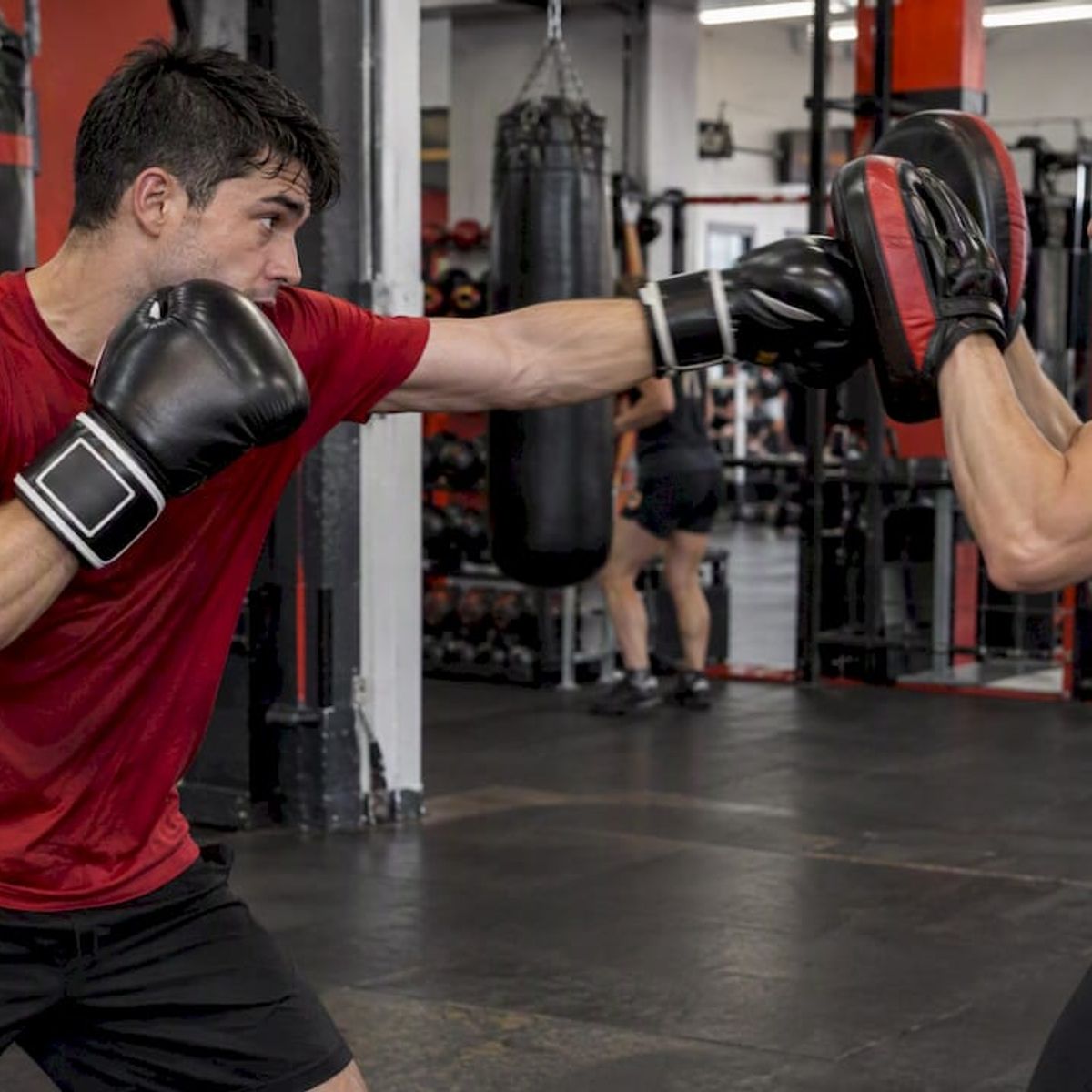
Level Up Gym builds shadow boxing into every level of its training programs, from first-time beginners to competitive athletes. The gym’s hybrid training programs in Stratford and Bridgeport, CT blend boxing technique, shadow boxing drills, and functional fitness into structured sessions that develop real skills alongside real fitness results.
For those who cannot train in person, Level Up Gym’s online personal training delivers remote coaching that includes shadow boxing technique tutorials and personalized workout plans. Whether you are stepping into a gym for the first time or refining skills you have been building for years, Level Up Gym’s coaches meet you where you are and move you forward.
FAQ
What is a shadow boxing workout exactly?
A shadow boxing workout is a solo boxing drill where you practice punches, footwork, and defensive movements against an imaginary opponent. No equipment is needed, and sessions typically run 15–30 minutes divided into 3-minute rounds.
Is shadow boxing effective for fitness?
Shadow boxing functions as high-intensity interval training that builds cardiovascular capacity, engages fast-twitch muscle fibers, and strengthens the core, arms, and legs. It is effective for both fitness conditioning and boxing skill development.
How often should beginners shadow box?
Beginners benefit most from shadow boxing 3–5 times per week, allowing enough frequency to build muscle memory while giving the body time to recover between sessions.
Do I need equipment to shadow box?
Shadow boxing requires no equipment at all. A mirror is the single most useful addition because it lets you monitor and correct your stance, guard, and punch mechanics in real time.
How is shadow boxing different from regular cardio?
Shadow boxing combines cardiovascular conditioning with technical skill development, making it more mentally demanding than running or cycling. The visualization component trains fight IQ and decision-making alongside physical fitness.