Build Upper Body Strength for Women: A Starter Plan
Train upper body 2–3 times per week with 6 foundational exercises, and you can expect measurable strength gains within 4–6 weeks. That’s not a motivational claim — research on untrained women found significant 1RM and muscle-thickness improvements in the upper body by weeks 4–6 of a structured program. Here’s a one-week plan to start right now:
Your Week 1 Starter Plan
- Monday: Push-ups (3×8–12), dumbbell shoulder press (3×10), triceps dips (2×10)
- Wednesday: Dumbbell rows (3×10 each side), band pull-aparts (3×15), biceps curls (3×12)
- Friday: Repeat Monday OR mix both sessions for a full upper-body circuit
- Track: Write down your reps and how hard each set felt (1–10 scale)
Strength gains won’t be visible in week one, but you’ll notice the weights feel easier by week three. That’s the signal that your nervous system is adapting — muscle size follows shortly after.
Key Takeaways
Consistent upper-body training 2–3 times per week, paired with adequate protein and progressive overload, produces measurable strength gains in women within 4–6 weeks.
PointDetails
Train 2–3× per week
Upper-body sessions spaced 48 hours apart produce the largest strength gains per meta-analysis.
Rep range matters
Sets of 13–20 reps are often effective for upper-body dynamic strength improvements in women.
Progress in order
Add reps first, then weight, then tempo, then sets — rushing load increases causes most beginner injuries.
Protein supports gains
Combining resistance training with adequate protein improves fat-free mass gains versus training alone.
Level Up Gym onramp
The 6-week beginner program at Stratford and Bridgeport, CT provides coached technique correction and structured progression.
Table of Contents
- How to build upper body strength as a woman: where to start
- Warm up your shoulders and upper body before every session
- The best exercises for upper body strength, grouped by muscle
- Three beginner workouts you can do this week
- How to keep progressing week after week
- Common mistakes that slow your progress (and how to fix them)
- A note from Coach Malcolm at Level Up Gym
- The honest truth about timelines and small wins
- Level Up Gym’s beginner programs in Stratford and Bridgeport, CT
- Sources
- FAQ
How to build upper body strength as a woman: where to start
Before you pick up a dumbbell, spend two minutes on a quick self-check. Can you do 5 push-ups with your chest touching the floor and your hips level? Can you hold a plank for 20 seconds? These aren’t gatekeeping tests — they tell you which equipment tier makes sense right now.
Equipment tiers (pick the one you have access to):
- No gear: Push-ups, triceps dips on a chair, bodyweight rows under a table
- Resistance bands: Banded rows, pull-aparts, overhead press, biceps curls
- Light dumbbells (5–15 lbs): All of the above, plus bench press, lateral raises, bent-over rows
- Gym access: Cables, machines, barbells — the full menu
Most beginners do best starting with bands or light dumbbells. They’re forgiving on joints, easy to progress, and you can do them anywhere. If you’re not sure which strength training program fits your level, a quick read on program types can save you weeks of guessing.
Schedule for busy lives:
- Train upper body 2–3 times per week, with at least one rest day between sessions.
- Sessions can be 30–45 minutes — you don’t need an hour to make progress.
- Pair upper-body days with a lower-body or cardio day if you want to train 4–5 days total.
Recording your baseline:
Before session one, note how many reps you can do of one push-up variation and one row variation. Write the weight, reps, and a quick RPE (Rate of Perceived Exertion) score from 1–10. A short baseline video of your push-up form is optional but genuinely useful — you’ll be surprised how much cleaner your technique looks six weeks later.
Warm up your shoulders and upper body before every session
A proper warm-up isn’t just about preventing injury — it directly improves how much force your muscles can produce in the first working sets. NHS guidance recommends 5–10 minutes of general aerobic activity followed by dynamic mobility drills before resistance training, and that structure holds for upper-body sessions specifically.
A 7-minute upper-body warm-up sequence:
- 2 minutes: Light cardio (jumping jacks, arm-circle marching, or a brisk walk)
- 1 minute: Shoulder circles, wrist circles, neck rolls
- 1 minute: Band pull-aparts or face pulls (15 reps, light band)
- 1 minute: Thoracic rotations (seated or on all fours, 8 each side)
- 1 minute: Dynamic arm swings across the body and overhead
- 1 minute: 10 slow, controlled push-up negatives (lower in 3 seconds, push up fast)
If your shoulders feel stiff or you’ve been sitting at a desk all day, add an extra 2 minutes of thoracic mobility before the band work. Tight thoracic spine is one of the most common reasons women struggle with overhead pressing — and it’s almost always fixable with consistent warm-up work.
Pro Tip: Before your first heavy set, stand tall and squeeze your shoulder blades together for 3 seconds. If you can’t feel them engage, your upper back is not activated yet. Do 10 more band pull-aparts and try again before loading the bar or dumbbells.
Harvard Health notes that short, focused upper-body routines that include activation moves like overhead press and push variations are effective for maintaining function — and that applies whether you’re 25 or 65.
The best exercises for upper body strength, grouped by muscle
You don’t need 20 exercises. You need 8–10 that cover every major muscle group, that you can do consistently, and that you can progress over time. Exercise choice also matters more than most beginners realize: a 9-week study in recreationally trained women found that different curl angles produced region-specific arm growth, meaning the angle of a press or curl affects where a muscle develops, not just whether it grows.
Arms: biceps and triceps
Dumbbell biceps curl: Stand with feet hip-width, palms forward, curl the weight to shoulder height without swinging your elbows forward. Beginners: 3×10–12 at a weight where the last 2 reps are genuinely hard. Regression: resistance band curl. Progression: slow the lowering phase to 3 seconds (tempo curl).
Triceps overhead extension: Hold one dumbbell overhead with both hands, lower it behind your head by bending at the elbows, then press back up. Keeps the long head of the triceps under stretch, which drives more growth than pushdowns alone. Regression: band overhead extension. Progression: single-arm version or heavier dumbbell.
Back: rows and pull variations
Dumbbell bent-over row: Hinge at the hips, back flat, pull the dumbbell to your hip — not your armpit. This is the single most important upper-body pulling exercise for beginners. Regression: seated band row. Progression: add a 1-second pause at the top.
Band pull-apart: Hold a band at shoulder height with straight arms, pull it apart until your hands reach your sides. Trains the rear deltoids and mid-traps, which most beginners neglect entirely. 3×15–20 reps.
Chest: presses and push variations
Push-up: The most underrated upper-body exercise. Start on your knees if needed — that’s not a shortcut, it’s a regression that lets you build the pattern correctly. Work toward 3×10 full push-ups before adding load. Progression: feet elevated, slow negatives, or a loaded vest.
Dumbbell chest press: Lie on a bench or the floor, press dumbbells from chest height to full arm extension. Floor press is a legitimate regression that limits shoulder strain. 3×10–12.
Shoulders: presses and raises
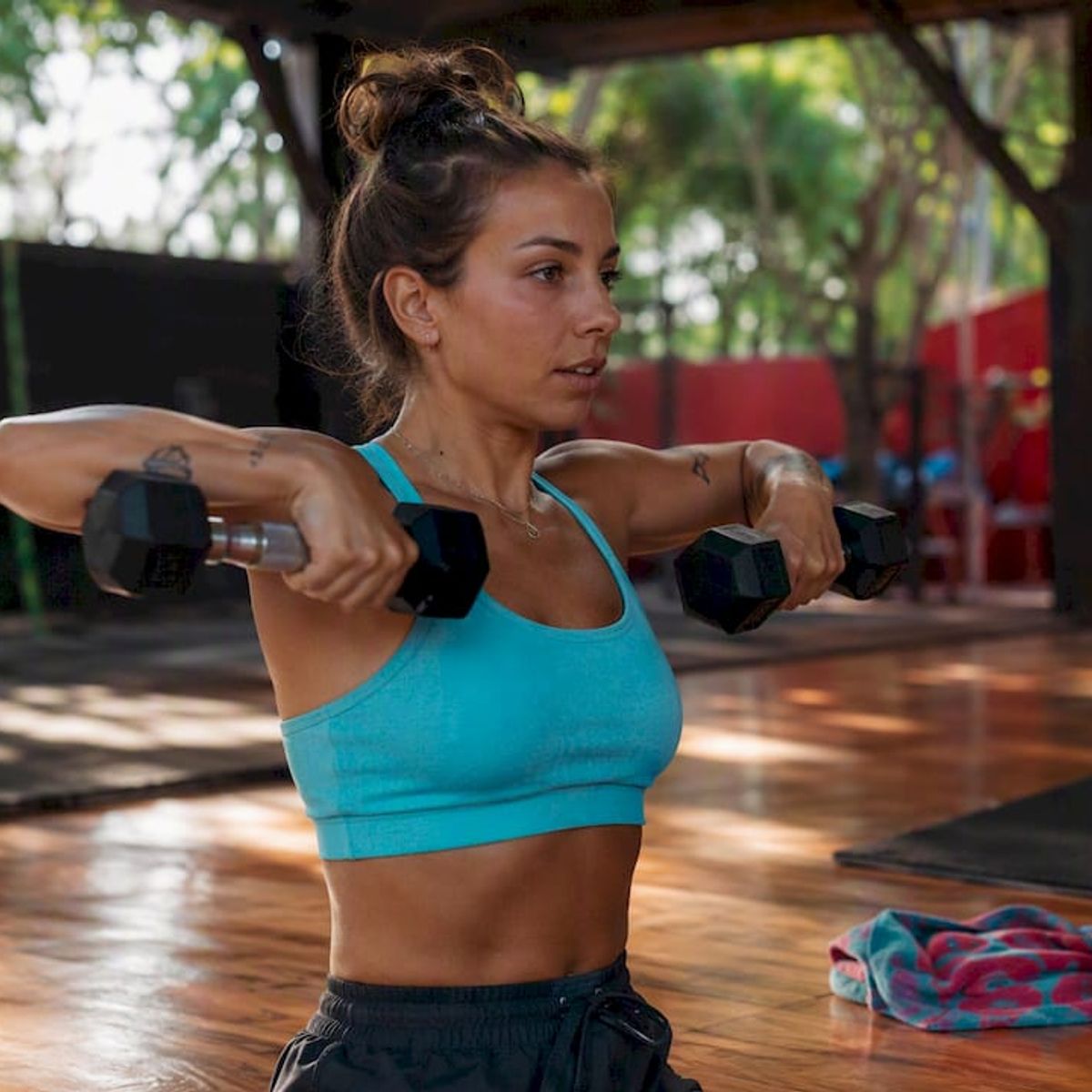
Dumbbell overhead press: Seated or standing, press dumbbells from shoulder height to overhead. Keep your core tight and avoid arching your lower back. Regression: band overhead press. Progression: single-arm press for a core stability challenge.
Lateral raise: Raise dumbbells to shoulder height with a slight bend in the elbow. Light weight only — most beginners go too heavy here and use momentum. 3×12–15 at a weight where you feel the side of your shoulder working.
ExerciseEquipmentPrimary MusclesBeginner Sets × RepsRegression
Biceps curl
Dumbbell or band
Biceps
3×10–12
Band curl
Triceps extension
Dumbbell or band
Triceps
3×10–12
Band extension
Bent-over row
Dumbbell or band
Lats, rhomboids
3×10 each side
Seated band row
Band pull-apart
Band
Rear delts, mid-traps
3×15–20
Lighter band
Push-up
Bodyweight
Chest, triceps, shoulders
3×8–12
Knee push-up
Dumbbell chest press
Dumbbell
Chest, triceps
3×10–12
Floor press
Overhead press
Dumbbell or band
Shoulders, triceps
3×10–12
Band press
Lateral raise
Dumbbell
Side deltoids
3×12–15
Lighter dumbbell
Understanding how functional movement choices transfer to daily life — carrying groceries, lifting kids, reaching overhead — makes it easier to stay motivated when the weights feel heavy.
Three beginner workouts you can do this week
These three sessions cover the full week. Pick the format that matches your equipment and time.
Workout A: Full upper-body home session (bands or bodyweight)
Duration: 35–40 minutes
- Warm-up (7 minutes, as above)
- Push-ups: 3×10 (knee variation if needed)
- Band bent-over row: 3×12 each side
- Band overhead press: 3×12
- Band biceps curl: 3×12
- Band pull-apart: 3×15
- Triceps dips on a chair: 2×10
- Rest 60–90 seconds between sets
Workout B: Gym session with dumbbells
Duration: 40–45 minutes
- Warm-up (7 minutes)
- Dumbbell chest press: 3×10
- Dumbbell bent-over row: 3×10 each side
- Dumbbell overhead press: 3×10
- Lateral raise: 3×12
- Biceps curl: 3×12
- Overhead triceps extension: 3×12
- Band pull-apart: 2×15
- Rest 60–90 seconds between sets; aim to increase weight by 2.5–5 lbs when 3 sets of 12 feel easy
Workout C: 20-minute express session (supersets)
Duration: 20–25 minutes
Pair exercises back-to-back with 30 seconds rest between pairs, 90 seconds after each full round. Complete 3 rounds.
SupersetExercise 1Exercise 2
A
Push-up × 10
Band row × 12
B
Overhead press × 10
Band pull-apart × 15
C
Biceps curl × 12
Triceps extension × 12
Workout C is not a substitute for A or B every week — use it when time is short, not as your default. Supersets reduce rest time and keep the heart rate up, but they also limit how heavy you can go, which matters for long-term strength development.
How to keep progressing week after week
Consistency beats intensity, especially in the first six weeks. A meta-analysis of resistance training in women found that training the upper body 2–3 times per week produced the largest 1RM increases, with weekly upper-body strength gains averaging approximately 5.2–7.2% across the included studies. The same analysis found that rep ranges of 13–20 per set were often associated with upper-body dynamic strength improvements — higher than most beginners expect.
The four progression levers (use in this order):
- Add reps first: If you’re prescribed 3×10 and it feels manageable, push to 3×12 before adding weight.
- Add weight second: Once you hit the top of your rep range for all sets, increase the dumbbell by 2.5–5 lbs.
- Adjust tempo third: Slow the lowering phase to 3–4 seconds. Same weight, harder stimulus.
- Add a set last: Going from 3 sets to 4 is a meaningful volume increase — save it for when the other levers are maxed.
Simple weekly tracking:
Write three things after every session: the exercise, the weight, and the reps. That’s it. After four weeks, compare week 1 to week 4. The numbers will tell you exactly where you’re progressing and where you’re stalling.
Statistic to know: Upper-body 1RM gains are achievable with consistent 2–3×/week training — meaning a woman who starts with a 20-lb dumbbell press could expect to press heavier weights within a month of structured training.
Nutrition matters more than most beginners account for; for evidence-based guidance on supplements to support strength gains, see the best creatine for women. Research combining resistance training with adequate protein found improved fat-free mass and strength gains in premenopausal women compared to training alone. A practical target is 0.7–1g of protein per pound of bodyweight daily. For a deeper breakdown of how to hit those numbers, the Level Up Gym protein guide and nutrition in training overview are worth bookmarking.
If you want to understand how to train three days a week for lasting muscle, that guide walks through the full programming logic.
Common mistakes that slow your progress (and how to fix them)
Most setbacks in beginner upper-body training come from a handful of repeatable errors. Knowing them in advance is genuinely useful.
Form mistakes and corrections:
- Collapsed shoulders during pressing: Your shoulder blades should stay retracted (pulled together and slightly down) throughout any press. If they wing out, the load is going to the wrong place and your rotator cuff is working overtime.
- Rushing reps: Speed hides weakness. A fast, sloppy curl uses momentum, not muscle. Slow down the lowering phase — that’s where most of the growth stimulus lives.
- Too-fast load progression: Adding 10 lbs to a dumbbell exercise in week two because it “felt easy” is how shoulders get strained. Follow the progression levers above.
- Skipping pulling exercises: Most beginners do too much pressing (push-ups, chest press) and not enough pulling (rows, pull-aparts). A 1:1 push-to-pull ratio protects shoulder health over time.
- Holding your breath: Exhale on the effort (the push or pull), inhale on the return. Holding your breath spikes blood pressure and reduces stability.
Shoulder health red flags — pause training and consult a professional if you notice:
- Sharp or pinching pain at the front of the shoulder during pressing
- Pain that persists more than 48 hours after a session
- Clicking or grinding in the shoulder joint accompanied by pain (some noise without pain is normal)
- Numbness or tingling down the arm
Recovery for upper body specifically:
Space your upper-body sessions at least 48 hours apart. Upper-body muscles — especially the smaller ones like the rotator cuff and rear deltoids — recover more slowly than legs. Sleep is where the actual repair happens; 7–9 hours is the range where muscle protein synthesis peaks. On rest days, light mobility work (the warm-up sequence above, done gently) keeps the shoulders feeling good without adding training stress.
A note from Coach Malcolm at Level Up Gym
Women who are new to strength training often underestimate how quickly their technique improves with consistent coaching. The most common issue I see in beginners isn’t lack of effort — it’s training without feedback long enough that a compensatory pattern becomes a habit. A rounded back during rows, a forward head during pressing, shoulders creeping toward the ears during lateral raises. These are easy to fix early and genuinely hard to fix after six months.
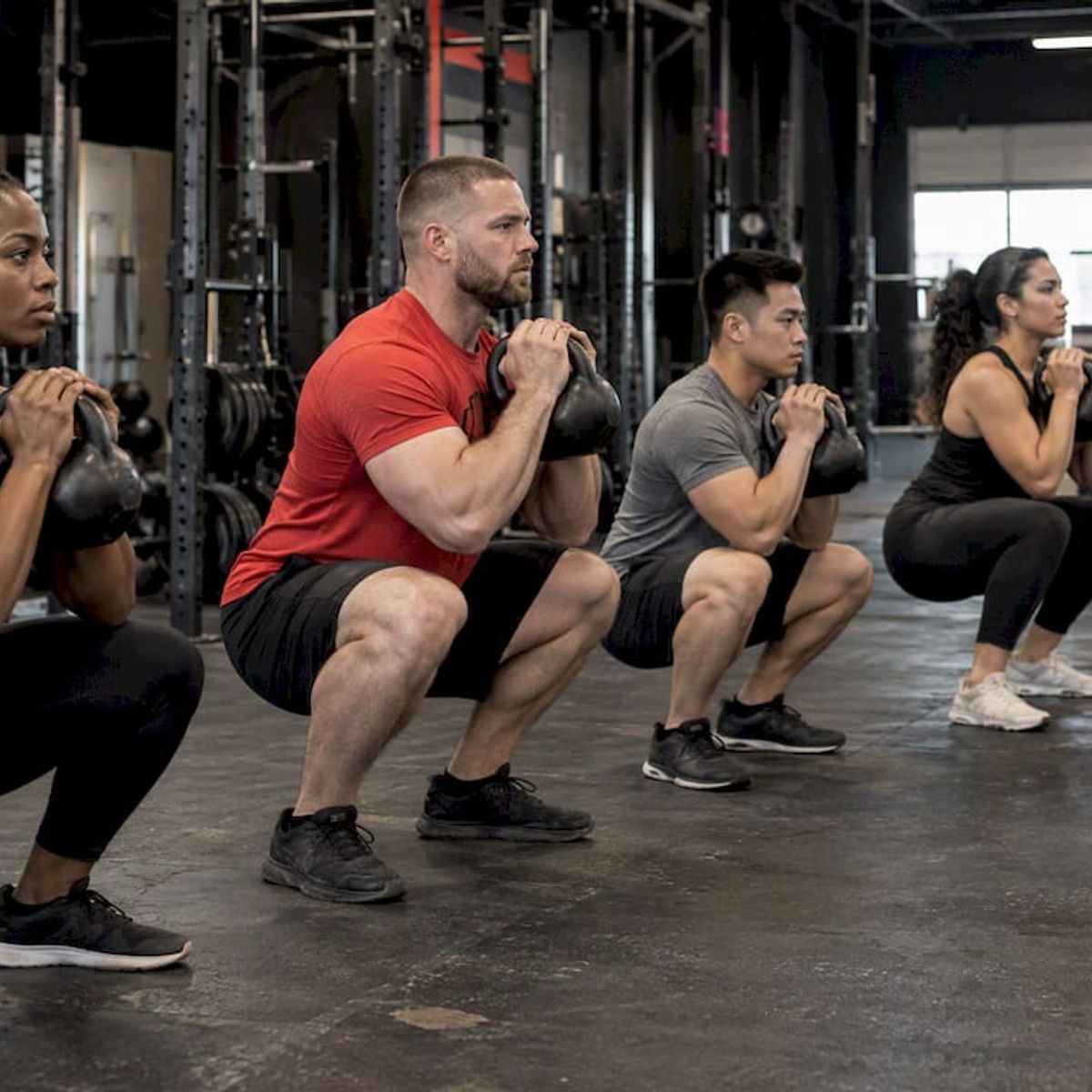
Level Up Gym’s 6-week beginner onramp exists specifically to close that gap. Small-group sessions mean you get hands-on technique correction without the cost of 1-on-1 personal training every session. By week three, most beginners have the movement patterns clean enough to start pushing load — and that’s when the real strength gains begin.
Pro Tip: Commit to the 2–3× weekly upper-body rhythm for six full weeks before changing anything. Most women who feel “stuck” quit or switch programs at week three, right before the adaptation curve steepens. The gains between weeks 4 and 8 are often larger than weeks 1 through 4 combined.
The honest truth about timelines and small wins
Progress in upper-body strength training rarely looks like a straight line. The first two weeks feel hard and unrewarding. Week three, something clicks — the push-ups feel lighter, the rows feel more controlled. By week six, you’re lifting weights that would have felt impossible at the start.
Track the non-scale wins: the first time you complete all three sets without dropping reps, the first time you increase the dumbbell weight, the first time you notice your posture has changed. Those are real, measurable strength gains, and they matter more than how your arms look in week two.
Follow the one-week starter plan at the top of this article. Come back after four weeks and re-test your push-up and row numbers. The difference will be concrete.
Level Up Gym’s beginner programs in Stratford and Bridgeport, CT
Knowing what to do and actually doing it with good technique are two different things. Level Up Gym’s 6-week beginner onramp gives you a structured, coach-led program that covers exactly what this article outlines — upper-body strength, movement patterns, and progressive overload — without the guesswork of building your own plan from scratch.
Small-group personal training sessions at the Stratford and Bridgeport locations keep the cost accessible while giving you real-time form feedback that no app or video can replicate. Nutrition coaching and meal planning are available alongside training, so the protein and recovery side of your program gets the same attention as the workouts. No long-term contracts — you can start with a trial session and see whether the environment fits before committing. Book your first session at Level Up Gym and bring the one-week plan from this article as your starting point.
Sources
- Muscle strength gains per week are higher in the lower-body than the upper-body in resistance training experienced healthy young women—A systematic review with meta-analysis - PMC
- Regional Hypertrophy: The Effect of Exercises at Long and Short Muscle Lengths in Recreationally Trained Women
- Easy upper-body boosters
- Nhs
- Mdpi
FAQ
Why is it so hard for women to build upper body strength?
Women start with less absolute upper-body muscle mass than men, which makes early gains feel slow. However, controlled research shows women and men make similar relative strength gains from the same program — the gap is in starting point, not training response.
Can flabby upper arms be toned?
Yes, but toning requires two things working together: building arm muscle through resistance training and reducing overall body fat through diet and activity. Resistance training increases arm muscle size and strength, while a calorie-appropriate diet handles the fat-reduction side.
How long does it take to strengthen your upper body?
Most women notice measurable strength improvements within 4–6 weeks of consistent training. Research on untrained women found significant upper-body 1RM and muscle-thickness increases by weeks 4–6 of a structured program, with continued gains through week 12 and beyond.
What is the hardest upper body muscle to build?
The rear deltoids and mid-back muscles (rhomboids, mid-traps) are typically the slowest to develop because most daily movements and beginner programs underload them. Dedicated pulling exercises — rows and band pull-aparts — are the fix, and they’re included in every workout in this article.
Recommended
- Types of Strength Training Programs: Pick the Right One Fast — Level Up Gym | Level Up Gym
- Strength Train Three Days Weekly: Build Muscle That Lasts — Level Up Gym | Level Up Gym
- Functional Weight Lifting for Everyday Strength — Level Up Gym | Level Up Gym
- Structured Workout Program Benefits for Real Results — Level Up Gym | Level Up Gym