Functional Weight Lifting for Everyday Strength
Functional weight lifting is strength training built around movement patterns you actually use in daily life: squat, hinge, lunge, push, pull, carry, and rotate. To get started, do three things: (1) master the basic movement patterns with bodyweight or light load before adding weight, (2) pick one exercise per pattern and build a short session around those, and (3) follow the 3-day starter program in the sample programs section below. If you want coached guidance from day one, Level Up Gym in Stratford and Bridgeport, CT runs a 6-week beginner onramp that walks you through exactly this process with certified coaches.
- Master movement first. Nail the bodyweight squat, hip hinge, and lunge before loading.
- Pick your patterns. Choose one exercise per movement category for your first three sessions.
- Follow the 3-day plan. The sample program below gives you exact sets, reps, and rest periods.
Table of Contents
- What functional weight lifting is and how it differs from traditional lifting
- Why functional weight lifting delivers real-world results
- Core principles that make functional training actually work
- The essential functional exercises, organized by movement pattern
- A practical 3-day starter program with progression notes
- Who benefits most and when to prioritize functional training
- How to progress and scale functional weight lifting safely
- Safety, warm-up, and the mistakes that slow most people down
- What the research actually says about functional training outcomes
- Key Takeaways
- A trainer’s perspective on getting functional training right
- Level Up Gym’s coached functional training in Stratford and Bridgeport
- FAQ
What functional weight lifting is and how it differs from traditional lifting
The industry term is functional strength training, and it describes a movement-focused approach to resistance work. Rather than isolating a single muscle for measurable overload, it trains the body to coordinate multiple joints and stabilizers through patterns that mirror real tasks. According to the American College of Sports Medicine and ACE, functional training targets movement patterns to improve daily-life capability, not just muscle size or raw strength numbers.
Cleveland Clinic physical therapist Justin Nessel makes an important point: “functional” is individual. A movement is only functional if it improves the specific actions a person needs to perform repeatedly or safely in their own life. A warehouse worker and a recreational tennis player have very different functional needs, and their programs should reflect that.
Both approaches have real value. Traditional training excels when the goal is maximal strength, hypertrophy, or measurable progressive overload on a barbell. Functional training wins when the goal is movement quality, balance, and real-world transfer. Most adults benefit from a hybrid of both.
CategoryFunctional trainingTraditional training
Primary goal
Movement transfer to daily tasks
Muscle size, maximal strength
Tools
Free weights, kettlebells, bands, bodyweight
Machines, barbells, cables
Movement style
Multi-joint, unsupported, stabilizer-engaged
Isolated, machine-guided, controlled path
Measure of success
Can you move better in daily life?
Did the lift number go up?
Best for
Adults, aging, sport transfer, rehab return
Bodybuilding, powerlifting, beginners building base
Pro Tip: If you can only pick one, ask yourself: “Do I want to lift more on a machine, or do I want to carry groceries, climb stairs, and play with my kids without getting hurt?” The answer tells you where to start.
Why functional weight lifting delivers real-world results
The benefits show up in places most gym programs miss: the parking lot, the backyard, the staircase.
- Everyday function. Squats and deadlifts translate directly to standing up from a chair or picking up a box from the floor.
- Balance and coordination. Single-leg work and loaded carries force your stabilizers to fire, which reduces fall risk. An 8-week functional training intervention in middle-aged adults improved both functional movement scores and balance scores compared with traditional training.
- Injury resilience. Training the hips, core, and smaller stabilizers to control loaded movement protects joints during unpredictable real-world tasks.
- Mobility. Hip hinges, deep squats, and thoracic rotation drills maintain range of motion that sedentary work erodes.
- Sport and activity transfer. Rotational patterns and unilateral strength carry over to tennis, golf, hiking, and recreational sports faster than machine-based isolation work.
- Metabolic effects. Multi-joint movements recruit more muscle mass per set, which raises caloric demand during and after training.
The research backing is solid. A supervised 12-week high-intensity functional training program for older adults with mild cognitive impairment produced measurable improvements in balance, stability, and activities of daily living compared with a general exercise control group. That is a meaningful result for anyone whose primary concern is staying capable and independent as they age.
Core principles that make functional training actually work
Programming functional weight lifting well comes down to eight variables. Get these right and the training transfers; skip them and you end up with a random collection of exercises that looks functional but doesn’t train anything specifically.
- Specificity. Pick movements that match what you need to do. A nurse who lifts patients needs hip hinge and carry strength. A parent needs asymmetrical carries and floor-to-stand patterns. Training should mirror your real tasks.
- Multi-joint patterns. Every session should include at least one squat, one hinge, one push, and one pull. These patterns cover the majority of human movement.
- Unilateral work. Single-leg and single-arm exercises fix left-right imbalances that bilateral lifts hide. Add split squats, single-leg deadlifts, and one-arm rows.
- Stability over load. Free weights and bodyweight challenge internal stability in ways machines cannot. A goblet squat with 35 lbs can be harder than a leg press with 200 lbs because your core and hips have to control the movement without a guided track.
- Load progression. Start with technique, then add load in small increments (5–10% per week is a reasonable ceiling). Complexity can also serve as progression: a bodyweight squat becomes a goblet squat, then a front squat.
- Tempo. Slowing the eccentric phase (the lowering portion) increases time under tension and builds control. A 3-second lower on a Romanian deadlift teaches the hinge pattern better than rushing through reps.
- Conditioning integration. Loaded carries, sled work, and circuit-style finishers build work capacity alongside strength. For guidance on balancing strength and conditioning across a weekly plan, a structured hybrid approach works best.
- Recovery. Two to three functional sessions per week with 48 hours between them is a solid starting point. Deload every fourth or fifth week by cutting volume by roughly 40%.
A hybrid model, blending a few progressive compound lifts (squat, deadlift, press) with movement-pattern practice and loaded carries, tends to produce the best outcomes for most adults. Research confirms that when training volume is matched, functional and traditional resistance training produce similar short-term muscular fitness gains in untrained individuals. That means you do not have to choose one or the other: use traditional lifts for reliable overload and functional patterns for transfer.
The essential functional exercises, organized by movement pattern
Group your exercise selection by pattern, not by muscle. Here is a practical library with progressions, rep ranges, and form cues for each category.
Squat pattern
Regression → Progression: Box squat → Goblet squat → Front squat → Barbell back squat
- Sets/reps: 3–4 sets of 8–12 reps for general strength; 2–3 sets of 15–20 for endurance
- Form cues: Chest tall, knees track over toes, weight through the whole foot
- Substitution (no equipment): Bodyweight squat, wall sit
Hip hinge pattern
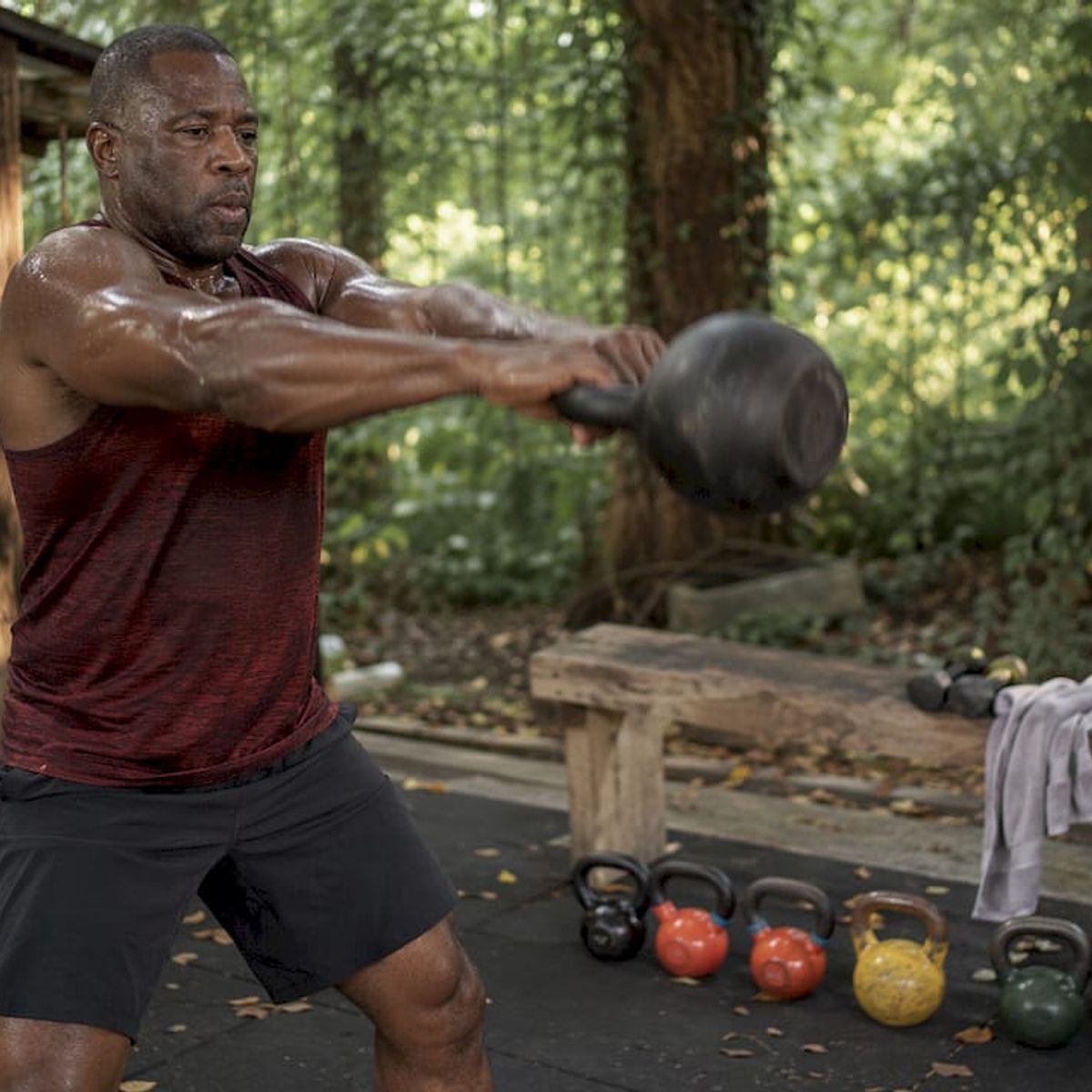
Regression → Progression: Romanian deadlift (light) → Kettlebell deadlift → Trap bar deadlift → Barbell deadlift
- Sets/reps: 3–4 sets of 6–10 reps; heavier loads, lower reps for strength
- Form cues: Hinge at the hips (not the waist), neutral spine, push the floor away on the way up
- Substitution: Single-leg hip hinge with bodyweight
Lunge pattern
Regression → Progression: Reverse lunge → Walking lunge → Bulgarian split squat → Loaded step-up
- Sets/reps: 3 sets of 10–12 per leg
- Form cues: Front shin stays vertical, back knee drops straight down, core braced
- Substitution: Step-up onto a sturdy chair or bench
Push pattern
Regression → Progression: Push-up (incline) → Push-up → Dumbbell floor press → Dumbbell overhead press → Barbell press
- Sets/reps: 3–4 sets of 8–15 reps
- Form cues: Elbows at roughly 45 degrees from the torso, full range of motion, scapulae retracted at the bottom
- Substitution: Wall push-up for beginners
Pull pattern
Regression → Progression: Banded pull-down → Dumbbell row → Inverted row → Pull-up
- Sets/reps: 3–4 sets of 8–12 reps; match push volume
- Form cues: Lead with the elbow, squeeze the shoulder blade at the top, avoid shrugging
- Substitution: Resistance band row anchored to a door
Loaded carry
Regression → Progression: Farmer carry (light dumbbells) → Suitcase carry (unilateral) → Overhead carry → Yoke carry
- Sets/reps: 3–4 sets of 20–40 meters
- Form cues: Tall posture, shoulders packed down, core braced throughout
- Note: Suitcase carries are among the best unilateral core exercises available.
Rotation and anti-rotation
Regression → Progression: Pallof press → Cable woodchop → Medicine ball rotational throw → Rotational deadlift
- Sets/reps: 3 sets of 10–12 per side
- Form cues: Rotate from the hips and thoracic spine, not the lower back; keep the pelvis stable on anti-rotation drills
- Substitution: Resistance band Pallof press
Core and bracing
Regression → Progression: Dead bug → Plank → Hollow body hold → Ab wheel rollout
- Sets/reps: 3 sets of 30–45 seconds (holds) or 8–10 reps (moving)
- Form cues: Ribs down, lower back neutral, breathe through the movement
Pro Tip: Rotate exercises within a pattern every 4–6 weeks. Swap goblet squats for front squats, or Romanian deadlifts for trap bar deadlifts. The pattern stays the same; the variation keeps adaptation happening.
A practical 3-day starter program with progression notes
This 3-day split covers all major movement patterns across the week. Rest at least one day between sessions.
Warm-up checklist (5–8 minutes before every session):
- 90/90 hip stretch: 60 seconds per side
- Cat-cow: 10 reps
- Thoracic rotation: 8 reps per side
- Glute bridge: 15 reps
- Bodyweight squat: 10 reps (slow, controlled)
- Arm circles and band pull-aparts: 15 reps each
Day A: Squat and push focus
ExerciseSetsRepsRest
Goblet squat
3
10
90 sec
Dumbbell overhead press
3
10
90 sec
Reverse lunge
3
10/leg
60 sec
Push-up
3
10–15
60 sec
Farmer carry
3
30 m
60 sec
Dead bug
3
8/side
45 sec
Day B: Hinge and pull focus
ExerciseSetsRepsRest
Kettlebell deadlift
3
8
90 sec
Dumbbell row
3
10/arm
90 sec
Romanian deadlift
3
10
90 sec
Inverted row or banded pull-down
3
10
60 sec
Suitcase carry
3
20 m/side
60 sec
Plank
3
30–45 sec
45 sec
Day C: Full-body and rotation focus
ExerciseSetsRepsRest
Front squat or goblet squat
3
8
90 sec
Single-leg Romanian deadlift
3
8/leg
90 sec
Push-up variation
3
12
60 sec
Dumbbell row
3
10/arm
60 sec
Pallof press
3
10/side
45 sec
Overhead carry
3
20 m
60 sec
6–12 week progression model:
- Weeks 1–2: Learn the movements. Use light loads. Focus entirely on form.
- Weeks 3–4: Add 5–10 lbs to lower-body lifts, 2.5–5 lbs to upper-body lifts if technique holds.
- Weeks 5–6: Increase reps by 2 per set OR add a fourth set to one exercise per session.
- Weeks 7–8: Introduce a harder variation (goblet squat → front squat; Romanian deadlift → trap bar deadlift).
- Weeks 9–10: Add a unilateral challenge (Bulgarian split squat, single-leg deadlift).
- Weeks 11–12: Deload. Drop volume by 40%, keep intensity. Reassess movement quality.
Who benefits most and when to prioritize functional training
Functional weight lifting is not the right primary focus for everyone at every stage. Here is how to decide.
Choose functional-first if:
- Your main goal is to move better in daily life, reduce fall risk, or return to an activity after time off
- You are an older adult concerned about balance and independence
- You play recreational sports and want strength that transfers to the field or court
- You are returning to training after an injury and need to rebuild movement quality before load
Choose traditional-first if:
- Your primary goal is maximal strength or muscle size (powerlifting, bodybuilding)
- You are a true beginner with very low baseline strength. Research suggests that some individuals, particularly women with lower baseline strength, may benefit from building basic capabilities through conventional training before moving to more specific functional protocols
- You want clear, measurable progression on a small number of lifts
Recommend a hybrid for most adults. The types of strength training programs that work best for general fitness almost always blend both approaches. A few progressive compound lifts provide reliable overload; functional patterns and carries provide transfer.
Consult a professional before starting if:
- You have a recent injury, chronic joint pain, or are post-surgery
- You have not exercised in more than a year and are unsure about movement patterns
- You experience pain (not just discomfort) during any of the movements above
How to progress and scale functional weight lifting safely
Progression in functional training follows a specific sequence. Jumping ahead skips the foundation and increases injury risk.
Progression checklist (in order):
- Nail technique at bodyweight or very light load (form check: can you do it slowly with control?)
- Increase load in small increments once technique is consistent across all reps
- Increase complexity (add instability, unilateral demand, or a longer range of motion)
- Change tempo (slow the eccentric, pause at the bottom)
- Add unilateral or unstable challenge (single-leg, single-arm, or offset loading)
Rep-range guidance by goal:
GoalRep rangeSetsLoad
Strength
3–6
4–5
Heavy ( — effort)
Hypertrophy
8–12
3–4
Moderate ( — effort)
Endurance
15–20+
2–3
Light (50– — effort)
Power
3–5
4–5
Moderate-heavy, fast execution
Functional training can be high-intensity even with lighter weights because movement complexity and the demand for internal stability raise the training challenge significantly. A single-leg Romanian deadlift with 30 lbs is genuinely hard for most people.
Adjust volume and frequency based on recovery. If you are sore for more than 48 hours after a session, reduce total sets by one per exercise the following week. If life gets busy, two sessions per week maintains most gains. Add a third when schedule allows.
Seek a coach when you want to move to heavier barbell work (deadlifts above bodyweight, front squats, overhead press with significant load). Technique errors under heavy load cause injuries that set progress back by months.
Safety, warm-up, and the mistakes that slow most people down
Most functional training injuries come from one of three sources: skipping the warm-up, loading too fast, or ignoring technique breakdown under fatigue.
Warm-up and mobility checklist:
- Hip 90/90 stretch (60 sec/side) for hip flexor and external rotator prep
- Cat-cow and thoracic rotation for spinal mobility
- Ankle circles and calf raises for ankle dorsiflexion
- Glute bridges and clamshells for hip activation
- Light activation sets (50% of working weight, 5 reps) before the first working set
Common mistakes and corrections:
- Poor hip hinge. Most people bend at the waist instead of pushing the hips back. Fix: stand 6 inches from a wall and practice pushing your hips back to touch it.
- Rounded lower back on deadlifts. Usually caused by tight hamstrings or loading too heavy too soon. Fix: reduce load, elevate the bar (rack pull), and focus on a neutral spine before adding weight.
- Knee valgus on squats and lunges. Knees caving inward signals weak glutes or poor ankle mobility. Fix: use a resistance band just above the knees to cue outward drive, and add clamshells to your warm-up.
- Poor core bracing. Holding your breath and bracing before the lift (the Valsalva maneuver, used lightly) protects the spine. Fix: practice bracing on dead bugs before applying it to loaded movements.
- Skipping unilateral work. Bilateral lifts mask side-to-side imbalances. Fix: include at least one unilateral exercise per session.
Red flags — stop and seek professional evaluation if:
- Sharp or shooting pain during any movement (not muscle burn)
- Joint swelling after training
- Pain that persists more than 72 hours post-session
- Numbness or tingling in the arms or legs during lifting
Pro Tip: Film yourself from the side on your first session of each new exercise. You will catch a rounded back or forward knee lean immediately. Most people are surprised by what they see.
What the research actually says about functional training outcomes
The evidence is consistent enough to draw practical conclusions, even if no single study is definitive.
The Cleveland Clinic’s guidance reinforces a key practical point: training is only functional when it mirrors the specific tasks a person needs to perform. Generic “functional” programming that does not match a person’s actual life demands is just exercise, not functional training.
Practical implications from the evidence:
- Adults with lower baseline strength may need a preparatory phase of conventional training before complex functional progressions. Practitioners recommend a movement-quality onramp for beginners before adding heavier or more unstable variations.
- When training volume is matched, functional and traditional resistance training produce similar short-term muscular fitness gains in untrained individuals. This supports a hybrid model for most adults.
- The fastest carryover to daily life tends to happen when training closely mirrors the actual movement demands of a person’s work, sport, or activity.
Key Takeaways
Functional weight lifting builds strength that transfers directly to daily movement by training patterns (squat, hinge, lunge, push, pull, carry, rotate) rather than isolating muscles.
PointDetails
Start with movement quality
Master bodyweight patterns before adding load; a 2–6 week onramp reduces injury risk.
Train all seven patterns
Cover squat, hinge, lunge, push, pull, carry, and rotation each week for complete transfer.
Use the 3-day starter plan
The Day A/B/C program above gives exact sets, reps, and rest periods to follow immediately.
Progress in stages
Nail technique, then add load, then add complexity; never skip steps under fatigue.
Level Up Gym onramp
Level Up Gym’s 6-week beginner onramp in Stratford and Bridgeport, CT provides coached progression through exactly this framework.
A trainer’s perspective on getting functional training right
There is a version of functional training that gets sold hard in the fitness industry, and it involves standing on a BOSU ball while doing a bicep curl. That is not what this is. Real functional weight lifting is often less flashy than that, and considerably more effective.
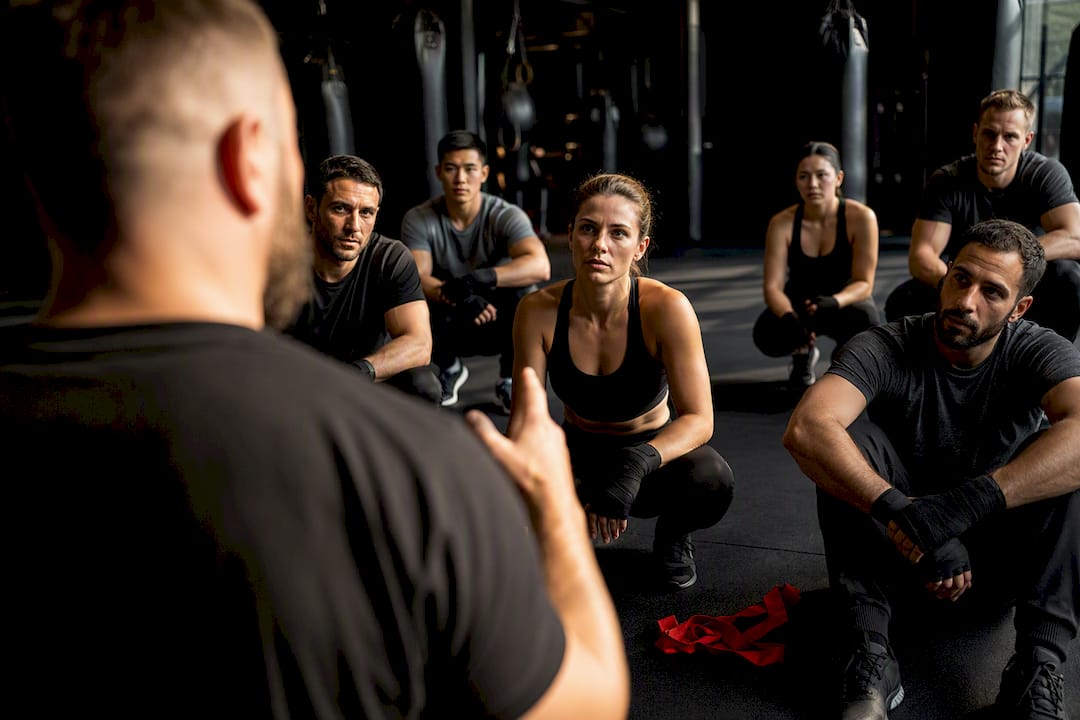
At Level Up Gym, the 6-week onramp starts with a movement assessment. Before anyone touches a barbell or a kettlebell for a working set, coaches watch how they squat, hinge, and brace. That single step catches the issues that would otherwise turn into injuries at week four: the hip that does not hinge, the ankle that limits squat depth, the shoulder that compensates on a press. Fixing those patterns first means clients progress faster once load is added, not slower.
The most common outcome after six weeks is not a dramatic strength number. It is a client who says they noticed they picked something up off the floor without thinking about it, or that their back did not hurt after a long day of yard work. That is the transfer this training is designed to produce. The strength numbers follow, but the movement quality comes first.
Structured programming is what separates clients who keep improving from those who plateau after two months. The difference is not effort; it is having a plan that progresses deliberately and adjusts when life gets in the way.
Level Up Gym’s coached functional training in Stratford and Bridgeport
Knowing the principles is one thing. Having a coach watch your hinge pattern on week one and adjust your load on week three is something else entirely.
Level Up Gym’s hybrid training programs in Stratford and Bridgeport, CT are built around exactly the framework in this article: movement-pattern training, progressive loading, and conditioning work that builds real-world capacity. The 6-week beginner onramp gives new members a coached introduction to functional lifting with small-group sessions, 1-on-1 personal training options, and nutrition coaching to support recovery and body composition. No long-term contract is required. Sessions are led by certified coaches at both the Stratford and Bridgeport locations.
If you are in Fairfield County and want to start functional weight lifting with a program that actually progresses, book a free assessment or join the next 6-week onramp at either location.
FAQ
What is functional weight lifting in simple terms?
Functional weight lifting is strength training organized around movement patterns you use in daily life, such as squatting, hinging, pushing, pulling, and carrying, so the strength you build transfers directly to real tasks.
How is functional training different from traditional strength training?
Traditional training often isolates muscles on machines for measurable overload; functional training uses free weights and bodyweight to train multi-joint patterns that engage stabilizers and build coordination. Research shows both approaches produce similar muscular fitness gains when training volume is matched, making a hybrid the practical choice for most adults.
Can beginners do functional weight lifting?
Yes, but a short preparatory phase helps. Practitioners recommend a 2–6 week movement-quality onramp before adding heavier or more unstable variations, which reduces injury risk and accelerates skill acquisition.
How many days a week should I train functionally?
Two to three sessions per week with at least 48 hours between them is a solid starting point for most adults. Two sessions per week maintains most gains when schedule is limited.
Does Level Up Gym offer functional weight lifting programs?
Yes. Level Up Gym in Stratford and Bridgeport, CT offers a 6-week beginner onramp, small-group hybrid training, and 1-on-1 personal training built around functional movement patterns, with no long-term contract required.
Recommended
- Strength Train Three Days Weekly: Build Muscle That Lasts — Level Up Gym | Level Up Gym
- Types of Strength Training Programs: Pick the Right One Fast — Level Up Gym | Level Up Gym
- Strength vs Endurance Training: Key Differences Explained — Level Up Gym | Level Up Gym
- Structured Workout Program Benefits for Real Results — Level Up Gym | Level Up Gym