Contact Sport Safety and Gym Protocols Explained
Contact sport safety combines three things: knowing how much physical risk a sport carries, wearing the right gear for that risk level, and following proven protocols when something goes wrong. The American Academy of Pediatrics classifies sports into collision, contact, and limited-contact categories, and that classification drives every safety decision that follows. Get the classification wrong and you are either over-protected and slowed down, or under-protected and exposed. Here is what you actually need to know about contact sport safety and gym protocols:
- Sports fall into three risk tiers: collision, contact, and limited-contact
- Protective gear must match the sport’s specific contact type and fit correctly
- Warm-up, technique training, and progressive contact exposure prevent most injuries
- Concussion management follows a strict “remove from play, medically clear before return” rule
- Gym environments require documented equipment checks, qualified staff, and emergency readiness
Table of Contents
- How sports are classified by contact risk
- What protective gear you actually need
- Key safety measures that actually reduce injuries
- Concussion management and return-to-play guidelines
- Gym and combative sport environment protocols
- Level Up Gym puts these protocols into practice
- FAQ
- Key Takeaways
How sports are classified by contact risk
The AAP classification system is the standard framework used by coaches, physicians, and gym operators across the United States. It sorts every sport into one of three categories based on how often contact happens and how hard it hits.
- Collision sports: Athletes deliberately hit each other or objects with great force. Boxing, American football, ice hockey, and lacrosse all fall here. These carry the highest injury risk, particularly for head and neck trauma.
- Contact sports: Athletes routinely make contact, but with less force than in collision sports. Basketball and soccer are the clearest examples. Contact is frequent but generally not the point of the game.
- Limited-contact sports: Contact is infrequent or unintended. Baseball, gymnastics, and volleyball belong here. Rules and boundaries actively work to prevent contact, though it still happens.
Knowing which tier a sport sits in tells you which protective gear is mandatory, what supervision ratios are appropriate, and how aggressively to enforce concussion protocols. A gym running boxing classes operates under collision-sport rules. One running recreational volleyball does not. The distinction shapes every safety decision in the building.
What protective gear you actually need
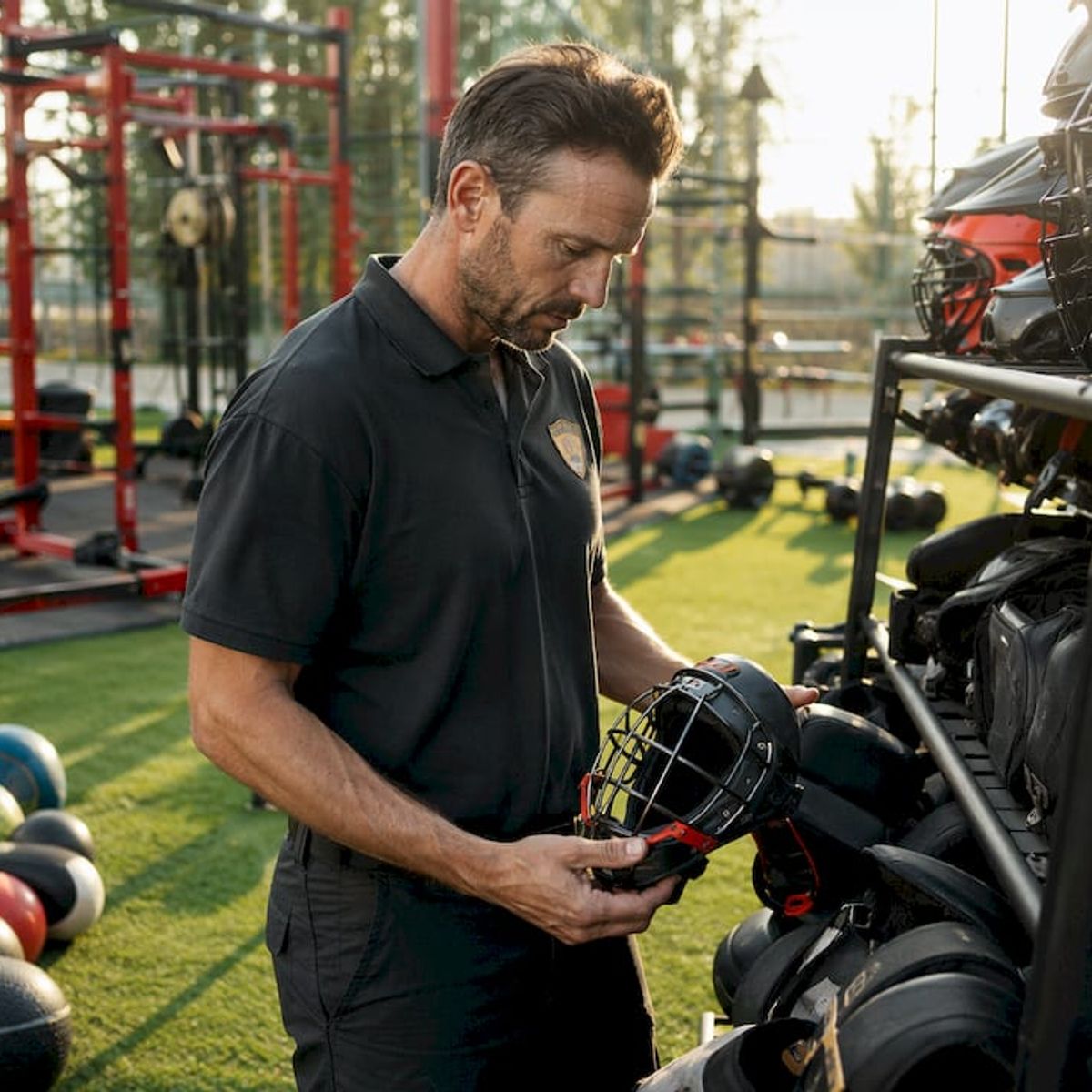
Gear that does not fit correctly provides almost no protection. A helmet that shifts on impact, a mouthguard that sits loose, or shin pads that slide during a kick are worse than useless because they create a false sense of security.
- Helmets: Sport-specific design is mandatory. A football helmet is not a hockey helmet. Each is engineered for the impact patterns of its sport.
- Mouthguards: Required across all collision sports. Mouthguards reduce concussion risk by 28% in youth ice hockey, making them one of the highest-return pieces of gear available.
- Pads: Shin, knee, and elbow pads absorb impact and reduce abrasion injuries. In combative sports, body protectors and groin guards are standard.
- Gloves: Boxing and martial arts gloves protect both the wearer’s hands and the opponent. Glove weight and padding specifications vary by discipline and competition level.
- Footwear: Sport-specific shoes affect ankle stability and traction. Wrestling shoes, boxing shoes, and cleated footwear each serve a different biomechanical purpose.
- Eyewear: Protective eyewear is required in racquet sports and recommended for anyone near a combative sports ring or cage.
EquipmentPrimary purposeSports where required
Helmet
Head and brain impact protection
Football, ice hockey, lacrosse, cycling
Mouthguard
Dental and concussion risk reduction
Boxing, football, ice hockey, rugby
Shin pads
Lower leg impact absorption
Soccer, kickboxing, field hockey
Body protector
Torso and rib protection
Martial arts, kickboxing
Gloves
Hand and opponent protection
Boxing, MMA, martial arts
Groin guard
Genitalia protection
Boxing, martial arts, football
Protective eyewear
Eye injury prevention
Racquet sports, combat sport sidelines
Gyms have a responsibility to verify that gear meets current safety standards and to pull worn or damaged equipment from use. A cracked helmet shell or a compressed mouthguard that no longer fits is a liability, not a safety measure.
Pro Tip: Have a qualified coach or trainer check your gear fit at the start of every season, not just when you buy it. Bodies change, and so does foam compression inside helmets and pads.
Key safety measures that actually reduce injuries
Warming up and stretching before contact training is not optional prep. Comprehensive preparation and coaching competence significantly reduce injury rates in contact sports, and the warm-up is where that preparation starts. Five to ten minutes of dynamic movement raises muscle temperature, improves joint range of motion, and primes the nervous system for the demands ahead.
Technique training matters more than most athletes expect. Research on youth rugby and American football shows that athletes with better technical proficiency suffer fewer head injuries. A head-up tackle posture in football, correct shoulder placement in a rugby tackle, or proper guard position in boxing all reduce the force transmitted to vulnerable areas. Skill-based drills using tackle bags and padded surfaces let athletes build these mechanics before facing live contact pressure.
- Conduct dynamic warm-ups before every session, static stretching after
- Match competition levels by weight, size, and experience to prevent mismatches
- Enforce rules consistently; fair play reduces reckless contact
- Maintain adequate supervision ratios throughout contact drills
- Conduct pre-session equipment and facility checks
- Keep emergency response equipment accessible and staff trained in first aid
- Monitor athletes for fatigue, which increases injury risk late in sessions
Hydration and nutrition support both performance and recovery. Dehydrated athletes have slower reaction times and reduced coordination, two factors that directly increase collision risk. Psychological readiness matters too. An athlete who is anxious, distracted, or mentally unprepared for contact is more likely to flinch into a bad position or freeze at the wrong moment.
Pro Tip: Coaching education and accreditation are not bureaucratic boxes to check. Active risk management by qualified personnel, including documented session plans and incident logs, is what separates a safe training environment from one that just looks safe.
For athletes building a foundation in contact sports, understanding injury prevention habits from the start pays dividends across an entire career.
Concussion management and return-to-play guidelines
Any athlete suspected of a concussion must come off immediately. The 2017 Berlin Concussion in Sport Group Consensus Statement is unambiguous: “when in doubt, sit them out.” No self-assessment, no waiting to see how they feel at halftime. The athlete does not return to that session under any circumstances.
Sideline assessment tools like the SCAT5 (Sport Concussion Assessment Tool) and CRT5 (Concussion Recognition Tool) give coaches and medical staff a structured way to evaluate symptoms on the field. For younger athletes, the 2022 Concussion in Sport consensus notes that symptom-based clinical evaluation is preferred over neurocognitive baseline testing, which has limited reliability at younger developmental stages.
Red-flag symptoms requiring immediate emergency care:
- One pupil larger than the other
- Extreme drowsiness or inability to be awakened
- Worsening headache that does not improve
- Slurred speech or repeated vomiting
- Seizures or convulsions
- Loss of consciousness, even briefly
Return to play follows a stepwise progression supervised by a qualified healthcare professional. Each stage must be symptom-free before advancing. The sequence typically moves from complete rest, to light aerobic activity, to sport-specific exercise, to non-contact drills, to full-contact practice, and finally to return to competition. Rushing any stage resets the clock. The National Football League’s concussion protocol, implemented in 2011, banned players from re-entering the same game in which they were injured, a policy that formalized what medical consensus had long recommended.
Gym and combative sport environment protocols
A gym running contact or combative sports training carries obligations that go well beyond standard fitness facility management. Physical space requirements are specific. Per Minnesota Office of Combative Sports guidelines, there must be a barrier at least eight feet from the outermost perimeter of the ring or cage where officials and medical staff work. Anyone within 15 feet and in range of flying sweat, blood, or other droplets is encouraged to wear a face shield or eye protection.
Staff qualifications and supervision ratios are not suggestions. Active risk management in high-risk gym environments requires documented equipment checks, accredited coaching staff, defined supervision ratios during contact drills, and a written emergency response plan. Passive oversight, meaning a coach who watches but does not intervene or document, does not meet the standard.
Critical gym-specific safety guidelines:
- Maintain a minimum eight-foot buffer zone around rings and cages
- Require eye protection for all personnel within 15 feet of the contact area
- Post emergency response procedures visibly throughout the facility
- Keep a stocked first aid kit and an AED accessible at all times
- Conduct documented pre-session equipment inspections
- Assign qualified staff to every contact training session with defined supervision ratios
- Establish and practice an emergency action plan covering injury, cardiac events, and fire
For youth programs, delaying full-contact exposure until around age 12, paired with progressive skill instruction in body positioning, safe falling, and neck strengthening, reduces injury risk without limiting long-term athletic development. Gyms that work with younger athletes should build this progression into their curriculum, not treat it as optional. Reviewing common training errors that affect safety is a practical starting point for any coach designing a contact curriculum.
Level Up Gym puts these protocols into practice
Most gyms that offer boxing or hybrid training post safety rules on the wall. Level Up Gym in Stratford and Bridgeport, CT, builds them into the structure of every class. Class sizes are capped, supervision ratios are maintained, and the programming follows a progressive contact model that mirrors the evidence-based approach this article covers. You are not thrown into sparring on day one. Technique comes first, contact follows when you are ready.
If you are looking for a training environment where the safety protocols described here are not just policy but daily practice, Level Up Gym’s hybrid training programs are built for exactly that. Whether you are new to contact sports or returning after time off, the structured approach at Level Up Gym Stratford gives you the foundation to train hard without cutting corners on safety. Check availability and book your first session at levelupgym.app.
FAQ
What are the three sport classifications based on contact?
The American Academy of Pediatrics classifies sports as collision (deliberate high-force contact, e.g., boxing and football), contact (frequent but less forceful contact, e.g., basketball), and limited-contact (infrequent or unintended contact, e.g., baseball).
How do you make contact sports safer?
Wearing properly fitted, sport-specific gear, warming up before every session, enforcing rules consistently, and following a strict concussion removal protocol are the four practices with the strongest evidence behind them.
What age is appropriate to start contact sports?
Current research supports introducing structured contact sports around age 12, with skill-based drills and progressive contact exposure starting earlier. Delaying full-contact until approximately age 12 supports neurological safety without limiting skill development.
What are the key gym safety rules for contact training?
Gyms running contact or combative sports training must maintain an eight-foot buffer around rings, require eye protection within 15 feet of the contact area, conduct documented equipment checks, and keep a written emergency action plan in place.
What should you do if a concussion is suspected?
Remove the athlete from play immediately and do not allow return to that session. Per the Berlin Concussion Consensus, medical clearance through a stepwise return-to-play protocol is required before the athlete resumes contact activity.
Key Takeaways
Contact sport safety depends on matching the sport’s risk classification to the right gear, protocols, and supervision standards at every level of participation.
PointDetails
AAP classification drives safety decisions
Collision, contact, and limited-contact tiers determine which gear and protocols apply.
Mouthguards deliver measurable protection
Mouthguards reduce concussion risk by 28% in youth ice hockey, making them high-return gear.
Concussion protocol is non-negotiable
Any suspected concussion means immediate removal; return requires stepwise medical clearance.
Gym environments need active risk management
Eight-foot ring buffers, documented equipment checks, and emergency action plans are required standards.
Level Up Gym applies these protocols daily
Capped class sizes, progressive contact programming, and qualified supervision at Stratford and Bridgeport locations.