
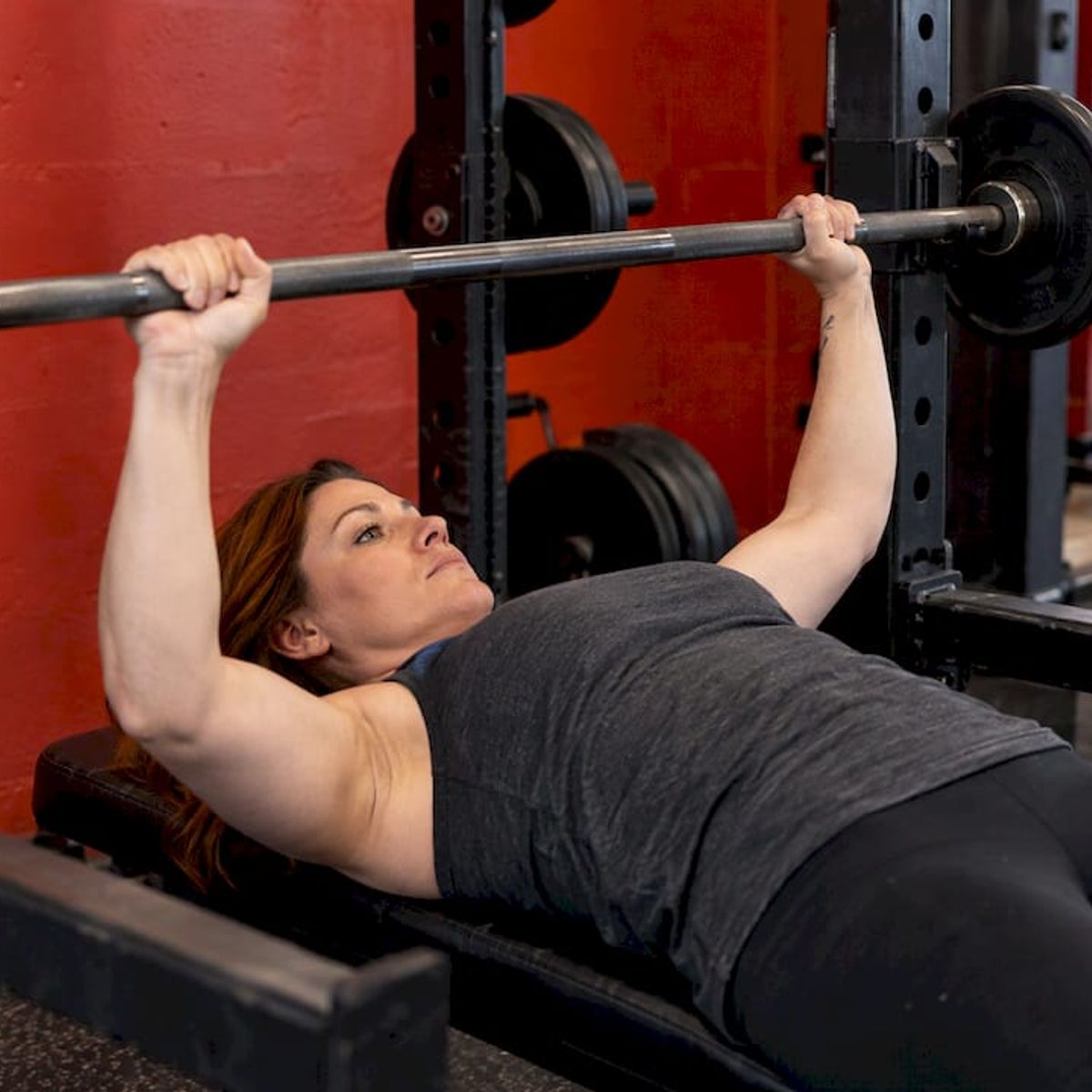
Deload Week Signs: 8 Clues It’s Time to Back Off
You need a deload week when your performance drops for several sessions in a row, your joints ache, your sleep and motivation fade, and your warm-up weights feel heavy even though you are eating and sleeping reasonably. A deload is a planned stretch of lighter training, not time off, and it is how experienced lifters keep making progress instead of grinding through a plateau. A coach who can read your training log makes the call far easier, and that is how we work with members at Level Up Gym in Stratford and Bridgeport.
Level Up Gym
Train Hard Without Grinding Through
Level Up Gym offers coached hybrid training and boxing in Stratford and Bridgeport, with beginners welcome and no contracts.
TL;DR
- A deload is a short period of reduced training stress, usually about 5 to 7 days, that lets fatigue clear so you can push harder afterward. You keep training, just lighter.
- The clearest signs: stalled or falling performance on main lifts, heavy-feeling warm-ups, achy joints, poor sleep, low motivation and a mood that dips around workouts.
- Typical timing is every 4 to 8 weeks of hard training. Beginners in their first months usually progress without planned deloads.
- To deload, cut volume or load by up to roughly half, stay further from failure and keep the movement patterns you already train.
- Normal soreness fades within days. Sharp, lingering or swelling pain is a medical question, not a deload question.
Table of Contents
- What a deload week actually is
- Eight signs you need a deload week
- Normal soreness or a real warning sign?
- How often should you deload?
- How to deload properly, step by step
- Are two rest days in a week too much during a deload?
- Do deloads make you stronger?
- Deload week for beginners
- Signs a deload is not the answer
- Our view on deloads
- Get a coach to plan your deloads
- FAQ
- Sources
What a deload week actually is
A deload is a period of reduced training stress designed to ease physical and mental fatigue, support recovery and prepare you for the next block of training. That wording comes from a 2023 consensus of expert strength coaches published in Sports Medicine – Open, and the National Strength and Conditioning Association’s 2025 practical guide uses almost the same definition.
Two things it is not. It is not a rest week: Cleveland Clinic’s sports medicine team stresses that you stay active during a deload. And it is not a taper before a competition. The point is to come back and push again.
There is a nervous-system side to this too. The same Cleveland Clinic piece explains that hard training strains the nervous system, not just the muscles, which is part of why lifters often feel sharper and sometimes hit personal bests when they return.
Eight signs you need a deload week
No single sign is a verdict. One bad Tuesday after a midterm all-nighter or a long I-95 commute means nothing. What matters is a pattern across several sessions.
1. Your main lifts stall or slide backward
The most reliable sign is performance. One widely used rule of thumb from Breaking Muscle, written by a physical therapist and certified strength coach, suggests a one-week deload after two consecutive sessions of reduced performance. Another published guide frames it as missing your target reps or loads on major lifts for two workouts in a row despite eating enough. If you have been hitting a squat of 185 for five reps and suddenly get four, then four again, take note.
2. Warm-up weights feel heavy
When the bar that usually feels like nothing feels like lead, your body is telling you something. This is often the earliest sign, showing up before your working sets suffer.
3. Your joints ache
Dull, general achiness in the knees, elbows, shoulders or lower back that builds across the week is a classic reason athletes deload. In a 2024 survey of 246 competitive strength and physique athletes, athletes reported taking deloads when performance stalled or when muscle soreness and joint aches increased.
4. Your sleep gets worse
The same one-to-five rule from Breaking Muscle counts four consecutive nights of poor sleep, or several days of rising fatigue, as a trigger. If you are lying awake at 1 a.m. even though you are exhausted, your training load may be part of the story. Stress from exams, work and a packed schedule stacks on top of it.
5. You dread sessions you usually enjoy
Three consecutive sessions with poor motivation is another trigger in that rule. Dragging yourself to the gym for a week straight is different from one lazy evening.
6. You cannot progress for five workouts
Five consecutive workouts with no ability to add a rep, a pound or a cleaner set is the last item on that rule. It is a sign your recovery is not keeping up with what you are asking of it.
7. Fatigue that does not clear with a normal night’s rest
You wake up still tired, coffee stops doing much, and everyday things like stairs or carrying a backpack across campus feel harder than they should.
8. Soreness that never really goes away
Some soreness is normal, but if you are always sore, your next session starts from behind. The next section covers where normal ends.
Normal soreness or a real warning sign?
A deload fixes training fatigue. It does not fix an injury. Use these reference points.
- Normal: Cleveland Clinic describes normal post-workout soreness as dull, low-level discomfort, around 2 to 3 on a 10-point scale, that does not worsen as you move or limit daily activities.
- Typical timing: Delayed onset muscle soreness starts 24 to 48 hours after activity and, according to Texas Health & Sports Medicine, resolves within at most seven days.
- See a clinician: Soreness lasting longer than a week, sharp or sudden pain, pain in a previously injured spot, or pain that does not ease after several days of rest should be assessed by a primary care or sports medicine provider. Sharp pain of 7 out of 10 or higher with swelling or limping is a clear signal to stop, not to push through.
If your signs look like the first group, a deload is the right tool. If they look like the third, see a doctor first.
Want a longer self-check? Our overtraining checklist lists 15 red flags, and our piece on signs your workout plan isn’t working helps separate a program problem from a recovery problem.
How often should you deload?
There is no single schedule, but the ranges are consistent:
SourceTypical timingTypical length
Every 4 to 6 weeks
About 7 days
Every 4 to 8 weeks
5 to 7 days
About every 5.6 weeks on average
About 6.4 days on average
Every 6 to 8 weeks for high-intensity training
Varies
The survey also showed the two ways people decide: 47% planned deloads in advance, 13% took them only when needed, and 39% used both. For most people, the sensible approach is the hybrid: pencil a deload into every fifth or sixth week, and move it earlier if several signs above show up together.
Longer or harder training blocks can call for a longer deload, according to the NSCA guide. Someone training five days a week with heavy sets close to failure will need it sooner than someone lifting three days a week with room to spare. If you are on a three-day schedule, our guide to strength training three days a week shows how that kind of week is built.
How to deload properly, step by step
Here is the routine, with the common places it goes wrong.
Step 1: Decide the length
Plan on 5 to 7 days. That is the NSCA’s typical duration for a structured deload. Going far past a week turns it into a detraining period.
Step 2: Choose what to reduce
The NSCA guide says a deload can reduce intensity of effort, volume, duration or frequency. Pick one or two, not all four. Cleveland Clinic suggests cutting weight, reps and sets by up to 50%. The athlete survey is a useful map of what experienced lifters actually do:
- 78.9% cut weekly sets
- 83.7% lowered the load on multi-joint lifts
- 84.9% trained further from failure
- 63.0% kept the same number of sessions
Where it goes wrong: cutting everything in half and then also skipping sessions and adding long cardio. You end up with a rest week and a confused body.
Step 3: Set the numbers
The NSCA guide gives two concrete options. Either reduce relative intensity by about 10% of your one-rep max while keeping the reps, or leave the weight and add 1 to 3 repetitions in reserve, meaning you stop with 1 to 3 clean reps left in the tank.
Worked example: your usual squat is 4 sets of 5 at 185 lb. For the deload week, do 2 sets of 5 at 165 lb, which is roughly 10% lighter with half the sets, and stop each set feeling you could have done several more. That is far from the grinding last reps of a normal week.
Step 4: Keep the movements, trim the extras
The expert consensus agreed that main exercises should stay with lower volume or intensity, accessory exercises can be removed, and exercise choice should focus on technique, with multijoint lifts maintained. A deload week is a good time to polish your squat depth, your bench setup and your hinge pattern.
Step 5: Consider an alternative flavor
The NSCA guide notes that a deload can also use bodyweight training, resistance bands or isometric holds. Cleveland Clinic suggests a lighter activity like hiking. For a student, a long walk along the Fairfield or Milford shoreline can double as mental recovery.
Step 6: Handle sleep, food and stress
Eat normally. Skipping meals during a lighter week works against the whole idea. Keep your sleep schedule steady. Extras such as massage, stretching and foam rolling were the most common add-ons in the survey, used by 48% of athletes, so they are a fine bonus but not required.
Step 7: Return with a plan
Go back at your normal loads, not a heroic jump. Begin the next block with the weights you were using before the deload and aim to beat them over the following weeks.
Are two rest days in a week too much during a deload?
No. Cleveland Clinic lists working out fewer days as one way to deload. The survey found that 63.0% of athletes kept the same number of sessions, so both approaches are common. If you normally train five days, three or four lighter days is a reasonable deload. Just make sure the days you do train still include movement and some lifting, so it does not become a total break.
If you feel completely wrecked, the NSCA guide goes further and recommends a short stretch of no training before the deload begins. That is for extreme fatigue, and it is a good moment to talk to a coach.
Do deloads make you stronger?
The research is encouraging with a nuance worth knowing. A 2024 PeerJ trial of 39 trained adults compared a full week of no training at the midpoint of a nine-week program with training straight through. Muscle size, endurance and power gains were similar. Lower-body strength rose more with continuous training (squat up 13.0 kg with the break versus 16.4 kg without).
The takeaway is practical: a full week of zero lifting is not the best form of deload for strength. A lighter week where you keep practicing your main lifts, as described above, keeps the skill sharp while the fatigue drains away. That is why we point people toward the reduced-load version, not the total-break version.
Deload week for beginners
If you started lifting in the last few months, you probably do not need a scheduled deload yet. Breaking Muscle’s guidance is that people with under six to 12 months of consistent training can usually keep progressing without planned deloads. Their suggestion is to track progressive overload, adding about 5 to 10% to weekly volume, and plan the first deload when solid progress slows, typically around the six to 12 month mark. A small 2024 trial in 19 untrained men found that two lighter weeks inside an eight-week program neither helped nor hurt muscle growth or 10-rep strength compared with training straight through.
What beginners should do instead:
- Write down every session: exercise, weight, sets, reps.
- Keep most sets a couple of reps short of failure.
- Take at least one full rest day between hard sessions of the same muscles. Our guide to recovery in training covers how to space them.
- Back off for a few days if several signs show up together, such as achy joints plus poor sleep plus falling reps.
With a log, you can see the pattern. Without one, every tired day looks like an emergency.
Signs a deload is not the answer
Sometimes the issue is not fatigue.
- Your program has no progression. Doing the same three sets of ten with the same weight for months is a plan problem. See our signs your workout plan isn’t working.
- You are under-eating or under-sleeping. A deload will not offset a semester of four-hour nights.
- Pain is sharp, local or lasting. That calls for a doctor or sports medicine provider.
- Rest between sets is too short or too long. It affects performance more than most people expect, as we explain in how long to rest between sets.
If you cannot tell which one applies, that is a sign a coach would help. Our list of signs you need a personal trainer gives a realistic picture of when to get that second pair of eyes.
Our view on deloads
Most people who come to us are not under-trained. They are under-recovered and under-guided. Between classes, a commute along Route 1 or I-95, a job or a full course load, the training stress is only one part of the load on the body.
We build every program around a written, individualized plan, and that plan is where a deload belongs. A deload should not be a surprise you improvise when you are already burnt out. It should be a line in the plan: this week, same movements, lighter loads, cleaner technique.
That is also why we cap class sizes. When a coach can see your bar speed slow down, your technique change or your energy dip, the call to back off gets made at the right time, not three weeks late. For our boxing members, the same logic applies: real boxing coaching means technique and sharpness first, and you cannot sharpen on empty.
If you are new, we would rather see you build a habit than chase a deload you do not need yet. If you are experienced and stalling, we would rather help you read the signs than guess.
Malcolm
Get a coach to plan your deloads
We run hybrid strength and boxing training at our Stratford and Bridgeport, CT locations, with certified coaches, no contracts, and a free class or consult plus a written, individualized plan for every new member. Large group classes are listed at $24.99 to $59.99 per week, small group personal training (2 to 4 people) at $74.99 to $174.99 per week per person, and 1-on-1 personal training at $149.99 to $359.99 per week. If you are starting from scratch, the 6-Week Onramp is a one-off $699.
See the options on our membership page, or start with the 6-Week Onramp if you want a structured beginning.
FAQ
How heavy should you go on a deload week?
A common target is about 10% lighter than your normal working weights while keeping the same reps, according to the NSCA guide. Another option is to keep the weight and stop 1 to 3 reps before failure. Cleveland Clinic suggests cutting weight, reps and sets by up to 50% if you need a bigger reduction.
How do you properly deload?
Plan 5 to 7 days, keep your main lifts, reduce either the load or the number of sets, and stay further from failure. Remove most accessory exercises and focus on clean technique. Eat and sleep normally, then return to your regular training weights the following week.
Is two rest days in a week too much?
No. Two rest days is normal for most people, and a deload can involve fewer training days than usual. What matters is that the training days you keep stay light and purposeful, and that you are not adding stress elsewhere in your week.
Do deload weeks make you stronger?
They help you recover so that you can train hard again, and lifters often report feeling fresher afterward. Research suggests that a lighter week where you keep lifting is a better fit for strength than a complete week off, since continuous training showed larger lower-body strength gains in a 2024 trial.
Do I need a deload if I just started working out?
Usually not in the first months. Track your sessions, keep your effort a couple of reps short of failure, and plan a deload once your progress slows or several signs appear together.
Sources
- Integrating Deloading into Strength and Physique Sports (Bell et al., 2023)
- NSCA practical guide to deloading (2025)
- Cleveland Clinic: Why You Should Have a Deload Week
- Cleveland Clinic: Is It Normal To Be Sore After a Workout?
- Texas Health & Sports Medicine: Is it Ever OK to Push Through the Pain During Exercise?
- Breaking Muscle: The Science Behind Deload Weeks Explained
- Deloading Practices in Strength and Physique Sports (Rogerson et al., 2024)
- Coleman et al., 2024, PeerJ trial on training cessation
- Deload Week: What It Is, When to Take One and How to Do It