Rest Between Sets: How Long to Wait for Your Goal
Rest between sets depends on what you are training for. Aim for roughly 3 to 5 minutes on heavy strength work, about 1 to 3 minutes for muscle growth, and 30 to 90 seconds when you want muscular endurance. Beginners do well with 1 to 2 minutes, and anyone can add time when form or reps start to slip. Below you will find the ranges, the research behind them and a simple way to adjust on the fly.
Level Up Gym
Build Strength With Better Coaching
Level Up Gym offers coached strength training and boxing for adults in Stratford and Bridgeport, with beginners welcome and no contracts.
TL;DR
- Heavy strength and power: rest 3 to 5 minutes on big lifts like squats and deadlifts.
- Muscle growth: 1 to 3 minutes works well. Research shows little added benefit past about 90 seconds, and longer rests do not hurt.
- Endurance and conditioning: keep rests under 2 minutes, down to 30 seconds or less.
- Beginners: start at 60 to 120 seconds and rest until you can repeat good form.
- Fat loss: consistency and total work matter more than the exact clock.
Table of Contents
- The quick answer by goal
- Why rest matters at all
- How long to rest for strength and power
- How long to rest for muscle growth
- How long to rest for endurance and fat loss
- How long beginners should rest
- Use the clock, then use your body
- Is 2 or 3 minutes too long?
- Rest times for common training styles
- Common mistakes with rest periods
- Perspective
- Train with coaches who time it for you
- FAQ
- Sources
The quick answer by goal
The table below gives the ranges most coaches work from. Treat each one as a starting point, then adjust to how you feel and perform.
GoalTypical rest between setsTypical rep rangeBest for
Maximal strength and power
3 to 5 minutes
1 to 6 reps
Squat, deadlift, bench press, heavy rows
Muscle growth (hypertrophy)
1 to 3 minutes
6 to 12 reps
Most compound and accessory lifts
Muscular endurance
30 seconds to under 2 minutes
12+ reps
Circuits, light loads, conditioning
Beginner learning phase
60 to 120 seconds
8 to 12 reps
Building form and work capacity
Accessory or single-joint work
1 to 2 minutes
8 to 15 reps
Curls, calf raises, lateral raises
The numbers differ a little from source to source, and that is normal. Healthline’s guide puts muscle growth at 30 to 90 seconds, strength and power at 3 to 5 minutes, and endurance under 2 minutes. Newer research has pushed the muscle-growth range longer, which we cover below.
Why rest matters at all
Every hard set uses up fast energy in the working muscle and builds fatigue in the muscle and the nervous system. Rest is the time you spend getting that back so the next set can be as productive as the last one.
The rest period decides how much quality work you can do. Cut it short and your reps drop on later sets, so you lift less total volume. Stretch it out and you start each set fresh, but the session takes longer. The right number is the one that balances those two for your goal and the time you have.
There is one more point worth keeping in mind. A review by Willardson notes that rest length is only one component of a training program. Choosing the ideal rest does not guarantee results if intensity and volume are off. Rest is a lever, not the whole machine.
How long to rest for strength and power
If you are lifting heavy, rest longer than feels necessary. A review by de Salles and colleagues found that 3 to 5 minutes between sets produced greater gains in absolute strength than shorter rests. It also found that with loads between 50% and 90% of your one-rep max, those longer rests let people perform more repetitions across multiple sets. Power output also held up better over several sets with 3 or 5 minutes of rest than with 1 minute.
The NSCA’s Personal Training Quarterly gives a practical split. Core movements such as squats or deadlifts need at least 2 minutes, and up to 5 minutes is acceptable. Accessory or single-joint movements such as biceps curls or calf raises need 1 to 2 minutes. The ACSM position stand lands in a similar place: at least 2 to 3 minutes for heavy multi-joint lifts and 1 to 2 minutes for assistance work.
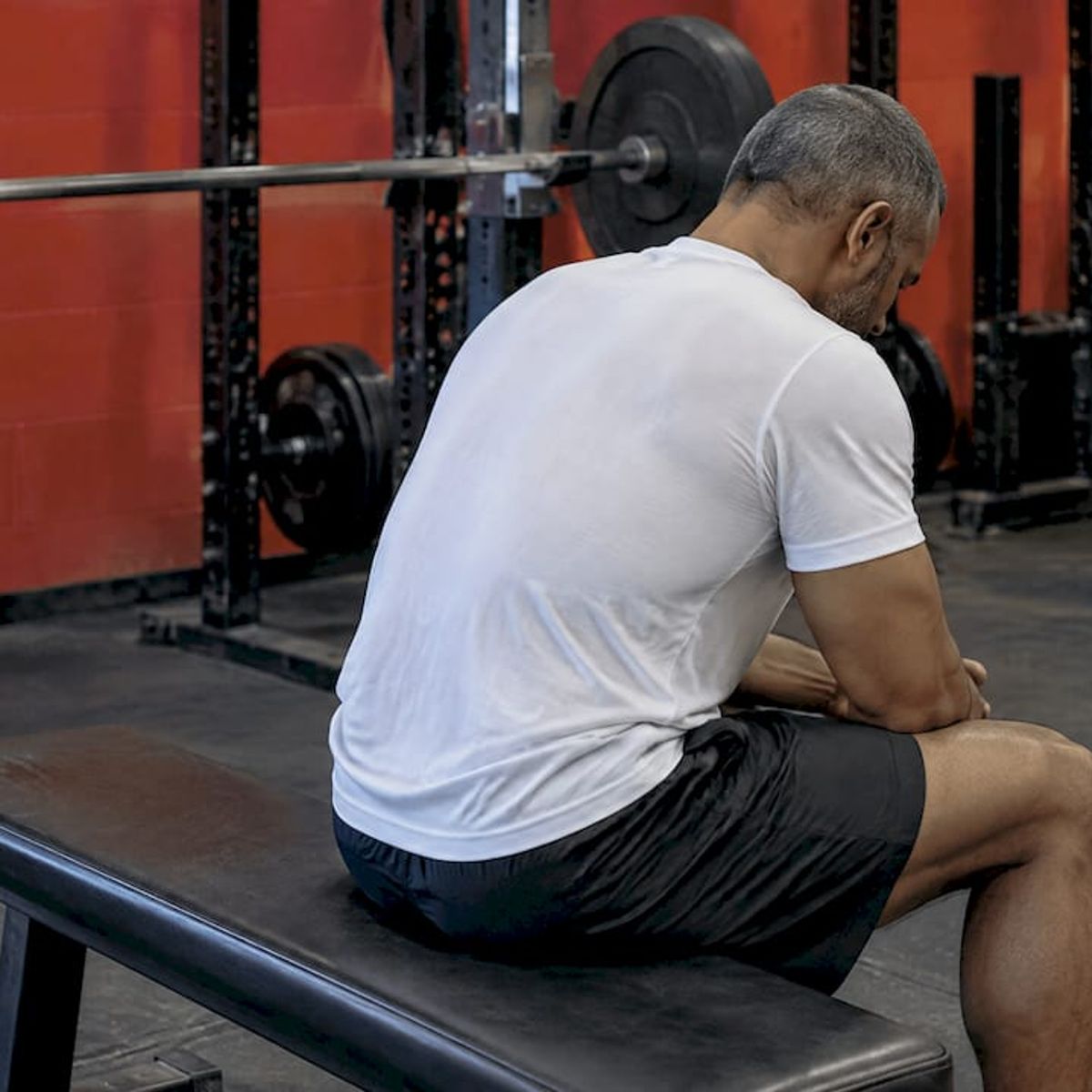
What does 5 minutes look like in real life? It is long. You can use it well:
- Fill part of it with a light warm-up set for your next lift.
- Do mobility work for the joint you are about to load.
- Walk, sip water and reset your breathing.
This is also why heavy days are best done with a plan. At Level Up Gym, strength sessions are built so rest and loading are set before you start, not guessed mid-workout.
How long to rest for muscle growth
For years the standard advice was to keep rests short, around 30 to 90 seconds, because short rests were thought to raise growth-promoting hormones. That idea has lost ground. A 2024 systematic review and meta-analysis in Frontiers found a small hypertrophy benefit for rests longer than 60 seconds, and no appreciable difference once rests went beyond 90 seconds. The authors also point out that short-lived hormone spikes after exercise may not play an important role in muscle growth, which questions the case for very short rests.
In plain terms, you do not need to hurry. For most people building muscle, 1 to 3 minutes is a solid zone. Use the lower end on lighter isolation work and the higher end on hard compound sets. Men’s Health still cites about one minute between sets of 8 to 12 reps as the classic advice, and that remains workable when time is tight.
A note for women lifters
An ACE-supported study found that three-minute rests were better than one-minute rests for female lifters aiming to build strength or muscle with low-to-moderate intensity training. Total volume lifted was significantly lower in the one-minute session. If you feel rushed by short rests and your reps fall off, that is useful information, not a weakness.
How long to rest for endurance and fat loss
When the goal is muscular endurance, shorter rests make sense because you are training your muscles to keep working under fatigue. Healthline says the best rest for building endurance is under 2 minutes, and intervals as short as 20 seconds can still help. The de Salles review also found that rests of 20 seconds to 1 minute supported higher repetition velocity across repeated submaximal efforts.
Results vary by exercise and load, though. A 2023 pilot study using a 65% one-rep max bench press found that 2 to 3 minutes of rest may suit endurance, while 4 to 5 minutes may suit hypertrophy. The takeaway is that heavier loads need more recovery even when the aim is endurance.
For fat loss, the exact interval is less important than the habits around it. According to Healthline, consistency and a nutritious diet matter more than rest length. A practical approach is to pick a rest that lets you complete good work and finish the session, then repeat it three or four times a week. If you want help with the food side, our meal planning is built to work alongside your training.
How long beginners should rest
If you are new, start at 60 to 120 seconds. Healthline recommends that range for novice lifters so they recover enough to perform the next set with good form. When you are working on technique, 1 to 2 minutes is usually enough.
The NSCA adds a useful caution: people who are poorly conditioned often need extra time for their heart and lungs to recover, and may need rests of more than three minutes. That is not a failure. Your breathing and heart rate settle faster as fitness improves, and your rests will naturally shrink.
A few beginner rules that keep things simple:
- Rest until your breathing is calm and you feel steady.
- Do not start the next set while your hands are shaky or your form feels loose.
- Use a clock only to notice patterns, not to rush yourself.
- Write down your rest times for a few weeks so you can see yourself improving.
This is the exact stage our 6-week Onramp is designed for. Coaches teach the lifts, set the pace and tell you when to go, so you are never guessing.
Use the clock, then use your body
Fixed timers are a good starting point, but the best approach combines a range with feedback. The NSCA suggests choosing a rest length inside the researched 2 to 5 minute range for heavy training, then autoregulating based on fatigue and performance. A 2026 study in PMC found that self-selected and adjustable rest protocols produced significantly greater repetition volume than fixed protocols.
Here is a simple autoregulation routine you can use:
- Pick a minimum. For example, 2 minutes on compound lifts and 90 seconds on accessories.
- Check your breathing. If you cannot talk in short sentences, wait.
- Check your target. Can you hit the planned weight and reps with solid form? If yes, go.
- Extend if needed. If you expect to miss reps, add 30 to 60 seconds.
- Trim if you are fresh. On easy sets, you can cut rest and keep the session moving.
A short activation routine before the first working set can also help you start feeling ready. For one example, see this guide to a vibration plate before workout routine. Whatever you pick, the point is the same: begin your next set when you are ready to do it well, not when a timer says so.
Is 2 or 3 minutes too long?
No. For strength and often for muscle, longer rests are likely better. The NSCA says rests of three minutes or more are likely superior for strength and hypertrophy, with an autoregulated approach being the best.
One StrengthLog analysis reports that about 95% of your strength and power returns after two minutes, while recovering close to 99% can take five minutes or more. So two minutes is a fair compromise when your time is limited, and three to five minutes is the better choice when the set is heavy and your target is strength.
The real cost of long rests is time. If you only have 45 minutes, try pairing exercises that do not compete for the same muscles, such as a squat followed by a pull-up. We break down that approach in our guide to supersets vs straight sets.
Rest times for common training styles
Different session types call for different rules. Here is how to apply the ranges.
Heavy strength day
Take 3 to 5 minutes on the main lift, then 1 to 2 minutes on accessories. Expect the session to run 60 to 75 minutes. If you train three days a week, our piece on strength training three days weekly shows how to structure it.
Muscle-building day
Use 90 seconds to 3 minutes on compound lifts and 60 to 90 seconds on isolation work. Keep an eye on your reps. If your second and third sets drop by more than a couple of reps, add 30 seconds next time.
Circuits and conditioning
Work-to-rest ratios matter more here than strict rest periods. Keep rests short, from 20 to 60 seconds, and pick weights you can control while tired. Rounds in boxing and hybrid classes follow the same idea, with timed work and timed recovery.
Short sessions between classes
If you are squeezing training between lectures, you can use paired sets and 60 to 90 second rests to finish within 30 minutes. Our guide to quick gym sessions between classes has examples.
Common mistakes with rest periods
- Rushing heavy sets. Cutting rest on big lifts lowers the weight or reps you can use, which defeats the point of the session.
- Scrolling through long rests. A five-minute break can turn into ten. Use a timer, then start the next set when you are ready.
- Treating one number as law. The ACSM says recommendations should be read in the context of your goals, physical capacity and training status.
- Ignoring the rest of recovery. Sleep, food and days off also decide how well you lift. Our article on the role of recovery in training covers the bigger picture.
- Skipping food around training. Fueling affects how fresh you feel set to set. See our guides on post-workout carbs and meal timing for workouts.
Perspective
Most people who walk into a gym are told a number and nothing else. “Rest 60 seconds.” “Rest three minutes.” The number is rarely the problem. The problem is that nobody is watching what happens next.
We coach small, capped groups on purpose. That lets a coach see when your bar speed slows, when your squat depth changes or when your jab gets sloppy in round four, and then adjust your rest on the spot. The research points the same way: ranges are a guide, and adjusting to fatigue and performance is what works.
Our hybrid model also means rest means different things on different days. A heavy lift gets full recovery. A conditioning block gets short, controlled breaks. Boxing rounds teach you to recover in 30 to 60 seconds and still keep your hands up. Knowing which one you are doing, and why, is the skill we want you to leave with.
If you are a beginner, we would rather you rest a little too long and move well than rush and learn bad habits. Every new member starts with a free class or consult and a written, individualized plan, so you never have to guess.
Malcolm
Train with coaches who time it for you
If you would rather not manage the clock yourself, we can do it with you. Level Up Gym is a hybrid training and boxing gym in Stratford and Bridgeport, CT, with certified coaches, capped class sizes and no contracts. Beginners are welcome, and you start with a free class or consult and a written plan built for you.
Here is what is published on our membership page:
- Large group classes: $24.99 to $59.99 per week.
- Small group personal training (2 to 4 people): $74.99 to $174.99 per week per person.
- 1-on-1 personal training: $149.99 to $359.99 per week.
- 6-Week Onramp: $699, one-off. See how the Onramp works.
Curious about boxing? Our boxing classes are coached by certified coaches, including pro boxers, and focus on real boxing technique, not cardio boxing. You can also try a free boxing class in Stratford.
FAQ
Is 2 minutes of rest between sets okay?
Yes. Two minutes is a solid default for most lifters. It suits muscle building and accessory work, and the ACSM sets it as a minimum for heavy multi-joint lifts. For very heavy strength sets, you may want to go longer.
Is resting 3 minutes between sets too much?
Not for strength or muscle. The NSCA says rests of three minutes or more are likely superior for both, and research on female lifters found that three-minute rests supported more total volume than one-minute rests. The only real cost is time, so pair non-competing exercises if you are short on it.
How long should I rest between sets as a beginner?
Start with 60 to 120 seconds and rest until you can perform the next set with good form. If you are out of breath or your technique is slipping, take more time. Your rests will shorten naturally as your fitness improves.
Does rest time matter for fat loss?
It matters less than showing up consistently and eating well. Pick a rest period that lets you finish the session with good effort, then repeat it each week. Shorter rests can raise the intensity of a circuit, but they are not required.
Should I use a timer or go by feel?
Use both. Set a minimum on a timer, then extend it if your breathing, form or reps say you are not ready. Studies on adjustable rest suggest this approach leads to more total repetitions than a fixed timer alone.
Sources
- Rest Between Sets: How Long to Wait, Based on Your Goals (Healthline)
- Rest interval between sets in strength training (de Salles et al., PubMed)
- A brief review: factors affecting the length of the rest interval (Willardson, PubMed)
- How to manipulate rest intervals to maximize strength training effectiveness (NSCA Personal Training Quarterly)
- Progression models in resistance training (ACSM position stand)
- Give it a rest: a systematic review with meta-analysis (Frontiers)
- How Long to Rest Between Sets in Workouts for Muscle and Strength (Men’s Health)
- ACE-supported research: How long should you rest between sets?
- Pilot study on exercise performance level and physiological responses (MDPI)
- Repetition-based inter-set rest adjustment (PMC)
- How Long Should You Rest Between Sets? (StrengthLog)