Boxing Conditioning Class: What It Is and What to Expect
A boxing conditioning class is a coached workout that borrows the structure of boxing, timed rounds with short rests, and uses it to build stamina, strength and footwork. You throw punches at bags and pads, but most of the effort goes into the work around the punching: movement, core, legs and breathing under fatigue. You do not need any fighting experience, and nobody spars.
This guide explains how a session runs, what the research says about it, how it differs from cardio boxing, and how to pick a class that fits your level. We coach boxing and hybrid training at our Stratford and Bridgeport, CT gyms, so we also cover how we run our own sessions.
Level Up Gym
levelupgym.app
Build Conditioning Through Boxing
Level Up Gym coaches boxing and hybrid training in Stratford and Bridgeport, with beginner-friendly sessions for adults looking to build fitness.
TL;DR
- Boxing conditioning combines timed rounds of punching, footwork, bodyweight strength and core work, scaled to your current fitness.
- Vigorous boxing can count toward the CDC’s weekly target of 75 minutes of vigorous activity, and you should still add two days of strength work.
- Beginners should expect a warm-up, technique first, and an intensity they can control. Showing up consistently beats going all out once.
- Look for a capped class size, certified coaches, and a first session that costs nothing. We offer a free boxing class in Stratford.
Table of Contents
- What a boxing conditioning class actually is
- How a session runs, round by round
- What the research says about the benefits
- Is it right for a beginner?
- What to wear and bring
- Perspective: why we teach conditioning through real boxing
- How to choose a boxing conditioning class
- Conditioning for fat loss
- Drills you will likely meet
- Starting at Level Up Gym
- FAQ
- Sources
What a boxing conditioning class actually is
The name covers a few formats, so it helps to separate them.
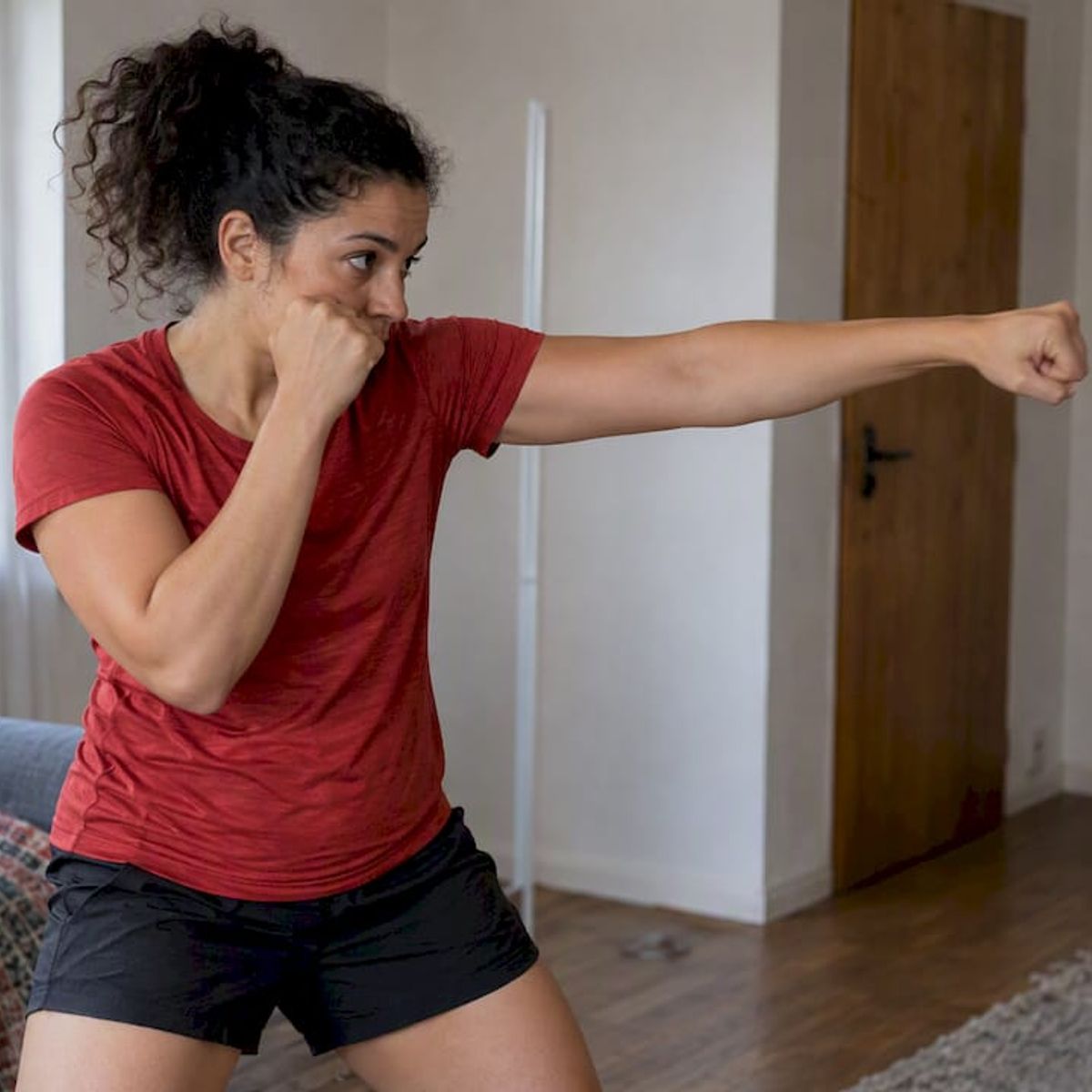
Boxing conditioning uses boxing as the engine. Rounds are usually three minutes, mirroring competitive boxing, with a short break between them. Inside a round you might work the heavy bag, hold pads with a partner, skip rope, do footwork ladders, or run bodyweight circuits such as squats, push-ups and planks.
Cardio boxing is choreographed. You follow a pattern of punches to music, and technique is secondary. It is a fine workout, but it is not the same thing.
Boxing technique classes spend most of the session on stance, defense and combinations, with less emphasis on fatigue.
A good conditioning class sits between the last two: real technique, taught first, with intensity layered on top. That order matters. Research on a six-week boxing program describes teaching proper technique before raising intensity or pace, and starting with a few minutes of joint mobilization for the shoulders, elbows, wrists and fingers before any punching.
How a session runs, round by round
Formats vary by gym. A typical 45 to 60 minute session looks like this:
- Warm-up (5 to 10 minutes). Joint mobility, light jump rope, shadow boxing at half speed.
- Technique block (10 minutes). Stance, jab, cross, hook, slipping and pivoting. If you want to practice before your first class, our beginner’s shadow boxing guide walks through it.
- Conditioning rounds (20 to 30 minutes). Alternating stations of bag work, pad work, footwork and bodyweight strength, in three-minute rounds.
- Finisher and cooldown (5 to 10 minutes). Core work, then stretching and breathing to bring your heart rate down.
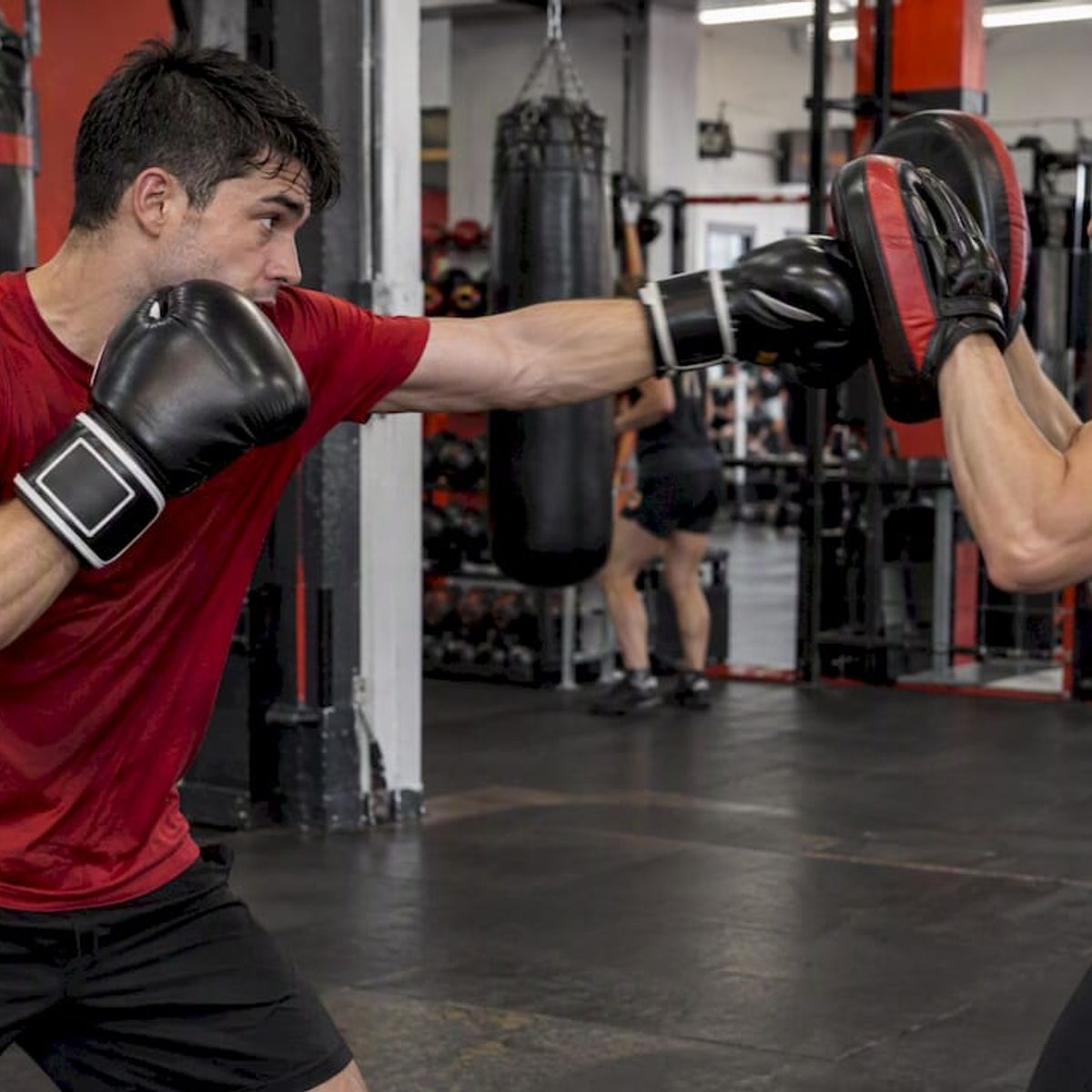
The bag and pad stations are not interchangeable. A study of pad and bag training found pad work was more physiologically demanding, with higher blood lactate and average heart rate, while the heavy bag produced a higher mechanical load. A well-built class mixes both so you get cardiovascular work and muscular impact in the same hour.
Why rounds work
Three-minute rounds with a rest let you push hard, recover, and push again. In a 2026 trial in young adults with elevated blood pressure, sessions used 10 rounds of 3 minutes with 1 minute of active rest, three non-consecutive days a week. Early rounds reached 90 to 95% of heart rate reserve, and later rounds dropped to about 60% for recovery. That is a research protocol, not a beginner prescription. In a normal class, a coach scales the effort to you, and you should not try to match elite intensity on day one.
What the research says about the benefits
Heart and blood pressure
The same six-week boxing study found that training three times a week lowered blood pressure and improved vascular function in young men and women with elevated blood pressure or stage 1 hypertension. It was a supervised intervention in a specific group. If you have high blood pressure, a heart condition or take medication that affects your heart rate, talk to your doctor before starting, and tell your coach on day one.
Weekly activity targets
The CDC’s adult guidelines call for 150 minutes of moderate activity or 75 minutes of vigorous activity a week, plus at least two days of muscle-strengthening work. Vigorous means you can say only a few words without pausing, which describes a hard boxing round. Two 45-minute conditioning classes in a week would cover most of the vigorous target on their own, provided the rounds are genuinely hard for you.
Strength and variety
The American Heart Association says strength work can be done separately from cardio or added to an existing workout, and that variety helps people stick with exercise. Boxing conditioning does the second thing: bodyweight squats, lunges and planks sit between rounds of punching.
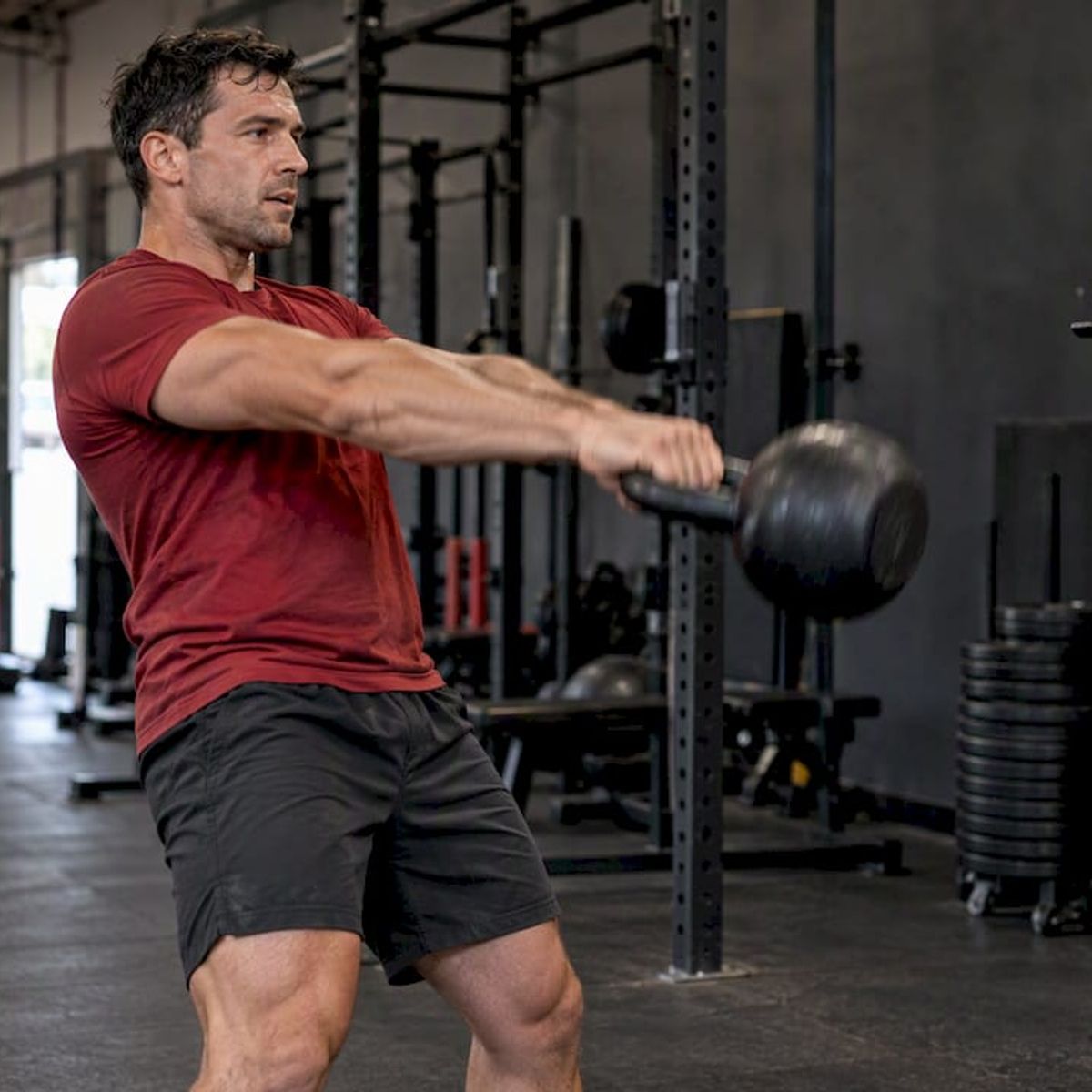
To count as strength work, the CDC says to train all major muscle groups, with 8 to 12 repetitions per set, and at least one set for benefit. A conditioning class gives you some of that, but not all of it. If lifting heavier loads is a goal, add a dedicated session. We cover how in our guide to strength training for boxing and in boxing and strength training.
Is it right for a beginner?
Yes, with the right class. High-intensity work does not need high-skill movement, and the American College of Sports Medicine notes that trainers can adapt intensity to each person’s fitness level so that participants still get the cardiovascular challenge they need. In practice, that means a newcomer and a regular can share a round: one jabs at a controlled pace, the other works harder, and both finish tired.
The ACSM’s 2026 resistance training guidance makes a related point: the best plan is the one you will actually do. For a beginner, that means a class you can finish and recover from, then repeat next week. If you are over 50, see our starter plan for adults 50+.
How often to go
Most beginners do well with two sessions a week, then add a third once recovery feels easy. Soreness in your shoulders, forearms and calves in the first two weeks is normal. Sharp joint pain is not, so stop and tell the coach. We break down frequency by goal in how often adults should box.
What to wear and bring
- Shoes: flat, stable, with grip for pivoting. Running shoes with thick, cushioned heels can feel wobbly when you rotate on the ball of your foot. For more on comfort and fit, see these workout footwear tips.
- Clothing: breathable and not baggy around the shoulders and hips.
- Hand protection: many gyms lend gloves for a first class. Ask before you buy anything.
- Water and a towel. Three-minute rounds add up to a lot of sweat.
Perspective: why we teach conditioning through real boxing
We built our boxing classes around a simple belief: conditioning feels better and lasts longer when there is a skill inside it. Our coaches are certified, and some are pro boxers, so people learn how to throw a punch properly rather than flail at a bag for 45 minutes. That is what separates this from cardio boxing, and it is why beginners progress without feeling lost.
We also keep class sizes capped. A coach who can see every person in the room can correct a dropped hand or a locked knee before it becomes a habit, and can tell you to ease off when you are overreaching. Beginners are our priority, which is why every new member starts with a free class or consult and a written, individualized plan, and why we have no contracts. If a class does not suit you, you can leave.
The mistake we see most often is chasing intensity before technique. The people who still train with us a year later are rarely the ones who went hardest in week one. They are the ones who came back on Thursday.
— Malcolm
How to choose a boxing conditioning class
Use these questions at any gym, ours included.
What to checkWhat good looks like
Class size
Capped, so the coach can watch your form
Coach credentials
Certified trainers, ideally with real boxing experience
Beginner path
A defined way to start, not just “jump in”
Warm-up
Structured mobility before punching, not a quick jog
Scaling
Rounds and rest adjusted to your level
Trial
A free or low-cost first session
Commitment
Month-to-month or pay-as-you-go, no long contract
Our longer guide on choosing a boxing gym for beginners matches each of these to common goals such as fat loss, confidence or fitness. If you prefer a smaller setting, read about small group boxing classes.
Conditioning for fat loss
Boxing conditioning burns a lot of energy in a short time, but fat loss still depends on your weekly routine and how you eat. A class two or three times a week, a daily walk, protein at each meal and enough sleep will do more than one brutal session followed by a week off. Our boxing workout for fat loss guide gives a full weekly layout, and our free fitness calculators can estimate your daily calorie needs. If you want help with meals, we offer meal planning and nutrition coaching.
Drills you will likely meet
If you want a preview, these are common conditioning drills in a boxing class:
- Jab-cross rounds on the bag: steady output, focused on crisp form as you tire.
- Pad rounds with a partner or coach: combinations called out, with defense built in.
- Jump rope intervals: footwork and calf endurance.
- Bodyweight circuits: squats, lunges, push-ups and planks between rounds.
- Footwork ladders and shuffles: balance and quick direction changes.
We ranked these by how well they carry over to actual boxing in 6 boxing conditioning drills ranked by ring transfer.
Starting at Level Up Gym
We run hybrid training and boxing classes in Stratford and Bridgeport, CT, for adults and students from Fairfield, Milford and the surrounding towns. Start with a free boxing class in Stratford to see how a session feels. From there, you can pick what fits:
- Boxing classes for real boxing coaching in a group setting.
- Large group classes, priced at $24.99 to $59.99 per week on our membership page.
- Small group personal training (2 to 4 people) at $74.99 to $174.99 per week per person, or 1-on-1 personal training at $149.99 to $359.99 per week.
- The 6-week Onramp, a one-off $699 program built for beginners.
If you can’t get to a gym, we also offer online training.
FAQ
What is boxing conditioning?
Boxing conditioning is training that uses boxing’s round structure and movements to build endurance, strength and coordination. A session mixes bag and pad work, footwork and bodyweight exercises in timed rounds. You do not have to spar or compete.
Is boxing good for your heart?
Vigorous aerobic activity supports heart health, and the CDC counts it toward its weekly activity target. In a 2026 study, six weeks of supervised boxing training lowered blood pressure in young adults with elevated readings. If you have a heart condition or high blood pressure, ask your doctor before you start.
Do I need experience or my own gear?
No. A good beginner class teaches stance and basic punches first. Many gyms provide gloves for your first session, so ask when you book. Bring water, a towel and flat, stable shoes.
How many times a week should I take a class?
Two is a sound starting point for most beginners, with a third added once you recover well. Spread sessions across the week rather than stacking them on consecutive days. If you also lift or run, count those toward your total.
Sources
- CDC: Adult Activity Overview
- CDC: What Counts as Physical Activity for Adults
- Six Weeks of Boxing Training Lowers Blood Pressure and Improves Vascular Function (PMC)
- Physical Response to Pad- and Bag-Based Boxing-Specific Training Modalities (PubMed)
- American Heart Association: Strength and Resistance Training Exercise
- ACSM: Resistance Training Plan
- ACSM: High-Intensity Exercise