
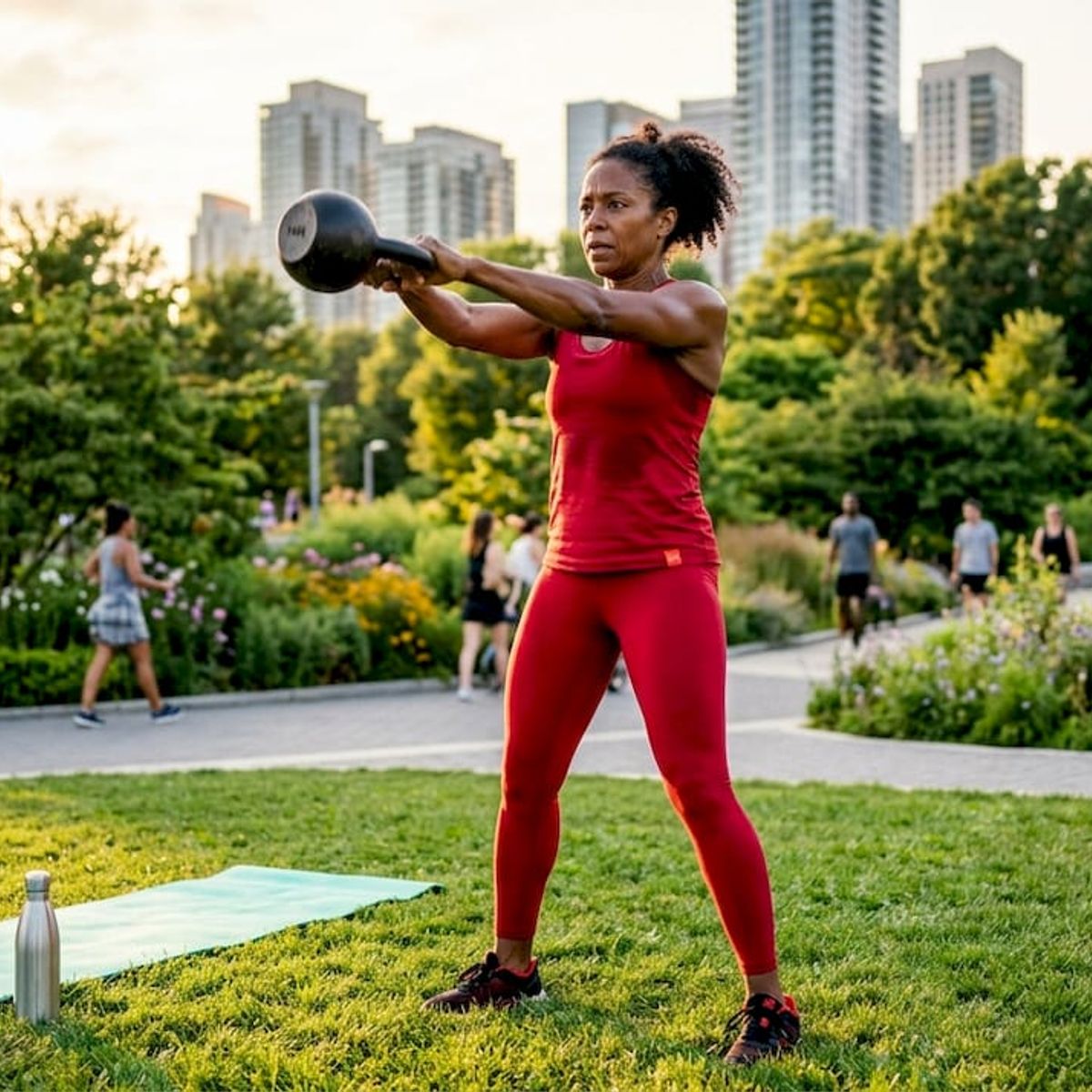
What Is Functional Fitness and Why It Matters
Functional fitness is defined as training that improves your body’s ability to perform everyday movements, including squatting, lifting, bending, and pushing, safely and efficiently. Unlike workouts built around isolated muscle groups, functional training uses multi-joint, multiplanar movements that mirror real-life demands. Muscle mass begins declining around age 25, making this approach one of the most practical strategies for preserving strength and independence across a lifetime. Dartmouth Health identifies functional fitness as a method that builds balance, coordination, and mobility simultaneously, not just raw strength. The result is a body that moves better, not just one that looks stronger.
What are the primary benefits of functional fitness?
Functional fitness delivers benefits that go well beyond aesthetics. The most measurable gains show up in neuromuscular coordination, cardiovascular capacity, and injury resilience.
Neuromuscular coordination is the first area to improve. When you train movements instead of muscles, your brain and body learn to work as a team. Squatting with proper form, for example, recruits your glutes, hamstrings, core, and stabilizing muscles in one fluid sequence. That kind of coordination carries directly into daily life, whether you are lifting a child or loading groceries into a car.
Cardiovascular fitness is another documented benefit. 2026 clinical trials report that high-intensity functional training improves VO2max significantly more than traditional resistance training alone, particularly among overweight men. VO2max is the gold standard measure of aerobic capacity, and higher levels correlate with longer, healthier lives.
The physical benefits of functional training include:
- Balance and stability: Multi-directional movements challenge your stabilizer muscles, reducing fall risk.
- Mobility: Full range-of-motion exercises keep joints healthy and flexible.
- Injury prevention: Stronger stabilizers protect tendons and ligaments during unexpected movements.
- Independence: Functional fitness supports real-life movements, preserving quality of life as you age.
Each of these benefits compounds over time. A person who trains functionally at 40 is far less likely to struggle with basic mobility at 70.
How does functional fitness differ from traditional resistance training?
Traditional resistance training and functional training are not opposites. They share tools, including barbells, dumbbells, and cables. The difference is in the intent behind each movement.
Traditional resistance training often isolates a single muscle group. A leg extension machine targets the quadriceps with no input from surrounding muscles. That approach builds size and raw strength effectively, but it does not teach muscles to coordinate under real-world conditions.
Functional training, by contrast, emphasizes integrated movement patterns that improve how muscles and the brain communicate. A barbell squat, a kettlebell deadlift, or a single-leg Romanian deadlift all require multiple muscle groups to fire in sequence. That sequencing is what makes functional training transfer to daily life.
FeatureTraditional resistance trainingFunctional training
Movement focus
Single-joint isolation
Multi-joint, multiplanar
Primary goal
Muscle size and strength
Movement quality and coordination
Equipment
Machines, free weights
Bodyweight, free weights, bands
Real-life transfer
Moderate
High
Injury prevention focus
Lower
Higher
Personalization also separates the two approaches. Functional programs must suit the individual’s daily demands, which means a warehouse worker and a desk-bound office worker need different movement priorities, even if both are training for general health.
Pro Tip: If you currently do traditional resistance training, you do not need to abandon it. Add one functional movement pattern per session, such as a single-leg squat or a farmer’s carry, and you will start building the coordination benefits without overhauling your routine.
What are common functional fitness exercises and how do beginners start safely?
Functional fitness exercises fall into a handful of foundational movement patterns. Every program, regardless of fitness level, builds from these categories.
- Squatting: The bodyweight squat and goblet squat train the hip-hinge pattern used every time you sit down or stand up. Start with feet shoulder-width apart, chest tall, and knees tracking over toes.
- Hinging: The Romanian deadlift and kettlebell deadlift teach you to load the hips safely, the same mechanics used when picking something up off the floor.
- Pushing: Push-ups and dumbbell shoulder presses build upper-body strength in the horizontal and vertical planes. Both patterns appear constantly in daily life.
- Pulling: Rows and lat pulldowns train the muscles that support posture and protect the shoulder joint. Most people are chronically weak in this pattern.
- Core engagement: Planks, dead bugs, and pallof presses train the core to resist movement, which is how it actually functions during real-life tasks.
2025 guidance recommends that beginners start with a circuit of 5 exercises, 12 reps each, repeated 1–2 times with rest between sets. That structure limits fatigue while building the motor patterns needed for safe progression. It also prevents the common beginner mistake of doing too much too soon.
Proper form and core engagement are non-negotiable in functional training, especially for beginners. Complex multi-joint movements demand more technique awareness than machine-based exercises. A rounded lower back during a deadlift, for example, shifts load onto the spine rather than the hips.
Pro Tip: Film yourself from the side during squats and hinges. You will spot form breakdowns, like forward lean or knee cave, that you cannot feel in the moment. Fix them early before they become habits.
Most functional movements require no special equipment, making them accessible regardless of budget or location. Bodyweight squats, push-ups, and lunges are complete training tools on their own. As you build strength, resistance bands, dumbbells, and kettlebells provide the progressive overload needed to keep improving. A structured workout program helps you apply progressive overload systematically rather than guessing week to week.
How can functional fitness support mobility and independence as people age?
Aging and functional fitness are directly connected. Muscle mass typically begins declining around age 25, and without deliberate training, that decline accelerates into a condition called sarcopenia, the progressive loss of muscle mass and strength that limits mobility in older adults.
The good news is that functional training directly counters this process. The benefits for aging adults include:
- Maintained muscle mass: Resistance-based functional movements stimulate muscle protein synthesis, slowing age-related loss.
- Fall prevention: Balance training within functional programs reduces fall risk, one of the leading causes of injury-related death in adults over 65.
- Joint health: Full range-of-motion movements keep cartilage nourished and joints mobile.
- Daily independence: The ability to carry groceries, climb stairs, and get up from the floor without help depends on functional strength, not gym performance metrics.
“Performing foundational movements like sitting down and standing up without support is a vital indicator of physical resilience and healthy aging. Movement competence outweighs traditional size or weight goals in predicting long-term independence.”
Functional fitness for seniors does not require high intensity or heavy loads. Bodyweight squats, step-ups, and resistance band rows all qualify as functional training when performed with attention to form and range of motion. The key is consistency, not intensity. Adapting exercises to individual capacity is what makes this approach sustainable across decades, not just months.
Balancing strength work with cardiovascular movement also matters. Learning how to balance strength and cardio ensures that functional training supports heart health alongside mobility, which is especially relevant for adults over 50.
Key Takeaways
Functional fitness is the most direct training method for maintaining strength, mobility, and independence across every stage of life.
PointDetails
Core definition
Functional fitness trains multi-joint movements that mirror real-life tasks, not isolated muscles.
Top health benefits
Improved VO2max, neuromuscular coordination, balance, and injury prevention are all documented outcomes.
Beginner starting point
Start with 5 exercises, 12 reps each, in a circuit format, focusing on form before adding load.
Aging and independence
Muscle decline starts at age 25; consistent functional training slows sarcopenia and preserves daily independence.
No equipment needed
Most foundational movements use bodyweight, making functional training accessible at any fitness level.
Why I think most people start functional fitness the wrong way
The most common mistake I see is people treating functional fitness like a style of workout rather than a philosophy of movement. They swap their leg press for a goblet squat and call it functional training. That misses the point entirely.
Functional fitness works because it asks a specific question before every exercise: does this movement make daily life easier? If the answer is no, the exercise might still be useful, but it is not functional training. That question changes how you program, how you progress, and how you measure success.
The second mistake is chasing intensity before mastering mechanics. I have watched people attempt kettlebell swings with a rounded back because they saw it in a video and wanted to feel the burn. The burn they eventually felt was in their lower back, not their glutes. Form is not a beginner concern. It is a permanent concern.
The third thing most articles will not tell you: functional fitness is deeply personal. A firefighter’s functional needs look nothing like a retired teacher’s. The movements that matter most depend entirely on what your daily life demands. Generic programs help you start, but personalized coaching is what makes functional training stick long-term.
Start where you are. A bodyweight squat done well is more valuable than a barbell squat done badly. The goal is a body that serves you for decades, not a performance that impresses people for a season.
— Malcolm
Functional training programs at Level Up Gym
Level Up Gym’s hybrid training programs in Stratford and Bridgeport, CT, are built around the same principles covered here: multi-joint movements, progressive overload, and programming that fits your actual life. Whether you are starting from zero or looking to add structure to an existing routine, the coaches at Level Up Gym design programs around your goals and daily demands.
For those who prefer to train on their own schedule, online personal training brings the same expert coaching to wherever you are. Every program includes movement assessment, form guidance, and progressive programming so you build functional strength safely and consistently. Level Up Gym also offers group training classes for those who train better with a community around them.
FAQ
What is functional fitness in simple terms?
Functional fitness is training that improves your ability to perform everyday movements like lifting, bending, and climbing stairs. It focuses on multi-joint exercises that build strength, balance, and coordination simultaneously.
How is functional training different from regular gym workouts?
Traditional gym workouts often isolate single muscles using machines, while functional training uses multi-joint movements that train muscles to work together. The goal is movement quality and real-life performance, not muscle size alone.
What are the best functional fitness exercises for beginners?
Beginners should start with squats, lunges, push-ups, rows, and planks in a circuit of 5 exercises with 12 reps each. This format builds foundational movement patterns safely before adding resistance.
Is functional fitness good for seniors?
Functional fitness is especially beneficial for older adults because it directly addresses muscle loss, balance, and fall prevention. Exercises like bodyweight squats and resistance band rows can be adapted to any fitness level and require no special equipment.
How often should you do functional fitness training?
Two to three sessions per week is a practical starting point for most people. Consistency over months matters more than session frequency, particularly when learning new movement patterns.
Recommended
- Structured Workout Program Benefits for Real Results — Level Up Gym | Level Up Gym
- Fitness Goal-Setting Best Practices for Real Results — Level Up Gym | Level Up Gym
- What Is Metabolic Conditioning and Why It Works — Level Up Gym | Level Up Gym
- Habit Stacking Fitness: Build Routines That Actually Stick — Level Up Gym | Level Up Gym