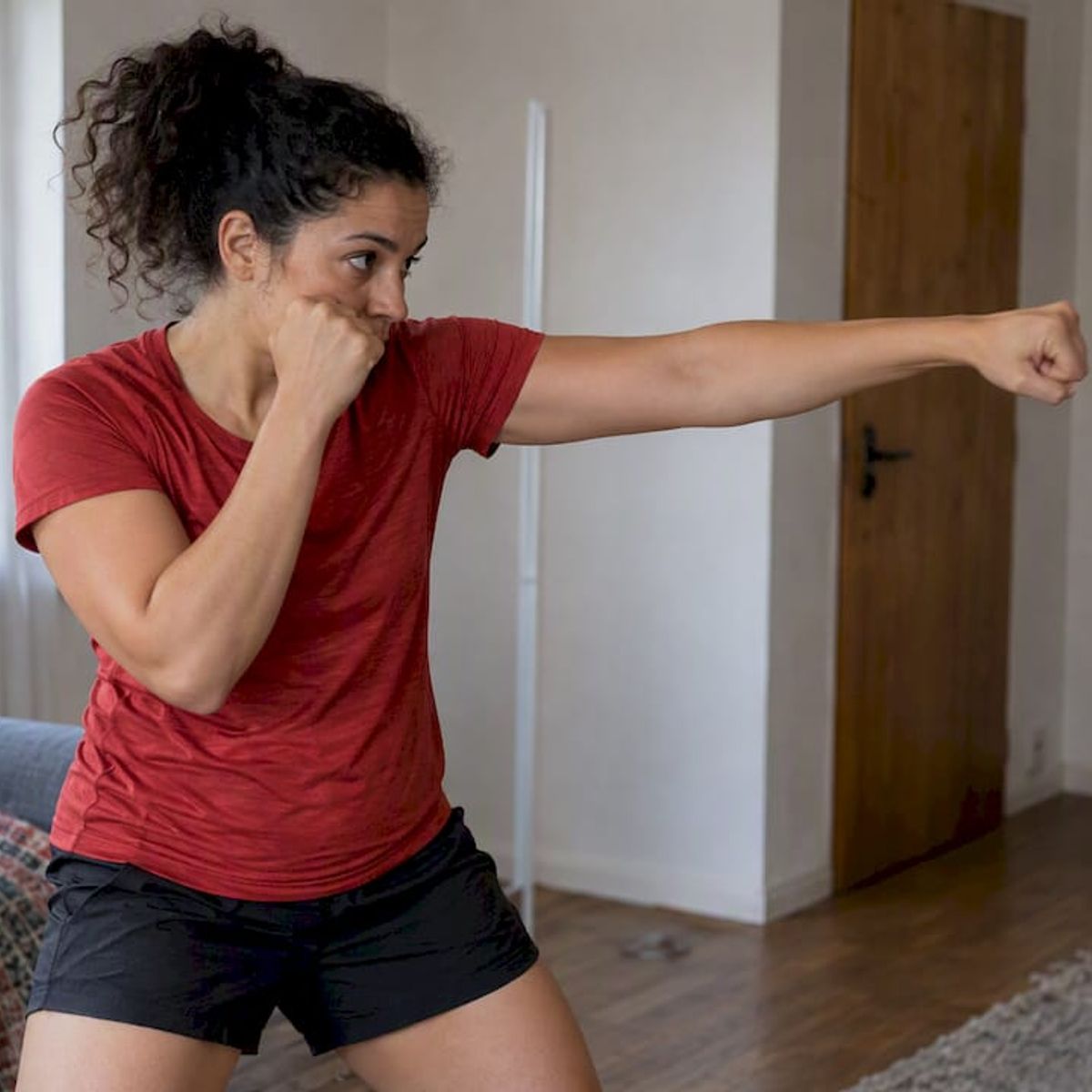
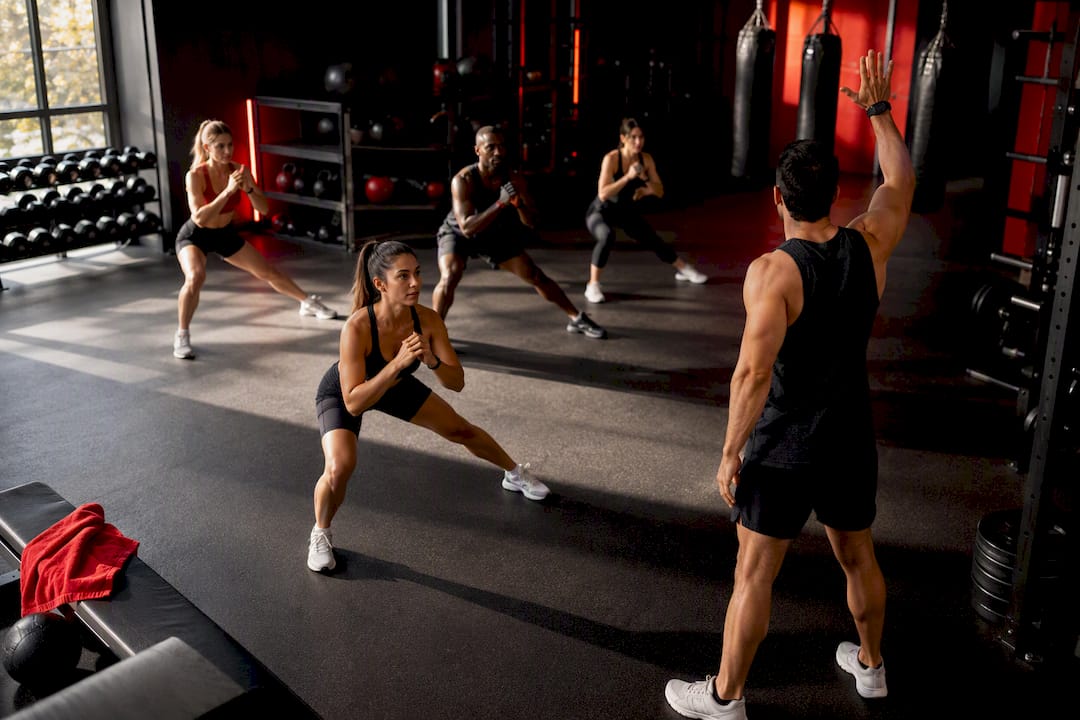
5 Group Fitness Etiquette Rules Instructors Insist On
Follow five rules and you will never be the person a group fitness class silently resents: book ahead, and show up on time, stay home if you are sick, keep a respectful buffer around other people’s space, follow your instructor’s cues instead of freelancing, and keep your phone silent and out of sight. None of this is about manners for their own sake. Group fitness class etiquette exists because a room full of strangers moving together only works when everyone protects the same three things: safety, flow, and the instructor’s ability to actually teach.
TL;DR:
- Book your spot early and always cancel promptly if your plans change, especially in classes with limited capacity like boxing or TRX.
- Arrive a few minutes before start time to set up equipment quietly or, if late, enter during a natural pause without disrupting the flow.
- Wear appropriate attire for the class type, bring essentials like water and a towel, and warm up on your own if needed before group warm-up.
- Stay home when sick to prevent spreading illness, and consistently wipe down shared equipment, using your own towel and hand sanitizer when possible.
- Silence your phone, avoid recording without permission, and respect personal space to maintain safety, flow, and instructor authority during the class.
Level Up Gym
Train With Coaching That Fits
Level Up Gym offers coached fat loss, strength, and boxing for Fairfield County adults, with beginners welcome and no contracts.
Table of Contents
- What Are the Basic Rules for Arriving to a Group Fitness Class?
- What Should You Wear and Bring to a Group Class?
- Why Should You Stay Home From Class When You’re Sick?
- Should You Ever Use Your Phone During a Fitness Class?
- How Do You Respect Personal Space and Shared Equipment?
- How Should You Choose Modifications and Exercise Intensity?
- How Can You Help New Attendees Feel Welcome?
- Why Is Following Your Instructor’s Cues So Important?
- How Should You Handle the Cool-Down and Leaving Class?
- What’s the Right Noise Level During a Group Class?
- How Should You Handle Disagreements During Class?
- How Should You Use Mirrors and Personal Space During Exercises?
- What Are the Etiquette Rules for Partner and Group Exercises?
- Instructor Perspective: What Teachers Actually Notice
- Learn the Ropes Without the Guesswork
- Sources
- FAQ
What Are the Basic Rules for Arriving to a Group Fitness Class?
Show up a few minutes before start time. That window covers checking in, grabbing equipment, finding a spot, and getting a quick warm-up in before the instructor calls the room to attention. Most studios now run on reservation systems, and skipping the cancel step when your plans change just burns a spot someone else wanted.
If you are running late anyway, do not barrel through the door mid warm-up. Slip in quietly, set up your area with as little noise as possible, and wait for a natural pause in the flow, like a water break or a transition between blocks, before joining in. Walking straight into a lunge sequence three minutes after class starts is how people pull muscles and clip their neighbors.
- Book your spot in advance and cancel promptly if you can’t make it.
- Arrive early enough to set up equipment without rushing.
- If late, enter quietly and wait for a pause rather than jumping straight into a moving exercise.
- Equipment-heavy formats (boxing, rowing, TRX) need extra setup time. Budget for it.
Reservation etiquette matters more in capped classes. A room with a hard headcount limit, the kind you will find at boxing classes that rely on paired stations and bag space, runs on the assumption that every booked spot shows up or gets released in time for someone else.
What Should You Wear and Bring to a Group Class?
Dress for the format, not just for comfort. Boxing and kickboxing call for supportive athletic shoes with lateral stability, cardio and strength formats want breathable layers you can shed as you heat up, and mind-body classes like yoga or Pilates often work better in grip socks than bare feet on a shared mat.
Pack light but pack right:
- A water bottle. Studios rarely stock enough for a full room.
- A small towel for wiping down shared equipment and your own sweat.
- A mat if the class doesn’t provide one.
- Minimal jewelry. Rings and dangling earrings snag on gear and other people during partner drills.
Warming up is your job, not just the instructor’s. Most classes build in a group warm-up, but if you have a tight hip or a shoulder that needs extra attention, get there early and handle it yourself before the group session starts. Instructors program a general warm-up for the room, not a personalized one for your old injury.
Why Should You Stay Home From Class When You’re Sick?
Staying home when you’re feeling under the weather is the single most important hygiene rule in any shared workout space, and public health guidance on limiting the spread of illness backs it up directly through CDC physical activity guidance. A room full of people breathing hard in close quarters is exactly the kind of environment that can spread illness widely.
Beyond staying home, hygiene is a shared responsibility that does not end when the workout does.
- Wipe down every mat, bench, or piece of equipment you touched, before you leave, not just when you remember.
- Bring your own towel instead of relying on the studio’s limited supply.
- Wash or sanitize your hands before and after class, especially in formats that involve shared gloves, wraps, or pads.
- Report broken or visibly dirty equipment to staff instead of just avoiding it.
Pro Tip: Keep a small bottle of hand sanitizer clipped to your gym bag. It sounds minor, but it’s the fastest way to handle the gap between “the studio just wiped this equipment” and “twenty other hands touched it since then.”
Facilities carry part of the load here too, similar to how commercial hygiene standards push shared spaces to keep high-touch surfaces sanitized on a regular schedule. But the studio’s wipe-down station only works if people actually use it.
Should You Ever Use Your Phone During a Fitness Class?
Turn your phone to silent, or better, leave it in your bag entirely. A screen glowing on the floor next to your mat is a distraction to you and everyone within eyeshot, and a ringtone going off mid-instruction cuts through the room in a way that breaks everyone’s concentration, not just yours.
Recording video or photos is a gray area most people get wrong. Never film other participants without asking first, and check with the instructor before filming any part of the class, even just for your own form check. Some studios allow it during specific portions; most do not allow it during partner or close-contact drills for obvious privacy reasons.
- Silence your phone before class starts, not after the instructor asks.
- Skip recording unless you’ve cleared it with the instructor and the people around you.
- Save real emergencies (a sick kid, a work fire) as the only acceptable reason to step out and check a call.
- Keep side conversations for before and after class. Cueing time is not chat time.
Cheering a training partner on is part of the culture in boxing and strength classes, but there’s a line between encouragement and drowning out the instructor’s next cue.
How Do You Respect Personal Space and Shared Equipment?
Space in a group class is a shared resource, and the way you use it affects whether the person next to you can see the instructor, swing a kettlebell safely, or throw a jab without clipping your shoulder.
- Pick a spot that keeps sight lines open. Don’t set up directly behind a pillar, a mirror pole, or another tall participant if you can help it, and never plant yourself in the instructor’s direct line of sight to the room.
- Leave real distance between mats, stations, or bags, not just enough to avoid touching, but enough that a lunge or a wide stance doesn’t invade someone else’s zone.
- Return every piece of equipment to where you found it. Dumbbells, resistance bands, and boxing gloves belong in their marked spots so the next class isn’t hunting for gear.
- Don’t camp at the water fountain or hover at a popular station during a rotation. Grab what you need and move.
- Get extra careful during transitions. Small studios and crowded rooms turn a 10 second equipment swap into a collision risk if everyone moves at once. Clear sequencing between movements, the kind ACE’s guidance on movement transitions recommends instructors build in, only works if participants move with the flow instead of against it.
How Should You Choose Modifications and Exercise Intensity?
Use the modifications your instructor actually offers, not the version you saw someone else doing three rows over. A good instructor builds options into every block specifically so people with different fitness levels, injuries, or experience can all work the same movement pattern safely.
That cuts both ways. Choosing the easier option when your knee is barking is smart, not weak. Choosing a flashier, harder variation to show off, especially one you haven’t trained for, like a jump variation or a heavier load you can’t control, puts you and the people around you at risk if your form breaks down mid-rep.
- Take the modification offered before improvising your own.
- Skip the ego lift or the ego jump. Nobody in a group class is grading your intensity.
- Rest when you need to. A missed rep is not a missed class.
- Ask the instructor privately before class if you have an injury that might need a specific adjustment.
Pro Tip: If you’re not sure whether a modification is “allowed,” it almost always is. Instructors would rather see you scale down safely than muscle through a rep you’re clearly not ready for.
Autonomy matters here, but it works best inside the structure the instructor sets, not instead of it.
How Can You Help New Attendees Feel Welcome?
A brief hello to the person setting up next to you goes further than people expect. You don’t need a conversation, just enough acknowledgment that a newcomer doesn’t feel like they wandered into a room full of strangers who all know each other.
What new attendees should do is just as simple: show up a few minutes early and give the instructor a quick heads-up about any injury or limitation before class starts. That thirty-second conversation lets the instructor spot you appropriately and offer the right modification without singling you out mid-class.
- Offer a quick greeting to anyone who looks new, without making a production of it.
- New attendees should introduce themselves briefly to the instructor before class begins.
- Avoid pointing out someone’s unfamiliarity with a move in front of the group. Quiet correction works better than public correction.
- Instructors who greet new students and check in on injuries directly reduce how intimidating a first class feels.
The payoff is measurable, not just anecdotal. According to ACSM’s guidance on reducing intimidation in group exercise, welcome behaviors like pre-class check-ins and offered modifications improve new-attendee retention. People come back to rooms that made them feel like they belonged the first time.
Why Is Following Your Instructor’s Cues So Important?
Cueing isn’t just instruction, it’s a safety system. Instructors typically use three types of cues: performance cues that fix your form, safety cues that prevent injury, and alerting cues that warn you a transition is coming. ACE’s research on effective cueing shows that instructors who mix visual, verbal, and physical cues reach more of the room, because people process instruction differently.
That means the “small” corrections, drop your elbow, soften your knee, breathe out on the exertion, are not optional suggestions. They are the difference between a movement that builds strength and one that wrecks a joint.
Instructors intervene differently depending on what they see. A minor form drift usually gets a verbal cue to the whole room. A dangerous deviation, someone locking out a joint under load or losing control of a swinging weight, gets a direct, individual correction on the spot.
Facilities that run group classes should keep AED access current and pre-participation screening on file, because when something does go wrong, the gap between a fast response and a slow one often comes down to whether staff already had the right information and the right equipment ready before the emergency happened.
That standard comes from ACSM’s case studies on real-world AED response, and it’s part of why reputable studios run drills and collect basic health information from new members before their first class.
- Treat every safety cue as non-negotiable, even if it slows you down.
- Don’t skip alerting cues. They’re your warning that the next move is coming.
- If you have a condition the instructor should know about, mention it before class, not during.
How Should You Handle the Cool-Down and Leaving Class?
The cool-down is part of the workout, not an optional add-on you can skip once the hard part is over. Stretching, breathing, and bringing your heart rate down gradually protects your body, and slipping out during the final stretch disrupts the room’s rhythm right when the instructor is trying to close things out.
If you genuinely need to leave early, a quiet exit is possible without being disruptive. Catch the instructor’s eye, give a brief nod or a quick word, and step out during a natural break rather than mid-movement.
- Stay through the full cool-down whenever your schedule allows it.
- Wipe down and return your equipment before you head for the door, not after you’re already gone.
- If leaving early is unavoidable, signal the instructor quietly and exit during a pause.
- Don’t linger blocking the doorway or gear rack while others are trying to leave too.
A room that empties out smoothly reflects on everyone in it, not just the instructor running it.
What’s the Right Noise Level During a Group Class?
Group energy is part of what makes classes fun, but there’s a difference between enthusiasm and noise that drowns out instruction. A well-run room has a rhythm: quiet during cueing, louder during the actual work set, and back to quiet the moment the instructor starts talking again.
Side conversations are the biggest offender here. Chatting with a friend while the instructor explains the next combination means you both miss the cue, and so does everyone standing near you who’s trying to listen through your conversation. Save the catch-up talk for before class or during the walk to your car afterward.
Cheering, on the other hand, has a place, especially in boxing and strength formats where a little verbal push during a hard set genuinely helps people finish strong. The line is simple: cheer during the work, go quiet during the instruction. If the instructor is mid-sentence explaining form or calling out the next move, that’s not the moment to shout encouragement across the room.
Grunting, heavy exhales, and the occasional frustrated sound during a tough set are normal and nobody expects silence during a hard rep. What crosses the line is anything that reads as performative, loud enough that it’s clearly for attention rather than exertion. Most experienced instructors can tell the difference immediately, and so can the rest of the room.
If you need to ask a question mid-class, a quick raised hand usually works better than calling out across the room. Save longer questions for a break in the format or the end of class, when the instructor actually has bandwidth to answer without losing the group’s attention.
How Should You Handle Disagreements During Class?
Conflicts in group fitness are rare, but they happen: someone takes your spot, a partner drill gets tense, or two people disagree about who’s next on a station. The instructor is the authority in the room, and the fastest way to defuse almost any disagreement is to let them make the call rather than working it out loudly in front of everyone else.
If another participant does something that genuinely bothers you, a spot they took, a piece of equipment they held onto too long, address it directly but quietly, one-on-one, rather than making it a group spectacle. Most of these moments come down to a misunderstanding, not malice, and treating them that way keeps the room’s energy intact.
Save actual complaints, about a person’s behavior, a safety issue, or a pattern that keeps repeating, for after class, and bring them to the instructor or front desk staff privately. Public callouts embarrass people and rarely fix the underlying issue. Instructors would rather hear about a problem calmly after class than referee an argument mid-set.
The one exception is safety. If someone’s form is putting themselves or others at real risk, a quiet word to the instructor in the moment is appropriate and expected. That’s different from a personality conflict or a scheduling gripe, and most instructors can tell the two apart immediately when you flag it that way.
Respecting instructor authority isn’t about blind obedience. It’s about recognizing that the person running the room can see things you can’t, like the person behind you who’s about to swing into your space, and trusting that call in the moment even when you’d handle it differently yourself.
How Should You Use Mirrors and Personal Space During Exercises?
Mirrors in a group fitness studio exist for form checks, not for extended self-viewing. A quick glance to confirm your squat depth or your punch alignment is exactly what mirrors are for. Planting yourself in front of one and staring through an entire set is a different thing, and it usually means you’re not watching the instructor’s cues anymore.
Mirror position also affects the people around you. If you consistently claim the front row directly facing the mirror, you may be blocking the sight line for someone behind you who’s trying to watch the instructor’s demonstration instead of your reflection. Rotating spots occasionally, rather than always claiming the same premium mirror position, is a small courtesy that adds up over a class’s lifespan.
Personal space during individual exercises follows the same buffer rule as the rest of class: give yourself and your neighbor enough room that a full range of motion, a wide lunge, a swinging kettlebell, an extended punch, doesn’t invade someone else’s zone. This matters more in formats with dynamic movement, like boxing or plyometric-heavy strength classes, where a misjudged buffer turns into an actual collision rather than just an awkward moment.
Watching your own reflection to correct form is useful. Watching it to compare your body to someone else’s, or to perform for anyone else in the room, misses the point of why the mirror is there. The best use of mirror time is short, functional, and focused on your own alignment, then back to the instructor for the next cue.
What Are the Etiquette Rules for Partner and Group Exercises?
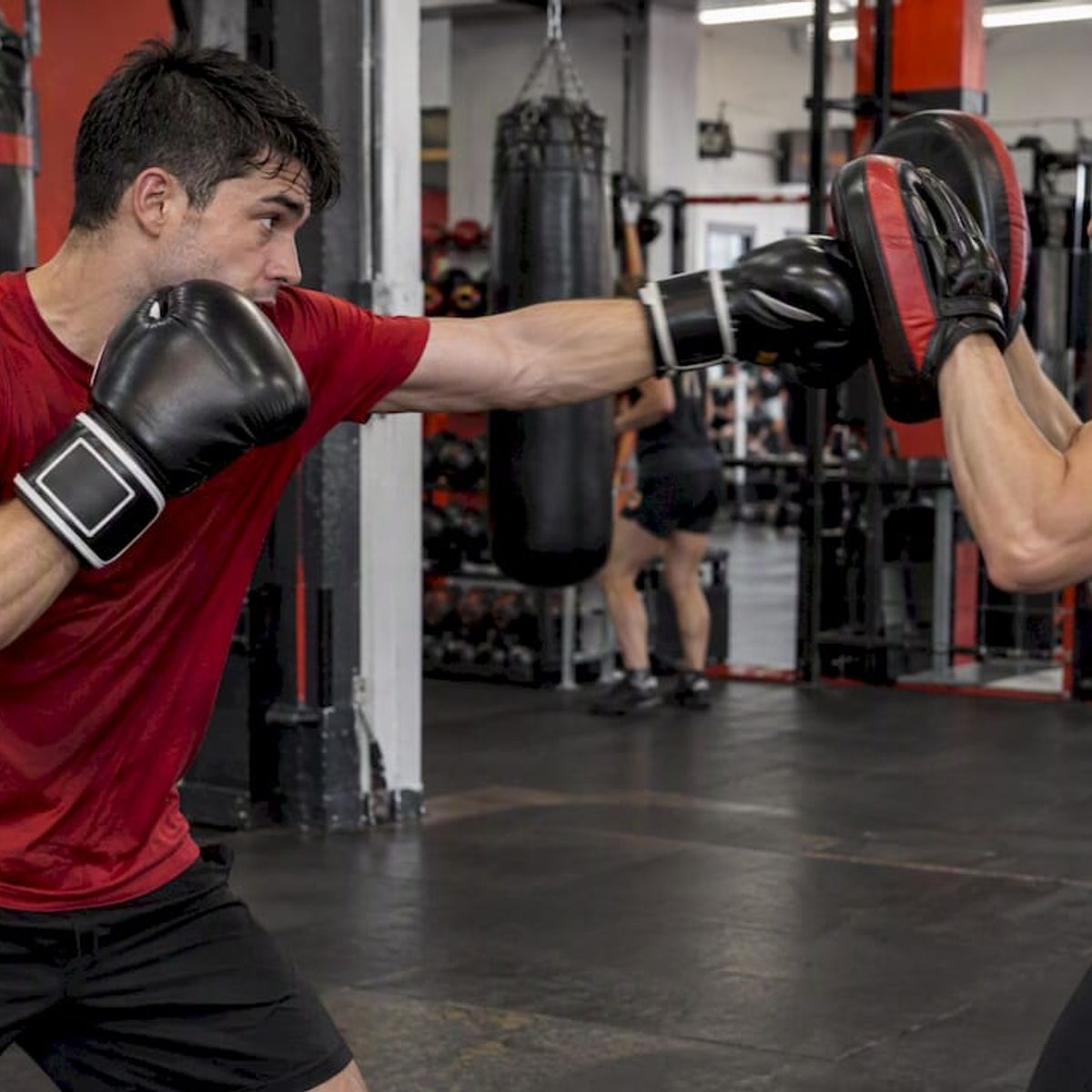
Partner drills, common in boxing, kickboxing, and some strength formats, come with their own etiquette layer on top of everything else. Communicate clearly before you start: agree on pace, intensity, and any injuries or limitations before the first rep, not mid-drill when something already feels wrong.
Match your partner’s skill level rather than pushing your own agenda. If you’re the stronger or more experienced person in a pairing, that means dialing back your power or speed to keep the drill safe and useful for both people, not proving how hard you can hit a pad. If you’re the newer person, speak up early if the pace feels unsafe rather than pushing through silently.
- Confirm intensity and any physical limitations before the drill starts, not during it.
- The more experienced partner adjusts down, not the other way around.
- Give clear, calm feedback mid-drill if something isn’t working, rather than staying quiet and hoping it improves.
- Thank your partner briefly at the end. It’s a small gesture that keeps the culture friendly.
Group circuits and station rotations need similar awareness. Move to your next station promptly when the instructor calls the rotation, and don’t linger at a station you liked just because you weren’t finished with your version of it. The person behind you is waiting, and the rotation only works if everyone respects the same clock.
Instructor Perspective: What Teachers Actually Notice
Instructors clock small behaviors within the first five minutes of any class, and most of them have nothing to do with fitness level. It’s whether someone silenced their phone without being asked, whether they wiped down their mat, whether they took the modification instead of forcing a rep they weren’t ready for.
Class caps exist specifically so certified coaches, including pro boxers on staff, can actually see who’s struggling and who’s coasting. That only works if the room cooperates: showing up on time, following cues, and giving new people room to learn without an audience. The beginner onramp exists because most etiquette mistakes aren’t rudeness, they’re just nobody explaining the unwritten rules first.
The instructors who get the best retention aren’t the ones running the hardest workouts. They’re the ones who notice when someone new looks lost and address it quietly instead of letting them figure it out alone.
— Malcolm
Learn the Ropes Without the Guesswork
Reading a list of etiquette rules only gets you so far. Level Up Gym built the 6-Week Onramp specifically for people who want to learn class norms, movement basics, and gym culture hands-on, with a certified coach walking you through it instead of hoping you pick it up by trial and error in a room full of strangers.
Every new participant starts with a free class or consult and gets a written, individualized plan before they ever step into a capped group session. That means you walk into your first boxing class or group session already knowing where to stand, how to set up, and what the coach expects, instead of guessing. Classes at the locations stay small on purpose, so coaches can actually correct your form and answer questions mid-session. There is no contract to sign. If you want to see what a beginner-first room actually feels like, book your free class or check membership options to find a schedule that fits.
Sources
- Physical Activity Guidelines for Americans (CDC)
- How to Reduce Intimidation for New Clients in Group Exercise Classes (ACSM)
FAQ
What Is the 3-3-3 Rule for Fitness?
The 3-3-3 rule isn’t a standard group fitness etiquette guideline, and definitions of it vary widely depending on the source, from workout structure tips to rehab pacing advice. It’s not something covered by the etiquette standards or physical activity guidance this article draws on, so treat any specific version you encounter elsewhere with caution.
What Are the 5 Gym Etiquette Rules?
The core five are: book or arrive on time, stay home if you’re sick, respect personal space and shared equipment, follow your instructor’s cues, and keep your phone silent. These cover the safety and courtesy basics that keep a shared workout space functional for everyone in the room.
What Are Some Unspoken Rules of Gym Etiquette?
Unspoken rules include not staring at your own reflection too long, rotating out of premium spots near mirrors occasionally, and not chatting loudly during instructor cueing. Another one: match your intensity to your partner during paired drills rather than showing off your own fitness level.
What Are the 10 Rules of Gym Etiquette?
Beyond the top five, additional rules include wiping down equipment after use, returning gear to its spot, avoiding recording others without permission, staying through the cool-down, and giving new attendees a brief, low-key welcome. Together these rules reduce injury risk and improve the experience for the whole class, something ACSM’s research on reducing intimidation ties directly to better retention for new participants.
Does Level Up Gym Have Rules for Beginners?
Level Up Gym caps class sizes and pairs new members with a free class or consult plus a written plan before their first group session, so beginners learn the norms before walking into a full room. The 6-Week Onramp is built specifically to teach these basics hands-on with a certified coach.