
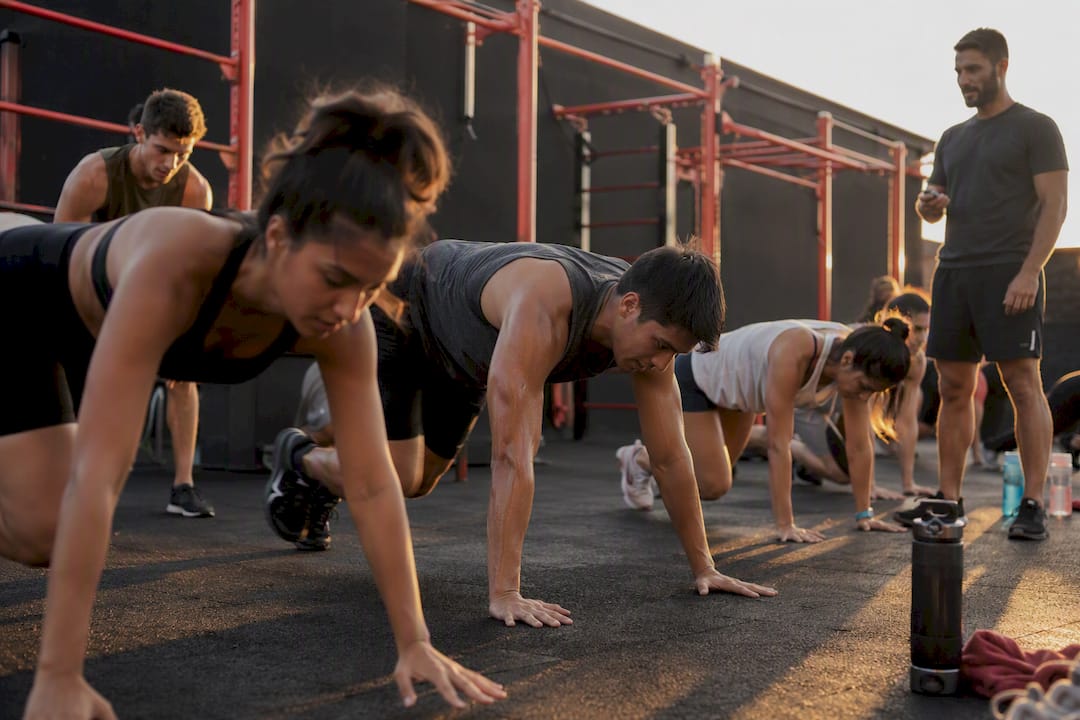
12 Types of Group Fitness for Young Adults: What to Try
The core group fitness categories worth knowing are HIIT, circuit training, strength training, yoga, Pilates, spin, Zumba and other dance formats, CrossFit, kickboxing/boxing, barre, aqua fitness, and functional training or bootcamp. If you want to build friendships fast, dance or spin classes tend to deliver the most social energy per session. If your goal is raw strength, group lifting or a bootcamp format gets you there faster. The CDC recommends 150 to 300 minutes of moderate activity weekly, and a 2026 systematic review found group-based programs produce stronger functional gains than solo workouts in a lot of cases. Level Up Gym in Stratford and Bridgeport runs several of these formats for people just starting out.
- HIIT, circuit training, strength training
- Yoga, Pilates, barre
- Spin, Zumba/dance, CrossFit
- Kickboxing/boxing, aqua fitness, functional training/bootcamp
Pro Tip: Pick your first class based on your social battery, not your fitness level. A quiet lifting session and a loud dance class both burn calories, but only one will feel sustainable if you hate crowds.
Key Takeaways
Group fitness works for young adults because it pairs measurable physical gains with social support that keeps people showing up long after motivation fades.
PointDetails
Twelve core formats exist
HIIT, circuit, strength, yoga, Pilates, spin, Zumba/dance, CrossFit, kickboxing/boxing, barre, aqua, and functional/bootcamp cover most goals.
Group training beats solo in key measures
A 2026 review of 31,607 participants found group formats produced stronger functional gains than individual training.
Social support drives adherence
Belonging to a group explained nearly 40% of the variance in weekly activity levels in one path-analysis study.
“True groups” perform better
Classes using team goals and peer feedback show larger health effects than loosely structured group settings.
Level Up Gym offers a low-risk entry point
Its 6-week beginner onramp and no-contract membership let young adults try hybrid training and boxing without long-term commitment.
Table of Contents
- The 12 Types of Group Fitness for Young Adults, at a Glance
- What Each Group Fitness Class Actually Involves
- Why Group Fitness Works Especially Well for Young Adults
- How to Pick the Right Group Fitness Class
- Your First Class: What to Bring and How to Not Panic
- Matching Classes to Your Goal: A Quick Reference
- What Coaches Wish New Members Knew
- Try a Class at Level Up Gym in Stratford or Bridgeport
- Sources
- FAQ
The 12 Types of Group Fitness for Young Adults, at a Glance
Before you commit to a schedule, it helps to see everything side by side. Here’s the fast version of the 12 formats that show up in nearly every gym’s class catalog.
- HIIT: short bursts of max effort followed by rest. Intensity: high. Best for: fat loss and time-crunched schedules.
- Circuit training: stations rotating through strength and cardio moves. Intensity: moderate to high. Best for: full-body conditioning.
- Strength training: barbells, dumbbells, and machines in a coached group setting. Intensity: moderate. Best for: building muscle and bone density.
- Yoga: breath-linked poses and holds. Intensity: low to moderate. Best for: flexibility and stress relief.
- Pilates: controlled core and posture work, often on a mat or reformer. Intensity: low to moderate. Best for: core strength and injury prevention.
- Spin: stationary cycling to music with resistance changes. Intensity: moderate to high. Best for: cardio endurance without joint impact.
- Zumba/dance fitness: choreographed cardio set to music. Intensity: moderate. Best for: social connection and calorie burn that doesn’t feel like exercise.
- CrossFit: varied functional movements scored for time or reps. Intensity: high. Best for: competitive types chasing measurable progress.
- Kickboxing/boxing: striking drills, combos, and pad work. Intensity: high. Best for: stress relief and full-body power.
- Barre: small, pulsing movements inspired by ballet training. Intensity: low to moderate. Best for: muscular endurance and toning.
- Aqua fitness: resistance-based movement in a pool. Intensity: low to moderate. Best for: joint-friendly cardio and recovery days.
- Functional training/bootcamp: real-world movement patterns like carries, crawls, and jumps. Intensity: moderate to high. Best for: everyday strength and athleticism.
What Each Group Fitness Class Actually Involves
Reading a one-line description won’t tell you whether a class fits your life. Here’s what actually happens once you walk in the door, format by format.
HIIT
HIIT alternates short, all-out efforts with brief recovery windows, usually in 20 to 45 second bursts. The Harvard T.H. Chan School of Public Health notes that HIIT delivers cardiorespiratory and metabolic benefits in less time than steady-state cardio, which is part of why it’s become a staple for people juggling work, school, and a social life. Expect a dynamic warm-up, six to ten work intervals, and a cooldown that usually runs 30 to 45 minutes total. It suits young adults who like intensity and get bored easily, but it’s rough on true beginners if the coach doesn’t offer scaled options. Bring a towel and expect to sweat through your shirt. Tell the instructor if you’re new so they can point out low-impact swaps for jumping moves.
Circuit training
Circuit training moves you through a series of stations, each targeting a different muscle group or energy system, with minimal rest between stops. Sessions typically run 45 minutes and mix strength moves (squats, rows) with cardio bursts (mountain climbers, jump rope). It works well for people who get bored doing the same exercise for a full set, and it’s forgiving for beginners because you can drop weight or reps at any station without holding up the group. Wear supportive cross-training shoes, not running shoes. If a station calls for a weight you can’t manage, take the resistance band regression instead of skipping it entirely.
Strength training
Group strength classes teach barbell and dumbbell fundamentals, squats, deadlifts, presses, and rows, in a coached setting. Mayo Clinic’s strength-training guidance emphasizes progressive overload and proper form on multi-joint lifts as the foundation for real strength gains. A typical session opens with mobility work, moves into three or four compound lifts, and closes with accessory movements. It’s ideal for young adults who want visible strength progress and don’t mind a slower, technique-focused pace. Expect a rack, plates, and possibly a lifting belt. If you have a previous injury, tell the coach before the warm-up so they can suggest a substitute lift.
Pro Tip: Ask “what’s the standard scale for beginners” before your first strength class. Every good program has one, and asking signals you’re coachable, not clueless.
Yoga
Yoga links breath to movement through a sequence of poses, or asanas, held for several breaths at a time. Practice in the U.S. has shifted in recent years, with NPR reporting more men and younger practitioners joining what was once a narrower demographic. A class usually opens with breathwork, builds through a flow or held-pose sequence, and ends with a few minutes of stillness. It’s a strong fit for young adults dealing with school or work stress, or anyone recovering from a harder training week. All you need is a mat and clothes you can move in. If a pose bothers a joint, ask for a modification rather than pushing through pain.
Pilates
Pilates trains the deep core, hips, and spine stabilizers through small, controlled movements rather than large ranges of motion. Sessions run on a mat or a reformer machine and last 45 to 55 minutes, moving through a structured sequence that builds intensity gradually. It’s a good match for young adults recovering from injury, sitting at a desk all day, or wanting better posture without heavy lifting. Wear grippy socks; most studios require them. First-timers should mention any lower-back issues before class since several exercises load the spine directly, a point worth raising given the beginner guidance on getting started with Pilates.
Spin
Spin puts you on a stationary bike for 45 minutes of resistance changes, sprints, and climbs, usually set to a loud playlist. The format suits young adults who want serious cardio without the joint pounding of running. Expect the instructor to call out resistance and cadence targets while riding alongside you. Bring padded shorts if you’re sensitive to the saddle, and ask the front desk to help set your bike height before your first ride, a five-minute fix that prevents knee pain later.
Zumba and dance fitness
Zumba and similar dance formats string together choreographed routines set to Latin, pop, or hip hop music, and the appeal is that it rarely feels like a workout in the moment. A class runs through eight to ten songs, each with its own routine, building from lower to higher intensity before a cooldown track. It’s one of the best entry points for socially oriented young adults who want to make friends while sweating, since nobody’s staring at a clock or a barbell. No equipment needed beyond sneakers with lateral support. Stand near the back for your first class if you want to follow along without pressure.
CrossFit
CrossFit combines weightlifting, gymnastics movements, and conditioning into a daily “workout of the day” that’s scored for time, rounds, or load. Sessions open with a specific warm-up, move into skill work, then hit the scored portion, typically 45 to 60 minutes total. It suits competitive young adults who like tracking numbers and comparing scores on a whiteboard, but it demands more coaching attention for beginners learning Olympic lift technique. Most boxes require a foundations or onramp series before joining regular classes. Always ask about scaled versions of the workout; nearly every CrossFit gym builds one in.
Kickboxing and boxing
Boxing and kickboxing classes teach striking combinations, pad work, and footwork, often paired with core and conditioning finishers. A session usually opens with a shadowboxing warm-up, moves into partner or bag combinations, and finishes with abs and a cooldown, running about 50 minutes. It’s a strong stress-relief outlet for young adults, and the coordination demands keep your brain as engaged as your body. You’ll need hand wraps and gloves, which most gyms rent or sell. Tell the instructor about any wrist or shoulder issues before hitting a bag; technique adjustments prevent most overuse injuries.
Barre
Barre classes use small, pulsing movements at a ballet barre to fatigue muscles through isometric holds rather than big ranges of motion. Expect a 45 to 55 minute class moving through leg, seat, arm, and core sections, often finishing with stretching. It fits young adults who want toning and postural strength without heavy weights or high impact. Grip socks and comfortable, fitted clothing help since instructors often check form visually. If your muscles start shaking during a hold, that’s the format working as intended, not a sign to stop, though sharp joint pain is always a reason to back off.
Aqua fitness
Aqua fitness uses water resistance for a full-body workout with almost no impact on joints, and it’s often overlooked by young adults who assume it’s only for older populations. Harvard Health’s overview of water-based exercise points out that the buoyancy makes it useful for both cardio conditioning and active recovery after harder training days. A typical class runs 45 minutes of intervals using pool noodles or water dumbbells for added resistance. It suits anyone nursing a minor injury, managing joint pain, or just wanting a lower-impact day between HIIT sessions. Bring a swimsuit and water shoes with grip for the pool floor.
Functional training and bootcamp
Functional training and bootcamp formats train movement patterns you use outside the gym: carrying, crawling, climbing, jumping, and lifting odd objects like sandbags or kettlebells. According to breakdowns of functional training styles, these formats build real-world strength and coordination rather than isolating single muscles. A session mixes strength stations with agility drills and often finishes with a team challenge or partner exercise. It’s a great fit for young adults who want athleticism, not just aesthetics, and who like a slightly competitive group atmosphere. Expect kettlebells, sandbags, sleds, or battle ropes depending on the gym. Newer participants should ask for a lighter implement rather than matching the group’s weight on day one.
Why Group Fitness Works Especially Well for Young Adults
A 2026 systematic review of 71 studies covering more than 31,000 participants found group-based exercise interventions produced a statistically significant advantage in functional improvements like strength and flexibility compared with training alone. That’s not a small sample; it’s one of the larger comparisons of its kind, and the direction of the finding lines up with what most coaches already suspected: people push harder and progress faster when someone else is in the room.
The mechanism isn’t mysterious. A path-analysis study following over 500 exercisers found that group membership creates several distinct forms of social support, emotional encouragement, companionship, and practical accountability, that together explained nearly 40% of the variance in how much people actually exercised weekly. In plain terms, showing up for a friend can matter as much as showing up for a goal.
Group membership doesn’t just add motivation on top of a workout. It builds an exercise identity, a sense of “this is who I am now,” that keeps people coming back long after willpower alone would have quit.
A related meta-analysis found that not all groups are equal. “True groups,” classes that intentionally use team goals, peer feedback, and shared accountability rather than just people exercising near each other, showed larger health-effect sizes and better retention than loosely structured group settings. For young adults picking a class, that’s the real filter: does the instructor build a sense of team, or is it twenty strangers on twenty bikes?
For a generation that came of age during remote work and social distancing, this matters more than fitness alone. Business Insider reporting describes Gen Z treating group fitness as a deliberate strategy against loneliness, a recurring “third place” outside home and work where showing up regularly builds real friendships. Choosing a class with a smaller roster and a coach who learns names tends to produce more of this effect than a massive, anonymous studio.
How to Pick the Right Group Fitness Class
Matching the format to your actual goals and personality beats picking whatever’s trending on social media. Run through this checklist before you book.
- Define your primary goal. Strength, fat loss, flexibility, stress relief, or making friends each points toward a different format, and trying to hit all five in one class usually means mediocre progress on all of them.
- Be honest about your intensity tolerance. If you dread sprinting, don’t start with CrossFit or HIIT; ease in with circuit training or barre and build up.
- Ask about class culture before booking. A quick email or call answers whether the room is competitive and scoreboard-driven or low-key and welcoming.
- Check the schedule fit. A perfect class you can only attend once a month won’t beat a decent class that fits your calendar three times a week.
- Confirm accessibility and modifications. Ask directly: “Is this beginner-friendly, and do you offer scaled versions?” A good studio answers without hesitation.
- Weigh virtual versus in-person. Research on delivery mode suggests online groups can replicate the social support of in-person classes when the facilitation is strong, so don’t rule out virtual options if travel time is your biggest barrier.
Pro Tip: Ask about the instructor-to-participant ratio before your first visit. A class of 30 with one coach means less individual feedback than a small-group format capped at 10 to 12 people.
Your First Class: What to Bring and How to Not Panic
Walking into a room full of regulars is intimidating for exactly one class, then it isn’t. Bring a water bottle, a sweat towel, supportive shoes for the specific format, and any gear the studio requires (gloves for boxing, grip socks for barre or Pilates). Arrive 10 minutes early, introduce yourself to the instructor, and say you’re new; nearly every coach adjusts their coaching in your direction once they know.
Basic etiquette matters more than technique on day one: take a spot near the back or side where you can watch others, wipe down shared equipment, and don’t apologize for needing a modification. Scale down rather than skip out, drop the weight, shorten the range of motion, or take an extra breath before the next round.
Know the red flags that mean stop immediately: chest pain, dizziness, sharp joint pain, or shortness of breath well beyond normal huffing. The MedlinePlus guide to starting an exercise program recommends checking with a healthcare provider before starting a new intense program if you have any underlying condition.
Pro Tip: Tell the instructor about any injury or limitation before class starts, not mid-set. A ten-second heads-up lets them cue a substitute exercise before you’re already struggling.
Matching Classes to Your Goal: A Quick Reference
Different goals call for different weekly mixes, and mixing formats tends to beat repeating the same class five times a week.
GoalBest class typesIntensityBeginner-friendly
Strength
Strength training, functional/bootcamp
Moderate
Yes, with scaled loads
Fat loss/cardio
HIIT, spin, circuit training
High
Moderate, scale intervals
Flexibility/mobility
Yoga, Pilates
Low to moderate
Yes
Stress relief
Kickboxing/boxing, yoga
Moderate to high
Yes
Socializing
Zumba/dance, functional/bootcamp
Moderate
Yes
A beginner week might combine strength training twice, one yoga session, and one dance or spin class for variety. An intermediate week could add a HIIT or boxing session and swap one strength day for CrossFit. Either plan lands within the CDC’s 150 to 300 minute weekly guideline for moderate activity, adjusting volume up or down based on recovery.
What Coaches Wish New Members Knew
The most common mistake newer members make isn’t picking the “wrong” class. It’s staying quiet about being new. A coach can’t scale a movement for someone they don’t know is struggling, and most people would rather grind through bad form than raise a hand mid-set. That instinct costs progress and sometimes causes injury.
The second mistake is treating the first class as a test to pass rather than a system to learn. Group fitness works because it compounds: week three feels easier than week one not because the workouts got softer, but because your body adapted. Judging your fitness off one rough session skips the part where the format actually pays off.
Pro Tip: Use a short onramp period, four to six weeks of consistent attendance before judging whether a format works for you. Most people quit right before the adaptation shows up.
Try a Class at Level Up Gym in Stratford or Bridgeport
Reading about twelve formats is useful, but the fastest way to find your fit is stepping onto a floor. Level Up Gym runs coached group training and small-group personal training out of both the Stratford and Bridgeport locations, with certified coaches who scale every movement for first-timers instead of expecting you to keep up cold.
The gym’s 6-week beginner onramp is built specifically for people who’ve never set foot in a group class before, pairing hybrid training and boxing fundamentals with a no-contract membership structure so you’re not locked into anything before you know if it fits. If you want more individual coaching attention without losing the group energy, the small-group personal training program caps class size to keep the coach-to-member ratio tight. Check current hybrid training schedules for Stratford and Bridgeport, or drop into a single class to see how the coaching style feels before committing to anything longer.
Sources
- Systematic review (2026) comparing individual and group-based interventions
- Path analysis linking group exercise membership, social support, and exercise identity (PMC)
- CDC — Physical activity basics
FAQ
What Are the Different Types of Group Fitness Classes?
The most common types include HIIT, circuit training, strength training, yoga, Pilates, spin, Zumba and other dance formats, CrossFit, kickboxing/boxing, barre, aqua fitness, and functional training or bootcamp, each varying in intensity and skill level.
What Is the 3-3-3 Rule for Fitness?
Definitions of this rule vary across fitness communities, but it generally refers to structuring a workout or week around three types of training, such as strength, cardio, and mobility, rather than a single fixed formula.
What Are the 7 Types of Fitness?
Fitness is commonly broken into components like cardiovascular endurance, muscular strength, muscular endurance, flexibility, body composition, balance, and coordination, and different group classes target different combinations of these.
What Is the Newest Group Fitness Trend?
Hybrid formats that blend strength and boxing, along with small-group coaching models that keep class sizes tight for more individual attention, have gained traction, which is the model Level Up Gym runs in Stratford and Bridgeport.
How Often Should I Attend Group Fitness Classes as a Beginner?
Two to three sessions per week is a reasonable starting point, aligning with the CDC’s recommendation of 150 to 300 minutes of moderate activity weekly while allowing recovery time between harder sessions.
Recommended
- Best Group Fitness Classes for Weight Loss: 2026 Guide — Level Up Gym | Level Up Gym
- Types of Fitness Assessments Explained for Adults — Level Up Gym | Level Up Gym
- Types of Strength Training Programs: Pick the Right One Fast — Level Up Gym | Level Up Gym
- Types of Coached Fitness Programs for Every Goal — Level Up Gym | Level Up Gym