Arrive 10–15 Minutes Early: Boxing Class Etiquette for Beginners
Respect the coach, respect your partners, and show up prepared and clean. That is the entire code of boxing gym behavior in one sentence. Everything else, from bag rotation to sparring gloves to when to check your phone, is just that rule applied to specific moments in class.
TL;DR:
- Arriving early, properly wrapping hands, and bringing essential gear helps beginners warm up effectively and avoid injuries.
- Respect for the coach includes listening without interrupting during demonstrations and asking questions at appropriate times after class.
- Sharing equipment and rotating bags or partner drills promptly prevents delays and maintains a safe, hygienic environment.
- Maintaining hygiene by washing gear, wiping down shared surfaces, and avoiding illness keeps the gym clean and safe for everyone.
- Showing patience across skill levels and controlling power in drills fosters a positive environment supportive of long-term progress.
Level Up Gym
Start Boxing With Support
Level Up Gym welcomes beginners to coached boxing in Stratford and Bridgeport, with guidance for building confidence from your first class.
Table of Contents
- Boxing Class Etiquette Starts With Respecting Your Coach
- Getting Ready: What to Wear, What to Bring, When to Show Up
- Sharing Equipment and Moving Through Drills
- Partner Drills and Sparring: The Rules That Keep Everyone Safe
- Gear Care and Keeping the Gym Clean
- Phones, Filming, and Staying Present in the Room
- Ego, Conflict, and How Respect Actually Gets Earned
- Your Quick Boxing Class Rules Checklist
- Towels, Sanitizer, and Keeping Shared Surfaces Clean
- What to Do If You’re Running Late or Need to Leave Early
- Training Alongside Every Skill Level in the Room
- A Coach’s Honest Take on Why Etiquette Speeds Up Progress
- How Level Up Gym Helps You Put This Into Practice
- Sources
- FAQ
Boxing Class Etiquette Starts With Respecting Your Coach
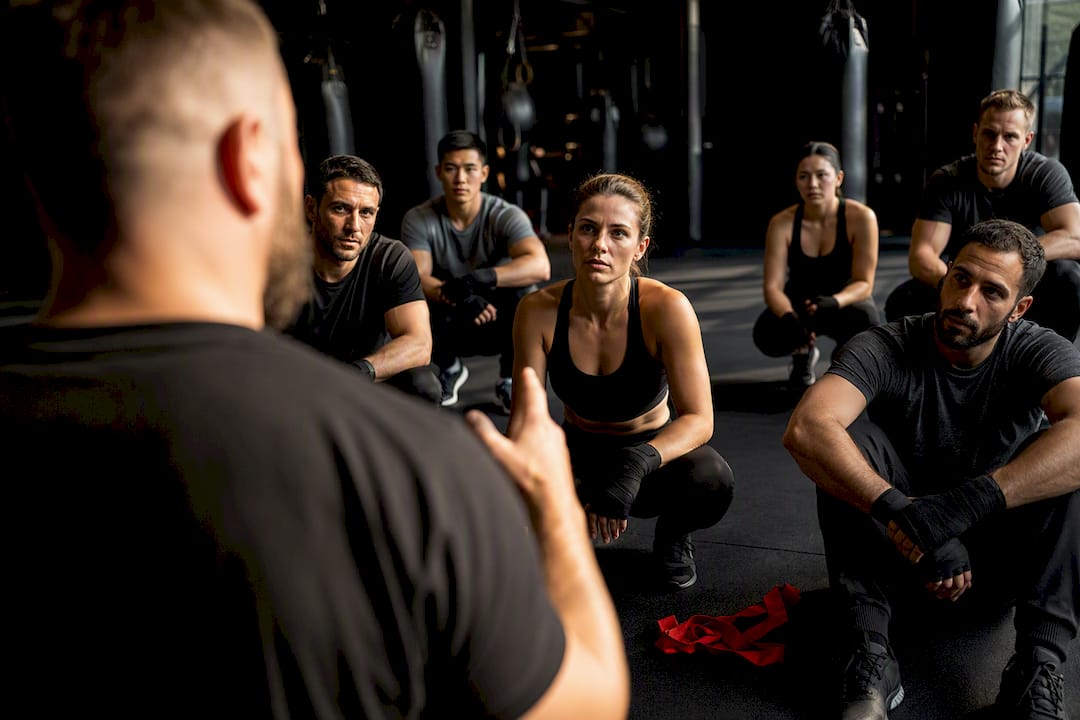
Coach authority is not optional in a boxing gym. When your coach speaks, work stops. That means dropping your hands mid combo, not finishing “just one more” punch, and actually looking at the person teaching you. Fighters and trainers call this the “Yes coach” principle: you listen, pause work during instruction, and accept correction without arguing back. If a coach fixes your guard for the third time in one round, the answer is “yes coach,” not a debate about why your old gym did it differently.
Questions have a place, but mid-demo isn’t it. Wait for a natural pause, or ask after class when the coach has a spare minute. Interrupting a demonstration to ask something you could ask in ten seconds later slows down everyone in the room, not just you. Coaches remember who listens and who talks over them, and that memory shapes how much attention you get later.
Getting Ready: What to Wear, What to Bring, When to Show Up
Arriving late to a boxing class does more than embarrass you. It breaks the warm up, distracts your partner during drills, and forces the coach to re-explain something you missed. Arriving 10 to 15 minutes early gives you time to change, wrap your hands, and get your joints moving before the real work starts. A quick warm up routine beats walking cold into your first combo.
What you wear and bring matters more than most beginners expect:
- Clothing: breathable, fitted athletic wear. Loose shirts get grabbed during partner drills and baggy shorts catch on gloves.
- Shoes: flat, grippy training shoes or boxing shoes. Skip running shoes with thick, cushioned soles; they roll your ankle on pivots.
- Jewelry: none. Rings and hoop earrings cut skin during contact drills.
- Gear to bring: hand wraps, gloves if you own them, a water bottle, a small towel, and a mouthguard once you start sparring.
If you don’t own gear yet, don’t stress over it. Most gyms let newcomers borrow wraps or gloves for a class or two, and asking a coach what to buy first beats guessing on a shopping site. Your first month is about building habits, not owning a full gear bag on day one.
Sharing Equipment and Moving Through Drills
A boxing gym only has so many bags, and most classes have more bodies than heavy bags to hit. That means rotation is a built-in part of boxing class etiquette, not an afterthought.
- Offer to rotate after each round. If you’ve been on a bag for a full round and someone’s waiting, step off without being asked.
- Watch the room before you shadowbox. Pick open floor space, not the walkway between bags, and check your punching radius so you don’t clip a neighbor.
- Follow the coach’s drill order. If the class is on round two of a combo drill, don’t jump ahead to round four because you’ve got it down faster than the group.
- Swap partners cleanly. When a coach calls a rotation, move promptly instead of finishing “one more” exchange with your current partner.
Bag sharing works best when nobody hoards equipment, especially in a packed evening class where every bag has a line. Most gyms run rotations in two or three minute blocks that mirror actual round length, so the person waiting isn’t standing around for ten minutes watching you freestyle.
Partner Drills and Sparring: The Rules That Keep Everyone Safe
Partner work only functions when both people agree on intensity before the round starts. That thirty second conversation, “light contact, working combos” or “defense only this round,” prevents the single most common source of gym friction: one person going harder than the other expected.
Sparring is technical practice, not a fight, and the etiquette in boxing around it reflects that. Touch gloves before the first exchange and after the last one. If you land something heavier than intended, stop and check on your partner, and apologize if it landed clean. Coaches expect this, and partners remember who does it without being told.
Gear matters just as much as intent. Heavier gloves, often 16 ounces or more, cut down impact for both people during sparring rounds, and a mouthguard is non-negotiable once gloves start meeting faces. Many gyms won’t let you spar at all until you’ve put in consistent time on pads and bags first. That’s not a snub. Earning sparring rounds through trust and consistency is part of the culture, and coaches decide when you’re ready, not you.
Gear Care and Keeping the Gym Clean
Boxing gyms are close contact by nature, which makes hygiene part of the etiquette, not a personal preference. Wash your hand wraps regularly and air out your gloves after every session instead of stuffing them straight into a bag. Damp gloves left sealed up for a week are how a gym bag becomes something nobody wants to open.
Wipe down pads and bags after your round, especially in warmer months, and put equipment back where you found it. Rinse your mouthguard and let it dry rather than tossing it wet into a case. If you’re sick, skip class. Nobody wants your cold, and partner drills put you within arm’s length of a dozen people in an hour. Trim your nails before class too. Long nails scratch during clinch work and pad holding, which is an easy problem to avoid.
Phones, Filming, and Staying Present in the Room
Phones stay silent and out of sight once class starts. Nobody needs a ringtone going off mid combo, and checking texts between rounds signals you’re not really there. If you want to film a combo or a sparring round for social media, ask first. Not everyone wants to end up in someone else’s video, and posting a clip without asking is one of the fastest ways to lose trust in a gym.
Breaks between rounds are short for a reason. A quick sip of water is fine; a five minute conversation about your weekend holds up the whole class. Keep it brief and keep your head in the session.
Ego, Conflict, and How Respect Actually Gets Earned
Leave your ego at the door. The guy who tries to out-punch his partner in a technical drill isn’t impressing anyone, he’s just making himself hard to train with. If a coach corrects you in front of the class, take it. If a partner says you’re going too hard, dial it back without getting defensive.
Respect in a boxing gym isn’t loud. It’s showing up on time, doing the work without complaining, and helping a newer member figure out wraps when the coach is busy. That’s how gym behavior builds a reputation faster than any highlight reel combo ever will. If a real conflict comes up, something more than a mismatched intensity level, bring it to a coach rather than settling it yourselves on the mat.
Your Quick Boxing Class Rules Checklist
Save this before your next session:
- Do: arrive early, wrap your hands, bring water, listen when the coach talks, rotate equipment fairly, control your power.
- Do: ask questions at the right time, wash your gear, apologize if you hit too hard.
- Don’t: show up late without a heads up, hog the bag, film someone without asking, argue with a correction.
- Don’t: spar before you’re ready, skip hygiene, let your phone run your breaks.
Towels, Sanitizer, and Keeping Shared Surfaces Clean
Gyms hand out towels and sanitizer stations for a reason that goes beyond tidiness. Boxing puts sweat on gloves, wraps, pads, and mats within the first five minutes of any drill, and that moisture doesn’t disappear on its own.
Use a gym towel to wipe down a bag or pad after your round, not just your own face. If the gym stocks disinfectant spray or wipes at each station, use them on gloves and pads between users, especially on shared mitts that get passed from partner to partner. One pass with a wipe takes ten seconds and stops sweat from sitting on vinyl until the next class.
Dispose of towels the way the gym askswhether that’s a hamper by the door or a bin near the locker room. Don’t leave a used towel draped over a bag rack or balled up on the floor mat; someone else needs that spot for their gear in fifteen minutes. If you bring your own towel, keep it separate from the gym’s shared stock so laundry doesn’t get mixed up.
Hand sanitizer stations near the entrance and exit exist because gloves and wraps touch dozens of surfaces in an hour, from the bag to your partner’s gloves to the water fountain handle. A quick pump before and after class costs nothing and keeps a shared space usable for the next group coming in. Skipping it isn’t a big violation on its own, but small habits like this are exactly what separates a gym that stays pleasant to train in from one that starts to feel grimy by the end of a busy week.
What to Do If You’re Running Late or Need to Leave Early
Life happens. Traffic, work calls, kids, all of it can make you five or ten minutes late to a class you meant to catch on time. The etiquette here is simple: come in quietly, skip the group warm up if it’s already underway, and do a fast version of it yourself off to the side before joining the main work. Walking straight into a partner drill cold, without any warm up at all, raises your injury risk and puts your partner at risk too if you’re stiff and slow to react.
Check in with the coach when you walk in, even with just a nod or a quick word, so they know you’re there and can slot you into a rotation or pair you up. Don’t interrupt an active demonstration to announce your arrival. Wait for the next natural break.
Leaving early follows the same logic in reverse. If you know ahead of time you need to duck out before the cool down, tell the coach at the start of class so they’re not left short a partner mid drill. When you do leave, exit between rounds or during a water break, not in the middle of an active combo or sparring round. Grab your things quietly and go. A five second wave to your partner is fine; stopping the whole class to say goodbye is not.
Frequent lateness or early exits without a heads up start to look like a pattern rather than a one off, and coaches notice patterns. One late arrival is life. A monthly habit of it without ever mentioning it is a different problem entirely.
Training Alongside Every Skill Level in the Room
Boxing classes mix total beginners with people who’ve trained for years, often in the same session. That’s normal, and it’s actually part of what makes group classes work. Someone two years into training moves differently than someone on their first night, and both deserve the same patience.
If you’re newer, don’t compare your combo speed to the person next to you who’s clearly done this before. If you’ve got more experience, resist the urge to correct a beginner’s form unless the coach asks you to help. That’s the coach’s job, not yours, and jumping in uninvited can come across as showing off even when your intentions are good.
Partner pairing across skill levels teaches you things a same-level partner can’t. A newer partner forces you to slow your combos and communicate clearly. A more experienced partner shows you what clean technique actually looks like up close. Both are worth the round. Programs built around small group boxing formats tend to handle this mixing well, since coaches can adjust intensity and pairing on the fly instead of running one pace for an entire room.
The bottom line on skill gaps: nobody in a beginner class is expected to look like a competitive fighter, and nobody with five years in should expect a first timer to keep pace. Judging a partner’s experience level, out loud or through body language, is one of the fastest ways to make a gym feel unwelcoming. Patience here isn’t just courtesy. It’s what keeps people coming back for their second class instead of their only one.
A Coach’s Honest Take on Why Etiquette Speeds Up Progress
. The beginners who improve fastest aren’t the most athletic ones in the room, they’re the ones who listen, show up on time, and treat their partners well enough that people actually want to work with them. Etiquette isn’t a formality bolted onto training. It’s what determines whether you get quality reps with a patient partner or get avoided because you go too hard or show up unprepared. At Level Up Gym, coaches who’ve been in the ring themselves watch for this from day one, because the beginners who respect the process are the ones still training a year later.
— Malcolm
How Level Up Gym Helps You Put This Into Practice
Reading a list of rules is one thing. Actually training in a room where a coach enforces them, corrects your form in real time, and pairs you with the right partner is what makes etiquette stick. Level Up Gym’s boxing classes cap group size on purpose, so certified coaches, including pro boxers, can catch bad habits before they become habits at all.
If you’re brand new, start with a free boxing class at the Stratford or Bridgeport location and see how a coached, beginner-friendly session actually runs. Want more structure from day one? The 6-Week Onramp at $699 walks you through fundamentals, technique, and gym culture together, so you’re not guessing about wraps, warm ups, or when to speak up in your first class. Once you’re comfortable, ongoing boxing classes at $24.99 to $59.99 a week keep you training with the same coaches who taught you the etiquette in the first place. No contracts, no guessing where to start, just a plan built around getting you ready for the room.
Sources
- Boxing Gym Etiquette for Beginners | H&G Boxing
- Boxing Gym Etiquette: What Every Newcomer Should Know | CourtKick
- Boxing Gym Etiquette: 8 Unwritten Rules Boxers Should Know – Fighters Corner
- Boxing Gym Etiquette 101: How to Make a Good Impression - Budo Boxing
FAQ
What Is the 80/20 Rule in Boxing?
The 80/20 rule generally refers to training intensity: roughly 80% of your rounds should be technical, controlled work, while only about 20% push toward higher intensity or competition-level effort. In a class setting, that ratio shows up as most partner drills staying light and technical, with sparring reserved for a smaller portion of trained, experienced members.
How Should I Dress for a Boxing Class?
Wear fitted, breathable athletic clothing and flat, grippy training shoes, and remove all jewelry before you step on the floor. Bring hand wraps and a mouthguard once you start sparring, and skip loose shirts or shorts that can catch on gloves during drills.
What Are the Basic Rules of Boxing Beginners Should Know?
Beginners should focus on core safety and conduct basics: listen to the coach, agree on intensity before partner drills, keep your hands up and guard tight, rotate equipment fairly, and never go full power with a partner who hasn’t agreed to it. These behavioral rules matter as much as technique in your first few classes.
What Are the Most Important Gym Etiquette Rules?
The core rules are punctuality, respecting the coach’s instructions, sharing equipment without hogging it, keeping your gear and hands clean, and controlling power during partner work. Programs like Level Up Gym’s small group personal training build these habits directly into coached sessions so beginners pick them up naturally.
Do I Need My Own Gloves for My First Boxing Class?
No, most gyms let first timers borrow gloves or wraps for an initial session or two. If you plan to keep training, ask your coach for a starter recommendation rather than buying gear before you know what fits your hand size and training goals.