
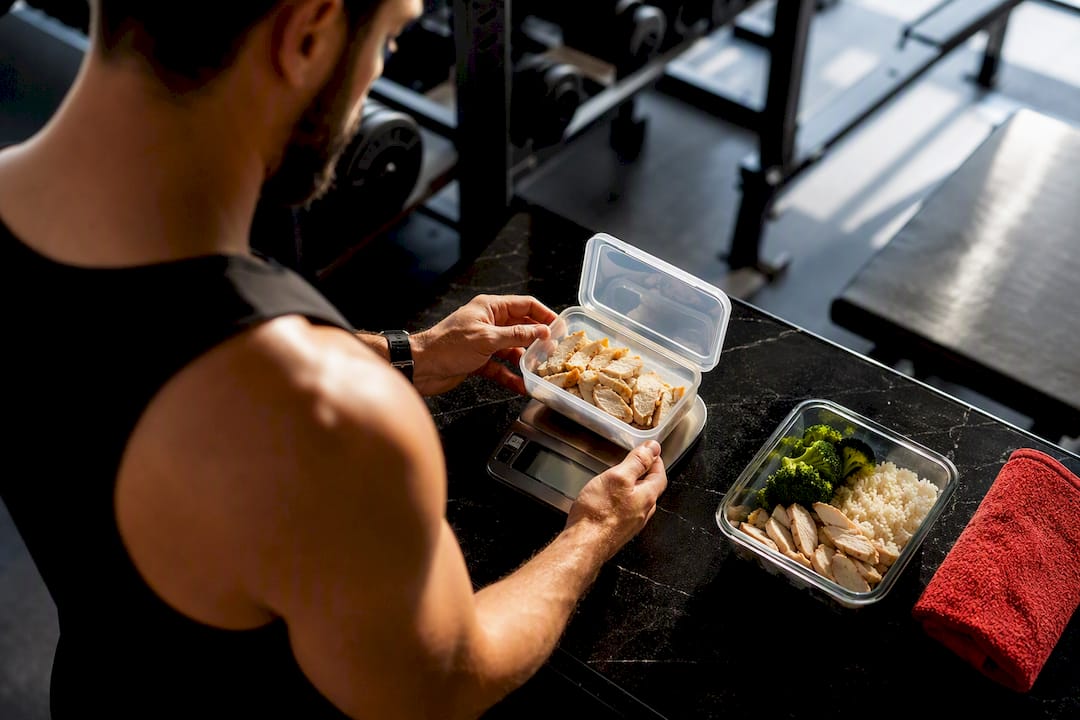
Set Protein From Lean Weight First: Track Macros for Gym Goers
Yes, macro tracking works for fat loss, but only because it forces you to maintain a calorie deficit while protecting muscle. The single most important move is sequencing it right: lock in your deficit first, set protein second, then split the rest between carbs and fat. Accuracy in logging (a food scale, measured oils, honest drinks) matters far more than chasing a “perfect” ratio.
TL;DR:
- Accurate food weighing and logging every oil, sauce, and drink are crucial to prevent underestimating calorie intake and stalling fat loss progress.
- Setting protein intake based on lean or adjusted body weight is more effective for muscle preservation than using total body weight, with 1.2 to 1.6 grams per kilogram recommended for active adults.
- Most plateaus occur due to tracking errors, so checking food logging accuracy for two weeks should precede reducing calorie intake by 100 to 200 kcal.
- The macronutrient split, whether 40/30/30 or 40/40/20, impacts fat loss minimally once calories and protein are optimized; adherence and precise measurement matter most.
- Starting macro targets with a calculator is useful, but ongoing coaching and calibration based on actual weight, training, and consistency are essential to maintain progress.
Level Up Gym
Make Your Macro Plan Work
Level Up Gym coaches Fairfield County adults through fat loss, strength, and boxing training, with beginners welcome and no contracts.
Table of Contents
- How Do I Set My Macros for Fat Loss?
- What’s the Best Way to Track Macros Day to Day?
- What Are the Most Common Macro Tracking Mistakes?
- How Do I Adjust My Macros When Progress Stalls?
- How Level Up Gym Applies Macro Tracking in Real Training
- Why the Conventional Macro Advice Gets This Backwards
- Get Hands-On Help Setting and Adjusting Your Macros
- Sources
- FAQ
How Do I Set My Macros for Fat Loss?
Your macro targets only work if the math underneath them is right. Skip a step here and you’ll hit your numbers on paper while your weight refuses to move.
- Estimate your maintenance calories (TDEE). Use a calorie deficit calculator to get a starting number, then adjust based on how your weight actually responds over two to three weeks.
- Choose a deficit of 10 to 25% below maintenance. A smaller deficit is more sustainable and preserves more muscle; a larger one moves the scale faster but raises the risk of quitting altogether.
- Set protein first, before anything else. Research on major weight loss consistently shows that higher protein intake calculated from lean or adjusted body weight protects lean mass better than protein set from total body weight. For most active adults, protein intake is commonly set in a range around 1.2 to 1.6 grams per kilogram of adjusted or lean body weight to protect lean mass during weight loss.
- Split the remaining calories between carbs and fat. A common starting ratio is 40% carbs and 30% fat once protein is fixed, though the Dietary Guidelines’ acceptable macronutrient ranges (45 to 65% carbs, 20 to 35% fat) give you room to adjust based on preference and training demands.
Example: a 180-pound (82 kg) man with a 2,600 kcal maintenance drops to 2,200 kcal (a 15% deficit). At 1.4 g/kg, protein lands at about 115 grams (460 kcal). The remaining 1,740 kcal splits into roughly 190 grams of carbs and 65 grams of fat. A macro calculator will do this conversion instantly once you know your calorie target.
What’s the Best Way to Track Macros Day to Day?
The gap between “tracking macros” and “tracking macros accurately” is where most fat loss plans quietly fail. Nobody underheats on purpose. They just underestimate.
- Weigh food raw or cooked, but pick one and stick to it. Chicken breast loses roughly 25% of its weight during cooking, so logging cooked weight against a raw-weight database entry inflates your actual intake.
- Log every oil, sauce, and drink. A tablespoon of olive oil runs about 120 kcal, and it disappears fast in a hot pan. Two “innocent” pours a day can add 240 kcal you never see on paper.
- Use verified database entries. USDA FoodData Central is the most reliable cross-check against crowd-sourced app entries, which are frequently wrong for branded and restaurant items.
- Build custom entries for meals you eat often. Weigh a dish once, save it, and you’ve solved that meal permanently instead of re-guessing it every week.
- Judge progress by weekly averages, not daily numbers. One high day doesn’t undo a week of consistency, and one perfect day doesn’t fix five sloppy ones.
Pro Tip: Weigh your dry pasta, rice, and oats before cooking. Post-cook weights absorb water unevenly and will throw off your carb count more than almost any other food group.
Traveling complicates all of this, and it’s worth planning ahead rather than abandoning tracking entirely. Strategies for eating well on holiday translate directly to any trip where your usual kitchen and scale aren’t available.
What Are the Most Common Macro Tracking Mistakes?
Most people who “hit their macros” and still don’t lose fat aren’t failing at discipline. They’re failing at measurement.
- Not weighing food. Eyeballing portions routinely underestimates intake. Fix: weigh everything for two to four weeks until your portion instincts recalibrate.
- Ignoring invisible calories. Cooking oil, salad dressing, coffee creamer, and alcohol rarely get logged but add up fast. Fix: measure and log every one of them, no exceptions.
- Trusting unverified database entries. User-submitted app entries are often wrong by a wide margin. Fix: cross-check against USDA FoodData Central and build your own verified entries for repeat meals.
- Setting a deficit too aggressive to sustain. A 40% cut feels productive for a week, then triggers binge eating or burnout. Fix: back off to a smaller, sustainable deficit and let protein do the work of keeping you full.
These four errors explain most stalled progress far more often than metabolic excuses do.
How Do I Adjust My Macros When Progress Stalls?
Progress rarely moves in a straight line, so the question isn’t whether you’ll stall. It’s how you respond when you do.
Aim for a modest and sustainable fat loss rate approximately between half a percent to one percent of body weight per week, as faster rates can increase muscle loss and reduce adherence over time.
- If the scale stalls for two full weeks, check your logging accuracy before touching your calories. Most “plateaus” are tracking drift, not metabolic adaptation.
- If accuracy checks out, cut 100 to 200 kcal and reassess after another two weeks rather than making a dramatic cut.
- If strength or recovery drops noticeably, keep protein steady and consider a smaller deficit or a short strategic refeed instead of pushing harder.
- Recalculate your maintenance calories after a significant weight change or a plateau lasting three or more weeks, since your TDEE shifts as your body weight does.
How Level Up Gym Applies Macro Tracking in Real Training
Setting a protein target is one thing. Hitting it while also training hard enough to keep the muscle that protein is meant to protect is another. Coaches often pair protein-first macro plans with resistance and boxing conditioning specifically because lean mass preservation depends on both inputs working together, not diet alone.
Some fitness programs emphasize weekly check-ins instead of a one-time number and a hope it works. Targets get adjusted based on actual weigh-ins and training performance, not guesswork. If you want the calculation piece before you ever set foot in a gym, the free calculator tools walk you through TDEE, deficit, and protein in the same sequence this article covers.
Why the Conventional Macro Advice Gets This Backwards
Most macro content online obsesses over the split. Is 40/40/20 better than 30/40/30? That question matters far less than people think. When calories are controlled, macronutrient ratios themselves show no independent effect on weight loss, which means the entire industry of debating ratios is arguing over a variable that barely moves the needle.
What actually separates people who lose fat from people who spin their wheels is boring: they weigh their food, they log their oils, and they judge themselves by the week instead of the day. Protein deserves the one exception to “ratios don’t matter,” because it’s the macro most tied to keeping muscle during a deficit, and calculating it from adjusted or lean weight instead of total body weight prevents the common mistake of chronically overshooting or undershooting the target.
If there’s one thing I’d tell a beginner to stop worrying about, it’s the exact carb-to-fat split. If there’s one thing I’d tell them to obsess over, it’s the food scale. That trade-off is where results actually come from.
— Malcolm
Get Hands-On Help Setting and Adjusting Your Macros
A calculator gets you a starting number. It doesn’t watch what happens when your job gets stressful, your weight stalls for two weeks, or your protein target feels impossible with your current schedule. Level Up Gym exists for the part after the math, where a hybrid training and boxing gym in Stratford and Bridgeport, CT pairs your nutrition targets with coached training designed to protect the muscle your deficit is trying to burn through.
The typical first step is either a free consult or the 6-Week Onramp ($699 one-off), which gets you a baseline TDEE, a protein target built from your adjusted weight, and a logging plan simple enough to actually stick with. From there, meal planning support and coached personal training keep your targets accurate as your weight changes, week over week, instead of leaving you to guess. Book your free consult or start the onramp to get your numbers set correctly from day one.
Sources
- Nutritional considerations during major weight loss therapy (PMC11327213)
- Dietary Guidelines for Americans 2020–2025
This article is general information, not a substitute for advice from a qualified doctor. Consult a qualified healthcare professional about your own circumstances before acting on anything here.
FAQ
What Is the 3-3-3 Rule for Fat Loss?
There’s no single, widely recognized clinical definition of a “3-3-3 rule” in the fat loss research this article draws on. Treat any version you encounter online as informal advice rather than an established framework.
What Is the 30/30/40 Macro Split?
This typically refers to 30% protein, 30% fat, and 40% carbs. It’s a reasonable starting ratio, but the split itself matters far less than hitting your calorie deficit and protein target, since ratios show no independent effect on weight loss once calories are controlled.
What Is a Good Macro Ratio for Fat Loss?
There’s no single ideal ratio. A practical starting point is setting protein at 1.2 to 1.6 g/kg of adjusted body weight, then splitting the rest between carbs and fat within the Dietary Guidelines’ acceptable ranges (45 to 65% carbs, 20 to 35% fat).
Is 40/40/20 Good for Fat Loss?
A 40% protein, 40% carb, 20% fat split can work fine for fat loss as long as the underlying calorie deficit is sustainable and protein stays adequate for your body weight. The specific percentages matter less than consistent logging and adherence over time.
What’s the Best App for Macro Tracking?
Any app that lets you create verified custom entries and cross-check against a database like USDA FoodData Central will work. The Level Up Gym macro calculator is a solid starting point for generating your initial targets before you settle on a daily logging app.