Boxing Defense Drills: 9 Beginner Drills for Head Movement and Blocking
The best boxing defense drills for beginners start with a solid guard, then add parries and blocks, and only then slips and rolls. Do them slowly, first alone in front of a mirror, then with a partner who feeds light, controlled punches. This guide gives you nine drills in that order, what each one trains, the mistakes to watch for, and a simple four-week plan.
We coach boxing at our Stratford and Bridgeport, CT gyms, and the same pattern shows up with almost every new member. They want to learn punches first, get hit once, and suddenly care a lot about defense. Learn it in the right order and you will get hit less, stay calmer, and counter faster.
Level Up Gym
Learn Boxing Defense With a Coach
Level Up Gym offers coached boxing in Stratford and Bridgeport, helping beginners build defense alongside their boxing skills.
TL;DR
- Build defense in layers: guard and stance, then parries and blocks, then slips, bobs and rolls, which need the most timing.
- Start every drill slow and light. Speed comes after the position is clean.
- Solo work (mirror, shadowboxing, slip line) builds the movement. Partner work builds the timing.
- Keep head movement small, keep your eyes on your partner, and always return to your stance.
- Do not spar until a coach says you are ready. Technical, controlled partner work comes first.
Table of Contents
- The order that makes defense easier to learn
- Drill 1: Guard and stance check
- Drill 2: Mirror defense
- Drill 3: Shadowboxing with defense built in
- Drill 4: Parry and counter
- Drill 5: Catch and block sequences
- Drill 6: Slip line (or rope)
- Drill 7: Slip bag or hanging ball
- Drill 8: Mitt-based defense
- Drill 9: Controlled partner drill
- Head movement basics: slips, bobs and rolls
- Mistakes to fix early
- A simple 4-week defense plan
- Practice safely
- Perspective
- Learn defense with a coach in Stratford or Bridgeport
- FAQ
- Sources
The order that makes defense easier to learn
Defense is not one skill. It is a stack of skills that depend on timing, and the stack goes from forgiving to demanding.
A common teaching order runs like this: stance and guard, high guard block, jab parry, outside slip, bob and weave, then shoulder roll. Blocks and parries are more forgiving if your timing is a little off. Slips and rolls punish mistakes in head position, which is why they are easier to learn with a coach watching.
The USA Boxing training manual makes a related point: in the early stages, defenses are taught after the basic punches are learned, and each basic defense is designed to answer specific punches. So learn a defense together with the punch it answers. A parry belongs with the jab. A slip belongs with the cross.
The nine drills below follow that order.
Drill 1: Guard and stance check
Every other defense depends on this one. Hands up near your cheeks, elbows tucked toward your ribs, chin down, feet about shoulder width with your weight balanced. If you are not sure whether you are orthodox or southpaw, our guide to picking your boxing stance will settle it before you drill.
How to do it: Stand in front of a mirror and hold your stance for 30 seconds. Throw a slow jab, return to guard. Throw a slow cross, return to guard. Count how many times your hands drift down or your chin lifts.
What it trains: the habit of coming back to a protected position after every action. That habit matters more than any fancy movement.
Drill 2: Mirror defense
This is the drill that turns descriptions into muscle memory.
How to do it: Stand in stance in front of a mirror. Practice each movement slowly and without speed: slip left, slip right, small bob, roll under an imaginary hook, parry a jab. Do slips and rolls on both sides. Check four things every rep: chin, eyes, feet, and your off-hand.
What to look for: Your head should move because your body moved, not on its own. The USIBA official manual describes the head as part of the trunk that should not move independently of the body. If you see your head dipping while your knees and hips stay still, slow down and bend through the legs.
Drill 3: Shadowboxing with defense built in
Most beginners shadowbox offense only. Flip that.
How to do it: Shadowbox three-minute rounds. After every combination, add one defensive move: slip an imaginary jab, roll under a hook, parry a straight punch, then counter. Imagine a specific punch coming at you each time, not a vague threat.
What it trains: the link between defending and counterpunching. Small, measured head movement keeps you in position to fire back. Big movements leave you off balance and late.
If you want a full solo structure to build around this, our beginner boxing training at home plan lays out the week.
Drill 4: Parry and counter
A parry is a small deflection with an open glove. The USIBA manual defines it as meeting the incoming punch with the open glove to catch or deflect it. It is one of the most beginner-friendly defenses because it asks for a small movement and gives you an instant opening.
Solo version: In the mirror, flick your lead hand a few inches to the side as if brushing a jab away, then throw your own jab back. Slow, then steady, never rushed.
Partner version: Your partner throws slow jabs at your glove, using an open palm as the target. You parry and return a light jab to their palm. Switch after five reps.
Common error: Reaching out to meet the punch. The USIBA coaching tips say not to reach with the block and to keep defensive movements efficient. Let the punch come to you.
Drill 5: Catch and block sequences
Blocking uses your gloves, forearms, elbows, arms or shoulders to take the force of a punch. The USIBA manual defines blocking this way, and it is the safety net when your feet or head movement are late.
The catch (for straight punches): From stance, open the palm of your rear hand and move it forward to just in front of chin level to catch the jab. The USA Boxing manual says to keep the rear arm rigid so the glove is not forced back into your face, then return to stance. Boxing Canada’s beginner manual gives the same advice and adds not to try to reach for the jab.
Partner block ladder: Work up in small steps, five reps each, then switch roles:
- Partner throws a slow jab, you block it.
- Jab-cross, you block both and reset your guard.
- Jab-cross-hook, you block all three.
- Add body shots once the head blocks look clean.
What to focus on: reset your guard between every punch, so you are protected against the next one. That is the whole point of the ladder. Start slow with minimal force. Your brain needs to learn the pattern before your body needs to handle speed.
Drill 6: Slip line (or rope)
The slip line is a rope or string tied tight between two fixed points at about shoulder height. It is the cheapest piece of defensive equipment you can set up, and it teaches slips and footwork at the same time.
How to do it: Stand at one end in stance with your guard up. Step forward and slip under the rope, then repeat down the line. Come back moving backward. Keep your eyes forward, your knees soft and your chin tucked. Once that is smooth, add a punch each time you come out of a slip.
What it trains: bending from the knees instead of the waist, moving your head off the center line, and keeping balance as you go. Balance is the foundation of all of it. If you ever feel wobbly coming out of slips, a few balance training exercises outside the gym can help you feel more stable on your feet.
Pair this drill with our boxing footwork drills. Good defense is often just a small step in the right direction.
Drill 7: Slip bag or hanging ball
A slip bag is a small, light weight hung at head height. You push it to swing, then move your head out of its path.
How to do it: Set it swinging gently. Slip, weave or pull back from each pass while keeping your hands up. Add a counter when the bag swings away.
Beginner rule: Keep the swing light and slow. If you are getting tagged, it is too fast. The goal is clean movement, not a challenge.
Drill 8: Mitt-based defense
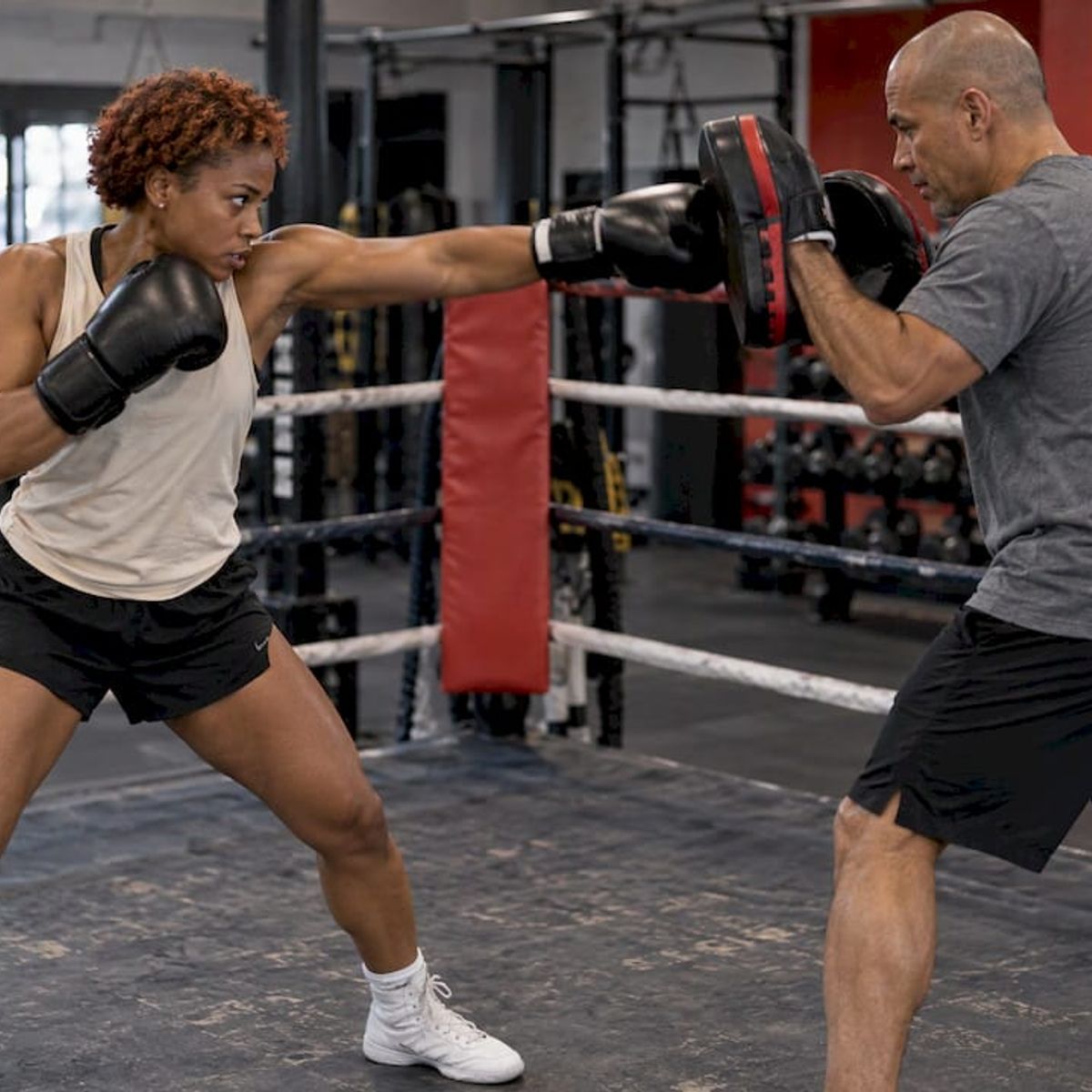
This is where a coach earns their keep. A coach holding mitts can “throw” light punches at you with the mitt, so you slip, roll or block, then counter on the mitts. The coach can see your head position and correct it on the spot.
We use this drill constantly because it builds reaction in a controlled setting. For a closer look at how we run mitt rounds, see our coach-led mitt work drills.
Drill 9: Controlled partner drill
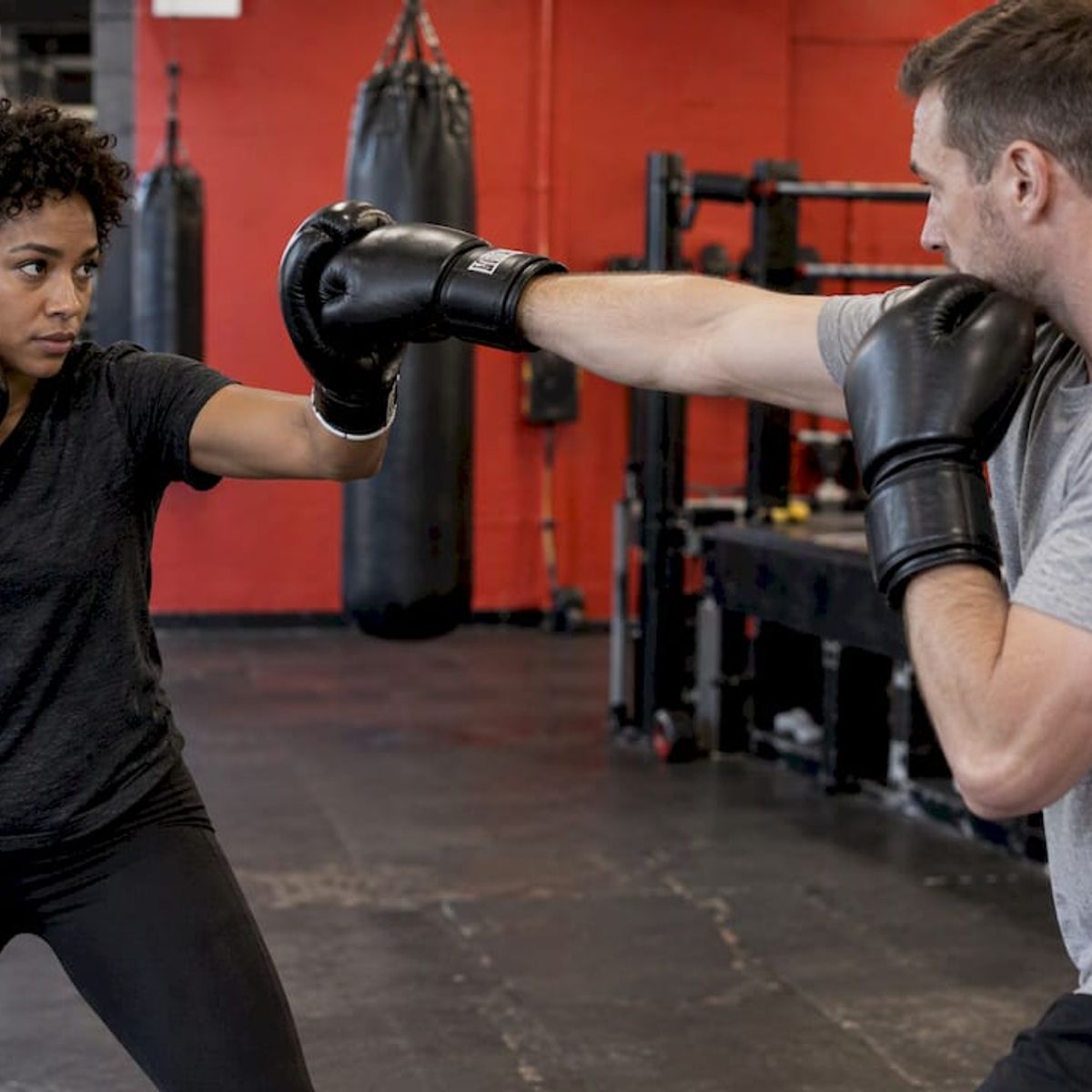
Once the mirror and solo work are clean, you can add a partner who throws punches at your gloves and not at your face. Boxing Canada’s manual says that until a learning boxer has mastered the fundamental defensive skills, the partner should not throw punches directly to the head or body. In the early stages, the gloved palm is the target that simulates a punch to the head.
How to do it: Partner holds up an open glove and extends it toward your head, slowly, as if throwing a jab. You slip, parry or block. Then swap. Increase the speed only when both of you are moving cleanly and returning to guard every time.
Head movement basics: slips, bobs and rolls
Head movement is a more complicated category than blocking, so it gets its own section.
- Slip: Move your head just inside or just outside the punch. The USIBA tips say to slip just inside or outside the punch and to break ground only as much as you need to relieve pressure.
- Bob and weave: Bend the knees to drop under a punch and move in an arc to the opposite side.
- Roll: Dip and rotate under a hook, returning to a balanced stance.
- Pull: Lean the head back a few inches to take your chin out of range, then return to counter.
Three cues apply to all of them:
- Small is better. Move only enough to clear the punch. Big movements waste time and leave you off balance.
- Eyes on your opponent. Do not look down or close your eyes.
- Feet under you. Defense with a lost base is just falling.
As the USIBA manual puts it, whenever possible you remove yourself from the line of attack and keep your balance at all times.
Mistakes to fix early
The USA Boxing manual lists the common mistakes in basic defense. They match what we see on the gym floor:
- Not looking at your partner, or closing your eyes or opening your mouth.
- Defending too early or too late.
- Using the wrong defense for the punch.
- No protection against the next punch.
- Movements that are too wide, too low or too far.
- Stiff movement.
- Not returning to your stance after the defense.
Pick one to fix per session. Filming a round on your phone and watching it back is the quickest way to see which one is yours.
A simple 4-week defense plan
Two to three short sessions a week is plenty. Each session: a short warm-up (our 10 to 15 minute boxing warm-up works well), then the drills below.
WeekFocusDrillsPace
1
Position
Guard check, mirror defense
Slow, no speed
2
Deflecting
Parry and counter, catch and block, shadowboxing with defense
Slow to steady
3
Head movement
Slip line, slip bag, mirror slips and rolls
Steady, light
4
Putting it together
Mitt defense, controlled partner drill
Steady, with a coach watching
Move on only when the movement is clean, not when the calendar says so. A drill is ready for speed when you can do it ten times in a row without losing your guard or your balance.
Practice safely
The USIBA manual says to learn skills first in slow motion, with light, easy training, no threat of getting hit, and no practice when you are fatigued. Stop a defensive session when your form starts to go. Tired defense is where people get hurt.
A few more rules for partner work:
- Keep impact minimal while you are learning.
- Wear the right gear. Boxing Canada’s manual says sparring requires sparring gloves, a head guard and, where appropriate, a groin guard, all under the direct supervision of a registered coach. Our guide to training vs sparring gloves explains the difference.
- Do not go to open sparring until your coach is satisfied you have the skills. The same manual says only technical sparring should be permitted at the initial stage.
- Clear more room than your arm span when drilling at home, and do not punch hard objects.
For more on staying healthy, see our boxing injury prevention templates and our rundown of contact sport safety and gym protocols. If you do not want sparring at all, our coach-led plan for boxing without sparring covers that path.
Perspective
Most beginners think defense is about reflexes. In our gyms it is about habits. Hands up, chin down, eyes open, feet under you, and back to guard after every action. Reflexes come later, once those habits are boring.
That is why we do not teach boxing as cardio with gloves. Our classes are capped in size so a coach can see your head position, your feet and your guard, and tell you the one thing to fix this round. Our coaches include pro boxers, and they teach defense the same way they would teach a new amateur: slow first, then faster, and sparring only when you are ready.
If you are new, that is exactly where we want you. Beginners are our priority, and every new member starts with a free class or consult and a written, individualized plan.
Malcolm
Learn defense with a coach in Stratford or Bridgeport
Drills on your own will get you started. A coach gets you moving correctly faster, because slips and rolls are hard to judge without someone watching your head position.
Our boxing classes teach real boxing technique, defense included, in small groups with certified coaches. If you want to try one first, book a free boxing class in Stratford. If you want a structured start, the 6-Week Onramp is $699 one-off and is built for beginners. Large group classes are listed from $24.99 to $59.99 per week on our membership page, and there are no contracts.
FAQ
What is the best boxing defense drill for beginners?
Mirror defense is the best place to begin. It lets you practice your guard, parries, slips and rolls slowly while checking your chin, eyes, feet and hands. Add a parry-and-counter drill with a partner once your form looks clean.
How do you block punches in boxing?
Keep your guard high with elbows tucked. To catch a jab, open the palm of your rear hand and place it just in front of your chin, with the arm rigid so the glove is not pushed into your face. Then return to your stance. Drill it slowly with a partner before adding speed.
Can I practice boxing defense alone?
Yes. Mirror work, shadowboxing with imaginary punches, a slip line and a light slip bag all build defensive movement alone. A partner or coach is still useful for timing, because it is hard to judge your own head position.
How long does it take to learn boxing defense?
Basic guard, parries and blocks can feel natural within a few weeks of regular practice. Slips and rolls take longer because they depend on timing. Progress when your movement is clean, not by the calendar.
Sources
- USA Boxing training manual
- USIBA official manual, The Sweet Science 101
- Boxing Canada instruction beginners reference manual