How to Punch Harder: Technique, Drills and Caffeine
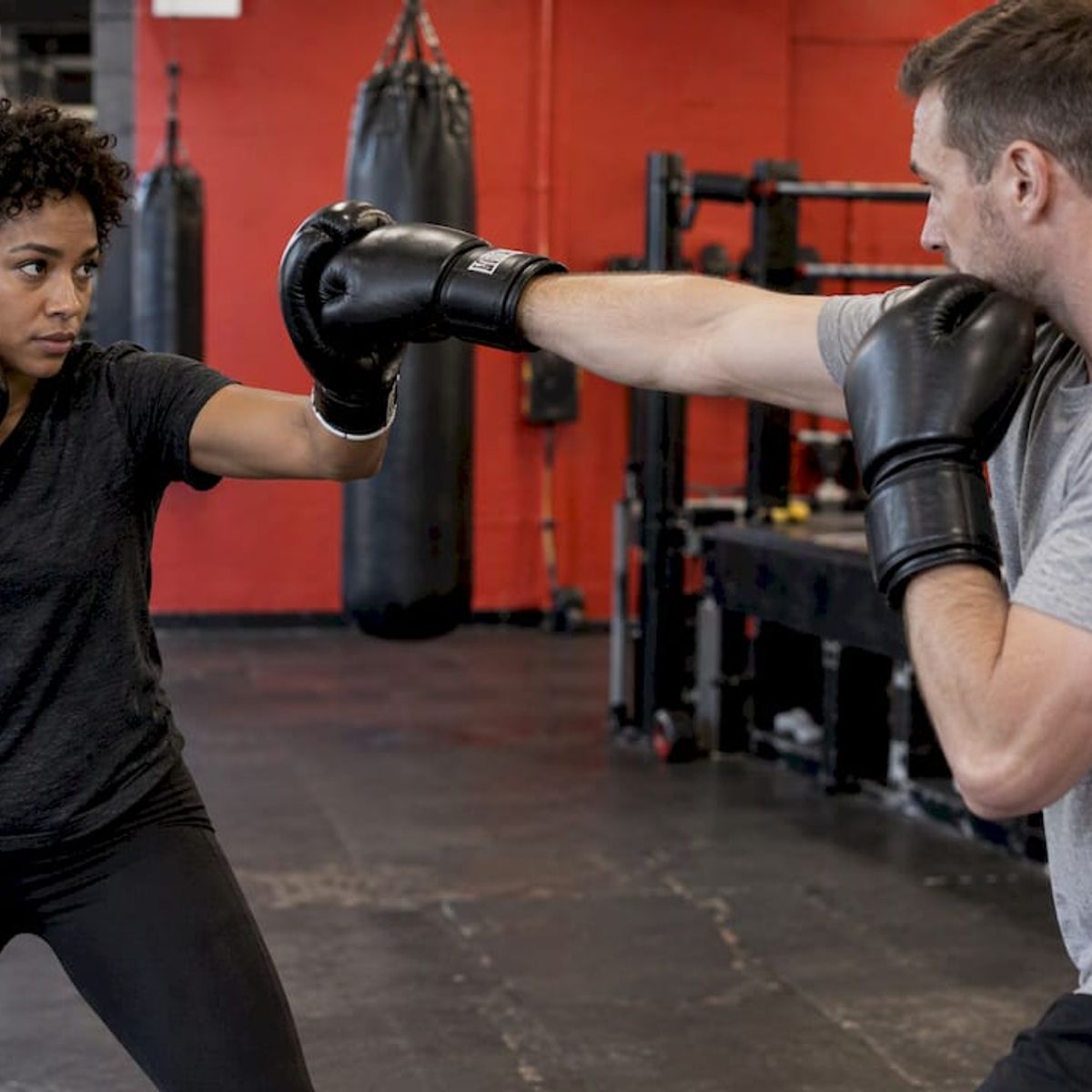
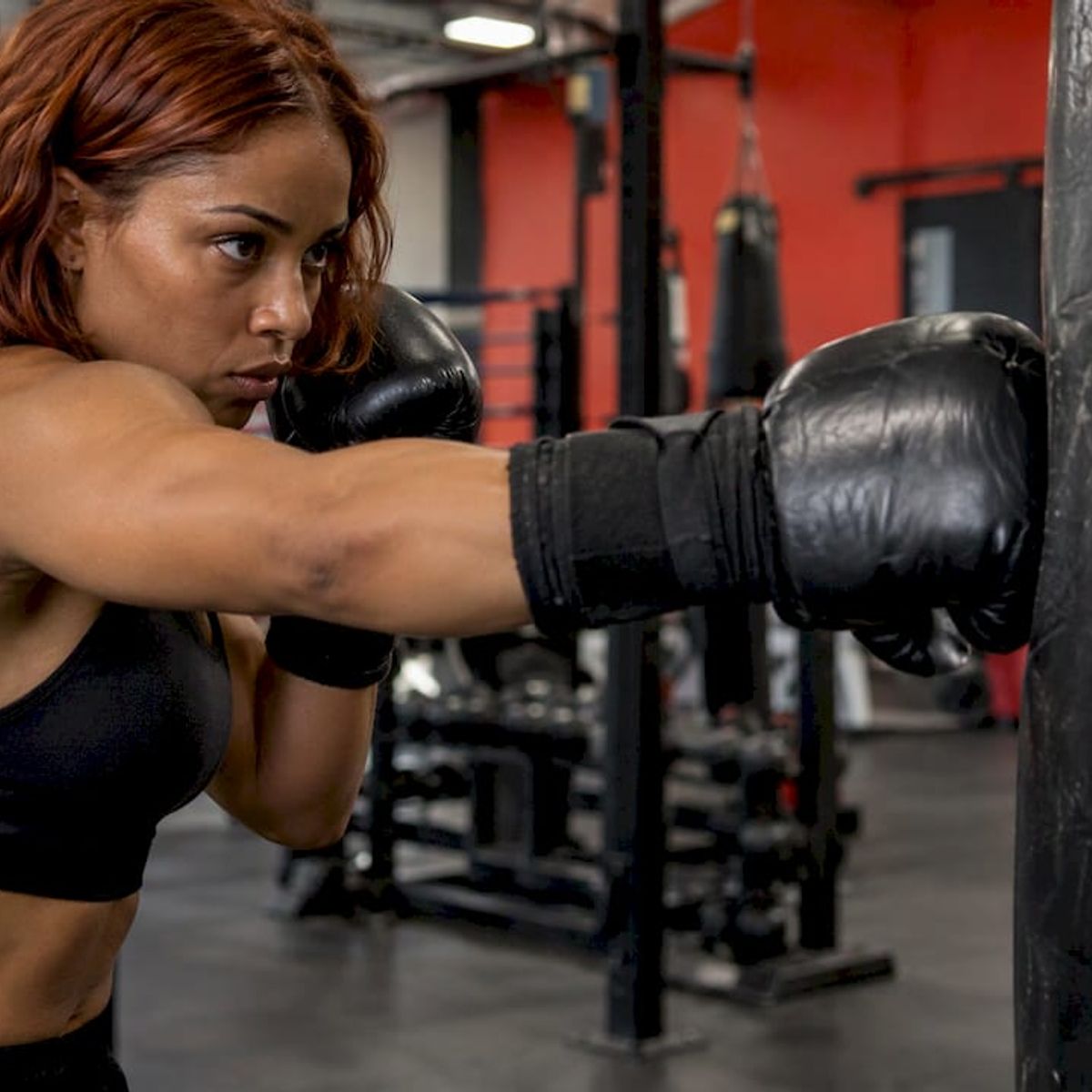
To punch harder, stop throwing with your arm and start pushing off the floor. Power travels from your back foot through your hips and trunk into your fist, and it peaks when you stay relaxed until the moment of impact. Better sequencing, stronger and more explosive legs, and a fast, loose hand will add more force than any amount of arm work. Below you get the mechanics, the drills, a simple training week, and a straight answer on coffee versus pre-workout.
Level Up Gym
levelupgym.app
Build More Power Into Every Punch
Level Up Gym offers coached boxing and hybrid training in Stratford and Bridgeport, CT, with beginners welcome.
TL;DR
- Punching power is a chain: ground, legs, hips, trunk, shoulder, arm. A break anywhere in the chain leaks force.
- Stay loose while the punch travels, then tighten up at impact. Tension too early slows your hand.
- Train legs for max and explosive strength, add rotational throws, and keep technique reps honest on the bag and mitts.
- Coffee and pre-workout work mostly through caffeine: about 3 to 6 mg per kg of body weight, roughly 60 minutes before training.
- Coached rounds beat guessing. A coach can spot the one leak that costs you the most.
Table of Contents
- Where punching power really comes from
- The sequence: feet, hips, trunk, shoulder, arm
- Relax, then snap
- Strength work that transfers to the punch
- Drills for power and sequencing
- What the big numbers actually mean
- Coffee or pre-workout before you train
- Our perspective
- Train power with a coach at Level Up Gym
- FAQ
- Sources
Where punching power really comes from
Most beginners think a hard punch comes from big shoulders and arms. The research says otherwise. A 2013 review in the Strength & Conditioning Journal splits a rear-hand punch into three contributors: the arm, the trunk rotation and the leg drive off the ground. In the work it cites, legs supplied 16.5% of total punching force for novice boxers, 32.2% for intermediate boxers and 38.6% for experienced ones. The better the boxer, the more the legs do.
The same review reports peak forces on a wall-mounted force plate of 2,381 N for novices, 3,722 N for intermediates and 4,800 N for elite boxers on the rear-hand punch. You do not need elite numbers to see the point: the gap between levels is mostly coordination and leg involvement, not bigger biceps.
There is a fair caveat from the same authors. Some studies tie impact force more closely to hand speed just before contact than to leg forces. Their reading is that leg drive builds that hand speed, so the two are linked rather than competing. For you, that means legs and speed are one project.
Boxing Science sums up what a harder punch needs: force, speed and “the snap”, the effective mass behind the fist at impact. We will take those three in turn.
The sequence: feet, hips, trunk, shoulder, arm
Think of the punch as dominoes. Each part starts moving just as the one before it peaks, so energy builds as it travels forward instead of leaking out sideways.
Here is the order for a rear-hand cross:
- Weight shift and push. Load your back leg and drive the ball of the foot into the floor. Skip this and you lose power right away, according to one boxing coach’s breakdown of the chain.
- Hip rotation. The hips turn as the back heel releases.
- Shoulder rotation. The trunk carries the turn up to the shoulder.
- Arm extension. The arm is the last link, not the engine.
A kinematics study of the straight right found that ankle, knee and elbow extension start at roughly 45%, 60% and 80% of the punch cycle. That is the dominoes pattern measured in real boxers. The trunk does its most active rotating late, in the final 20% of the motion, according to a small study of Thai professional boxers described by Engage.
Common leaks in the chain
- Arm-first punches. Fast to the eye, hollow on impact. A jab thrown from the shoulder with no ground connection feels disconnected.
- Hips too early or too late. One 2026 write-up argues that hip-to-shoulder timing is the strongest single predictor of force in trained boxers. Treat that as a coaching guide rather than a hard rule, but it matches what coaches see.
- Bent wrist at impact. The same source says a 10-degree wrist deviation can cut force transfer by about 15 to 20%. Keep knuckles, wrist and forearm in one line.
- Lunging instead of rotating. Falling forward costs you balance and recovery. Push, then turn.
Relax, then snap
The quickest fix for many people is to loosen up. Force is mass times acceleration, and a tense arm accelerates slowly. Stay relaxed while the punch travels so velocity builds, then stiffen your whole body briefly at contact.
Why stiffen at all? Tightening at impact raises effective mass, meaning more of your body weight is behind the fist. A biomechanics paper on rear-hand punching notes that stiffening the system before contact increases the impulse delivered, and that this works best when hand speed was already high beforehand.
A simple cue: breathe out sharply as you land, grab the fist at the last moment, and let your weight follow through the target. Then relax again right away so you can throw the next shot. Staying clenched round after round only burns energy and slows you down.
Fast or hard?
It is not either/or. A fast hand with a connected body is a hard punch. In one New Zealand study covered by Performance Menu, boxing winners were not the ones who landed the single hardest shot, but the ones who applied the most total force over time. Repeatable power beats one big swing that leaves you off balance.
Strength work that transfers to the punch
A 2022 review by Beattie and Ruddock found that lower-body maximal and explosive strength are largely associated with punch impact force in elite amateur boxers, while upper-body maximal strength is not. Their recommendation: build both max and explosive leg strength, and keep the upper body explosive. They also point out that research is thin, especially for women, so treat any plan as a starting point and adjust to how you move.
The AUT University approach summarized by Performance Menu uses three phases:
- Legs: a strength base with squats, deadlifts and lunges, then power work such as push presses, vertical jumps and medicine ball throws.
- Core: stability and endurance for the lower back.
- Upper body: velocity-focused work like bench press throws, medicine ball throws and clapping push-ups, with 2 to 5 minutes of rest between sets.
Two more details are worth using. Forward lunges build the braking strength that lets you accelerate hard, since the body only speeds up to the point it can comfortably slow down. The same coach suggests pulling volume of two to three times your pushing volume if your push work dominates, to keep your shoulders balanced. And explosive training should come after you have technique and a strength base, not before.
For a deeper look at loading and weekly layout, see our guide to boxing strength training and how it transfers, and our overview of combining boxing and strength work.
Drills for power and sequencing
Pick three or four of these per session. Quality reps matter more than volume.
DrillWhat it trainsHow to do it
Medicine ball rotational throw
Hip and trunk rotation, sequencing
Use a 10 to 15 lb ball. Push off the back foot, turn the hips, and throw into a wall. 3 to 4 sets of 5 per side.
Jump squat
Explosive leg drive
Light to moderate load, 3 to 6 reps, fast up, soft landing.
Wall high-knee sprint
Ground force and foot speed
15 to 20 seconds against a wall, lean in, drive the knees.
Shadow boxing with a pause
Sequence and balance
Throw the cross slowly, pause at full extension, check hips, shoulder and wrist, then reset.
Heavy bag, single shots
Snap and weight transfer
One punch, full reset, then the next. Aim for a deep “thud”, not a slap.
Mitt rounds
Timing under a moving target
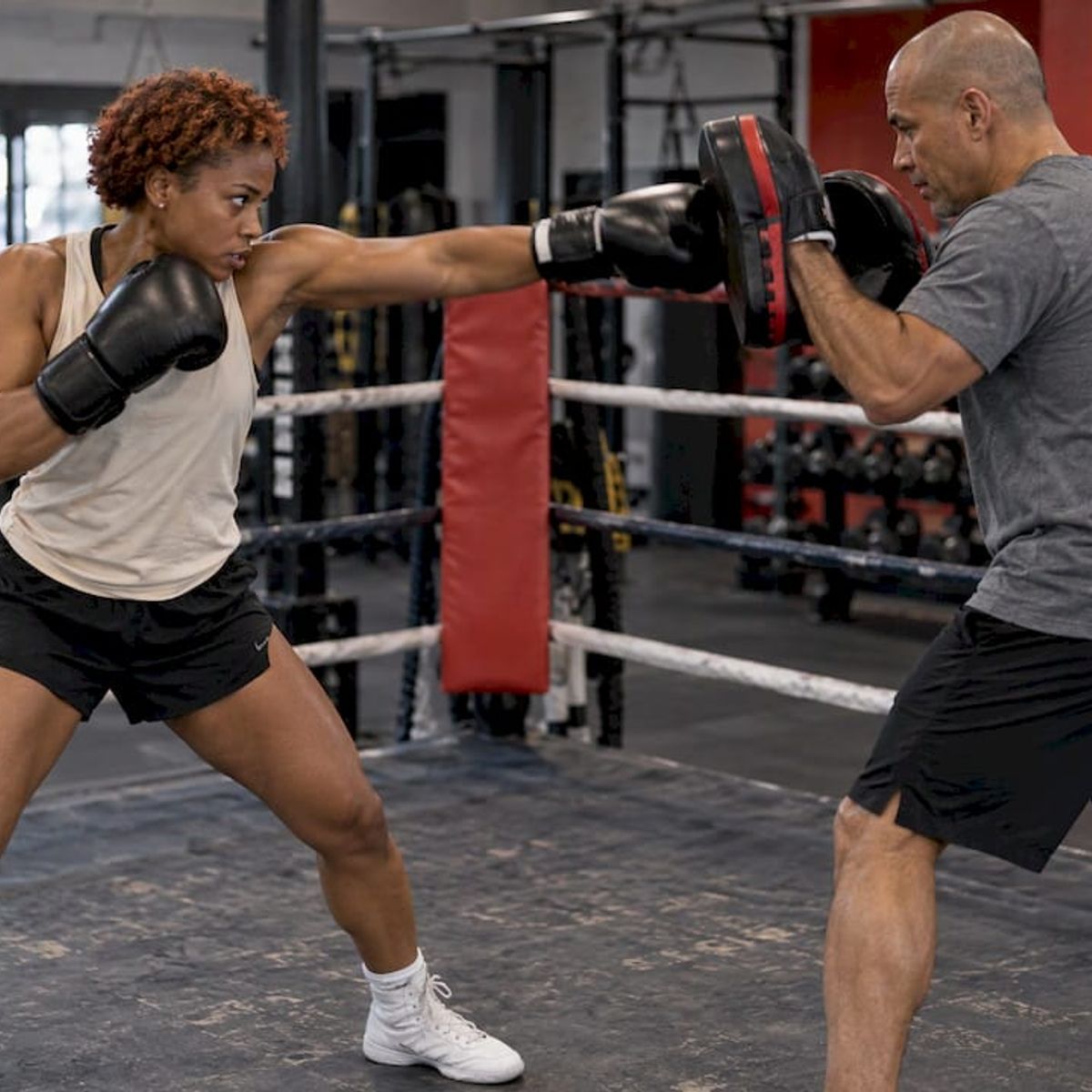
Coach calls combos; you stay loose and land with the whole body.
The throw and the wall sprint come from Ed Latimore’s biomechanics drills. A jump squat guide from Sweet Science of Fighting uses the 3 to 6 rep range for power.
To practice the sequence without a bag, start with our beginner’s shadow boxing guide. To add a moving target and reaction speed, see our coach-led mitt work drills. Footwork matters too, because you cannot push off a floor you are not set on: our boxing footwork drills cover it.
A simple week for beginners
- Day 1: Technique rounds (shadow boxing, bag), then squats, lunges and rows.
- Day 2: Rest or easy movement.
- Day 3: Mitt or bag work, medicine ball throws, jump squats.
- Day 4: Rest.
- Day 5: Strength day (deadlift pattern, push press, core), then light shadow boxing.
- Weekend: One conditioning session and a walk.
Keep punching reps crisp when you are tired. Sloppy late rounds teach your body the wrong sequence.
What the big numbers actually mean
People love to ask whether a human can punch with 1,000 pounds of force. The honest answer is that it depends on how it is measured. A study of seven Olympic boxers found peak punching force from 447 to 1,066 pounds, and a study of 23 boxers had the hardest hitter near 1,300 pounds. A classic 1985 study in the British Medical Journal measured a heavyweight’s punch at 4,096 N peak force on impact, reached within 14 milliseconds.
Those numbers shift with the target. A rigid surface spikes the reading and a swinging bag lowers it, so numbers from labs, arcade machines and TV shows rarely match. Do not chase a number. Track your own progress: how the bag sounds, how stable you feel after the shot, how fast you reset.
Coffee or pre-workout before you train
If you want to train hard, a little caffeine can help. Here is how coffee and pre-workout compare.
The short version: pre-workout generally does not beat the same dose of caffeine alone, according to a 2026 review in The Conversation. Coffee is a fine, cheap option. Pre-workout is a convenience choice, and that review suggests taking it 30 to 60 minutes before training.
Dose and timing
The International Society of Sports Nutrition says the most common timing is 60 minutes before exercise, at 3 to 6 mg per kg of body weight, and that very high doses around 9 mg/kg bring more side effects without being needed. The IOC consensus statement agrees and notes that 3 to 6 mg/kg taken 50 to 60 minutes before a 1 to 2 minute effort has been linked to performance gains above 3% in anaerobic activity. It also warns that more is not better: nausea, anxiety, a racing heart and poor sleep can outweigh the benefit.
A quick example: at 70 kg (154 lb), 3 to 6 mg/kg works out to 210 to 420 mg. BarBend lists 80 to 100 mg in an eight-ounce cup of black coffee, at least 300 mg in typical pre-workouts, and an FDA suggestion of no more than 400 mg a day. So two cups of coffee covers a beginner’s dose, while one scoop of a strong pre-workout may already be near the upper end. Count everything you drink that day.
Practical rules
- Start low, around the bottom of the range, and see how you feel before raising it.
- Take it about an hour before class, not minutes before.
- Do not take caffeine late in the day if it hurts your sleep. Sleep is where you recover and adapt, and sleep supplement timing is worth thinking through if evening training is your only option.
- If you have a heart condition, avoid formulas with p-synephrine (bitter orange) and speak with your doctor before using any stimulant, as The Conversation advises.
- Caffeine will not fix a broken sequence. It can make sloppy technique faster, so keep your first rounds controlled.
For what to eat around training days, our boxing diet plan sets out protein targets and timing.
Our perspective
Most people who walk in asking how to punch harder have the same problem: they are punching with their arms. In our classes, the fix is almost never a new exercise. It is a coach standing next to you saying “push the floor away” and watching your back foot.
That is why we teach real boxing coaching, not cardio boxing, and why we cap class sizes. Power comes from small details: when the hips start, whether the wrist stays straight, whether you relax between shots. Those cannot be corrected from the back of a crowded room.
We pair that with strength work for the legs and trunk, because the research points to lower-body strength as a big piece of the puzzle. Our certified coaches, including pro boxers, build that into a written, individual plan. Beginners are our priority, there are no contracts, and you start with a free class or consult.
If you want to hit harder, build the base first, then add speed and snap. It works, and it is safer for your shoulders and hands.
Malcolm
Train power with a coach at Level Up Gym
If you live around Stratford, Bridgeport, Fairfield or Milford, you can work on these exact skills with us. Our boxing classes teach the sequence, the bag work and the mitt rounds, and our group training classes build the leg and trunk strength behind it. Large group classes are listed at $24.99 to $59.99 per week on our membership page.
New to all of this? Our 6-Week Onramp is $699 one-off and is designed to get beginners moving well before they push the intensity. You can also try a free boxing class in Stratford and see how a coach cleans up your cross.
FAQ
How do boxers hit so hard?
They generate force from the ground and pass it quickly through the legs, hips and trunk to the fist. Harder punches combine force, hand speed and effective mass at impact. Experienced boxers use their legs far more than novices do.
Is it better to punch fast or hard?
You need both, and they feed each other. Hand speed before impact raises the force you deliver, and a connected body gives that fast hand more mass behind it. Stay relaxed in flight, then tighten at contact.
How long does it take to punch harder?
Technique changes can show up within a few sessions, because most people start out with obvious leaks like arm-first punching. Strength and explosive gains build over weeks of consistent training. A coach can tell you which of those to focus on first.
Is coffee or pre-workout better before training?
The main active ingredient in both is caffeine, and pre-workout generally does not outperform the same dose of caffeine alone. Aim for roughly 3 to 6 mg per kg of body weight about an hour before training, and keep total caffeine for the day within the FDA’s suggested 400 mg.
Sources
- Strength & Conditioning Journal: assessment and contributors of punching forces
- Boxing Science: Punch Force, The Science Behind The Punch
- Boxing Coach Juan: Punching Power Kinetic Chain
- Kinematics of Straight Right Punch in Boxing
- Engage: Developing Punching Power, Trunk
- Dojo and Ring: The Structural Mechanics of the Jab
- SportsReflector: Why Your Punches Feel Weaker Than They Should
- SSC200328 punching force document
- Performance Menu: For stronger punches, focus on leg training?
- Beattie and Ruddock: The Role of Strength on Punch Impact Force in Boxing
- Warrior Punch: How to Increase Punching Power
- Ed Latimore: How to Punch Harder
- Sweet Science of Fighting: How To Punch Harder
- Straight Dope: punch force and pressure
- The damaging punch, British Medical Journal, 1985
- The Conversation: Can pre-workout supplements benefit your workouts?
- ISSN position stand on caffeine and exercise performance
- IOC consensus statement on dietary supplements
- BarBend: Coffee vs. Pre-Workout
- Sleep supplement timing