
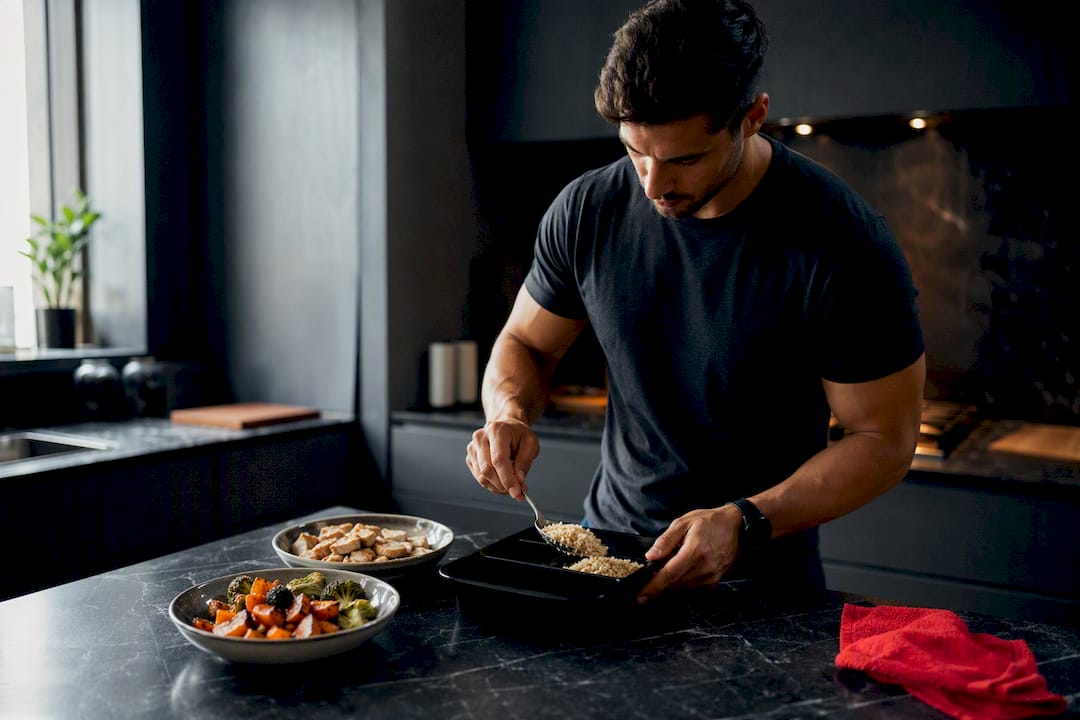
Two 45 minute Prep Sessions a Week: Nutrition for Busy Professionals
Prioritize an appropriate amount of protein at every meal, build meals from components you’ve already prepped, and drink water on a schedule instead of when you remember to. Pull one protein source out of the fridge tonight, whether that’s grilled chicken, tofu, or hardboiled eggs, so tomorrow’s first meal is already halfway done. That single move breaks the cycle of skipped breakfasts and 3 p.m. vending machine runs that drain energy on demanding workdays.
TL;DR:
- Most adults should distribute 25 to 40 grams of protein across meals to support energy and recovery without overcomplicating meal prep.
- Building meals from prepped components and batching protein, grains, and vegetables in 45-minute sessions weekly simplifies healthy eating during busy weeks.
- Hydration is crucial, with a two-liter daily goal often reachable by refilling a water bottle at scheduled times, helping prevent fatigue caused by dehydration.
- Consuming roughly 20 grams of carbs and protein within 20 minutes after exercise enhances recovery, while mindful eating can prevent overeating during long meals.
- Tailoring meal plans and timing to individual work and training schedules through coaching improves adherence and results over generic diets.
Level Up Gym
Build Nutrition Around Your Schedule
Level Up Gym coaches Fairfield County adults toward fat loss, strength, or boxing, with beginner-friendly training and no contracts.
Table of Contents
- Daily Habits That Keep Your Energy Steady All Day
- What Balanced Meals Actually Look Like This Week
- When Should You Eat, and What Is the 20-20-20 Rule?
- How Component Prep Cuts Your Kitchen Time in Half
- Eating Out Without Losing the Whole Day’s Progress
- The Research and Coaching Experience Behind This Approach
- What I’ve Noticed Works (and What Fails Every Time)
- Ready to Build a Nutrition Plan Around Your Actual Schedule?
- Sources
- FAQ
Daily Habits That Keep Your Energy Steady All Day
You don’t need a new diet. You need a routine that survives a packed calendar. The goal is removing decisions from moments when you have zero bandwidth to make them.
Morning:
- Eat a protein-forward breakfast (eggs, Greek yogurt, or a protein shake) before checking email.
- Fill a water bottle before your first meeting. Refill it at lunch. That’s two liters gone before 3 p.m. without thinking about it.
Midday and afternoon:
- Build lunch around a protein anchor first, then add a carb and vegetable.
- Stash two planned snacks in a desk drawer so a granola bar from the break room isn’t your only option.
- Set a phone reminder at 2 p.m. to refill your bottle. Dehydration mimics fatigue, and most people mistake one for the other during long stretches at a desk, a point hydration research on work performance backs up directly.
Weekly micro-prep (roughly 45-minute):
- Cook one large batch of a protein.
- Roast or steam a tray of vegetables, or keep frozen vegetables on hand for zero-prep backup.
- Cook a base grain like rice or quinoa in bulk.
Keep a short staples list on your phone: eggs, canned beans, frozen vegetables, pre-cooked grains, and a couple of proteins you actually enjoy. Shopping gets faster when you’re not deciding from scratch every week.
Pro Tip: Buy two of everything you use daily, one for home and one to leave at your desk. You’ll never be stuck without a snack because you forgot to pack one.
What Balanced Meals Actually Look Like This Week
Theory is fine, but you need something to put on a plate at 7 a.m. Here are real combinations that hit protein targets without a recipe.
Breakfast (aim for a moderate target of protein):
- Greek yogurt with berries and a scoop of protein powder
- Two eggs plus a slice of whole grain toast and avocado
- Tofu scramble with spinach and salsa (vegan)
- Overnight oats made with milk and a spoon of nut butter
- Cottage cheese with sliced fruit and a handful of nuts
Lunch template: protein plus a starchy carb (rice, quinoa, potato) plus a vegetable plus a fat source (olive oil, avocado, nuts). Rotate the protein and vegetable weekly and the meal never feels repetitive.
Portable snacks: string cheese and an apple, a high-protein breakfast option turned into a snack cup, hardboiled eggs, or a handful of almonds with dried fruit.
Prep PlanTimeMeals Produced
Sunday batch (protein, grain, veg)
35 minutes
4 to 5 lunches
Midweek reset (new protein, fresh veg)
30 minutes
3 to 4 meals
Two sessions a week, around an hour combined, covers most of your weekday eating.
When Should You Eat, and What Is the 20-20-20 Rule?
Protein needs land around 25 to 40 grams per meal for most adults, a range FORM’s coaching guidance uses specifically because it’s achievable without weighing food. Active professionals training regularly should target protein intake scaled per kilogram of body weight daily, a figure consistent with position statements from dietetics and sports medicine bodies that favor personalized, periodized intake over one-size-fits-all plans.
Timing depends on your day:
- Early morning training: eat a small carb and protein snack beforehand if your workout is intense, then a full meal after.
- Midday meetings: front-load protein at lunch to avoid the 3 p.m. crash.
- Evening training after work: this is where the 20-20-20 rule applies.
The 20-20-20 idea has two distinct versions. The post-workout version means consuming roughly 20 grams of carbs and 20 grams of protein within 20 minutes of finishing exercise to kickstart recovery. The mindful-eating version from Harvard Health means chewing each bite multiple times, pausing between bites, and stretching meals to a sufficient duration, which gives satiety signals time to catch up with your stomach. Both matter for different reasons: one for recovery after training, one for not overeating lunch at your desk.
How Component Prep Cuts Your Kitchen Time in Half
Cooking full meals in advance sounds efficient until day four, when the same casserole is unappealing and you order takeout anyway. Component prep solves that by separating the building blocks so you assemble fresh combinations daily instead of reheating the same dish.
- Cook your protein first: grill, bake, or pressure-cook two to three proteins in one session.
- Roast or steam vegetables while the protein cooks. Keep a bag of frozen vegetables as backup for weeks you run short.
- Cook a base grain in bulk. Rice, quinoa, and farro all hold well for four to five days refrigerated.
- Portion everything into clear containers and label with the date, not the meal, so you naturally rotate mix-and-match combinations.
This approach is more sustainable than full batch cooking because a single ingredient going stale doesn’t ruin an entire week’s meals, just one component.
Pro Tip: Cook double the grain and protein you think you need. The extra becomes tomorrow’s lunch instead of an evening decision you’re too tired to make well.
Expect one 45 to 60-minute session weekly, plus a 15-minute midweek touch up. Cost runs close to what you’d already spend on groceries, since you’re not buying separate ready meals.
Eating Out Without Losing the Whole Day’s Progress
Order protein first, mentally. Whatever you choose next, an entree built around a protein source anchors the meal and keeps you fuller longer than one built around bread or pasta.
- Ask for dressings and sauces on the side. Restaurant portions often carry more added sugar and sodium than you’d add at home.
- Choose grilled, roasted, or steamed over fried when it’s an option.
- Watch for oversized refined carbs (a giant bun, a mountain of fries) that crowd out room for protein and fiber.
- Add a side salad or vegetable instead of a second starch whenever you can.
Keep convenience items within reach for travel days: a quality protein bar with under 10 grams of sugar, a single-serve packet of canned fish, or a small container of nuts. The American Diabetes Association’s guidance on eating on the go recommends planning snacks ahead and choosing lower-sugar, lower-sodium packaged options specifically because decision fatigue on the road leads to the worst choices, not lack of willpower.
The Research and Coaching Experience Behind This Approach
Major dietetics and sports medicine organizations converge on the same core idea: nutrition works best when it’s periodized and personalized rather than static, with protein needs scaled to body weight and training load instead of applied as a flat number for everyone.
That consensus lines up with what shows up in the workplace. Research on diet and work performance links better dietary patterns to sharper cognition, more stable energy, and fewer sick days.
Distributing protein evenly across meals, rather than loading it all at dinner, supports both mental focus during work hours and physical recovery from training, without requiring hours of daily prep.
Level Up Gym’s coaching applies this directly through:
- Nutrition coaching paired with hybrid training, so meal timing matches actual training days
- Meal planning support built around real schedules, not idealized ones
- Certified coaches at the Stratford and Bridgeport locations who adjust protein and meal timing based on client training load
What I’ve Noticed Works (and What Fails Every Time)
Most nutrition advice fails busy people for one reason: it assumes you have time you don’t have. The failure modes are always the same. Rushed meals eaten standing up. Breakfast skipped, then over-corrected with a heavy lunch that causes a 2 p.m. slump. Water forgotten until a headache shows up around hour six.
Here’s a concrete test. For five workdays straight, hit roughly 30 grams of protein at breakfast, no exceptions. Track it loosely, a notes app is fine. Most people notice fewer cravings and a flatter energy curve by day three. Iterate from there instead of overhauling everything at once. Small, repeatable wins beat a perfect plan you abandon by Thursday.
— Malcolm
Ready to Build a Nutrition Plan Around Your Actual Schedule?
Nutrition coaching paired with hybrid training helps build meal plans that fit your real week, not a generic template. Instead of guessing at protein targets or piecing together meal prep advice from five different sources, you work with a certified coach who adjusts your plan as your training and work demands shift.
The meal planning and nutrition coaching program is designed specifically for people juggling long hours and training goals at the same time, and it pairs naturally with the hybrid training programs offered at both the Stratford and Bridgeport locations. If group energy fits your schedule better than one-on-one coaching, the group training classes offer a lower-commitment entry point that still includes nutrition guidance. Book a consult and work toward a meal structure that fits your actual calendar, rather than a generic calorie template.
Sources
- Slow down and try mindful eating — Harvard Health
- Balancing healthy meals and busy lives — PMC article
- Tips for Eating Healthy on the Go — American Diabetes Association
- Nutrition for Busy Professionals: Eat Well — FORM
This article is general information, not a substitute for advice from a qualified doctor. Consult a qualified healthcare professional about your own circumstances before acting on anything here.
FAQ
What Is the Best Nutrition for Active Professionals?
A periodized, protein-forward plan works best: an appropriate amount of protein per meal, carbs timed around training, and meals built from prepped components rather than a rigid fixed diet.
How Do Busy People Eat Healthy Without Much Time?
Component-based meal prep, a short staples list, and one or two 30 to 45 minute prep sessions weekly cover most weekday meals without daily cooking.
What Nutrition Actually Improves Work Productivity?
Steady protein intake, consistent hydration, and avoiding sugar crashes support sharper focus and fewer energy dips, patterns tied to reduced absenteeism in workplace nutrition research.
What Is the 20-20-20 Rule in Nutrition?
It refers to two things: eating about 20 grams of carbs and 20 grams of protein within 20 minutes after a workout for recovery, or the mindful-eating practice of 20 chews per bite, a 20 second pause, and a 20 minute meal.
Can a Gym Help With Meal Planning, Not Just Workouts?
Yes. Level Up Gym pairs nutrition coaching and meal planning directly with hybrid training so meal timing and protein targets match each client’s actual training schedule.