What Is a Realistic Fitness Goal for Adults?
A realistic fitness goal is a specific, achievable target that matches your current health, schedule, and fitness level so you can build lasting habits and measurable progress. Vague intentions like “get fit” or “lose weight” rarely produce results. The National Institute of Diabetes and Digestive and Kidney Diseases (NIDDK), the CDC, and the Mayo Clinic all agree: the adults who succeed long term are the ones who set concrete, personalized targets grounded in evidence. This guide breaks down what those targets look like, which frameworks help you build them, and how to apply them starting today.
What is a realistic fitness goal backed by science?
The clearest benchmark for weight loss comes from the NIDDK: a 5–10% reduction in starting body weight over six months is the gold standard for safe, sustainable progress. For a 200-pound adult, that means losing 10–20 pounds in six months. That pace feels modest, but it produces real metabolic benefits and is far more likely to stick than crash approaches.
For physical activity, the CDC and NIDDK recommend at least 150 minutes of moderate-intensity aerobic exercise per week, plus at least two days of muscle-strengthening that covers all major muscle groups. Spreading that aerobic activity across three or more days per week reduces injury risk and produces more consistent gains than cramming it into one or two long sessions. Adults who push aerobic activity up to 300 minutes per week gain an added benefit: significantly lower risk of weight regain.
The table below summarizes the core evidence-based targets for adults.
Goal categoryRecommended targetTimeframe
Weight loss
5–10% of starting body weight
6 months
Aerobic activity
150–300 minutes moderate intensity
Per week
Strength training
2+ days, all major muscle groups
Per week
Sustainable weight loss pace
1–2 pounds per week
Ongoing
Pro Tip: Pair your aerobic and strength days strategically. For example, walk or cycle on Monday, Wednesday, and Friday, then lift on Tuesday and Thursday. This structure meets both CDC targets without doubling up on the same muscles.
How do goal-setting frameworks create achievable fitness targets?
The SMART framework is the most widely used structure for setting achievable fitness goals. Each letter stands for Specific, Measurable, Attainable, Relevant, and Time-bound. A goal like “exercise more” fails every one of those criteria. A goal like “jog for 20 minutes three times a week for the next eight weeks” passes all five. Specific sub-goals like that one convert vague desires into repeatable habits. That conversion is exactly where most adults fail without a framework.
The Cleveland Clinic recommends going one step further with the SMARTER framework, which adds Evaluation and Readjustment to the original five criteria. Those two additions matter because progress rarely follows a straight line. When you hit a plateau at week six, SMARTER gives you a built-in process to reassess and adapt rather than quit. That flexibility is what separates a goal you finish from one you abandon.
A newer concept worth knowing is the open goal. Research published in Springer shows that open-ended goals, such as “see how many steps I can reach today” rather than a fixed step count, can increase physical activity for adults who feel intimidated by hard targets. Open goals lower the psychological pressure of failure. They work best as a starting point or during high-stress periods, not as a permanent replacement for measurable targets.
Here are the best practices for applying any goal-setting framework:
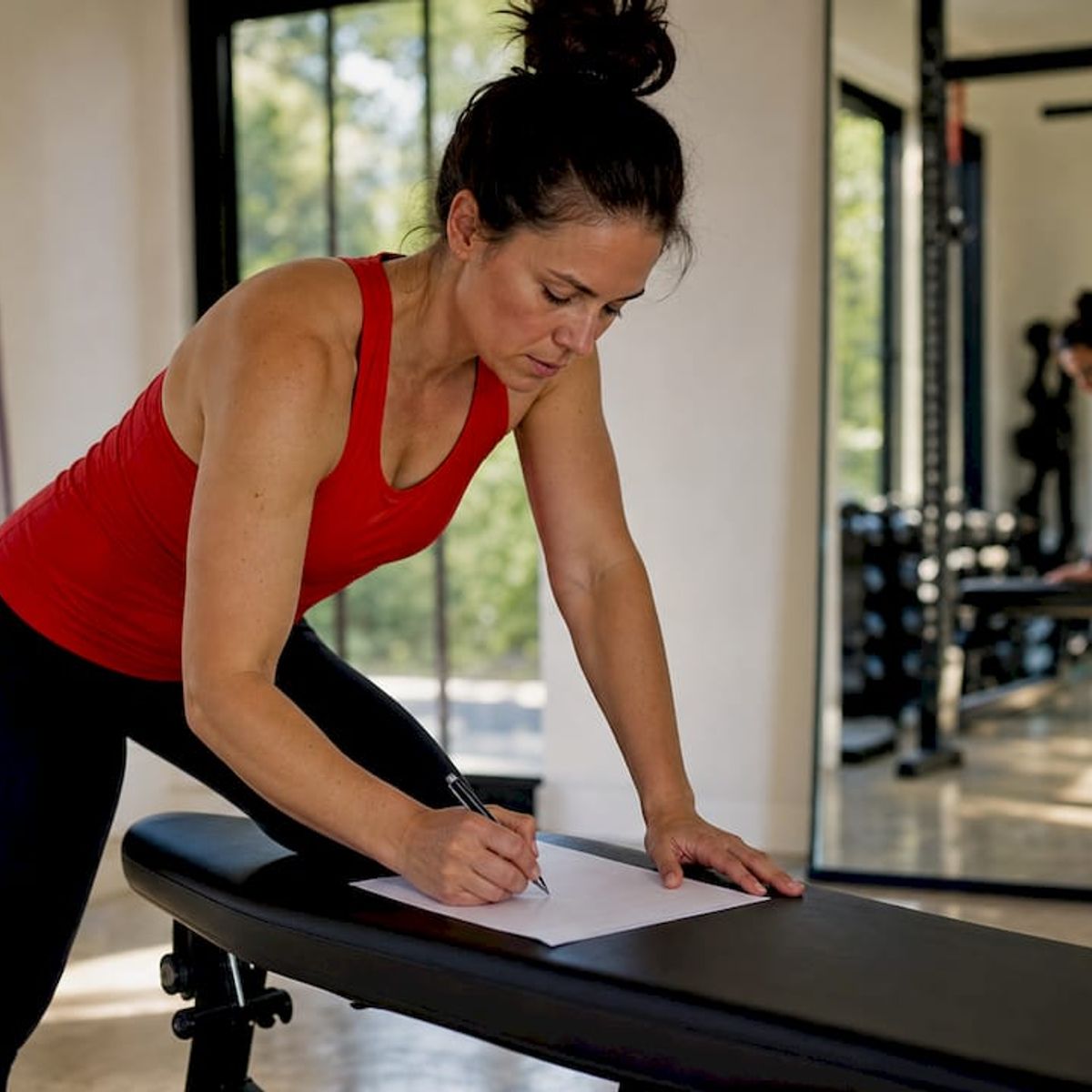
- Write your goal down and post it somewhere visible.
- Set a review date every two to four weeks to evaluate progress.
- Break long-term goals into monthly milestones.
- Adjust the goal when life changes, not just when you fail.
- Use a fitness assessment to establish your baseline before writing any goal.
Pro Tip: If you are new to SMART goals, start with just one goal at a time. Adding three or four new fitness targets simultaneously is one of the most common reasons adults burn out in the first month.
What are realistic fitness expectations for beginners?
Beginners need to prioritize safety and consistency over speed. The NIDDK recommends that anyone starting a muscle-strengthening routine allow at least one rest day between sessions for the same muscle groups and increase intensity gradually. Skipping rest days is the fastest route to overuse injuries, which derail progress far more than a slow start ever would.
The Mayo Clinic defines a sustainable beginner pace as losing 1–2 pounds per week, with an early focus on behavioral changes like cooking at home and drinking more water rather than strict calorie counting. That behavioral focus builds the habits that support long-term weight management. Calorie math matters eventually, but habit formation comes first.
Concrete beginner milestones give you something to aim for without overwhelming you. Consider these in order of progression:
- Walk for 20 minutes without stopping, three times per week.
- Hold a plank for 30 seconds with proper form.
- Complete two full-body strength sessions per week for four consecutive weeks.
- Run or jog a 5K without stopping.
- Hold a plank for 60 seconds.
- Reach 150 minutes of moderate aerobic activity in a single week.
One underrated habit tip: if you miss a scheduled session, pick it up the next day rather than waiting for the following week. Skipping one session is a minor disruption. Waiting seven days to restart turns a small miss into a broken habit. That single rule prevents more regression than any training program.
Habit stacking is another tool beginners underuse. Attach a new fitness behavior to an existing routine. Walk after your morning coffee. Do bodyweight squats while your lunch heats up. These micro-habits accumulate quickly and reduce the mental friction of starting.
How to set your own realistic fitness goals step by step
Setting a goal that actually works starts with an honest look at where you are right now. A fitness assessment measures your current cardiovascular capacity, strength, flexibility, and body composition. Without that baseline, you are guessing at your starting point, which makes it impossible to measure real progress.
Once you have a baseline, follow this process:
- Identify your primary motivation. Weight loss, better energy, stress relief, and athletic performance all require different goal structures.
- Write one SMART goal. Make it specific, measurable, and tied to a deadline of four to eight weeks.
- Schedule your sessions. Treat workouts like appointments. Adults who fit workouts into a schedule are significantly more consistent than those who exercise “when they have time.”
- Track weekly. Log your sessions, note how you felt, and record any metrics tied to your goal.
- Review and adjust every four weeks. Use the SMARTER framework to evaluate what is working and what needs to change.
- Build in support. A coach, training partner, or structured program dramatically increases follow-through.
Common mistakes to avoid: setting too many goals at once, choosing a goal based on someone else’s results, and ignoring recovery. Use free fitness calculators to estimate your calorie needs and weight loss timeline before you commit to a number. That data grounds your expectations in math, not wishful thinking.
The balance between strength and cardio is another area where adults frequently go wrong. Most beginners either do all cardio with no strength work or lift weights without any aerobic activity. Both approaches leave results on the table. The CDC’s dual recommendation of 150 minutes of aerobic work plus two strength days exists because both components serve different and complementary functions.
Key Takeaways
A realistic fitness goal combines a specific target, an evidence-based timeline, and a built-in review process to keep progress on track through setbacks and plateaus.
PointDetails
Weight loss benchmark
Aim to lose 5–10% of starting body weight over six months at 1–2 pounds per week.
Activity target
Hit 150 minutes of moderate aerobic exercise and two strength sessions per week.
Use SMARTER, not just SMART
Add Evaluation and Readjustment to adapt your goal when progress stalls.
Beginners: behavior first
Focus on consistent habits before tracking calories or chasing performance numbers.
Miss a session? Act fast
Pick up the missed session the next day to protect your habit streak.
The “realistically optimistic” standard most adults ignore
Most adults set fitness goals in one of two ways. They aim too low because they fear failure, or they aim so high that they quit by week three. Neither approach works. The standard that actually produces results sits in the middle: what I call “realistically optimistic.”
A goal should feel slightly uncomfortable. Not crushing, not easy. Goals set at that level drive better performance than safe, comfortable targets. I have seen this play out repeatedly. The adult who commits to running a 5K in eight weeks, when they currently walk a mile, grows faster than the one who commits to “being more active.” Discomfort is the signal that the goal is worth chasing.
What I have also learned is that flexibility is not weakness. Missing a week because of work, illness, or family is not failure. Treating it as failure is what ends most fitness efforts. The adults who build lasting habits are the ones who forgive the miss and show up the next day. That mindset is a skill, and it takes practice just like any physical one.
Working with a coach or joining a structured program accelerates this process because accountability removes the negotiation. When you have a session scheduled with a coach or a group, the internal debate about whether to go disappears. That single variable changes everything for most adults. Small wins, logged and acknowledged, build the confidence that sustains the bigger goals over months and years.
— Malcolm
Level Up Gym’s programs are built around goals like yours
Setting a realistic goal is step one. Having the right structure to execute it is step two.
At Level Up Gym in Stratford and Bridgeport, CT, the hybrid training programs combine strength, cardio, and boxing in a format designed for real adults with real schedules. Every program starts with an assessment so your goals are grounded in your actual baseline, not a generic template. If you prefer flexibility, online personal training gives you expert coaching from anywhere. Free fitness and nutrition tools are available to help you calculate your targets before you commit to a program. Level Up Gym exists to make your goal the starting point, not an afterthought.
FAQ
What is a realistic fitness goal for a beginner?
A realistic beginner goal is walking 20 minutes three times per week and building to 150 minutes of moderate aerobic activity weekly within two to three months. The NIDDK recommends starting light and increasing intensity gradually to avoid injury.
How much weight can I realistically lose in six months?
The NIDDK defines a realistic weight loss target as 5–10% of your starting body weight over six months, which equals 10–20 pounds for a 200-pound adult at a pace of 1–2 pounds per week.
How do I set fitness goals that I will actually keep?
Use the SMARTER framework: make your goal Specific, Measurable, Attainable, Relevant, Time-bound, and build in scheduled Evaluation and Readjustment points every two to four weeks to adapt when progress slows.
How many days per week should a beginner exercise?
The CDC recommends spreading aerobic activity across three or more days per week, with at least two separate days dedicated to muscle-strengthening. Beginners should allow at least one rest day between strength sessions for the same muscle groups.
Are open goals better than fixed fitness targets?
Open goals, such as “see how far I can walk today,” work well for adults who feel intimidated by fixed targets and can increase overall activity levels. Fixed SMART goals remain more effective for measurable, long-term progress.
Recommended
- Fitness Goal-Setting Best Practices for Real Results — Level Up Gym | Level Up Gym
- Types of Fitness Assessments Explained for Adults — Level Up Gym | Level Up Gym
- Free Fitness Calculators | TDEE, Macros & Weight Loss | Level Up Gym | Level Up Gym
- What Is Functional Fitness and Why It Matters — Level Up Gym | Level Up Gym