Small Group Boxing Classes: A Guide to Fitness and Skill
Small group boxing classes are coached sessions of roughly 4 to 12 people that combine real boxing technique with HIIT-style conditioning to build skill, burn fat, and sharpen coordination. Beginners through advanced athletes benefit, but the right format matters more than the gym’s reputation.
Here’s the fast version, before the details:
- Best for fat loss and cardio: a boxing-conditioning class built around bag rounds and circuits, 2 to 4 times a week.
- Best for learning real technique: a technical class with lower student-to-coach ratios and slower rep counts on footwork and combinations.
- Best for sport or competition prep: a small-group personal training track that layers in controlled sparring once fundamentals are solid.
Gyms like Level Up Gym in Stratford and Bridgeport, Connecticut, run all three formats side by side, so you’re not locked into one path before you know which one fits.
Key Takeaways
Small group boxing classes work best when class size, coach feedback, and a structured onramp are prioritized over intensity alone.
PointDetails
Match format to goal
Choose cardio boxing for fat loss, technical classes for skill, small-group PT for sport prep.
Expect a real structure
Sessions run warm-up, technical drills, bag or pad rounds, conditioning, and cool-down.
Frequency drives results
2 to 3 sessions weekly for 6 to 12 weeks matches the cadence used in the research behind these gains.
Coaching ratio matters more than class size alone
Fewer than 12 students per coach allows real technique correction.
Level Up Gym offers a low-risk start
A free intro class and 6-week onramp in Stratford and Bridgeport, CT, let beginners test the format before committing.
Table of Contents
- What to Expect in a Small Group Boxing Class
- Which Class Format Fits Your Goal?
- Does the Research Back Up the Benefits?
- How Do You Choose the Right Boxing Class?
- What Safety Steps and Gear Do You Need?
- Why Most Boxing Class Advice Undersells Coaching Ratio
- Ready to Try a Class in Stratford or Bridgeport?
- Sources
- FAQ
What to Expect in a Small Group Boxing Class
Most sessions run 30 to 60 minutes for group classes, sometimes stretching to 90 minutes for hybrid formats that pair boxing with strength work. The round structure mirrors what you’d see in a real fight camp: work intervals of 2 to 3 minutes followed by 30 to 60 seconds of rest, a pattern lifted directly from boxing’s HIIT roots.
A typical class moves through five stages:
- Warm-up — dynamic stretching, jump rope, or light footwork to raise heart rate.
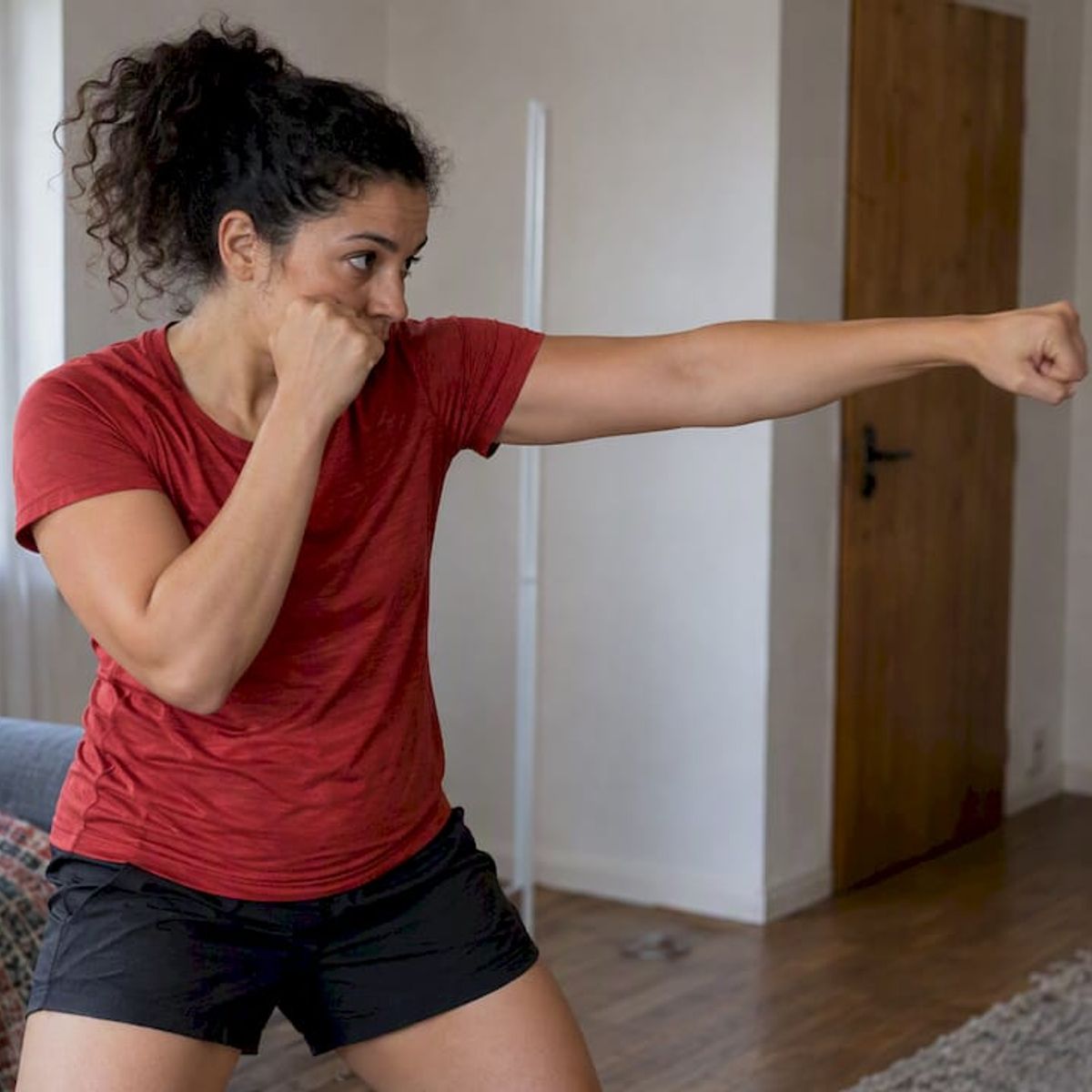
- Technical drills — shadowboxing and combination work where the coach corrects form in real time.
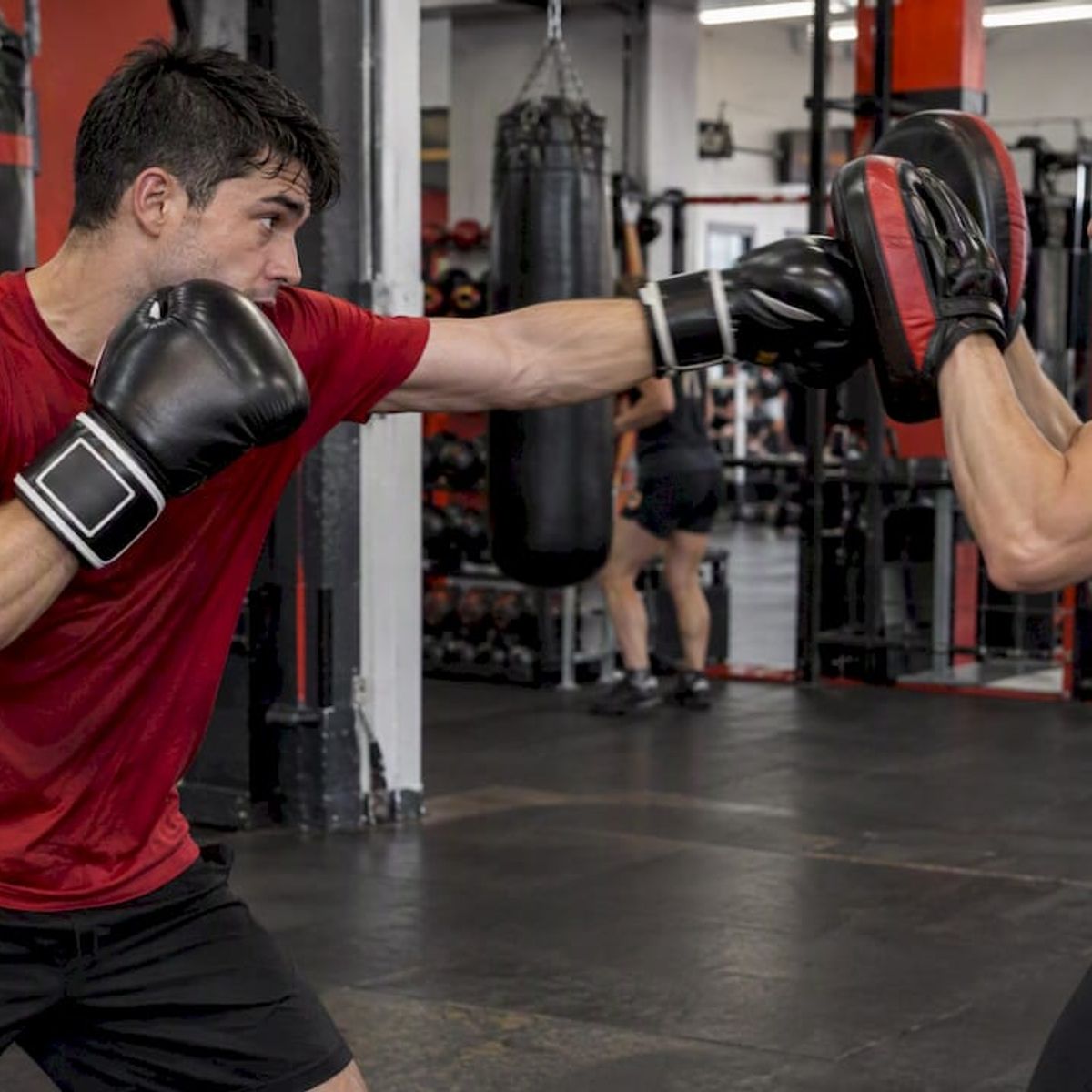
- Bag or pad rounds — heavy bag work or mitt rounds with a partner or coach, the part most people picture when they think “boxing class.”
- Conditioning circuits — bodyweight or light-resistance intervals mixed between boxing rounds.
- Cool-down — stretching and breathing work to bring heart rate back down.
Because the group stays small, coaches can watch your jab technique or foot placement without the class stalling out, which is the entire argument for small-group personal training over a 30-person cardio-boxing class at a big-box gym. New members usually start with modified intensity and simplified drills. Most gyms supply gloves and wraps for a trial class so you don’t need to buy gear before you know if you like it.
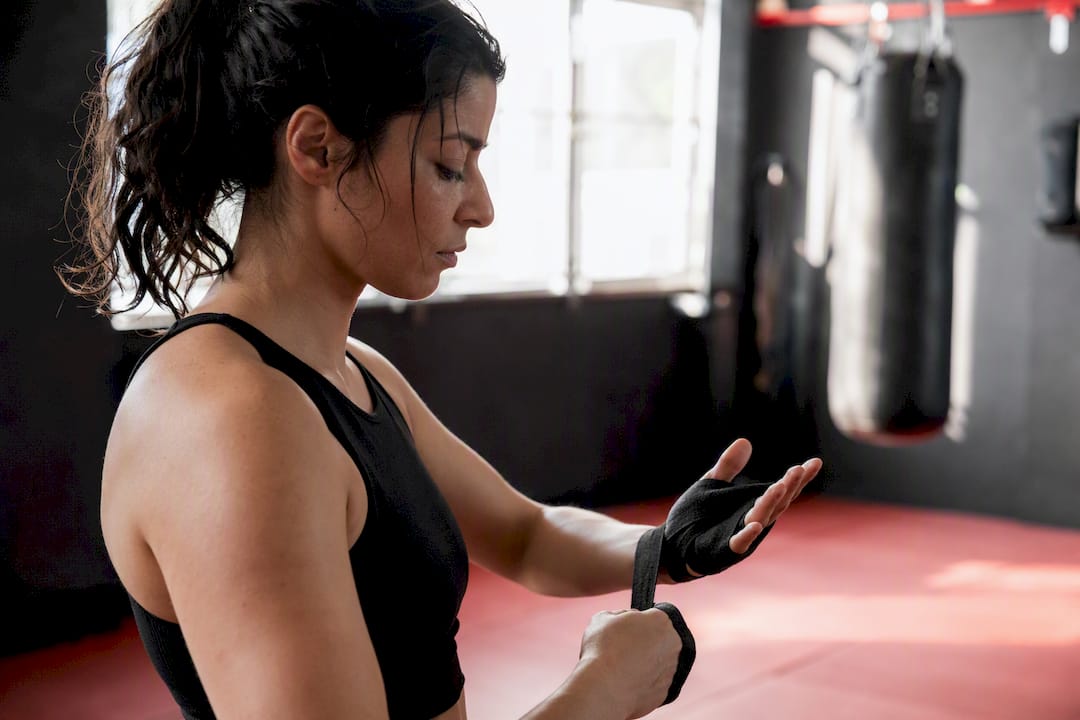
Pro Tip: Show up 10 minutes early to your first class and ask the coach to check your wrap technique. A loose wrap is the single most common cause of wrist strain for beginners.
Which Class Format Fits Your Goal?
Not every “boxing class” is training for the same outcome, and the format names vary by gym even when the content overlaps.
- Cardio boxing (boxercise): heart-rate-driven circuits with minimal technical correction. Best if fat loss and general fitness are the goal.
- Technical classes: slower pace, heavy emphasis on stance, guard, and combinations. Best if you want to actually learn the sport.
- Small-group personal training: a coach working with 2 to 6 people, closer to private coaching pricing but with shared energy and cost. Best for faster technical progress or sport-specific goals.
- Sparring-ready tracks: controlled, supervised contact work, gated behind a technical prerequisite. Only for those planning to compete or spar.
Most gyms structure a path: a beginner onramp (often 6 weeks) that teaches stance, guard, and basic combinations, followed by continuing classes once you can throw a jab-cross-hook sequence without losing your footing. A shadowboxing foundation is usually the clearest marker of readiness. If you can shadowbox three rounds cleanly, most coaches will move you into faster-paced conditioning classes or introduce pad work with a partner.
Does the Research Back Up the Benefits?
The physical case for boxing HIIT is stronger than most fitness trends get. A pilot randomized trial comparing boxing-style HIIT to brisk walking in adults with abdominal obesity found the boxing group had significantly greater improvements in body-fat percentage, systolic blood pressure, and VO2max over 12 weeks, at an equivalent exercise dose. Same time investment, better output, likely because the varied movement patterns and round structure keep people engaged instead of clock-watching on a treadmill.
The mental health data surprised even researchers running the studies. A 2025 feasibility trial of a mindfulness-based non-contact boxing program tracked participants over 10 weeks and found:
Depression scores dropped substantially and anxiety scores significantly decreased, alongside a large increase in self-reported mindfulness. Attendance remained high across most sessions, with nearly all participants expressing satisfaction.
That combination of results and retention is rare in exercise research, where dropout usually wrecks the data before benefits show up. The source, a PLOS One feasibility study, attributes part of the adherence to the group setting itself. Broader scoping reviews of non-contact boxing programs point to a similar cadence for results: 60 to 90 minute sessions, 2 to 3 times weekly, sustained for 6 to 12 weeks.
How Do You Choose the Right Boxing Class?
Judge a class on structure, not just vibe. Ask these questions before you commit to a package:
- What certifications do your coaches hold, and how many years have they coached boxing specifically?
- What’s the maximum class size, and what’s the coach-to-student ratio in practice, not on paper?
- Do beginners spar? If so, at what stage, and how is intensity scaled down?
- What happens if I need to cancel or pause my membership?
- Is there a trial class or an intro offer before I commit to a package?
Decision FactorWhat to Look For
Class size
Fewer than 12 per class for real coaching attention
Level structure
A clear beginner onramp separate from advanced classes
Sparring policy
Contact work gated behind a technical prerequisite, not optional add-on
Trial options
A free or low-cost first class before any commitment
Pricing model
No-contract or month-to-month options over long lock-ins
A 6-week onramp is a reasonable timeline to expect visible skill and conditioning progress. If a gym can’t describe its leveling system in one sentence, that’s a signal the classes aren’t actually structured by level.
What Safety Steps and Gear Do You Need?
Bring your own hand wraps once you’re past the trial class. Most gyms rent or provide gloves early on, but wraps are a hygiene item worth owning outright. You’ll also want cross-training shoes with lateral support, not running shoes, since footwork drills involve pivoting that running shoes aren’t built for.
- Hand wraps (180 inch length is standard for most adults)
- Boxing gloves, 12 to 16 oz depending on your body weight and class intensity
- Cross-training or court shoes with ankle support
- A water bottle, since round-based conditioning dehydrates faster than steady-state cardio
Tell your coach about any joint issues, past injuries, or cardiovascular concerns before your first round. A good coach scales pad work and footwork drills around real limitations instead of pushing everyone through an identical circuit.
Pro Tip: If your wrist or shoulder aches after bag work, it’s almost always a technique issue, not a conditioning one. Ask for a form check before assuming you need to train through it.
A Note From the Coaching Side
Malcolm — background in strength and conditioning coaching with a focus on combat-sport athletes and beginner onboarding.
Level Up Gym runs its programming out of Stratford and Bridgeport, Connecticut, with a free intro class and a structured 6-week onramp for new members. Class frequency and round length follow the same 2 to 3 session, interval-based structure the research above points to, not a template pulled from nowhere.
Why Most Boxing Class Advice Undersells Coaching Ratio
The conventional pitch for boxing classes leans almost entirely on the calorie burn and the stress relief, and both are real. But the research keeps pointing to something the marketing skips: adherence drives results more than intensity does. The boxing HIIT pilot trial beat brisk walking not because it was harder, but because people actually showed up and stayed engaged.
That’s an argument for class size over class intensity. A packed 30-person cardio-boxing session can torch calories for an hour, but nobody’s correcting your guard or your hip rotation, and bad technique compounds into injury or plateau. Small-group formats cost more per session than a mega-gym class, but the coaching attention is the actual product, not the calorie count.
If you’re choosing between a cheaper big class and a pricier small one, prioritize the small one, at least for your first three months. Technique built early sticks. Technique skipped early gets expensive to unlearn later.
— Malcolm
Ready to Try a Class in Stratford or Bridgeport?
Level Up Gym runs beginner-friendly boxing classes led by certified coaches, with small enough groups that you get real feedback on your jab and footwork, not just a shouted count. The hybrid training programs blend boxing conditioning with strength work if you want both in one membership, and there’s no long-term contract locking you in while you figure out what fits.
New members start with a free boxing class at either the Stratford or Bridgeport location, followed by the option to roll into the 6-week onramp if you want a structured path from beginner fundamentals to continuing classes. Coaches scale intensity for newcomers from day one, and equipment is available on-site so you don’t need to buy gloves before your first session. Check class times and book your free session on the main Level Up Gym site to see what fits your schedule this week.
Sources
- Mindfulness-based (non-contact) boxing therapy (MBBT) for depression and anxiety: A feasibility study (PLOS One)
- The feasibility and effectiveness of high-intensity boxing training versus moderate-intensity brisk walking in adults with abdominal obesity (pilot study)
FAQ
What Age Is Too Late to Start Boxing?
There’s no upper age limit for non-contact, fitness-focused boxing classes. Coaches scale intensity and footwork demands to fitness level, not age, so adults of any age can join a beginner class safely.
How Much Do Boxing Classes Cost?
Pricing varies widely by gym and format, with drop-in rates typically higher than package or membership pricing. Look for gyms offering a free or low-cost trial class and no-contract membership options, like Level Up Gym’s free intro class, before committing to a longer package.
Is Boxing 90 Percent Mental?
Boxing demands real technical and physical skill, but the mental component is significant. Reduced anxiety and depression scores in the PLOS One feasibility trial suggest the focus and rhythm of boxing rounds carry a real psychological benefit alongside the physical one.
Is Three Boxing Classes a Week Enough?
Yes. Research on non-contact boxing programs used a cadence of 2 to 3 sessions weekly over 6 to 12 weeks to produce measurable fitness and mental-health improvements, so three classes a week fits squarely within that effective range.
Recommended
- Boxing and Strength Training: The Science-Backed Method — Level Up Gym | Level Up Gym
- Shadow Boxing Workout: A Complete Beginner’s Guide — Level Up Gym | Level Up Gym
- Best Group Fitness Classes for Weight Loss: 2026 Guide — Level Up Gym | Level Up Gym
- The Mental Health and Fitness Link: Boxing and Hybrid Training — Level Up Gym | Level Up Gym