Coach Cues for Boxing Breathing Techniques and Six Weeks of IMT
Use diaphragmatic breathing as your baseline, exhale sharply on impact for power and core stability, and switch to box breathing or pursed-lip breathing to recover between rounds. Add inspiratory muscle training if you want extra respiratory endurance beyond what technique alone provides. Together these four habits cover the full arc of a round: staying loose, hitting hard, and getting your wind back before the bell.
TL;DR:
- Diaphragmatic breathing should be practiced lying down first to develop proper technique and prevent chest tension during training.
- Exhaling sharply on impact helps brace the core, protect the ribs, and channel force into your punches more efficiently.
- Combining box breathing or pursed-lip breathing with regular diaphragmatic patterns enhances recovery and nervous system regulation during rounds.
- Inspiratory muscle training for six weeks can improve respiratory endurance and cardiovascular response, but results vary and should be scheduled on easy training days.
- Starting with gradual volume increases and paying attention to warning signs like lightheadedness ensures safe and effective breathing development.
Level Up Gym
Build Stronger Boxing Fundamentals
Level Up Gym helps Fairfield County adults learn boxing with coaching, whether they are beginners or experienced athletes.
Table of Contents
- The core boxing breathing techniques to learn first
- How to time your breathing during combos and rounds
- What the research says about training your breathing muscles
- Staying safe while you train your breathing
- Three sample sessions to build breathing skill
- How we teach breathing in the gym
- Train your breathing with a coach who watches every rep
- Sources
- FAQ
The core boxing breathing techniques to learn first
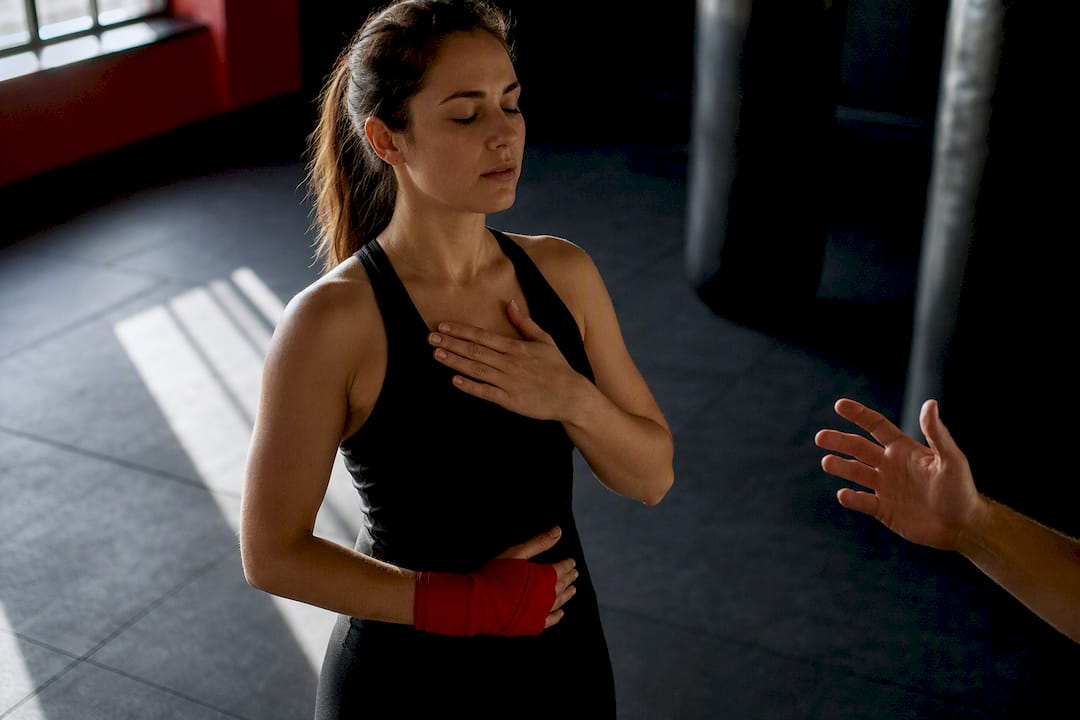
Diaphragmatic breathing is the foundation. Lie down or stand relaxed, put one hand on your chest and one on your belly, and breathe so the belly hand rises while the chest hand stays still. Trained martial artists rely on greater diaphragmatic and abdominal pressure than untrained people to produce and absorb force, which is part of why this pattern matters more in boxing than in casual exercise, according to research on respiratory pressure control in martial artists.
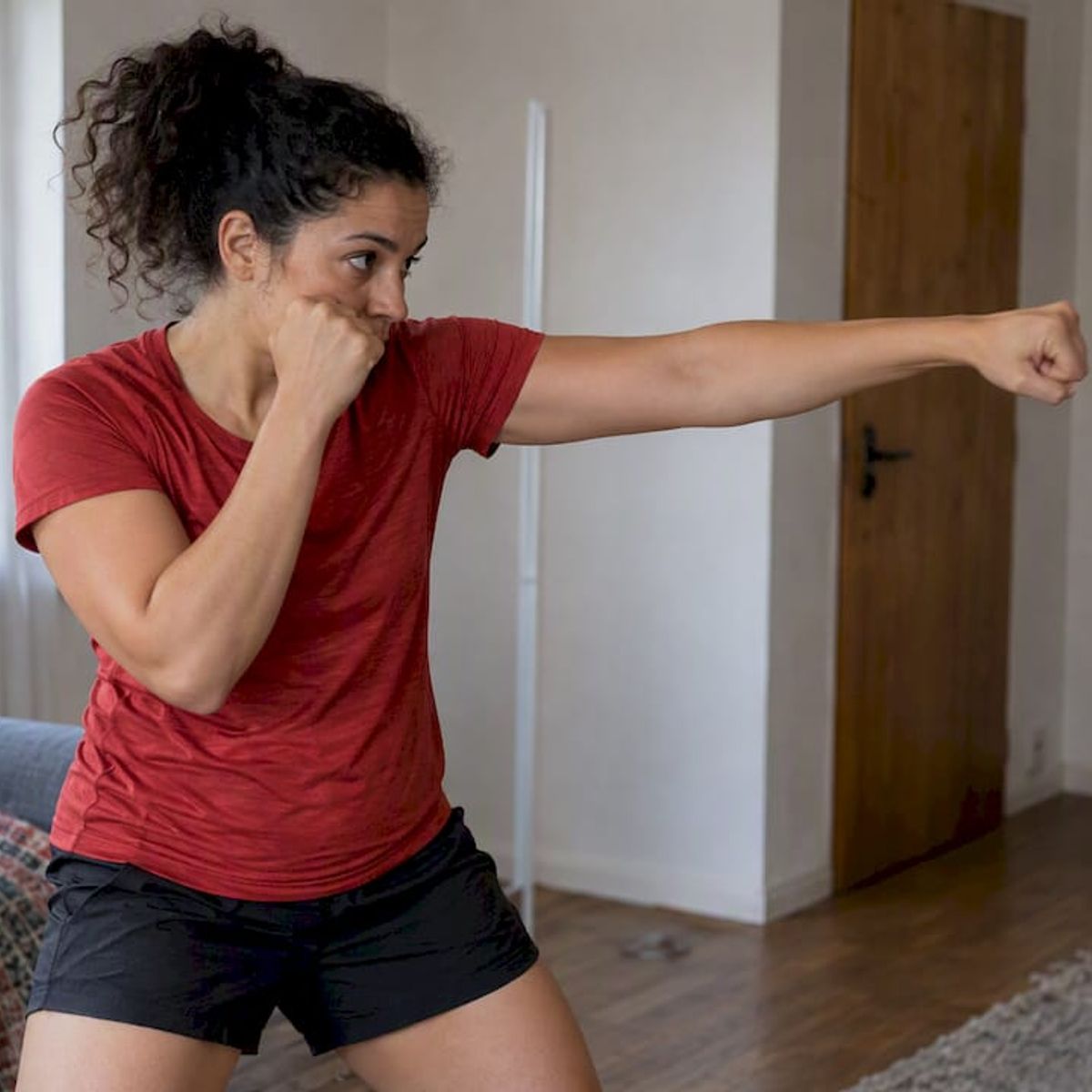
Exhale on impact comes next. As you throw a punch, push air out sharply through pursed lips or a short hiss through clenched teeth, timing the exhale to land right as your fist connects. This braces the core, protects the ribs from a counter, and channels more force into the strike rather than letting it leak into a held breath.
Box breathing, the 4-4-4-4 pattern of inhaling, holding, exhaling, and holding again for four counts each, works well between rounds or during a break in sparring to settle the nervous system. Pursed-lip breathing, where you inhale through the nose and exhale slowly through pursed lips for roughly twice as long, is better suited to active recovery because it lengthens the exhale and speeds the drop in heart rate.
- Diaphragmatic breathing: belly rises, chest stays quiet, used constantly as your default pattern.
- Exhale on impact: short, sharp exhale timed to the strike, never held breath.
- Box breathing (4-4-4-4): equal counts for calm focus between rounds or before sparring.
- Pursed-lip breathing: slow, extended exhale for faster recovery after hard rounds.
Common mistakes include holding the breath through a combination, breathing only through the nose during high output, and tensing the neck and shoulders instead of the core. If you notice a gag reflex or lightheadedness when trying pursed-lip breathing at speed, slow the count down before adding intensity.
Pro Tip: Practice diaphragmatic breathing lying down before you ever try it standing. It’s far easier to feel the correct pattern with gravity working for you.
How to time your breathing during combos and rounds
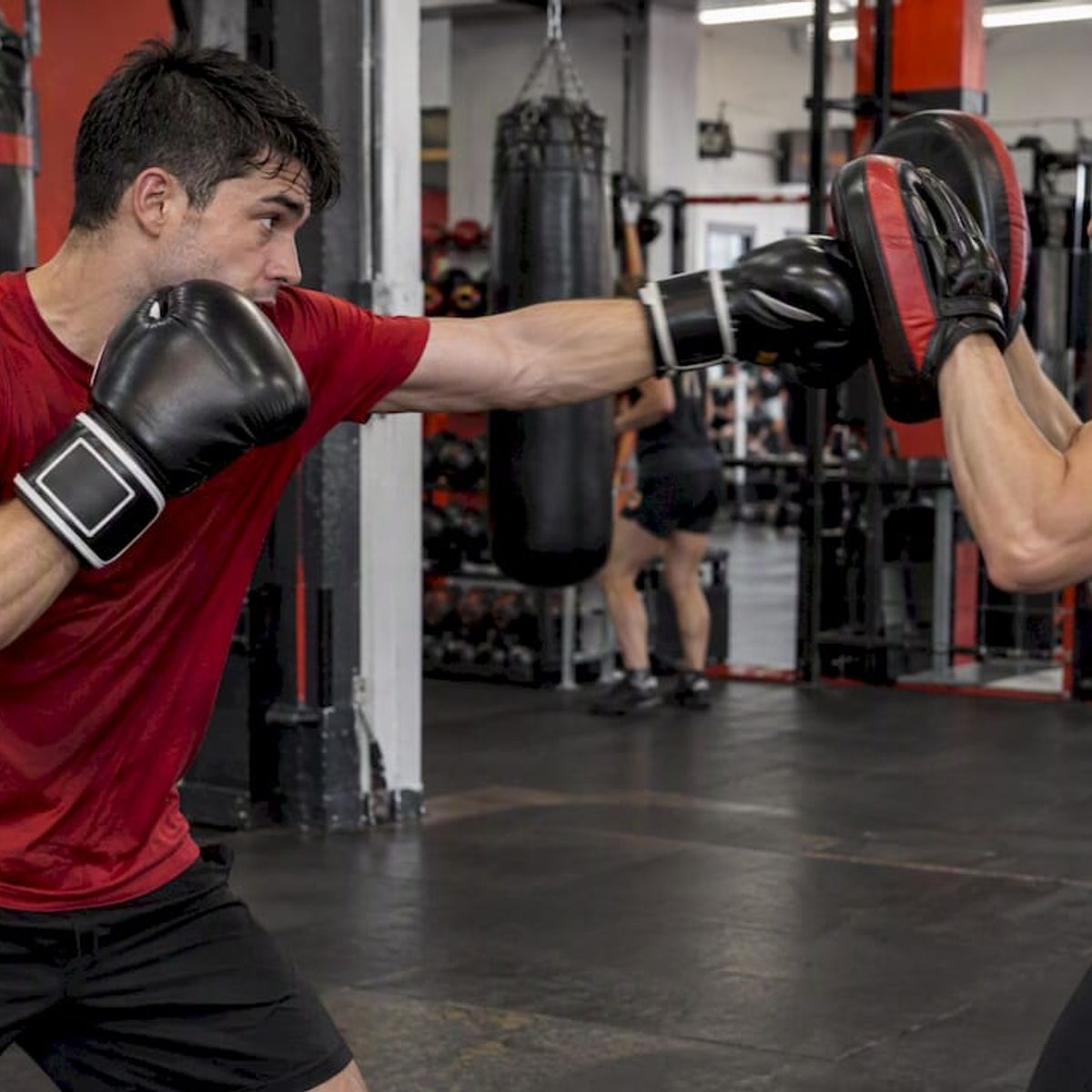
The general rule is simple: inhale during the gap between combinations, exhale on each strike or at least on the power shots that end a combo, and favor nasal inhales when your pace allows it. On the heavy bag or with a coach on mitts, this becomes a countable rhythm you can drill on purpose.
- Single punches: inhale as you set your feet, exhale sharply as the punch lands.
- Two to three punch combos: one inhale before the combo starts, then a short exhale on each strike, ending with your longest exhale on the final power shot.
- High-tempo intervals: shift to shallow, rapid nasal breaths between exchanges, then a full exhale on the combo that closes the exchange.
- Bag sets: try three-minute rounds where you count “inhale, one-two-exhale” out loud until the pattern becomes automatic.
Breathing has to move with your feet, not against them. A short inhale as you pivot or step back, followed by an exhale as you plant and throw, keeps your core braced exactly when you need stability. The footwork drills that build ring movement are a good place to layer this in once the breathing pattern feels automatic on its own.
What the research says about training your breathing muscles
Technique alone has a ceiling. A short program of high-resistance, low-volume inspiratory muscle strength training increased time to exhaustion on resistive breathing tests and lowered blood pressure and heart-rate responsiveness in healthy adults after six weeks, according to research on inspiratory muscle training and cardiovascular response. A separate program built specifically for combat athletes, using 30 breaths twice a day for six weeks, improved lung function measures in MMA fighters, according to a study on inspiratory muscle training in combat-sport athletes.
Six weeks of targeted breathing muscle training measurably extended respiratory endurance in healthy adults, based on inspiratory muscle training research, which is a meaningful window for anyone building a training block around a fight date.
Two reproducible options:
- IMT protocol: 30 breaths against resistance, twice daily, for six weeks.
- IMST protocol: 30 high-resistance efforts per day, five days a week, for six weeks.
- Device-free option: the straw method, breathing through a narrow straw for short sets, mimics some of the resistance effect without equipment.
Results vary by sport and by individual, and most of this evidence comes from small samples, so treat gains as likely rather than guaranteed.
Pro Tip: Run IMT sets on easy training days, not right before heavy sparring, so fatigued breathing muscles don’t compromise your technique.
Staying safe while you train your breathing
Start any new breathing drill with three to five cycles before building volume, and give your respiratory muscles rest days the same way you would a muscle group you just loaded heavily. Stop and reassess if you feel lightheaded, notice chest pressure, or become severely short of breath, all of which the American Heart Association flags as reasons to pause and seek evaluation.
- New to breathwork: three to five cycles per session, adding volume only once it feels easy.
- Warning signs: lightheadedness, chest pressure, or severe shortness of breath mean stop immediately.
- Recent illness or poor air quality: scale back intensity or skip the session.
- Older trainees or anyone with lung or heart conditions: check with a doctor before starting resistance breathing work.
Rate your effort on a simple breathlessness scale as you train, and treat a rating that climbs faster than usual as a signal to back off rather than push through.
Three sample sessions to build breathing skill
- Beginner (5 to 10 minutes): five minutes of diaphragmatic breathing at rest, three short bag sets of one minute each with an inhale-exhale count called out loud, finished with two box-breathing cycles.
- Intermediate (15 to 25 minutes): three-minute bag rounds with a strict rule of exhaling on every strike, one minute of pursed-lip breathing between rounds, adding a round each week as the pattern holds under fatigue.
- IMT-integrated (six-week block): IMT sets on two easy days each week, heavier bag and sparring work on the other days, tracking how many rounds you can hold diaphragmatic breathing before it breaks down into shallow chest breathing.
Track progress by timing how long you maintain the diaphragmatic pattern before fatigue takes over, and note your perceived exertion at the same point each week. The conditioning drills ranked by ring transfer are worth pairing with this once the breathing itself feels stable.
Pro Tip: Film one round a week. Watching your shoulders rise on the inhale is an easy way to catch chest breathing creeping back in.
How we teach breathing in the gym
Coaches get faster adoption with short verbal cues rather than long explanations: a quick “breathe” or “exhale snap” paired with a hands-on tap to the ribs does more than a lecture on diaphragms. Most beginners in our classes notice their breathing holding up longer within a few weeks of consistent bag work, once the exhale-on-impact habit stops being something they have to think about.
— Malcolm
Train your breathing with a coach who watches every rep
Reading about diaphragmatic breathing is one thing. Having a coach catch the moment your shoulders creep up mid-round is another, and that correction is what actually changes how you fight. Boxing classes and personal training are available with certified coaches, including pro boxers, and class sizes are capped so breathing cues can be seen and corrected.
- Boxing Classes give you ongoing, coached rounds to apply breathing patterns under real pressure.
- The 6-Week Onramp builds breathing fundamentals alongside technique from day one, priced at $699 for the full program.
- Online training options are available for those who prefer remote coaching.
New members have the opportunity to start with a free class or consult and receive a written, individualized plan, with no contracts required. Book your free class or check membership options to get a coach watching your breathing from the first round.
FAQ
Do Navy SEALs actually use box breathing?
Box breathing is widely associated with military and tactical training as a way to stay calm under stress, and the pattern itself, four-count inhale, hold, exhale, hold, matches guidance from the American Heart Association on activating a calmer nervous system state. It is a simple, learnable technique regardless of its military reputation.
What is 4-4-4-4 box breathing?
It is a breathing pattern where you inhale for four counts, hold for four, exhale for four, and hold again for four before repeating. The equal counts make it easy to learn and useful for settling nerves between rounds or before sparring.
Does box breathing actually work?
Making the exhale as long as or longer than the inhale can activate the parasympathetic nervous system and help calm heart rate, according to American Heart Association guidance. It works best as a calming tool between exertion rather than as a way to increase output during it.
Is 4-7-8 breathing better than box breathing?
Neither is strictly better since they serve slightly different purposes: 4-7-8 leans harder into a long exhale for relaxation, while box breathing’s equal counts are easier to hold steady under stress. Both rely on the same principle of extending the exhale to trigger a calmer physiological state, per American Heart Association guidance.