10 to 15 Minute Boxing Warm Up Coaches Use to Prep Fighters
Run this sequence: two to three minutes of jump rope, three to four minutes of dynamic mobility, two minutes of boxer bounce and footwork, three to four minutes of shadowboxing with technique focus, then one to two minutes of hip and shoulder activation. That’s approximately 10 to 15 minutes total, and it works for beginners, seasoned amateurs, and anyone over 50 who scales the impact down. If your session is heavy on power work, add 30 seconds of light plyometrics at the end.
TL;DR:
- The warm-up sequence should be structured from general metabolic activation to sport-specific technical work to prevent injuries and optimize performance.
- Beginners and older athletes should extend activation exercises and reduce impact, substituting low joint-pounding movements for high-impact jump rope.
- Shadowboxing is the most critical component, emphasizing slow, deliberate practice to reinforce proper stance and motion before increasing speed.
- Adjustments for bag work, sparring, or power days include extending shadowboxing, adding power shots, and incorporating brief plyometric exercises for explosive strength.
- Proper pacing and avoiding static stretches before training are essential, with attention to minor form details in each drill to maximize safety and effectiveness.
Table of Contents
- Boxing Warm Up Drills: Your Step-By-Step 10 to 15 Minute Routine
- How Do You Perform Each Boxing Warm Up Drill Correctly?
- Should You Change Your Warm Up for Bag Work, Sparring, or Strength Days?
- What’s a Fast Warm Up When You’re Short on Time?
- What Mistakes Wreck a Boxing Warm Up?
- Coach Notes: Scaling This Routine for Every Age and Level
- The Warm Up Nobody Talks About Enough
- Ready to Have a Coach Run Your Warm Up Instead of Guessing?
- Sources
- FAQ
Boxing Warm Up Drills: Your Step-By-Step 10 to 15 Minute Routine
Boxing asks the body to do two contradictory things at once: stay loose enough to rotate fast, and stay tight enough to absorb a shot. A rushed warm-up fails at both. The routine below is built in five blocks, each with a specific job, and it runs in order because your nervous system needs a general wake-up before it can handle joint-specific or sport-specific demands.
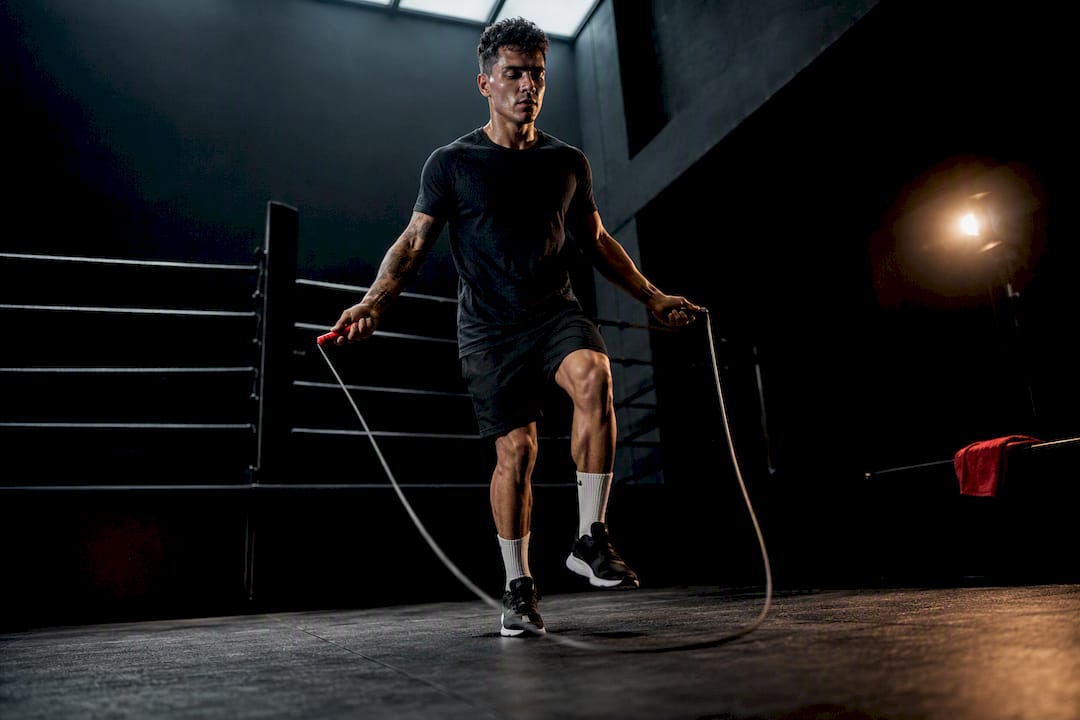
- Minutes 0 to 3: Jump rope. Basic bounce, then alternate-foot steps, then a light double-under attempt if you’re comfortable. This raises core temperature and gets your calves and forearms firing before anything else happens.
- Minutes 3 to 6 or 7: Dynamic mobility. Leg swings, walking lunges with a torso twist, arm circles, and thoracic rotations. No holding a stretch for 20 seconds here. Everything moves.
- Minutes 7 to 9: Boxer bounce and footwork. Light on the toes, small lateral steps, pivot drills off the lead foot. This is where balance and rhythm come online.
- Minutes 9 to 12 or 13: Shadowboxing. Slow at first, full extension, calling out combos in your head. Build speed only in the final minute.
- Minutes 13 to 15: Activation. Banded or bodyweight glute bridges, shoulder dislocates with a towel or band, hip circles. This primes the muscles that actually generate punching power.
Beginners can stretch every block by 30 to 60 seconds and skip double-unders entirely, sticking to basic bounce. No jump rope at home? Substitute high knees or a marching-in-place cardio burst for the first block. Advanced boxers preparing for a power-heavy bag session can compress the mobility block slightly and add a short plyometric burst at the end, covered in the session-adjustment section below. If your focus is pure technique, spend less time on cardio activation and more on the shadowboxing block, slowing everything down and calling combos out loud.
How Do You Perform Each Boxing Warm Up Drill Correctly?
Getting the order right matters less than getting each drill right. Boxing Science’s warm-up framework recommends a progression from general metabolic activation to joint-specific mobility to sport-specific technical work, finishing with brief potentiation if the session calls for power. Here’s how each piece should actually look.
Jump rope. Start with a basic two-foot bounce for 30 seconds, then switch to alternating single-leg steps, then try boot-scoot or side-to-side movement. If your knees or ankles complain, swap in a marching jump-rope motion without the rope, or use a rowing machine for two minutes instead. Checkpoint: your heart rate should be noticeably up, but you should still be able to talk in full sentences.
Dynamic mobility. These aren’t stretches, they’re rehearsals for the range of motion boxing demands. Walking lunges with a twist prep your hips for pivots. Arm circles and cross-body arm swings open the shoulders for hooks. Thoracic spine rotations, standing or on all fours, prep the torso rotation that generates power in every punch you throw. Checkpoint: you should feel range increasing with each rep, not pain.
Boxer bounce and footwork. Stay on the balls of your feet, knees soft, and move in small lateral steps and pivots rather than big jumps. This is the same footwork pattern covered in a full boxing footwork drills session, just compressed and lighter. Checkpoint: your feet should feel light, not planted.
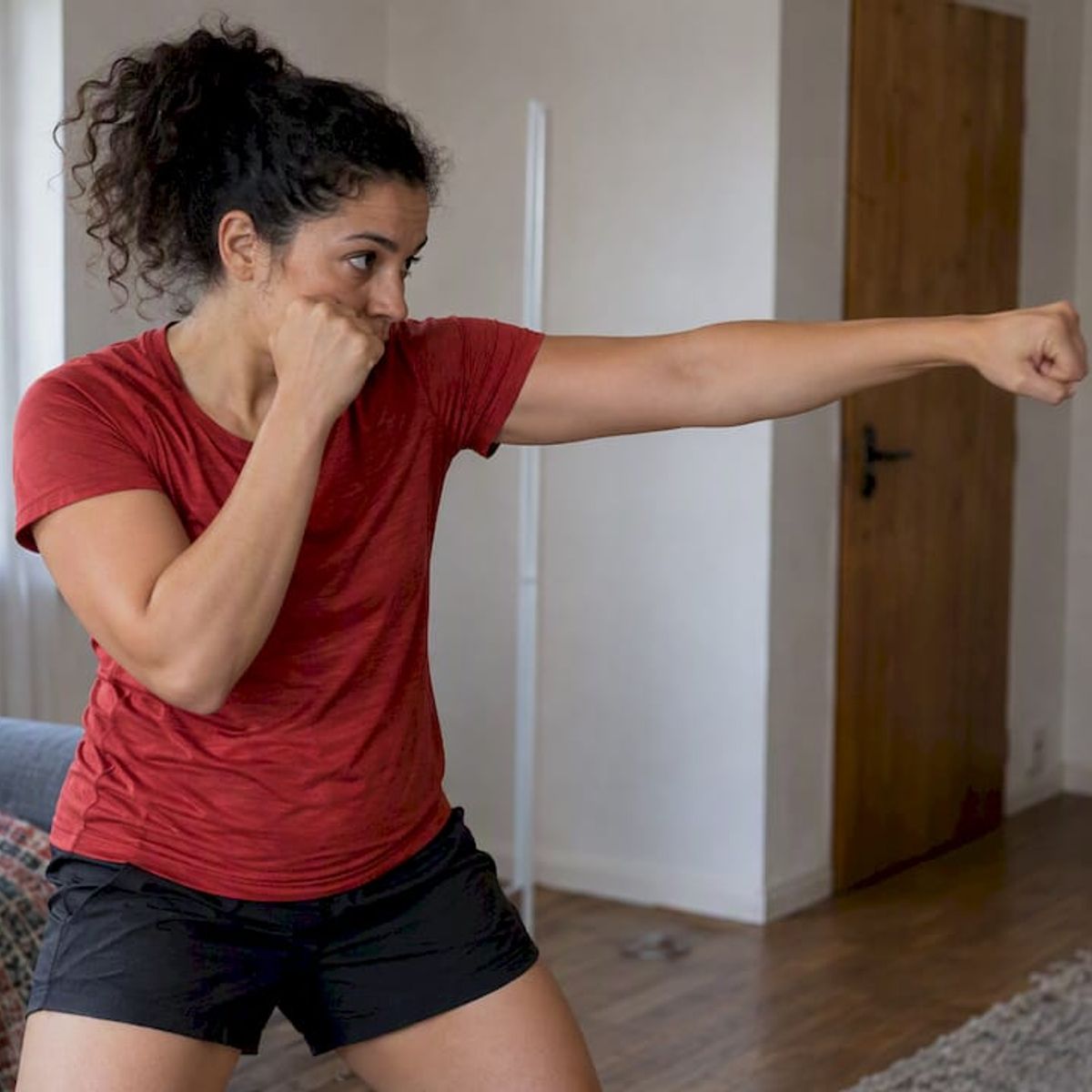
Shadowboxing. Structure this in short rounds, even during warm-up. Throw a 1-2 (jab, cross) for 30 seconds at half speed, focusing on full extension and returning to guard. Then add a 1-2-3 (jab, cross, hook), still slow. The punch numbering system that most coaches use makes it easy to call combos to yourself or a partner without breaking rhythm. A deeper breakdown of stance, guard, and combo sequencing lives in our shadow boxing guide. Checkpoint: are you hitting full extension without leaning forward at the waist?
Activation. Glute bridges wake up the hips that drive your rear-hand power. Banded shoulder rotations prep the rotator cuff for repetitive punching. A few hip circles or fire hydrants finish the job. Checkpoint: you should feel these muscles “switch on,” not fatigue out.
Pro Tip: If you only remember one cue from this whole routine, make it this: slow shadowboxing before fast shadowboxing. Rushing to full speed before your joints have rehearsed the motion is how warm-ups turn into the injury they were supposed to prevent.
Should You Change Your Warm Up for Bag Work, Sparring, or Strength Days?
Yes, and the adjustments are small but specific. A warm-up built for a technical bag session looks different from one built for sparring or a conditioning day, even if the bones of the routine stay the same.
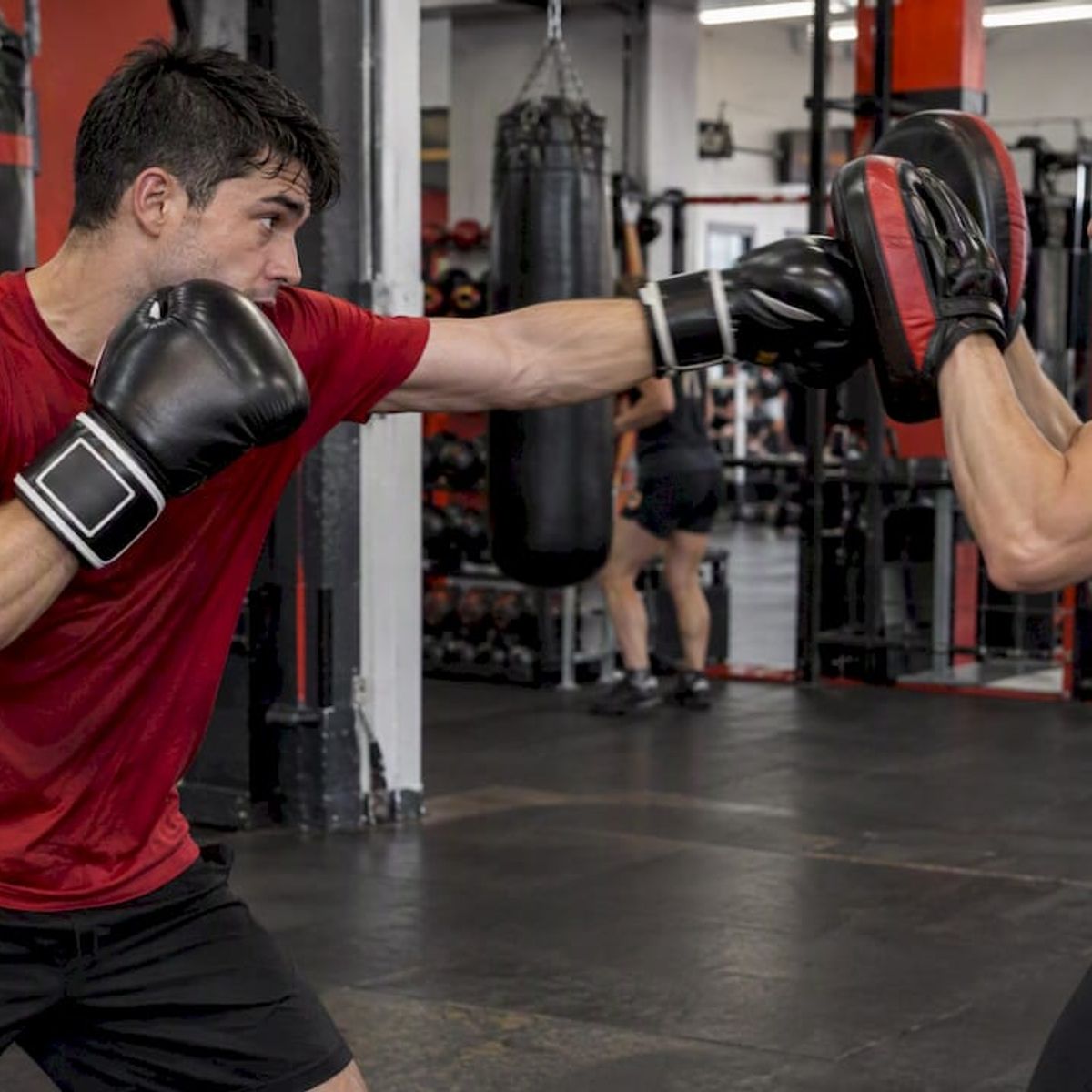
- Heavy bag sessions: Extend the shadowboxing block by a minute and add a few power shots at 70% intensity in the final 30 seconds so your first bag combos aren’t your first hard punches. Our guide on using a heavy bag for fitness covers how to structure the rounds that follow.
- Sparring: Add a short mental warm-up, focusing on attention and reaction cues, since sparring demands split-second decisions the bag doesn’t. A pre-competition mental warm-up script is worth running through in the last two minutes before gloves go on.
- Conditioning or HIIT days: Trim the mobility block slightly and lean harder on jump rope and footwork, since the session itself will handle further conditioning.
- Strength or power days: This is where brief plyometrics earn their place. Ten to 15 seconds of squat jumps or lateral bounds after activation primes fast-twitch fibers without pre-fatiguing them. Boxing Science’s warm-up research specifically calls out potentiation work like this for power-focused sessions.
If you’re training twice in one day or stacking hard sessions back to back, this is also where Seiler’s 80/20 training principle matters. Most of your sessions in a given week should stay lower intensity, with only one or two genuinely hard efforts. Your warm-up on an easy day can be shorter and gentler; on a scheduled hard day, don’t skimp on activation just because you’re pressed for time.
What’s a Fast Warm Up When You’re Short on Time?
Three to five minutes still beats walking in cold. Here’s the compressed version.
- 90 seconds of jump rope or high knees to raise your heart rate and temperature.
- 90 seconds of dynamic mobility, prioritizing hip circles, arm swings, and one set of walking lunges.
- 60 to 90 seconds of shadowboxing, jab and cross only, building from half speed to full by the last 20 seconds.
Skip the dedicated activation block, but don’t skip movement entirely. If you’re genuinely fatigued, sore beyond normal soreness, or dealing with a nagging joint issue, that’s a different problem than time pressure. Warming up faster is fine. Warming up on an injury that’s telling you to rest is not.
What Mistakes Wreck a Boxing Warm Up?
The single biggest mistake is holding static stretches before throwing a punch. Long, held stretches (30 seconds or more) temporarily reduce muscle power output, which is the opposite of what you want right before explosive rotational movement. Save static stretching for after training, when you’re cooling down.
The second mistake is treating intensity as all-or-nothing. Use a simple RPE (rate of perceived exertion) scale from 1 to 10 in your head: warm-up should peak around a 5 or 6, not an 8. If you’re gasping by minute five, you’ve front-loaded too hard. A heart rate zone calculator using the Karvonen method can give you a target range if you train with a monitor.
- Rounding your back during glute bridges or hip circles strains the lower back instead of activating the glutes.
- Shrugging your shoulders toward your ears during arm circles tightens the neck instead of loosening it.
- Throwing full-power punches before your shoulders and hips have rotated through a few slow reps invites a strain.
- Skipping footwork entirely and going straight from jump rope to punches leaves your balance unrehearsed.
None of this requires equipment or a coach standing over you, just attention to how each movement feels the first few reps in.
Coach Notes: Scaling This Routine for Every Age and Level
Age and experience change the math, not the sequence. At Level Up Gym, the same five-block structure runs across our beginner on-ramp and our adult classes, we just adjust the dial on impact and duration.
For adults 50 and up, we stretch the activation block to closer to three minutes and swap jump rope for a marching or step-touch cardio pattern that skips the joint pounding. That approach is detailed further in our boxing program for adults 50+, which leans on lower-impact alternatives that still deliver the neuromuscular wake-up a warm-up is supposed to provide.
In our six-week beginner on-ramp, new members run this exact sequence for the first two weeks with a coach calling out each block by name, so the pattern becomes automatic before we add complexity to the shadowboxing combos in week three.
Two cues we repeat constantly on the floor: “soft knees, quiet feet” during footwork, so members stop stomping and start gliding, and “punch through the target, not at it” during shadowboxing, which fixes the pulled-punch habit almost instantly. Small corrections like these, repeated early, save months of retraining bad habits later.
The Warm Up Nobody Talks About Enough
Most articles on this topic treat the warm-up as a checklist to clear before the “real” training starts. That framing is backwards. A boxing warm-up is where you rehearse the exact movement patterns you’ll need in the next hour, at low stakes, where a mistake costs you nothing.
The conventional advice fixates on generic mobility work, ten minutes of hip circles and leg swings that could belong to any sport. What gets skipped is the technical rehearsal piece: slow, deliberate shadowboxing where you’re grooving your actual stance and guard, not just loosening joints. That’s the block most people rush through or skip, and it’s the one that prevents the sloppy first three minutes of bag work that leads to a tweaked shoulder.
If you only have time to do one thing well, make it the shadowboxing block. Do it slow enough to notice your feet, your guard, your hip rotation. Speed and intensity should be the last thing you add, not the first, and definitely not the thing you use to make up for skipping the rest of the routine.
— Malcolm
Ready to Have a Coach Run Your Warm Up Instead of Guessing?
Reading about proper warm-up sequencing is one thing. Having someone watch your first few reps of shadowboxing and catch the dropped guard hand before it becomes a habit is another. That’s the real advantage of training with coaches on the floor instead of piecing together drills solo: correction happens in real time, before a bad pattern sets in.
Level Up Gym builds every class around this exact warm-up structure, scaled to whoever is in the room that day, whether that’s a first-timer in the six-week beginner on-ramp or someone training for a sparring session. Our hybrid training programs include coached warm-ups as a standard part of every session, not an afterthought tacked onto the schedule. If you’re near Stratford or Bridgeport, Connecticut, the next step is simple: book a class, try the on-ramp, or reach out about small-group coaching to get your warm-up (and everything after it) actually corrected instead of just repeated.
Sources
The warm-up sequence and activation guidance in this article draw on Boxing Science’s evidence-based warm-up framework, which covers progression from general to sport-specific movement. Combo structure references the punch numbering system explained by FightCamp and FightCamp’s breakdown of the six basic punches. Intensity scaling follows Runner’s World’s explanation of the 80/20 training principle, and warm-up structuring for other sports draws on Hoop Mentality’s basketball warm-up guide.
- What Is the 80/20 Rule? An evidence-based training structure
- THE BOXER’S WARM UP
- The Punch Number System 1-6 Explained
FAQ
What Do 1 Through 6 Mean in Boxing?
Numbers 1 through 6 correspond to specific punches: jab, cross, lead hook, rear hook, lead uppercut, and rear uppercut, in the standard punch numbering system most coaches use to call combinations quickly.
What Is the 30/30/30/30 Drill in Boxing?
It’s a round structure using 30 seconds of high-intensity punching followed by 30 seconds of active recovery, repeated for several cycles to build endurance and explosive output within a single round.
What Are the Five Best Boxing Warm Up Exercises?
Jump rope, dynamic mobility drills, boxer bounce footwork, shadowboxing at increasing speed, and glute or shoulder activation exercises form the core five, run in that order over 10 to 15 minutes.
What Is the 80/20 Rule in Boxing Training?
It means roughly 80% of your training sessions should stay at low to moderate intensity, with only about 20% pushed to genuinely hard efforts, a principle borrowed from endurance sports research and applied to combat-sport scheduling to protect recovery.
How Long Should a Boxing Warm Up Last?
A full warm-up runs 10 to 15 minutes for most sessions, though a condensed 3 to 5 minute version can work when time is genuinely limited and the session itself will build further intensity.