
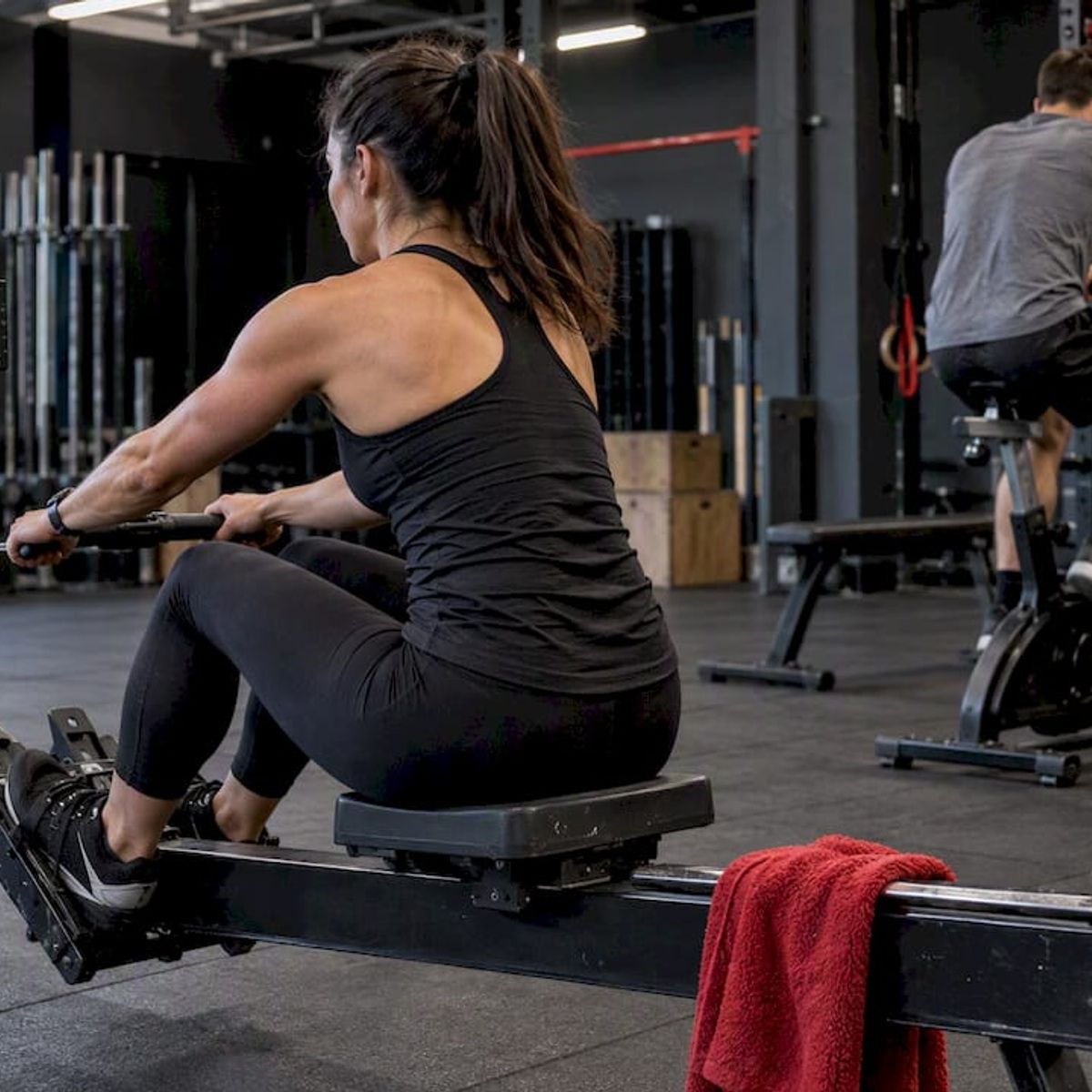
Rowing Uses 70–85% of Your Muscles: Rowing vs Cycling Explained
For full-body conditioning and a higher cardiovascular load in less time, rowing usually comes out ahead. For long, lower-body-focused endurance work with easier pacing, cycling tends to win. The right pick still depends on your joints, your goals and what you’ll actually show up and do, since the best cardio machine is the one you use consistently.
TL;DR:
- Rowing engages more muscle groups, burns more calories, and raises heart rate higher than cycling at the same effort, making it ideal for fat loss and full-body conditioning.
- Cycling allows for longer, lower-intensity sessions and puts less stress on the lower back, making it better for endurance building or rehabilitation.
- Proper technique is crucial for both activities to prevent injury, with rowing risking lower back strain and cycling highlighting knee joint issues if improperly set up.
- Heart rate and perceived effort are more reliable measures of intensity than wattage when comparing the two, emphasizing effort consistency across modalities.
- For joint health, both are low-impact, but rowing may aggravate the lower back, while cycling can increase knee stress if bike fit is poor.
Level Up Gym
levelupgym.app
Train With Guidance, Not Guesswork
Level Up Gym coaches adults through fat loss, strength, and boxing training, with beginners welcome across Stratford and Bridgeport.
Table of Contents
- Rowing vs cycling at a glance
- What muscles does each machine actually work?
- How rowing and cycling compare on heart rate, VO2 and calories
- Which one is easier on your joints?
- Structuring workouts for your specific goal
- How to decide which machine fits you
- How we program rowing and cycling at Level Up Gym
- Train with guidance instead of guessing
- FAQ
- Sources
Rowing vs cycling at a glance
Before digging into the physiology, here’s how the two stack up on the factors that matter most when you’re choosing between them.
- Muscles worked: rowing recruits legs, back, core and arms in one continuous motion; cycling is driven mainly by quadriceps, glutes and hamstrings.
- Calorie burn: rowing tends to burn more calories at a matched effort level because it moves more total muscle mass per stroke, according to research comparing rowing and cycling energy expenditure.
- Cardiovascular intensity: rowing raises heart rate and oxygen uptake higher than cycling at the same external power output, based on physiological comparisons of elite rowers on both ergometers.
- Joint impact: both are low-impact compared to running, but rowing stresses the lower back through repeated hip hinging while cycling loads the knees through repetitive flexion.
- Accessibility: cycling has a shorter learning curve and widely available equipment (spin bikes, outdoor bikes), while rowing machines are common in gyms but require more technique coaching.
For fat loss, rowing’s higher per-minute calorie cost gives you an edge in shorter sessions. For pure endurance building, cycling lets you log longer, lower-intensity miles without the same full-body fatigue. For strength carryover, rowing’s posterior-chain demand gives it a slight advantage. For rehab or a true beginner starting from scratch, cycling is often the gentler on-ramp. For simple convenience, whichever machine you’ll actually use wins.
When comparing the two, use heart rate or rate of perceived exertion (RPE) rather than wattage alone. Power output on a rower and a bike doesn’t translate evenly into effort, so matching by how hard it feels (or your heart rate zone) gives a fairer read on true intensity.
What muscles does each machine actually work?
Rowing works in three phases: the drive starts with the legs pushing against the footplate, continues through hip extension, then finishes with the back and arms pulling the handle in. The recovery reverses that sequence, sliding you back to the catch position. This chain recruits an estimated 70 to 85% of your total musculature in a single stroke, according to electromyography research on indoor rowing, which found coordinated activation across the calves, quads, glutes, back and arms throughout the stroke cycle.
Cycling is more localized. Quadriceps drive the downstroke, glutes and hamstrings assist through hip extension, and calves contribute a smaller stabilizing role. That narrower muscle recruitment is exactly why cyclists can sustain high leg power for much longer than rowers can sustain full-body effort: fewer muscle groups fatigue less in sync.
Technique errors undercut results on both machines:
- Rowing: rushing the recovery (sliding forward too fast) shortens the catch position and shifts load onto the lower back instead of the legs.
- Rowing: rounding the lumbar spine during the drive, rather than hinging at the hips, raises injury risk over repeated strokes.
- Cycling: a saddle set too low or too far forward forces extra knee flexion and strains the joint.
- Cycling: over-gearing (pushing too much resistance at a low cadence) grinds the knees instead of building aerobic capacity.
Pro Tip: Film yourself from the side for 10 strokes or 10 pedal cycles. On the rower, check your shins stay vertical at the catch; on the bike, check your knee doesn’t collapse inward at the bottom of the stroke.
How rowing and cycling compare on heart rate, VO2 and calories
At a matched power output, rowing typically produces a higher heart rate and oxygen consumption than cycling. Research on elite rowers found that cycling allows for higher maximal power output, but rowing elicits higher VO2 and heart rate at the same submaximal workload, which is part of why cross-modal programs use heart rate rather than wattage to compare intensity across the two modalities.
One study found that rowing increases stroke volume and cardiac output more than cycling when matched for power, even though heart rate and blood pressure stayed similar between the two activities. At a power-to-weight ratio of 2 watts per kilogram, stroke volume and cardiac output were significantly higher after rowing than after cycling. That means your heart is moving more blood per beat during rowing, a meaningful adaptation for cardiovascular fitness.
This higher physiological demand is also why rowing tends to burn more calories minute for minute. Harvard Health’s calorie-burn tables list ranges for 30 minutes of stationary rowing and stationary cycling across different body weights and intensities, and both activities scale up considerably from moderate to vigorous effort. Your actual burn depends heavily on body weight, fitness level and how hard you push, so treat any number as a starting estimate rather than a guarantee.
To compare sessions fairly:
- Use a heart rate monitor and stay in the same training zone across both machines rather than matching wattage.
- Rate your effort on a 1 to 10 RPE scale: a 6 to 7 should feel similarly hard whether you’re rowing or cycling.
- Track session totals (time, average heart rate, perceived effort) so you can see real trends instead of guessing.
Whichever modality you choose, both count toward the Physical Activity Guidelines recommendation of 150 to 300 minutes of moderate activity, or 75 to 150 minutes of vigorous activity, each week.
Which one is easier on your joints?
Both rowing and cycling are far gentler on joints than running, since neither involves the repeated impact of a foot striking the ground. But each has its own repetitive stress pattern worth knowing before you commit to one.
Rowing’s main risk area is the lower back. The hip-hinge motion, repeated for hundreds of strokes per session, can aggravate an already irritated spine if your form breaks down, especially during fatigue in the final minutes of a piece. Cycling’s main risk area is the knee, since the joint flexes and extends thousands of times per ride; poor saddle height or bike fit is usually the root cause of pain that shows up on the front or side of the knee.
The American College of Sports Medicine recommends modifying an activity that irritates a joint rather than abandoning it altogether, noting that consistency across multiple sessions, not any single workout, is what determines whether a pain-management program actually works. In practice, that might mean shortening your rowing strokes to reduce lumbar flexion, or raising your bike saddle half an inch to open up knee angle at the bottom of the pedal stroke. If you have a history of joint pain, a physical therapist’s perspective on joint pain causes and treatment options can help you figure out whether the issue is form, fit or something that needs clinical attention before you keep training through it.
Pro Tip: If a joint hurts during the first five minutes of a session and doesn’t ease up, that’s a signal to adjust your setup or switch machines for the day, not to push through it.
Persistent pain that doesn’t resolve with technique or equipment changes is worth a conversation with a doctor or physical therapist before you keep logging miles or meters.
Structuring workouts for your specific goal
How you structure a session matters as much as which machine you choose. Both rowing and cycling respond well to high-intensity interval training (HIIT), and both support long steady-state efforts, but the practical limits differ.
Because rowing taxes your whole body at once, rowing-based HIIT sessions tend to run shorter, often 15 to 20 minutes of work, before form breaks down and the lower-back risk mentioned above starts to climb. Cycling’s more localized demand allows for both longer intervals and genuinely long steady-state rides, since your upper body and core aren’t fatiguing alongside your legs.
A few starting templates:
- 20-minute rowing HIIT: eight rounds of 30 seconds hard, 90 seconds easy, focusing on clean form each stroke.
- 30 to 45 minute steady-state cycling: a conversational pace held for the full duration, useful for building aerobic base without taxing recovery.
- Cross-training swap: cyclists add two short rowing sessions a week for upper-body and core stimulus; rowers add a low-impact cycling day to recover from lumbar load while still training the cardiovascular system.
Track progress with the same metrics regardless of machine: session time, average heart rate, RPE and how you feel the next day. For more on why short, structured sessions can outperform longer unstructured ones, see our breakdown of why short workouts still work, and for the difference between interval and endurance programming, our piece on aerobic versus anaerobic training is a useful next read.
How to decide which machine fits you
Run through five questions before committing to one modality over the other:
- What’s your primary goal: fat loss, endurance, strength carryover or rehab?
- Do you have a joint history, particularly in your lower back or knees?
- Which machine do you actually have reliable access to?
- How much time do you have per session, and how many sessions per week?
- Which one do you genuinely enjoy enough to repeat three times a week for a month?
If you’re still torn, try a two-week trial: alternate rowing and cycling sessions, and log RPE, heart rate, session length and how recovered you feel the next day. By the end of two weeks, one machine usually stands out as easier to stick with and better tolerated by your joints.
A few red flags should prompt a coach or clinician visit instead of more trial and error:
- Sharp or localized pain that doesn’t resolve within a day of rest.
- Pain that gets worse with each session rather than improving as you adapt.
- Numbness, tingling or swelling around a joint during or after training.
If both appeal to you, you don’t have to choose just one. Many lifters mix two or three rowing sessions with two cycling sessions a week, using the bike for lower-impact recovery days and the rower for higher-intensity full-body work. For ideas on balancing cardio formats with strength training, see our guide on balancing strength and cardio sessions.
How we program rowing and cycling at Level Up Gym
When we build a session around rowing or cycling, the decision starts with the member’s goal, not the equipment. Someone training for fat loss and short on time usually gets rowing intervals; someone rebuilding fitness after an injury or new to structured training often starts on the bike, where the learning curve and joint demand are lower.
In our hybrid training and beginner onramp programs, we use short rowing and cycling intervals as a conditioning finisher rather than the whole session, pairing them with strength work so members get cardiovascular benefit without burning out their recovery capacity. For members managing a cranky lower back, we’ll lean on cycling first and reintroduce rowing gradually with strict form cues. You can see how we structure these combinations in our hybrid training workout examples, and our heart rate zone calculator is the same tool we use to set intensity targets across both machines in class.
— Malcolm
Train with guidance instead of guessing
Picking between rowing and cycling matters less than whether you’re doing either one with decent form and a plan that fits your goal. We ensure new members start with guidance and personalized plans, so you’re not left figuring out stroke mechanics or bike fit on your own. Our classes are capped in size with certified coaches giving hands-on attention whether you’re rowing, cycling or working the bag.
If you’re in Stratford or Bridgeport, Connecticut and want a structured way to build cardio capacity alongside real strength and boxing work, our 6-Week Onramp is built for exactly that transition, priced at $699 one-off for the full program. Prefer to start with classes instead of a dedicated program? Check our membership options for personal training and group class pricing, or explore online training if in-person sessions aren’t practical right now. Membership options are available without contracts.
FAQ
What is 10 minutes of rowing equivalent to?
Ten minutes of rowing at a moderate to vigorous pace delivers a comparable cardiovascular stimulus to a longer cycling session, since rowing recruits a larger share of total muscle mass and raises heart rate and oxygen uptake faster at matched effort, according to physiological comparisons of rowing and cycling. It won’t fully replace a 30-minute steady ride for pure endurance building, but it’s an efficient way to raise your heart rate and burn calories in a short window.
Can you get in shape just by rowing?
Yes, rowing alone can meaningfully improve cardiovascular fitness and build strength across your legs, back and arms, since it engages a large share of total body musculature in each stroke according to research on rowing’s energy demands. Consistency and clean technique matter more than any single session, so pairing it with proper form coaching and the Physical Activity Guidelines target of 150 or more weekly minutes gives you a realistic path to real fitness gains.
Is 20 minutes of rowing enough?
Twenty minutes of rowing, especially structured as intervals, can be enough to produce a meaningful cardiovascular and calorie-burning effect given how much muscle mass the stroke engages. Whether it’s “enough” depends on your goal: for general health maintenance it can contribute solidly toward weekly activity targets, but for significant endurance or fat-loss goals you’ll likely want to combine it with additional sessions throughout the week.
Is rowing or cycling better for belly fat?
Neither machine targets fat loss from a specific body area, since spot reduction isn’t how fat loss works, but rowing tends to burn more calories per minute at a matched effort because it moves more total muscle mass, based on comparative studies of rowing and cycling energy expenditure. Overall fat loss depends more on sustained calorie deficit and consistency than on which cardio machine you pick.
Sources
- A comparison of energy expenditure during rowing and cycling ergometry
- Rowing increases stroke volume and cardiac output to a greater extent than cycling
- Differences in physiological responses during rowing and cycle ergometry in elite male rowers
- Calories burned in 30 minutes for people of three different weights
- Physical Activity Guidelines, 2nd edition