Get Confident in 6 Weeks: Beginner Personal Training Backed by Research
Yes. Personal training is a smart first step for almost anyone new to exercise, because a trainer catches the mistakes you can’t see yourself making and builds a plan around your actual body instead of a generic template. After two or three sessions, expect three concrete things: safer movement patterns, a simple written plan, and enough early wins to know you can keep going. The sections below cover what those first sessions look like, how programs get built, and how to pick the right coach.
TL;DR:
- Personal trainers reduce injury risk for beginners by emphasizing proper movement habits before adding weight, especially within the first few weeks.
- Program design typically focuses on 8 to 15 repetitions per set, with one primary exercise per movement pattern, progressively increasing difficulty through various methods.
- Choosing a trainer with credible certification and experience with beginners or older adults ensures appropriate program adjustments and safe progression.
- Small-group sessions and structured onboarding help maintain motivation and build consistent habits without long-term contractual commitments.
- Preparing for the first session involves medical clearance, packing essentials, setting clear goals, and understanding that initial soreness and steady progress are normal.
Table of Contents
- What to Expect From Beginner Personal Training in Your First Sessions
- Does Personal Training Actually Help Beginners, or Is It Overkill?
- How Trainers Build a Beginner Workout Program Step by Step
- How Do You Pick the Right Beginner Personal Trainer?
- How Should You Prepare for Your First Personal Training Session?
- What Beginner-Friendly Training Looks Like at Level Up Gym
- A Quick Note on Starting Slow and Tracking Small Wins
- Ready to Start Training With Support Built for Beginners
- Sources
- FAQ
What to Expect From Beginner Personal Training in Your First Sessions
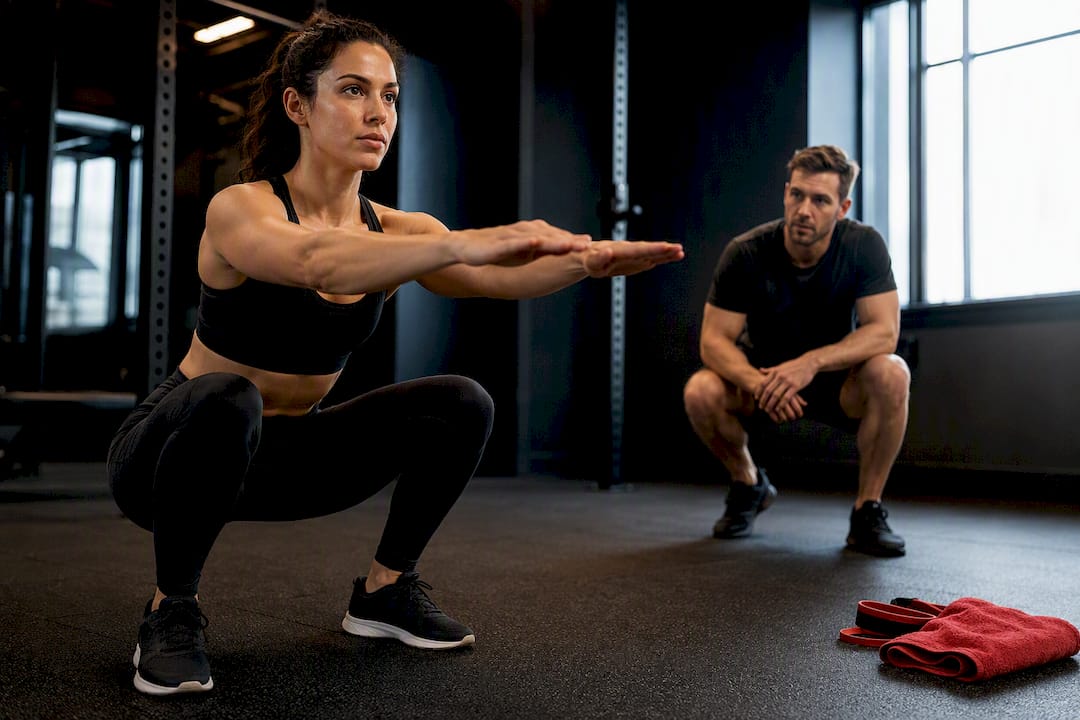
Your first session isn’t a workout. It’s an interview with movement testing attached. A competent trainer starts with an intake: injury history, medications, surgeries, sleep, stress, and what “fitness” even means to you. That’s followed by a movement screen, usually a squat, a hinge (like a deadlift pattern), a shoulder reach, and a single-leg balance check, so the trainer can see where your hips, ankles, or shoulders are limiting you before loading anything heavy.
From there, most beginner sessions follow a similar shape:
- Warmup (5 to 10 minutes): dynamic drills like leg swings, band pull-aparts, or a light bike to raise your heart rate and rehearse the day’s movement patterns.
- Skill or technique work (10 to 15 minutes): slow, unloaded reps of the day’s main lift, often with a broomstick or empty bar.
- Main strength work (15 to 25 minutes): two to four exercises at a manageable load, coached closely for form.
- Cooldown and mobility (5 minutes): stretching or breathing work to bring your heart rate down.
Total session length usually runs 30 to 60 minutes. A Harvard Health overview of personal training notes that trainers commonly open with dynamic warmups and adjust equipment choices specifically to reduce injury risk in new clients.
Format matters more than most beginners realize. One-on-one sessions give you full attention and faster correction, which helps if you’re anxious or have a health condition to manage closely. Small-group training (two to six people) costs less per session and adds a little social pressure that many beginners find motivating rather than stressful. Hybrid or remote coaching works if you train at home, though a coach can only correct what they can see on camera, so form checks take longer. A good trainer will also ask what equipment you actually have access to and build around it instead of prescribing a gym-only plan you’ll never do.
Does Personal Training Actually Help Beginners, or Is It Overkill?
It helps, and the evidence isn’t just marketing. Harvard Health points out that trainers reduce injury risk mainly by teaching correct form before load gets added, which matters most in the first few weeks when technique habits are forming. That single factor, learning the movement before the weight, is the difference between a beginner who’s still training in six months and one who gets hurt in week three.
For adults over 35, the case gets stronger. Strength training improves balance, bone density, and metabolic health, and reduces long-term fall and injury risk, according to a review from RWJBarnabas Health. The NSCA’s program-design guidance for older clients recommends building programs around balance, hinges, presses, rows, split-stance work, and carries, often structured into a 12-week block that controls how fast volume increases. That’s a very different approach than handing a 40-year-old the same plan as a 22-year-old, and it’s exactly why trainer experience with older or deconditioned clients matters when you’re choosing one.
Beginners hiring trainers report a consistent pattern: early, structured coaching builds confidence faster than solo trial and error, largely because a trainer catches small form errors before they become habits. UPMC’s guidance on healthy aging through personal training frames this as a safe, structured path that improves mobility and confidence specifically through tailored assessments and progressions, not generic routines.
Accountability is the other piece. Showing up alone is easy to skip. Showing up to someone waiting for you is much harder to skip, which is a large part of why trainer-led starts tend to stick longer than solo attempts.
How Trainers Build a Beginner Workout Program Step by Step
Most competent trainers follow a version of the same sequence when designing beginner workout programs, sometimes called a Focus System in program-design writing for beginner clients. Here’s the framework in practice:
- Pick the rep range first. Beginners typically train in the 8 to 15 rep range, which is heavy enough to build strength but forgiving enough to fix form mistakes before they cause injury.
- Choose one primary exercise per movement pattern. A squat, a hinge, a push, a pull, and a carry cover almost everything a beginner needs in a session.
- Add secondary or assistance exercises. Lighter, single-joint moves like glute bridges or band rows that reinforce the primary lifts without adding fatigue.
- Build the warmup around the day’s patterns. If deadlifts are on the menu, the warmup rehearses hip hinges, not random stretching.
- Layer in cardio or conditioning. Often just brisk walking, cycling, or short intervals tacked onto the end, since beginners get most of their conditioning benefit from the strength work itself early on.
- Set clear progression rules. A specific trigger, like hitting 12 clean reps on all sets, for when to add weight or complexity.
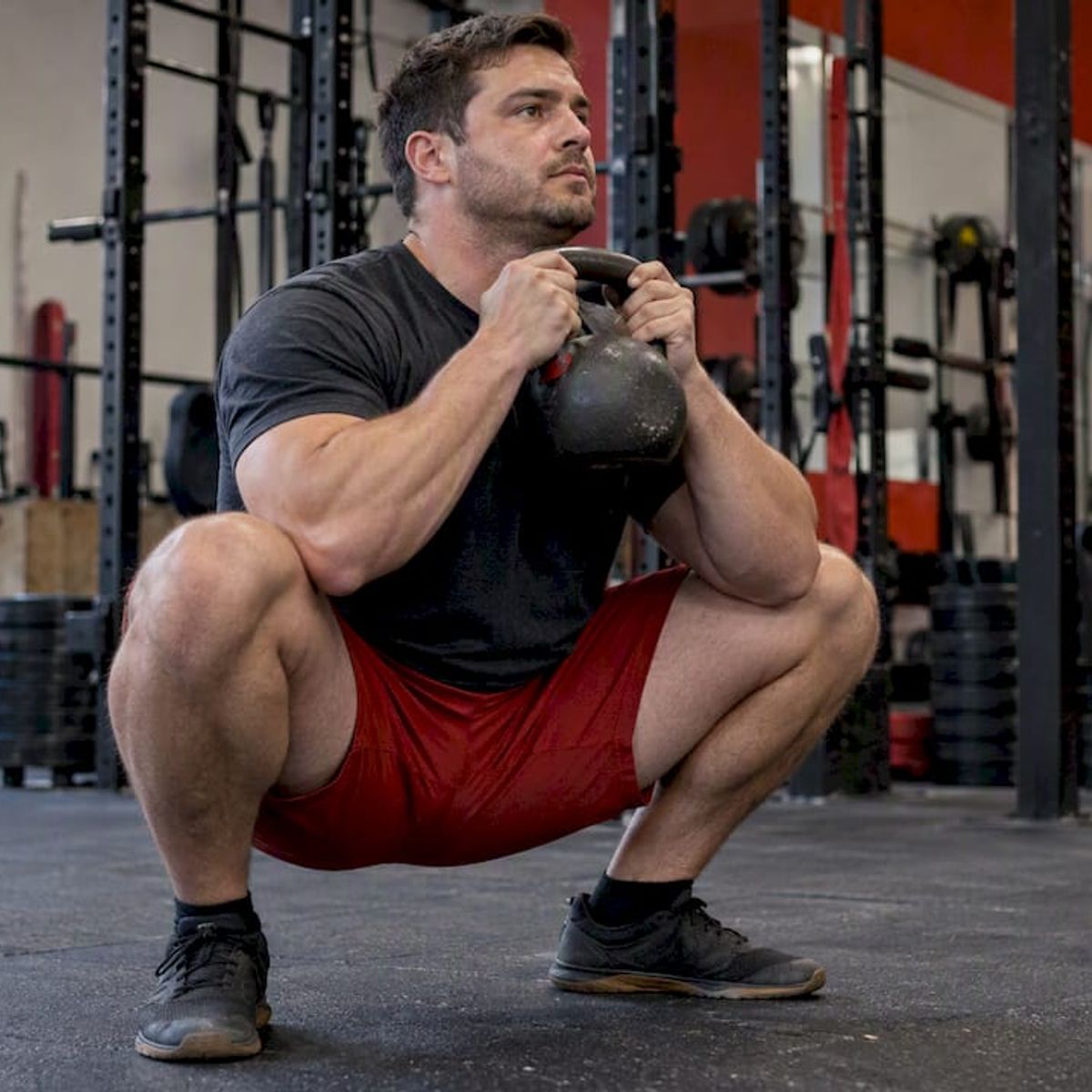
A typical beginner week looks like full-body training two to three times, with at least one rest day between sessions. Exercise selection leans on regressions: bodyweight squats before goblet squats, hip hinges with a dowel before loaded deadlifts, incline push-ups before floor push-ups, assisted rows before free-weight rows, farmer’s carries for grip and core, and step-ups for single-leg strength and balance.
Pro Tip: Ask your trainer what specific number or standard triggers your next progression. “We’ll see how it goes” is not a plan. “Once you hit 12 clean reps for three sets, we add weight” is.
Progression itself is rarely just “add more weight.” Trainers also increase difficulty by adding a third set, slowing the tempo, reducing rest time, or swapping a stable exercise for one requiring more balance. That layered approach is why a well-designed program still feels challenging in week eight even if the weights haven’t jumped dramatically.
How Do You Pick the Right Beginner Personal Trainer?
Credentials are the first filter. Look for certification through the American Council on Exercise, the National Academy of Sports Medicine, or the National Strength and Conditioning Association, and ask directly whether they’ve worked with true beginners or older clients, not just athletes who already knew how to lift.
Bring a short list of questions to your consult:
- “Walk me through what my first assessment will actually cover.”
- “How will you decide when to progress my program?”
- “Can you coach me through one exercise right now so I can see your style?”
- “What’s your cancellation and refund policy if this isn’t a fit?”
Watch for red flags that suggest a trainer is coasting rather than coaching. A cookie-cutter plan handed over before any assessment, pressure to sign a long-term contract on day one, or skipping a movement screen entirely are all signs to walk away. So is a trainer who can’t clearly explain why they picked a particular exercise for you.
On cost, expect roughly $75 to $125 per hour for one-on-one sessions, with small-group formats lowering the per-person price considerably since the trainer’s time gets split across clients. If budget is the barrier, small-group personal training is worth exploring before ruling out coached training altogether, and it’s worth reading up on the signs that suggest you actually need a trainer versus what you could safely figure out solo.
How Should You Prepare for Your First Personal Training Session?
A little prep prevents most first-session headaches. Here’s what to sort out before you walk in:
- Get medical clearance if warranted. Anyone with heart disease, uncontrolled blood pressure, joint replacements, recent surgery, or pregnancy should check with a doctor before starting, and most reputable trainers will ask about this directly during intake.
- Pack the basics. Water, supportive athletic shoes (not worn-out sneakers or sandals), and any medication you might need, like an inhaler.
- Write down your goals and conditions. A short note listing what you want, plus any old injuries or aches, saves time and helps the trainer screen you accurately.
- Wear clothes you can move in. Nothing restrictive at the hips or shoulders, since the movement screen will test your range in both.
- Expect some soreness 24 to 48 hours later. That’s normal muscle adaptation, not injury. Light walking, hydration, and sleep help it pass faster than sitting still does.
Keep your first four to six weeks’ expectations modest. You’re not chasing dramatic strength gains yet. You’re building movement quality, a workout habit, and a baseline the trainer can measure future progress against. That’s genuinely the whole job of the early phase, and it’s worth reading more on what a realistic fitness goal actually looks like before you set expectations too high.
What Beginner-Friendly Training Looks Like at Level Up Gym
A hybrid training and boxing gym runs its beginner intake around a six-week onramp designed specifically for people who’ve never trained with a coach before. New members move through:
- An initial movement and fitness assessment before any programming starts.
- Small-group personal training sessions that keep coaching attention high while maintaining manageable cost.
- No-contract membership options are available, so beginners aren’t locked into a commitment before they know if the format fits them.
- A structured path into ongoing group classes once the onramp period ends.
Level Up’s own program data backs the approach: beginner-friendly class design at the gym has been tied to attendance rates as high as 64%, a strong sign that easing new members in gradually, rather than throwing them into advanced classes, keeps them coming back. If you’re evaluating a gym elsewhere, that’s the pattern worth copying: an assessment first, a defined onboarding window, and no pressure to sign a long contract before you know it’s a fit.
A Quick Note on Starting Slow and Tracking Small Wins
Feeling nervous before your first session is completely normal, and every trainer worth hiring expects it. Nobody good at this job is judging your fitness level walking in the door. They’re paying attention to how you move, not how much you can lift on day one.
Two things matter more than anything else early on. First, consistency beats intensity. A moderate session you actually complete twice a week beats an all-out session you dread and skip. Second, track two or three simple metrics, like how many clean reps you hit on your main lift, how you feel walking upstairs, or how consistently you show up, rather than obsessing over the scale. Small, visible wins are what keep beginners in the game long enough to see real change.
If you’ve been putting off that first step, the fix isn’t more research. It’s booking a movement screen or a free intro session and letting a coach tell you where you actually stand.
— Malcolm
Ready to Start Training With Support Built for Beginners
This gym is built for readers who want coached, structured training without signing a long-term contract before they know it fits. That’s the real gap most beginners run into elsewhere, either overpriced one-on-one training or a group class with zero individual attention. The gym closes that gap with small-group personal training that keeps real coaching in every session, plus a six-week beginner onramp built around an initial movement assessment rather than guesswork.
Booking is straightforward: start with a free boxing class in Stratford or explore the hybrid training programs built for people brand new to structured exercise. Either path gets you an assessment, a starter recommendation, and a coach who already expects to work with beginners.
Sources
- How a personal trainer can enhance your workouts - Harvard Health
- Personal Training Program Design for Beginner Clients - The PTDC
- Strength training for the older client: a blueprint for program design - NSCA
FAQ
Should a Beginner Get a Personal Trainer?
Yes, for most people. Trainers reduce injury risk by teaching correct form early, and beginners don’t need to be “in shape” before starting since coaching is designed to build fundamentals from scratch.
What Is the 3-3-3 Rule for the Gym?
There’s no single agreed-upon definition of a “3-3-3 rule” in the strength-training research covered here, so treat any version you see online as informal advice rather than an established standard. A trainer can give you a personalized structure that fits your actual goals instead.
What Are Good Beginner Exercises to Practice Regularly?
Bodyweight squats, hip hinges, push-ups (or an incline variation), assisted or band rows, glute bridges, step-ups, and farmer’s carries cover the major movement patterns beginners need. A trainer will typically pick regressions of these based on your movement screen results.
Is 40 Too Old to Start Personal Training?
No. Adults over 35 see real benefits from strength training, including improved balance, bone density, and metabolic health, and program-design guidance for older clients specifically builds in balance and functional work before adding heavier loads.