Mobility Routine for Lifters: A 12-Minute Plan That Works
The best mobility routine for lifters is short, specific to the lifts you are about to do, and paired with strength work through a full range of motion. Twelve minutes before you train, aimed at your ankles, hips, upper back and shoulders, beats an hour of random stretching you skip by Thursday. Below is the routine, how to adjust it for squats, deadlifts and presses, what the evidence says about stretching, and a few add-ons if you also box.
Level Up Gym
Build Mobility Into Your Lifting
Level Up Gym offers coached strength training in Stratford and Bridgeport, with beginners welcome and no contracts.
TL;DR
- Do 10 to 12 minutes of movement-specific drills before lifting: ankles, hips, thoracic spine (upper back) and shoulders, then a few light ramp-up sets of your first lift.
- Lifting through a full range of motion improves range of motion about as well as stretching does, so your squat depth and press position are part of your mobility work.
- Pair every mobility gain with strength in that position. Range you cannot control under load is not usable range.
- Reserve long static stretches or PNF for a separate session or a rest day, not for right before heavy sets.
- If a position stays stuck after a few weeks of consistent work, have a coach watch your lift or see a physical therapist if anything hurts.
Table of Contents
- What mobility means for a lifter
- What the research says about stretching and lifting
- The 12-minute pre-lift mobility routine
- Adjust the routine to your lift
- Strength is what makes mobility stick
- Mobility for boxing: shoulders, hips and thoracic spine
- Our perspective on mobility
- Get a coach to watch your lifts
- Common mistakes to avoid
- FAQ
- Sources
What mobility means for a lifter
Flexibility is how far a muscle can be lengthened. Mobility is how well you can control a joint through the range you need. That distinction matters in the gym. A lifter who can pull a foot to their backside in a quad stretch but folds forward in a squat is not short on flexibility. They are short on control, strength or positioning in that range.
Physical therapist and educator Sue Falsone makes a similar point in an APTA podcast on bridging rehab and performance: the useful outcome is controlling joints through the full range that daily life and sport demand, not simply getting looser.
For lifting, four areas do most of the work:
- Ankles: limited dorsiflexion pushes your heels up or your torso forward in a squat.
- Hips: they need rotation and flexion to reach depth without your lower back tucking under.
- Thoracic spine: a stiff upper back makes you compensate with your lower back or shoulders in presses and rows.
- Shoulders: overhead pressing and the rack position of a front squat both depend on them.
The ACSM resource on resistance training recommends dynamic warm-ups that mimic the lifting motions, with ankle and shoulder mobility prioritized for deep squats and overhead work, and it advises progressing from stable to unstable and simple to complex. That is the logic of the routine below.
What the research says about stretching and lifting
Most lifters were taught that stretching prevents injury and that you must stretch to get flexible. The evidence is more nuanced, and it is good news for people who already lift.
Lifting through full range builds range
A systematic review and meta-analysis of resistance training and range of motion found that resistance training increased range of motion, with one exception: training using only body mass did not produce a significant improvement. The same analysis found no significant difference between resistance training and stretching for range of motion gains. A separate randomized controlled trial in healthy, physically active adults compared full-range resistance training with static stretching for the hip and lower back extensors, which is the kind of question deadlift and squat lifters actually ask.
The practical reading: a deep, controlled goblet squat, a Romanian deadlift taken to a real stretch in the hamstrings, or a pause squat in the bottom position are not just strength exercises. They are mobility drills with a load attached.
Stretching and injury prevention
Stretching is widely recommended to prevent injury, yet a 2023 review in the literature on resistance training and range of motion points toward building controlled strength through the full range as the better focus. In that framing, a mobility routine is an integrated part of a training session rather than an optional extra. That is how we treat it, and how this article is built.
When static stretching and PNF still make sense
If your goal is to maximize long-term range of motion in a specific joint, a review of stretching methods concludes that static stretching and proprioceptive neuromuscular facilitation (PNF) outperform dynamic or ballistic stretching for that purpose. For a general lifter’s pre-training routine, though, dynamic movements are usually more appropriate because they raise blood flow and prepare the joints without adding pre-lift fatigue.
That gives you a clean split:
GoalBest toolWhen
Get ready to lift
Dynamic, lift-specific drills
Right before training
Improve usable range in a lift
Full-range lifting, paused reps, tempo work
In your working sets
Lengthen a stubborn area long term
Static stretching or PNF
Separate session or after training
The 12-minute pre-lift mobility routine
Run this before any session. Move slowly, breathe, and stop short of pain. Sharp pain, pinching or numbness is a reason to stop and get assessed, not to push through.
1. Ankle rocks (1 minute)
Stand facing a wall or rack with one foot a few inches back from it. Keep your heel flat and drive your knee forward over your middle toes. Rock 10 times per side. If your heel lifts, you found your limit for today. Move the foot slightly closer next time only when the heel stays down.
2. Half-kneeling hip flexor shift (1.5 minutes)
Kneel on one knee with the other foot planted in front. Squeeze the glute of the back leg, tuck your pelvis slightly, and shift forward until you feel the front of the hip lengthen. Hold 3 seconds, return, and repeat 8 times per side. The squeeze keeps the stretch in the hip rather than in your lower back.
3. 90/90 hip switches (2 minutes)
Sit with both knees bent at right angles, one leg in front and one to the side. Sit tall, then rotate both knees to the other side. Aim for 8 to 10 slow switches. Use your hands for support if needed. This builds internal and external hip rotation, which is what lets your knees track out in a squat.
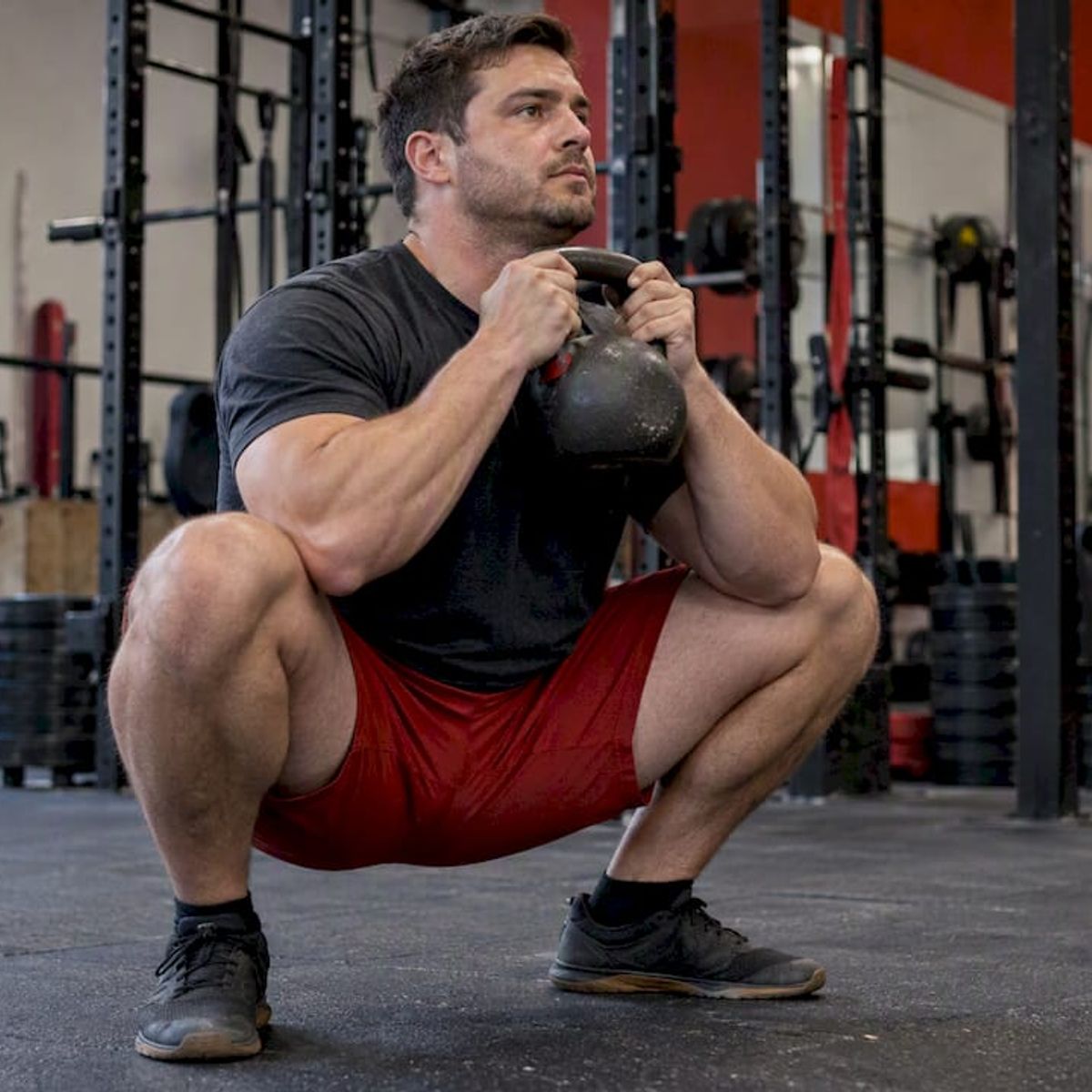
4. Deep goblet squat hold with pry (2 minutes)
Hold a light dumbbell or kettlebell at your chest and sink into the deepest squat you can control. Use your elbows to gently press your knees out, shift side to side, and breathe. Spend 30 to 45 seconds, stand, and repeat once or twice. A strength coach’s guide to mobility for Olympic lifting and many similar guides use this squat as a core drill, and for good reason: it checks ankles, hips and posture in one position.
5. Thoracic open book (1.5 minutes)
Lie on your side with knees bent and stacked, arms straight in front. Rotate the top arm up and back toward the floor behind you, following your hand with your eyes. Keep your knees together. Do 8 reps per side. Your ribcage should rotate, not your lower back.
6. Cat-camel with a reach (1 minute)
On hands and knees, round the spine, then extend it, moving through the upper back more than the lower back. Ten slow reps is plenty.
7. Wall slides or band pull-aparts (1.5 minutes)
Stand with your back and forearms against a wall. Slide your arms overhead without letting your ribs flare or your lower back arch. Do 10 reps. If you have a light band, swap in 15 pull-aparts, squeezing your shoulder blades together. This wakes up the muscles that stabilize the shoulder blade for pressing.
8. Ramp-up sets (1.5 minutes plus)
Finish by performing your first lift with an empty bar or light weight, then build up. The ACSM guidance on mimicking the lifting motion is the point: the last piece of your warm-up should look like the lift itself.
Some lifters also like to add a short activation step before heavy sets. If you are curious, here is a quick vibration plate activation protocol from a wellness studio that walks through how people use one before training. It is optional, and the routine above works without any equipment.
Adjust the routine to your lift
You do not need every drill every day. Spend more time where your day’s lifts demand it.
Squat day
Double the ankle rocks and the goblet squat holds. Add one set of 90/90 switches. If your torso leans forward at the bottom or your heels rise, ankle and hip rotation are the first suspects. Try squatting to a box or pausing 2 seconds at the bottom, because full-range reps are themselves training.
Deadlift day
Prioritize the hip flexor shift and a few bodyweight hip hinges. Your goal is to hinge from the hips and keep a neutral spine, not to touch your toes. A lifter whose hamstrings feel tight may actually need better hip hinge control and more time under tension in the Romanian deadlift.
Bench and overhead press day
Spend extra time on the open book, wall slides and band pull-aparts. Overhead pressing depends on thoracic extension and shoulder mobility. If your ribs flare and your lower back arches to get the bar overhead, the range is coming from the wrong place.
A simple weekly layout
- Every session: the 12-minute routine, trimmed to your lift.
- Once a week: a separate 20 to 30 minute mobility block on a rest day, using static holds or PNF for your one or two stubborn areas.
- In every working set: take the full range you currently own, with control.
That rest-day block mirrors the advice in a strength coach’s powerlifting mobility guide to add a dedicated 20 to 30 minute session. Treat it as your place for long holds, not your warm-up.
Strength is what makes mobility stick
A common mistake is chasing range of motion while ignoring the muscles that control it. A physical therapy paper on CrossFit notes that the Functional Movement Screen includes both a deep squat and a shoulder mobility test, and the broader point holds for lifters: range has to be backed by stability. The rotator cuff for shoulders, and knee and hip stability for the lower body, are what turn a new range into one you can use safely under load.
In practice:
- After opening the hips, add goblet squat holds or split squats with a pause.
- After opening the upper back, add rows and face pulls.
- After gaining overhead range, add light overhead carries or half-kneeling presses.
One caution applies to the research above. The meta-analysis found that bodyweight-only resistance training did not significantly improve range of motion. If you are a beginner doing only bodyweight moves, add load gradually and keep the technique clean.
Mobility for boxing: shoulders, hips and thoracic spine
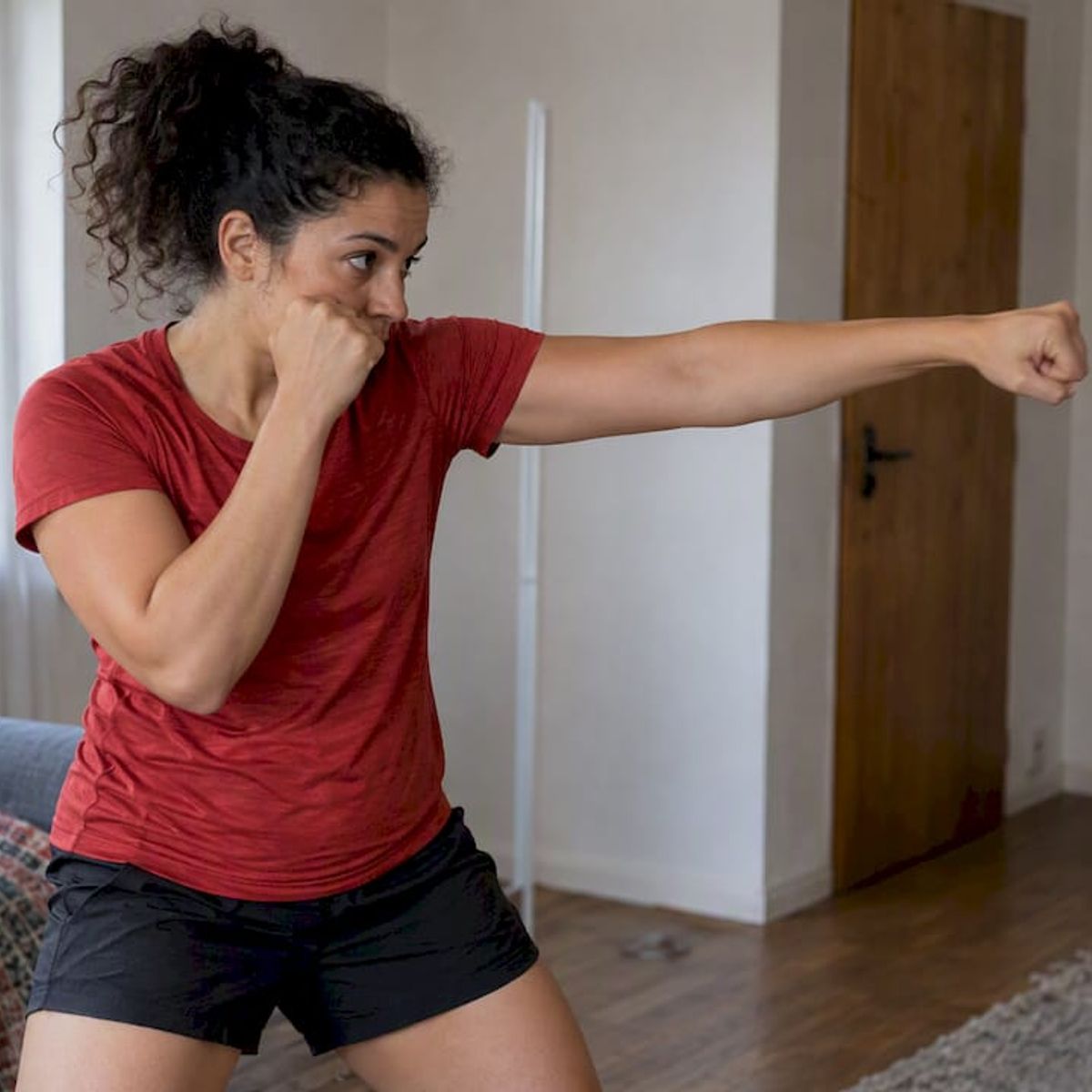
Boxers share much of the lifter’s list, with a different emphasis. Punching is rotational. Power travels from the feet through the hips and trunk into the shoulder, so the thoracic spine, hips and shoulders matter most.
Shoulder mobility and flexibility for boxing
Shoulders take thousands of repetitions in a boxing session. Add these to your warm-up:
- Arm circles and cross-body swings: 10 each direction, starting small and getting bigger.
- Band pull-aparts and external rotations: these train the rotator cuff and the muscles behind the shoulder, which help decelerate a punch.
- Wall slides: the same drill as above, keeping ribs down.
- Thread-the-needle on all fours: a gentle rotation for the upper back and shoulder.
Hips and trunk
The 90/90 switches and open books above transfer directly to pivoting on the lead foot and rotating through a hook. Add 10 slow, controlled torso rotations with the feet planted, then a few lateral lunges to open the inner thighs for footwork.
Calves, hamstrings and wrists
Bouncing on the balls of your feet for rounds loads the calves, so finish with calf stretches against a wall. Hamstring flexibility helps with kicks in kickboxing. Wrist circles and gentle wrist extensions are worth a minute before wrapping your hands.
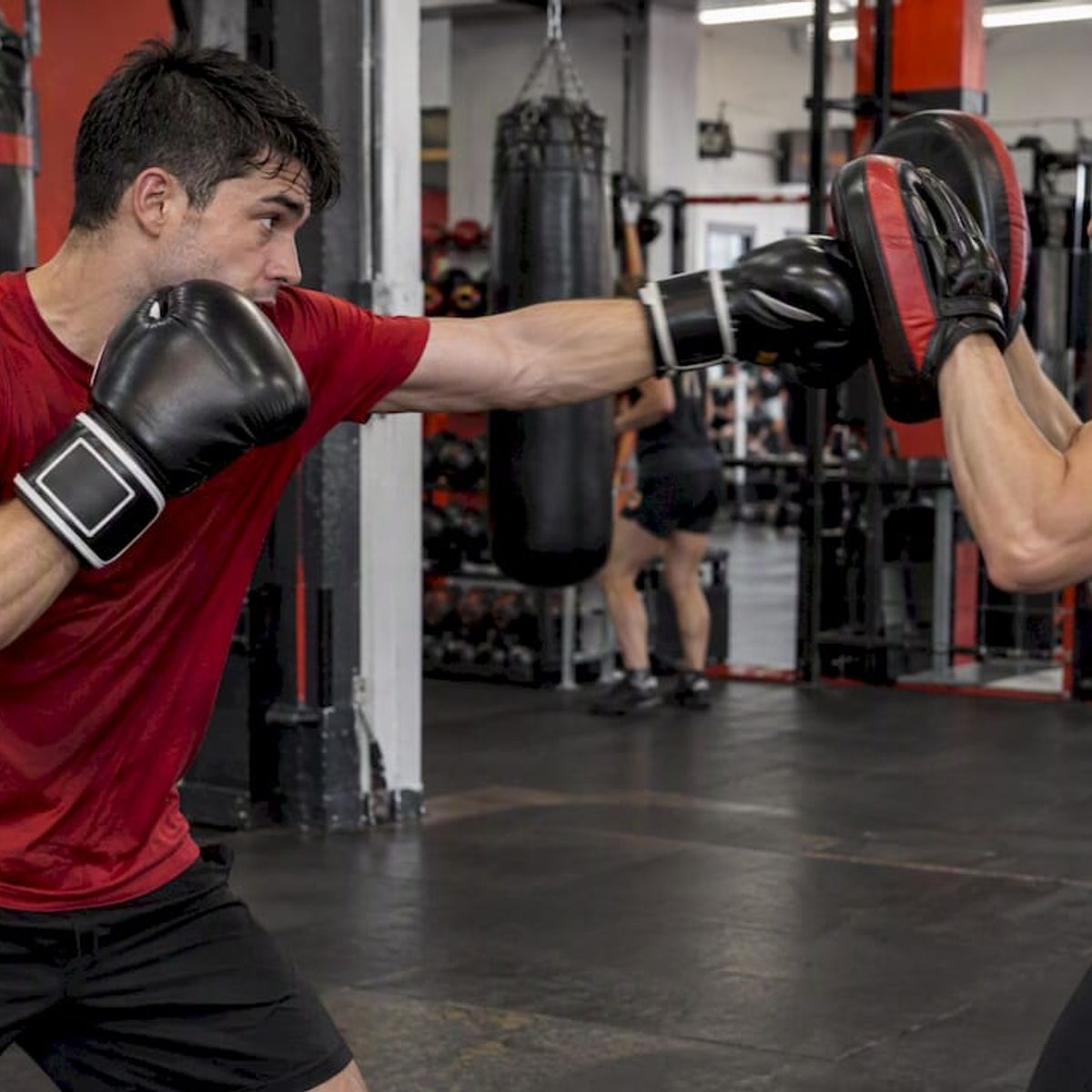
For a boxing-specific sequence, our coaches have written two guides: a 10 to 15 minute boxing warm-up for power and speed and a warm-up that coaches use to prep fighters. If you want to see why footwork and rotation matter, our mitt work drills show how those ranges get used.
Our perspective on mobility
We see the same pattern with new members: someone arrives with a list of stretches from the internet and a sore spot that will not go away. The list is rarely the problem. The problem is that nobody has watched them move.
Our view is simple. Mobility is not a separate chore. It belongs inside the session, through a warm-up that looks like the work you are about to do, and through lifts taken to full, controlled depth. The research supports this: resistance training through a full range builds range of motion about as well as stretching does, and it builds strength at the same time.
What changes movement is consistency and a coach correcting your form. Adding random drills to a workout rarely does it. That is why our sessions are led by certified coaches, our classes are capped in size, and every new member starts with a written, individualized plan. If your left hip hikes at the bottom of a squat, a coach can spot it in two reps and give you one fix, not ten.
We also teach real boxing, not cardio boxing, so shoulders, hips and trunk rotation get attention in the same plan as your strength work. Beginners are welcome, and there are no contracts.
— Malcolm
Get a coach to watch your lifts
If you train in Fairfield County and want someone to check your squat, hinge or press and build the warm-up around what they see, start with a free class or consult at our Stratford or Bridgeport location. From there you can choose what fits:
- Large group classes: $24.99 to $59.99 per week, on our membership page.
- Small group personal training (2 to 4 people): $74.99 to $174.99 per week per person, also on the membership page.
- 1-on-1 personal training: $149.99 to $359.99 per week.
- The 6-week Onramp: $699 one-off, built for people starting out.
If boxing is your goal, see our boxing classes. If you cannot get to us, we also offer online training. For strength-specific reading, our guides on functional weight lifting and strength training three days a week are good next steps.
Common mistakes to avoid
- Long static stretches right before heavy sets. Save them for after training or a separate session.
- Stretching a joint that is already unstable. If a joint feels loose or sloppy, strengthen it instead.
- Doing 15 drills badly. Pick the four that match your lift and do them well.
- Skipping the ramp-up. Mobility drills are not a substitute for light sets of the actual lift.
- Ignoring pain. Sharp, pinching, or numb sensations, or pain that lingers after a session, are reasons to see a physical therapist or sports medicine clinician.
- Expecting overnight change. Give a new routine several weeks of consistent work before judging it.
FAQ
How long should a mobility routine for lifters take?
Ten to twelve minutes before training is enough for most people. Add a separate 20 to 30 minute block once a week if one area, such as hips or shoulders, is holding back a lift.
Should I stretch before or after lifting?
Before lifting, use dynamic, lift-specific drills rather than long static holds. Research on stretching methods suggests static stretching and PNF are better for increasing long-term range, so use them after training or on a rest day.
Can lifting alone improve my mobility?
Often, yes. Meta-analyses show resistance training through a full range of motion improves range of motion about as well as stretching, though bodyweight-only training did not show a significant benefit. Control the lowering phase and use the full range you can own.
What mobility work helps with boxing?
Focus on shoulders, thoracic spine and hips: arm circles, band pull-aparts, wall slides, open books and 90/90 hip switches. Add calf and wrist work, and keep it dynamic before you hit the bag.
When should I see a professional about tight or painful joints?
If a movement causes sharp pain, numbness, or discomfort that persists after training, see a physical therapist or sports medicine doctor. If it is just a stubborn position that will not improve, a qualified coach can assess your form.
Sources
- Resistance Training Induces Improvements in Range of Motion: A Systematic Review and Meta-Analysis
- Resistance Training Induces Improvements in Range of Motion (PubMed)
- Comparison of resistance training vs static stretching on flexibility and maximal strength: randomized controlled trial
- Stretching methods and range of motion review
- ACSM resistance training resource
- CrossFit: An Overview and Considerations for Physical Therapists
- APTA podcast: Bridging the gap between rehab and performance