
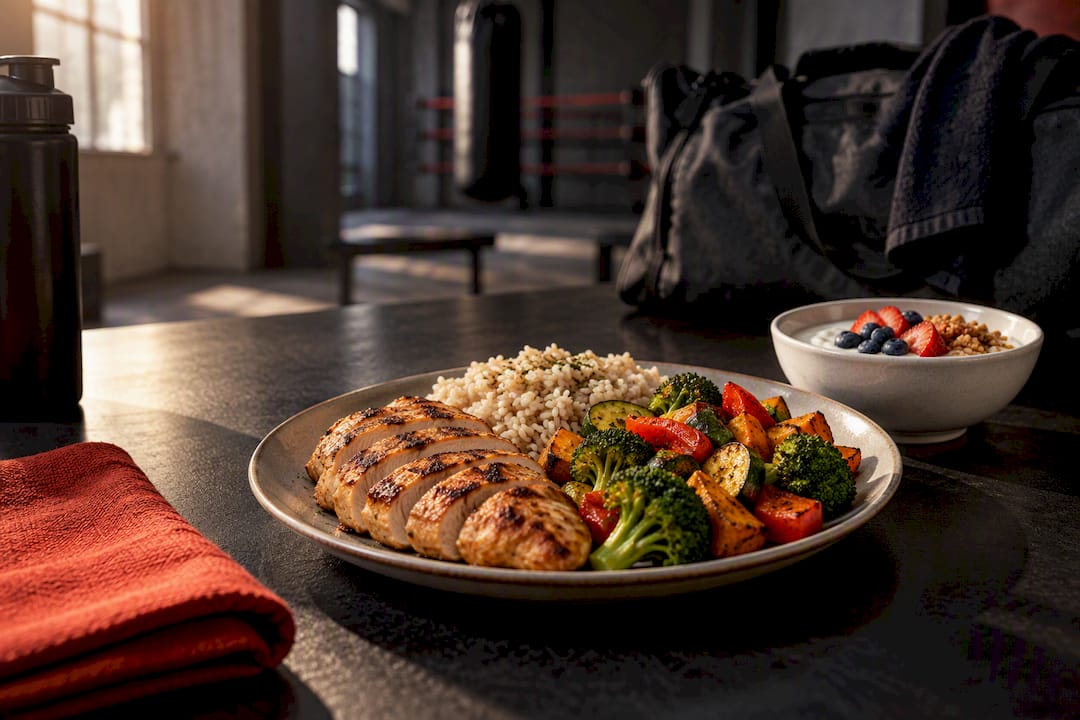
Match Food to Training Days: Boxing Diet Plan with 20–40g Protein
A boxing diet plan works by matching your food intake to what each training day actually demands: more carbohydrates on hard sparring and conditioning days, steady protein spread across four or five meals, and enough fluid to replace what you sweat out in a heavy round of mitt work. The goal is three things done consistently, not perfectly: fuel the sessions you’re about to do, protect the muscle you’re building, and manage weight gradually instead of through last-minute water cuts. Sample plans and personalization tools come later in this guide.
TL;DR:
- Carbohydrate intake varies widely from 3 to 12 grams per kilogram of body weight daily depending on training volume, with higher needs on heavy sparring or conditioning days.
- Pre-workout meals should be eaten 1 to 4 hours before training, focusing on carbs and moderate protein, whereas during long sessions, carbs or a sports drink help maintain energy.
- Gradual weight loss at 1 to 2 pounds per week is safer and more sustainable than rapid cuts, which pose health risks and impair performance.
- Hydration involves drinking water regularly and using sodium-rich fluids during intense sessions or after weigh-ins to replenish electrolytes effectively.
- Consistent meal planning, bulk preparation, and tracking macros support adherence, especially for busy boxers, with tailored plans available through professional guidance.
Level Up Gym
Train With Boxing Guidance
Level Up Gym helps Fairfield County adults build strength, pursue coached fat loss, or learn boxing with beginners welcome and no contracts.
Table of Contents
- Setting Your Training-Day Macronutrient Targets
- When to Eat Before and After a Boxing Session
- Sample Meal Plans for Boxing Training Days
- Making Weight Safely for a Boxing Match
- Hydration and Electrolytes for Boxing Training and Fight Week
- Meal Prep and Adherence Tips for Busy Boxers
- How Level Up Gym Helps You Personalize the Plan
- Why Vitamins and Minerals Matter for Boxing Recovery
- A Note on Realistic Expectations
- Get a Personalized Boxing Nutrition Plan at Level Up Gym
- Sources
- FAQ
Setting Your Training-Day Macronutrient Targets
Start with a rough calorie estimate, not a guess pulled from a magazine. The Mifflin St. Jeor equation is the most widely used starting formula for resting energy needs, and most online calorie calculators build on it. From there, a simple activity multiplier gets you close: light technique days need less padding, while double-session or heavy sparring days call for a real bump in intake.
Carbohydrate needs swing the most. Athlete guidance from USADA puts carbohydrate scaling anywhere from 3 to 12 grams per kilogram of body weight per day depending on training volume, meaning a two-hour sparring session justifies a different plate than a mobility day. Protein is more stable: aim for 20 to 40 grams per meal or snack, spread across the day rather than loaded into one dinner.
Adjust by session type:
- Hard sparring or conditioning days: higher carbs, moderate to high protein, lighter fat.
- Technique or skill days: moderate carbs, steady protein, normal fat.
- Rest days: lower carbs, same protein target, slightly higher fat to fill calories.
Chronic under-fueling shows up as more than fatigue. Persistent low energy intake is linked to Relative Energy Deficiency in Sport (RED-S), a condition tied to hormonal disruption, weaker bones, and declining performance over weeks, not just off days. Boxers cutting calories aggressively for months, rather than adjusting week to week, are the ones who run into it.
When to Eat Before and After a Boxing Session
Timing rules are simpler than most people expect. Fuel 1 to 4 hours before a session when your schedule allows it, according to the Academy of Nutrition and Dietetics. If you’re training within an hour of your last meal, keep it small and carb-forward.
- 1 to 4 hours out: a full meal with carbs, moderate protein, and low fat, like rice with chicken and vegetables.
- 30 to 60 minutes out: something light and fast-digesting, such as a banana, a slice of toast with honey, or a small sports drink.
- Within 60 minutes after training: carbohydrates to restock glycogen plus 20 to 40 grams of protein, like a protein shake with fruit or eggs and toast.
- During very long sessions (90+ minutes): a carbohydrate drink or a small piece of fruit if you’re doing back-to-back sparring rounds or extended pad work.
Pro Tip: Never try a new pre-training meal on fight night or before a big sparring session. Test it during a regular training week first, so you know exactly how your stomach handles it under stress.
Sample Meal Plans for Boxing Training Days
Templates work better than rigid meal plans because you can scale them up or down using the calorie and macro targets you set earlier. Level Up Gym’s macro calculator is a fast way to pin down exact numbers before you build your grocery list.
High-volume double-session day (roughly two workouts, heavy carb needs):
- Breakfast: oatmeal with berries, Greek yogurt, and a scoop of peanut butter.
- Lunch: rice bowl with grilled chicken, black beans, and mixed vegetables.
- Dinner: pasta with lean ground turkey and marinara.
- Snacks: a banana with honey pre-workout, a protein shake post-workout, and a rice cake with almond butter before bed.
Normal training day (one session, moderate intensity):
- Breakfast: eggs, whole-grain toast, and avocado.
- Lunch: turkey wrap with hummus and a side salad.
- Dinner: salmon, sweet potato, and roasted broccoli.
- Snacks: apple with cheese, or a handful of almonds.
Light or rest day (lower carbs, same protein):
- Breakfast: Greek yogurt with nuts and a small serving of fruit.
- Lunch: grilled chicken salad with olive oil dressing.
- Dinner: stir-fried tofu or shrimp with vegetables, light on rice.
- Snacks: cottage cheese or a protein-forward snack bar.
For dairy-free or vegetarian swaps, replace Greek yogurt with a soy or coconut-based yogurt, and swap chicken or turkey for tofu, tempeh, or lentils, adjusting portion size upward slightly since plant proteins are often less calorie-dense per gram of protein. A basic grocery list keyed to these templates covers eggs, oats, rice, chicken or plant protein, mixed frozen vegetables, Greek yogurt or a dairy-free alternative, and a couple of fruits you actually enjoy eating daily.
Making Weight Safely for a Boxing Match
Gradual beats rapid, every time the research gets compared head to head. CDC guidance recommends losing about 1 to 2 pounds per week for weight loss that actually sticks, and that pace applies just as well to a boxer trying to move down a weight class over a training camp instead of a fight week.
The ISSN position stand on combat-sports weight-cut strategies draws a clear line between slow, sustained weight descent during camp and the acute manipulations some fighters use in the final 24 to 48 hours before weigh-in. Those acute methods, like severe fluid restriction, sauna sessions, or extreme sodium cuts, carry real performance and health risks and belong under professional supervision, if at all. Research on rapid weight-loss methods links repeated aggressive cutting to strength loss, impaired recovery, and higher injury risk over a career, not just a single fight.
Before choosing any weight-cut approach, run through this checklist:
- Is the target weight realistic for your current body composition, not just your goal division?
- Do you have enough weeks of camp left for a gradual approach, or are you already up against the clock?
- Is a coach, nutritionist, or doctor overseeing the plan, especially if you’re considering anything beyond normal calorie and hydration adjustments?
Boxers doing this well combine steady calorie management with training built for the goal. A boxing workout for fat loss paired with consistent eating does more for a weight class move than any last-minute cut ever will.
Hydration and Electrolytes for Boxing Training and Fight Week
Daily hydration is simple: drink enough that your urine runs pale yellow, and add sodium-containing fluids on days with heavy sweat loss, like long sparring sessions in a warm gym. Plain water covers most training days.
Sports drinks earn their place on longer, harder sessions. USADA’s hydration guidance also flags the risk of diuretics and other substances some fighters used to drop water weight fast, which can impair performance and, in some cases, violate anti-doping rules.
After a weigh-in, rehydration needs a plan, not just a water bottle:
- Start with small, frequent sips rather than chugging a large volume at once.
- Add an oral rehydration solution or a sodium-rich sports drink if the cut was significant.
- Pair fluids with easily digested carbs and a moderate protein source to start refueling glycogen and muscle repair simultaneously.
Meal Prep and Adherence Tips for Busy Boxers
A short, repeatable grocery list beats a long, ambitious one you abandon by week three. Stock eggs, oats, rice, frozen vegetables, a couple of lean proteins, and Greek yogurt or a dairy-free swap, then batch-cook grains and proteins on one day for the week ahead.
Portable snacks matter more than people admit. Keep almonds, fruit, protein bars, and single-serve yogurt cups on hand so a long gym day doesn’t turn into skipped meals. If dairy is an issue, swap Greek yogurt for a coconut or soy-based version with a comparable protein count.
- Set rough eating windows around training times instead of eating whenever you remember to.
- Follow an 80/20 approach: hit your targets most of the time, and don’t panic over one off meal.
- Use a macro calculator or food-tracking app so adjustments are based on numbers, not guesswork.
Pro Tip: Prep proteins and grains in bulk on your lightest training day of the week, when you have the most energy left to cook.
For travelers or anyone training away from home, Wild Foodz’s guide to eating well on the road has practical tips for keeping meal quality up when your kitchen access disappears.
How Level Up Gym Helps You Personalize the Plan
Templates only get you so far. Level Up Gym’s meal-planning program and free calculators turn the calorie and macro steps above into numbers specific to your body and schedule, whether you train in person or through online coaching.
Why Vitamins and Minerals Matter for Boxing Recovery
Macronutrients get most of the attention, but a boxer running low on iron, magnesium, or vitamin D will feel it in ways that don’t show up on a scale. Iron carries oxygen to working muscle, and boxers who train hard multiple times a week, especially women, run a real risk of low iron stores from sweat losses and training stress. Fatigue that doesn’t improve with more sleep or more carbs is worth checking with bloodwork rather than pushing through.
Magnesium supports muscle contraction and relaxation, and low levels have been associated with cramping and disrupted sleep, both of which wreck recovery between sessions. Leafy greens, nuts, and whole grains are the most reliable dietary sources, and they show up naturally in the meal templates above.
Vitamin D affects bone density and immune function, both relevant to a sport with repeated impact and a packed training calendar where getting sick costs you a week of camp. Boxers training mostly indoors, especially through winter months, often run low without realizing it.
Calcium deserves a mention too, particularly for fighters cutting dairy or restricting calories for a weight class move, since bone stress injuries climb when calcium intake drops alongside overall energy intake. B vitamins, especially B12 and folate, support the energy metabolism pathways that convert food into usable fuel during rounds.
None of this means loading up on supplements. A varied diet built around the MyPlate framework of whole grains, colorful vegetables, fruit, and lean protein covers most of these needs without a pill bottle. Micronutrient gaps usually show up when the whole diet is too restrictive, not when one specific food is missing.
A Note on Realistic Expectations
Nutrition plans fail more often from being untested than from being wrong on paper. A meal that looks perfect on a spreadsheet can still wreck your stomach mid sparring round if you’ve never tried it in training first. Test everything, especially pre-fight meals, well before it matters.
If you’re chasing an aggressive weight change, talk to a sports dietitian or your coach before you start cutting hard. And if you want a second opinion on your current setup, a free class or consult at Level Up Gym is a low-pressure way to get one.
— Malcolm
Get a Personalized Boxing Nutrition Plan at Level Up Gym
Reading about macros is one thing. Having a coach look at your training schedule, your weigh-in timeline, and your actual grocery habits is another. Level Up Gym’s meal-planning program pairs directly with its boxing and hybrid training classes, so your nutrition plan matches what you’re actually doing on the bag and in sparring, not a generic template.
If you’re new to boxing altogether, the 6-Week Onramp at $699 gives you a structured entry point with certified coaches, including pro boxers, guiding your technique while your nutrition catches up. Already training and just need the numbers dialed in? Run your stats through the free macro and calorie calculators first, then book a boxing class at the Stratford or Bridgeport location to put the plan to work. Every new member starts with a free class or consult and a written plan built around their own schedule, no contract required.
Sources
This article draws on the CDC’s guidance on sustainable weight loss, the ISSN position stand on combat-sports nutrition and weight cutting, the Academy of Nutrition and Dietetics’ pre- and post-workout timing guidance, NCAA guidance on adjusting nutrition across a training season, and USADA’s hydration and fueling recommendations.
This article is general information, not a substitute for advice from a qualified doctor. Consult a qualified healthcare professional about your own circumstances before acting on anything here.
- CDC — Losing Weight
- International society of sports nutrition position stand: nutrition and weight cut strategies for mixed martial arts and other combat sports
- Timing your pre- and post-workout nutrition — Academy of Nutrition and Dietetics / EatRight
- USADA — Nutrition guide (fluids and hydration)
FAQ
What Is the 3-3-3 Rule in Diet Planning?
The 3-3-3 rule generally refers to eating three balanced meals a day, each built around three components: a protein source, a carbohydrate source, and vegetables or fruit. It’s a simplified framework rather than a formal clinical guideline, useful for beginners who need structure without counting every gram.
What Is the 80/20 Rule in Boxing Nutrition?
This approach helps prevent the burnout that comes from treating every meal as a strict test.
How Can a Boxer Lose Weight Safely?
The safest approach combines a moderate calorie deficit with consistent training, aiming for roughly 1 to 2 pounds of loss per week according to CDC guidance. Rapid, fight-week-only cutting methods carry real performance and health risks and should only happen under professional supervision.
What Did Mike Tyson Eat During Training Camp?
Public accounts of Mike Tyson’s training-camp diet describe high protein and carbohydrate intake built around multiple meals a day to support intense two-a-day training sessions, though exact figures vary by account and era of his career. The core principle still holds for any boxer today: match food intake to training volume rather than following a single fighter’s meal-for-meal plan.
How Much Protein Do Boxers Need Per Day?
Most boxing nutrition guidance points to roughly 20 to 40 grams of protein per meal or snack, spread across four to five eating occasions daily. Spacing protein this way supports muscle repair better than loading it all into one large dinner.