
30–45 Minute Boxing for Stress Relief Based on 16 Studies
Yes, supervised, non-contact boxing commonly reduces stress and improves mood when it’s delivered as a structured, instructor-led program. A 2022 scoping review and a small mindfulness-based boxing trial both found measurable drops in anxiety and depression symptoms. The catch: the format matters more than the punching. Keep reading for the mechanisms and a workout you can actually use.
TL;DR:
- Supervised, instructor-led boxing programs with mindfulness elements show the most promising mental health benefits, but small sample sizes limit definitive conclusions.
- The combination of physical exertion, motor focus, and social support contributes to reductions in anxiety, depression, and blood pressure, especially in structured protocols.
- Routine incorporation of guided breathing during rest periods enhances emotional regulation and helps sustain relaxation after boxing sessions.
- The safest, most effective approach relies on non-contact formats with proper form correction, small classes, and program pacing tailored to individual needs.
- Consistent participation of one to three sessions per week, with emphasis on structured coaching and mindfulness cues, offers the best chance for long-term mental health improvements.
Table of Contents
- What Does the Research Say About Boxing and Mental Health?
- Why Does Hitting Something Feel So Good?
- Which Non-Contact Boxing Format Fits Your Goals?
- What Does a Stress-Relief Boxing Workout Look Like?
- Is Boxing Safe, and Who Should Skip It?
- How Do You Pick a Class That Actually Delivers Stress Relief?
- How Level Up Gym Puts This Research Into Practice
- Comparing Boxing to Other Stress Relief Methods
- What Happens if You Keep Boxing for Years, Not Weeks?
- The Research Is Promising, But Don’t Oversell It
- Try a Supervised Boxing Class Built Around This Research
- Sources
- FAQ
What Does the Research Say About Boxing and Mental Health?
The strongest evidence for boxing as a stress-relief tool comes from a 2022 scoping review that pulled together 16 studies on non-contact boxing interventions. The pattern across those studies was consistent: participants reported less anxiety, fewer depressive symptoms, reduced PTSD symptoms, and better mood, self-esteem, and concentration. Most of the programs used group-based, HIIT-style circuits with deep breathing built into the rest periods, which turns out to matter for reasons we’ll get into below.
One data point from that review stands out. That’s an association, not proof of cause and effect. Cross-sectional surveys can’t rule out the possibility that mentally healthier people are simply more drawn to boxing in the first place. Still, it’s a large, population-level signal that lines up with the smaller controlled work.
The most rigorous single study on boxing as a targeted mental-health intervention is the Mindfulness-Based (non-contact) Boxing Therapy trial published in PLOS One. It ran a small outpatient sample through 90-minute sessions twice a week and tracked outcomes using validated clinical scales, including the PHQ-9 for depression and the GAD-7 for anxiety. The results were striking for a feasibility study: a strong reduction in depression and anxiety scores and a large increase in mindfulness scores. Retention was high, which matters because dropout is usually where exercise-as-therapy studies fall apart.
A few numbers worth sitting with:
- multiple documents reviewed in the 2022 scoping review, spanning multiple mental-health measures
- a large average reduction in depression scores in the MBBT feasibility trial
- a large average reduction in anxiety scores in the same trial
- lower reported mental-health burden among boxers in the large US cross-sectional dataset
Statistic Callout: The MBBT trial’s 54% depression reduction and 51% anxiety reduction came from an analyzed sample of eight participants. That’s a strong signal for a feasibility study, not a population-level guarantee. Reason enough to treat these numbers as promising, not definitive.
Physical outcomes back up the mental ones. A controlled 6-week boxing intervention in young adults with elevated blood pressure produced average reductions of about 16 mmHg systolic and 10 mmHg diastolic, along with improved vascular function. Participants trained three times a week, ten rounds of three minutes on and one minute off, under supervision with monitored heart rate. Lower blood pressure isn’t the same as lower perceived stress, but the two tend to travel together.
Here’s where the caveats matter. Every study cited above worked with small samples. The MBBT trial analyzed eight people. Study designs across the scoping review varied widely in program length, session structure, and how “stress” or “anxiety” was even measured. Follow-up periods tended to be short, often just weeks, so nobody can yet say with confidence whether these gains hold up a year later. Randomized controlled trials with larger cohorts are still the missing piece. What exists now is a coherent, encouraging early signal, not a settled verdict.
Why Does Hitting Something Feel So Good?
Boxing’s stress-relief effect isn’t one mechanism. It’s at least four working together, and they don’t all move in the same direction at the same time.
The biochemistry is the obvious part. Sustained, moderate-to-vigorous exercise triggers the release of endorphins and monoamines like serotonin and dopamine, the same neurochemical shifts behind the well-documented “runner’s high.” Boxing’s combination of upper-body striking and lower-body footwork pushes heart rate up fast, which also improves nitric oxide bioavailability and vascular signaling. That’s part of why the 6-week boxing intervention mentioned above saw measurable blood pressure drops alongside better vessel function.
Cortisol is more complicated than most fitness content admits. A 2026 study tracking national-level boxers through an official bout found that cortisol and testosterone followed distinct patterns across competition, but neither hormone correlated directly with the boxers’ self-reported anxiety or anger. In plain terms: your body’s stress chemistry and your subjective sense of being stressed can move independently. A boxing session might lower how you feel without your cortisol dropping in lockstep, or vice versa. This is why leaning entirely on “boxing crushes cortisol” as a talking point oversells what the data supports.
The attention-hijacking effect might be the most underrated mechanism. Boxing demands constant motor coordination. You’re tracking a partner or a bag, timing combinations, managing footwork, and adjusting to instructor cues, often all at once. That level of motor and cognitive demand crowds out the mental space rumination usually occupies. Steady-state cardio like a treadmill jog leaves plenty of room for your brain to keep replaying the argument you had that morning. Boxing doesn’t give rumination the same runway.
Catharsis and community round it out. There’s a real psychological release in striking something with focused intensity, particularly for people carrying frustration or anger they don’t have another outlet for. Group classes add a social layer: shared effort, a coach calling out encouragement, other people breathing hard next to you. The MBBT trial built in group meditation before and after sessions specifically because instructors observed it deepened the emotional-regulation effect.
Pro Tip: Pair your rest-period breathing with a slow four-count inhale and six-count exhale. Breathing techniques that extend the exhale longer than the inhale activate your parasympathetic nervous system faster than casual breathing, which helps you recover between rounds without losing the calm you just built.
Which Non-Contact Boxing Format Fits Your Goals?
Not all “boxing for stress” looks the same, and the format you choose changes what you get out of it.
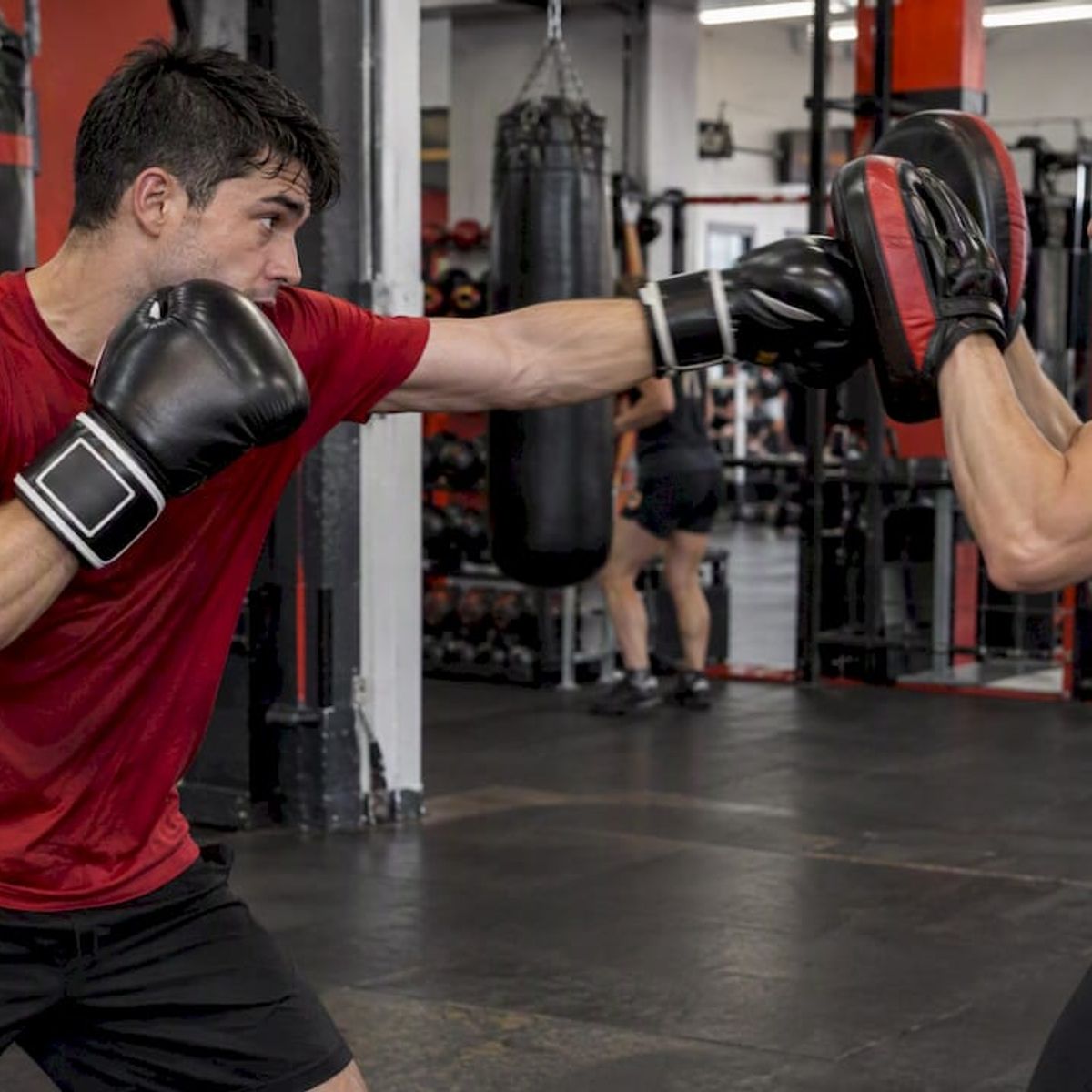
- Fitness boxing classes. These run as HIIT-style circuits combining bag work, pad drills, and bodyweight conditioning. Heart rates in studio classes commonly climb to 150 to 160 beats per minute, which produces a fast, noticeable mood lift and a strong post-workout endorphin effect. The trade-off is less individualized attention since instructors are managing a full room.
- Manualized therapeutic programs like MBBT. These are structured, clinically designed protocols, typically 90-minute sessions delivered twice weekly, that bookend the boxing work with mindfulness practices, such as a guided hand-wrap ritual or brief seated meditation. This format produced the largest self-reported symptom reductions in the research to date, likely because it’s explicitly designed as a therapeutic intervention rather than a fitness class that happens to help mood.
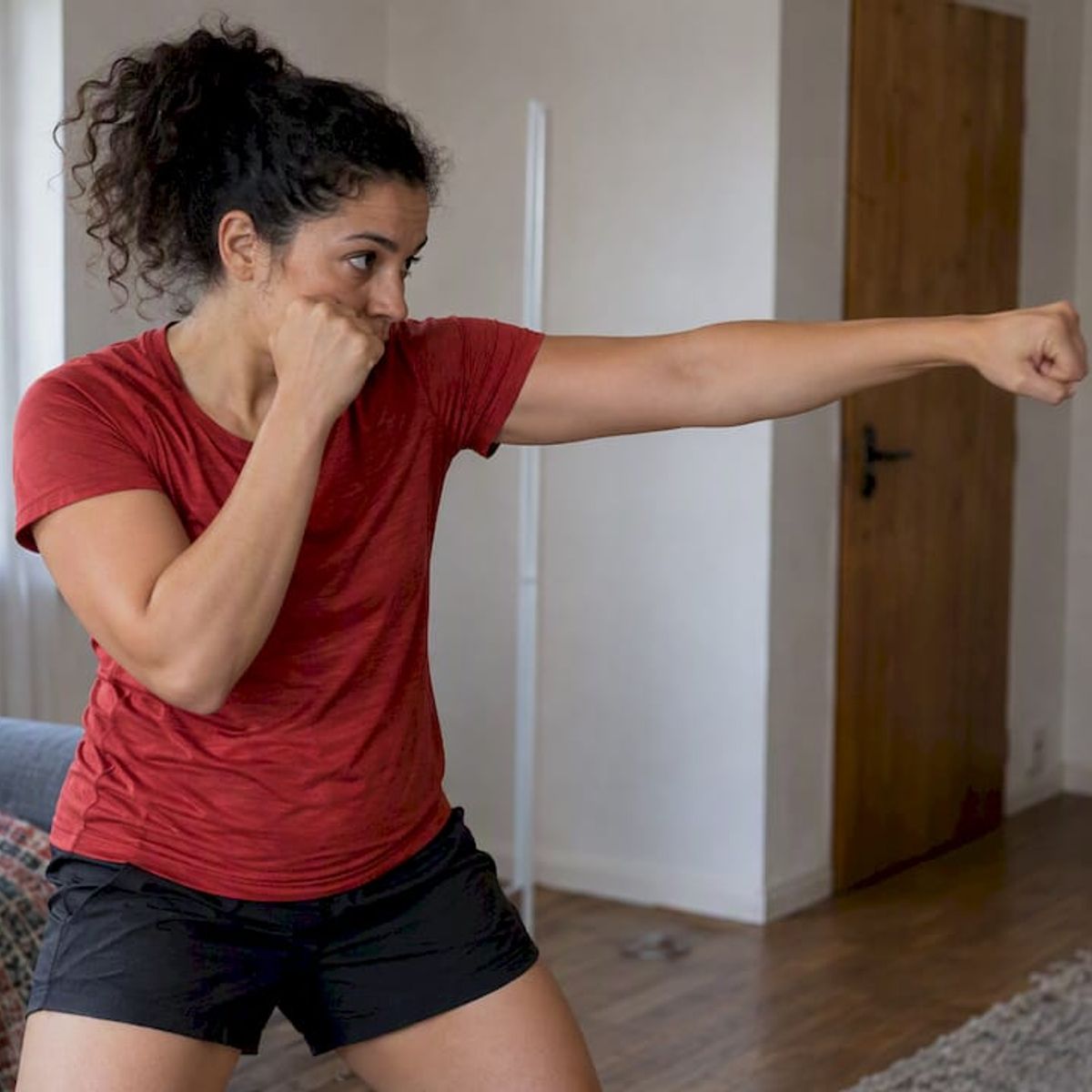
- Solo bag work or shadowboxing at home. Lower barrier to entry, no schedule to work around, and a real option on days you can’t make it to a gym. A shadowboxing routine or basic heavy bag session still delivers the cardio and attention-focusing benefits. What it doesn’t deliver is the coaching feedback and group cohesion effect that seemed to amplify results in the MBBT trial.
Music, coaching tone, and class structure aren’t cosmetic details. A coach who paces rounds deliberately, cues breathing during rest periods, and creates a low-pressure atmosphere changes the psychological experience of the same physical movements. Two people throwing identical combinations can walk away with very different stress outcomes depending on who’s calling the rounds.
What Does a Stress-Relief Boxing Workout Look Like?
Here’s a session structure you can run in 30 to 45 minutes, whether you’re at a gym, in your garage, or working with just floor space and a jump rope.
- Warm-up (5 to 7 minutes). Start with light skipping or marching in place for two minutes, then move into shoulder circles, hip openers, and ankle mobility. Close the warm-up with 60 seconds of slow, deep breathing, four counts in, six counts out, to set the tone before intensity rises.
- Main rounds (20 to 30 minutes). Structure this as three-minute rounds with one-minute rest, mirroring the format used in the 6-week boxing blood pressure study. Alternate between heavy bag combinations (jab, cross, hook, repeat for the full round), pad work if you have a partner, and shadowboxing rounds focused purely on footwork and defense. Aim for five to six rounds total, depending on your conditioning.
- Intensity scaling. Use a rate of perceived exertion, or RPE, scale from 1 to 10. Target RPE 6 to 7 for most rounds, hard enough that talking in full sentences gets difficult, but not maximal effort. If you’re newer to training, drop to four rounds at RPE 5 and build from there. Small group boxing classes are a good way to learn proper pacing from someone watching your form in real time.
- Cooldown (5 to 8 minutes). Finish with two to three minutes of light shadowboxing at a slow, deliberate pace, then transition to standing or seated breathing. A brief reflective moment here, even just 60 seconds of noticing how your body feels compared to when you started, helps consolidate the emotion-regulation benefit rather than letting it fade the second you check your phone.
Pro Tip: Keep your rest-period breathing structured rather than just standing around. Programs that build guided breathing into recovery rounds report stronger adherence and lower injury risk than sessions run at sustained maximal intensity with no built-in recovery cues.
Is Boxing Safe, and Who Should Skip It?
Non-contact boxing and competitive sparring are not the same activity from a safety standpoint, and conflating them is where most of the fear around “boxing” for stress relief comes from. Non-contact formats, hitting a bag, pads, or air, carry essentially none of the head-impact risk associated with sparring or competitive bouts. That distinction is worth repeating any time someone hesitates because they’re picturing a ring instead of a heavy bag.
That doesn’t mean non-contact boxing is risk-free. The most common issues are musculoskeletal: wrist and shoulder strain from poor punching technique, and lower-back tightness from twisting incorrectly during combinations. Proper hand wraps, well-fitted gloves, and instructor correction on form reduce most of this risk within the first few sessions.
Get medical clearance before starting if you have any of the following:
- A recent concussion or history of head trauma, even outside of boxing
- Diagnosed cardiac conditions or uncontrolled hypertension
- Uncontrolled hypertension specifically, given the cardiovascular demand of HIIT-style rounds
- Any recent shoulder, wrist, or lower-back injury that hasn’t fully healed
A responsible instructor builds in progression rather than throwing beginners into max-intensity rounds on day one. Expect monitoring of your form, modifications offered without you having to ask, and rest periods that are actually enforced instead of optional.
How Do You Pick a Class That Actually Delivers Stress Relief?
The right class isn’t necessarily the toughest one. Look for programs that combine structured coaching with room to breathe, literally and figuratively.
- Confirm the format is non-contact unless you’re specifically seeking competitive training. Ask directly: “Is there any sparring or partner contact in this class?”
- Ask about instructor credentials and class size. A smaller ratio means more individual correction, which reduces injury risk and improves the technique-focused attention that seems to matter for the psychological benefit.
- Ask whether breathing or mindfulness cues are built into rest periods. Programs that include this, even informally, tend to report stronger emotional-regulation outcomes than pure conditioning classes.
- Ask about frequency recommendations. The evidence base points toward one to three sessions per week as a reasonable target; the MBBT trial used twice weekly, while the vascular-outcomes study used three sessions a week over six weeks.
- Track your own mood before and after your first few sessions. A simple 1 to 10 self-rating before class and again an hour after gives you real data on whether this particular format is working for you specifically.
For your first session, bring a water bottle, wear shoes with lateral support, and wrap your hands if the gym provides wraps or expects you to bring your own. Pace the first class conservatively. Judging the format on session one, run at your actual limit, gives you a distorted read on whether boxing fits your routine long-term.
How Level Up Gym Puts This Research Into Practice
Level Up Gym’s programs in Stratford and Bridgeport, Connecticut are built around the same principles the research points to: small class sizes, certified coaching, and a structure that beginners can ease into rather than get thrown at.
- The 6-week beginner onramp mirrors the progressive, supervised structure used in the clinical trials cited above, rather than dropping newcomers into advanced rounds.
- Small-group boxing and hybrid classes keep instructor attention high, which supports the technique correction and pacing that reduce injury risk.
- Coaches incorporate breathing cues during rest periods, the same detail the MBBT protocol and scoping review flagged as strengthening the emotion-regulation effect.
- Level Up Gym’s blog on the mental health and fitness link walks through the research in more depth for members who want the full picture.
- No-contract membership options let you test whether the format works for you before committing long-term.
A typical beginner session opens with mobility and light footwork, moves into three-minute bag rounds with a one-minute rest and coached breathing, and closes with a brief cooldown, the same structure outlined in the sample workout above.
Comparing Boxing to Other Stress Relief Methods
Boxing isn’t competing with yoga, meditation, or steady-state cardio so much as offering a different lever on the same problem. Yoga and meditation work primarily through parasympathetic activation, slow breathing, sustained stillness, and present-moment awareness, and both have decades of research behind their calming effects. Boxing gets to a similar endpoint through the opposite route: high sympathetic activation followed by a hard crash into relaxation once the round ends.
Steady-state aerobic exercise, like jogging or cycling, delivers the endorphin and monoamine benefits Harvard Health describes as a baseline stress-buster, but it leaves more mental space open for rumination since the movement itself doesn’t demand much attention. Boxing’s motor complexity, tracking combinations, footwork, timing, occupies that same mental space more aggressively, which is likely why some people find it interrupts anxious thought loops more effectively than a treadmill session.
None of this makes boxing objectively superior. Someone managing chronic pain or joint issues may get more consistent relief from yoga’s low-impact movement. Someone who struggles with any group setting may find solo meditation more accessible. The honest takeaway from the research is that boxing adds a genuinely distinct mechanism, physical catharsis plus attention capture, to the stress-relief toolkit rather than replacing the others.
What Happens if You Keep Boxing for Years, Not Weeks?
The mental-health data on boxing mostly comes from short trials, weeks rather than years, so claims about long-term outcomes require more humility than claims about a single 6-week program. That said, the plausible long-term upside tracks with what’s known about sustained exercise generally: better baseline mood regulation, improved cardiovascular markers like the blood pressure improvements seen in the 6-week vascular study, and a durable coping skill you can reach for during high-stress periods instead of building one from scratch each time.
The long-term risks are mostly about accumulation, not any single session. Repeated strain on wrists, shoulders, and the lower back from imperfect technique compounds over years if it’s never corrected. This is where sticking with instructor-led programs matters more over time, not less. A coach who catches a form flaw in month two prevents an overuse injury in year three.
There’s also a psychological risk worth naming honestly: over-reliance on any single coping mechanism, boxing included, can become its own problem if it crowds out other stress-management tools or relationships. The research doesn’t suggest boxing should be someone’s only outlet. It suggests it’s a strong addition to a broader approach, one best sustained through community, varied training, and periodic recalibration of intensity as life circumstances change.
The Research Is Promising, But Don’t Oversell It
The honest read on this evidence is that boxing works as a stress-relief tool for a lot of people, but the research doesn’t support treating it as some kind of specialized therapy that outperforms every alternative. What it actually shows is narrower and more useful: structure and instruction matter more than the punching itself. The MBBT trial’s outsized results came from a manualized program with mindfulness built into the structure, not from someone randomly hitting a bag for stress relief.
Where conventional fitness advice falls short is in treating “boxing” as one monolithic activity. Sparring and non-contact bag work are different risk profiles entirely, and lumping them together scares off people who’d actually benefit from the safer version. The mechanisms also don’t all point the same direction. Cortisol and self-reported stress can diverge, which means chasing a hormonal outcome misses what people actually feel.
If you’re starting from zero, prioritize finding a supervised class over building a solo routine. The coaching, pacing, and group structure appear to be doing real work in the outcomes, not just the exercise itself.
— Malcolm
Try a Supervised Boxing Class Built Around This Research
Reading about breathing cues and structured rounds is one thing. Feeling the difference after your first session is another. Level Up Gym’s hybrid training and boxing programs are built on the same principles covered above: small classes, certified coaches, and a six-week onramp for anyone who’s never wrapped their hands before.
You don’t need to walk in swinging at full intensity. Book a free boxing class at the Stratford or Bridgeport location, and expect a coach to walk you through wraps, stance, and your first few rounds at a pace that matches your conditioning, not the person next to you. If group classes fit your schedule better than one-on-one work, the group training program runs the same coached, non-contact format described throughout this guide. Either way, the first step is just showing up once and seeing how you feel an hour later.
Sources
- Boxing as an Intervention in Mental Health: A Scoping Review
- Temporal dissociation between endocrine and psychological responses across an official boxing bout
- Exercise is an effective stress-buster — Harvard Health
FAQ
What type of exercise is most beneficial for anxiety?
Research points to HIIT-style activities that combine cardiovascular exertion with motor complexity, like boxing, as particularly effective, since the attention demand interrupts anxious rumination while the exercise itself triggers mood-lifting neurochemical changes. Steady-state cardio and yoga also reduce anxiety through different mechanisms and remain solid options depending on personal preference.
What physical activities can help reduce stress?
Boxing, running, cycling, yoga, and swimming all reduce stress through overlapping pathways involving endorphin release and improved cardiovascular function, according to Harvard Health. Boxing specifically adds a catharsis and focused-attention element that steady-state cardio doesn’t offer in the same way.
How do you release anxiety and stress?
Structured physical exertion paired with controlled breathing, the format used in most boxing-for-mental-health studies, produces measurable reductions in anxiety symptoms within a matter of weeks. Combining movement with a slow, extended exhale during rest periods appears to speed up the calming effect compared to exercise alone.
Is boxing good for cortisol?
The relationship is more nuanced than most fitness advice suggests. A 2026 study found that cortisol and testosterone shifted across a boxing bout but didn’t directly correlate with boxers’ self-reported anxiety or anger, meaning the hormonal and subjective experiences of stress can move independently.
How often should you box for stress relief?
Evidence-based programs generally use one to three sessions per week, with the MBBT trial using twice-weekly sessions and the vascular-outcomes study using three sessions weekly over six weeks. Starting with two structured, instructor-led sessions a week is a reasonable target for most beginners.