Boxing Hand Wraps: 180" Mexican Wraps Protect Adult Wrists
For most adult trainees, a 180" Mexican-style semi-elastic hand wrap is the right default: it wraps snugly around the knuckles, locks the wrist, and fits nearly every hand size. Sanctioned competition usually calls for gauze and tape instead. Brands like Hayabusa, Title Boxing, and Everlast all sell solid versions in this style. The sections below cover length rules, wrapping technique, and how to buy the right pair for your training.
TL;DR:
- Most adult trainees should use 180-inch Mexican-style semi-elastic wraps for balanced wrist support and knuckle protection during regular training.
- Materials matter: stretch wraps provide easier application but less rigid wrist support, while cotton wraps offer stronger support but require proper technique.
- Proper wrapping technique, including correct tension and placement of wrist and knuckle passes, is essential to avoid injuries and should be practiced with coaching.
- Washing wraps regularly with air drying extends their lifespan, and owning at least one extra pair prevents training delays due to damp or worn wraps.
- For sparring and competition, wraps with extra wrist passes or gauze and tape offer superior stabilizing support to prevent injuries.
Table of Contents
- What Are the Best Boxing Hand Wraps for Training?
- How Do You Choose the Right Hand Wraps?
- How Do You Wrap Your Hands for Boxing?
- How Do You Wash and Store Hand Wraps?
- Which Wraps Work Best for Bag Work, Sparring, and Competition?
- Coach Tips: What Beginners Get Wrong With Hand Wraps
- What Actually Matters Most When Buying Hand Wraps
- Learn Proper Wrapping Technique at Level Up Gym
- Sources
- FAQ
What Are the Best Boxing Hand Wraps for Training?
The four wrap categories on the market solve different problems, and picking the wrong one is the fastest way to end up with a sore wrist six weeks into training. Mexican-style semi-elastic wraps stretch to conform around the knuckles and palm, which is why they’ve become the default recommendation in most current buying guides, including a 2026 buyer’s consensus that names them the go-to for regular training. Traditional cotton wraps have almost no stretch, so they rely on your wrapping technique for support rather than the material doing the work. Gel or quick wraps skip the wrapping process entirely, sliding on like a glove liner, but research on wrap materials found they transmit less force to the hand than cloth wraps while offering weaker wrist immobilization. Gauze and tape, the choice for most professional bouts, gets built fresh before every fight and isn’t meant for daily gym use.
Wrap TypeBest ForMaterial / StretchTypical LengthsWrist Support vs. Knuckle CushionPrice RangeClosure
Mexican-style (semi-elastic)
Regular bag work, pads, sparring
Cotton/spandex blend, moderate stretch
120", 180"
Balanced, leans toward support
$10 to $—
Velcro
Traditional cotton
Sparring, technique-focused training
Cotton, little to no stretch
108", 120", 180"
Strong wrist support
$— to $—
Velcro or tie
Gel/quick wraps
Fitness classes, light bag work
Neoprene with gel padding
One-size slip-on
Strong cushioning, weaker wrist lock
$— to $—
Slip-on with strap
Gauze + tape
Sanctioned competition
Woven gauze, athletic tape
Cut to length per bout
Highest wrist support
$5 to $10 per set
Taped
Hayabusa and Title Boxing both build semi-elastic wraps with reinforced thumb loops that hold up over months of daily use, and Everlast’s cotton lineup remains a reliable, budget-friendly choice for lifters who spar more than they hit the bag. Rival’s wraps run a touch narrower, which some smaller-handed trainees prefer.
A quick way to match category to activity:
- Beginners: 180" Mexican-style semi-elastic, easiest to learn on and forgiving of imperfect technique.
- Heavy bag: 180" semi-elastic with extra knuckle passes for shock absorption.
- Sparring: Traditional cotton or semi-elastic with added wrist passes for stability.
- Fitness classes: Gel/quick wraps or 120" wraps for shorter, lower-intensity sessions.
How Do You Choose the Right Hand Wraps?
Material is the first decision, and it comes down to a real tradeoff. Stretch wraps (Mexican-style) conform to your hand and are faster to put on, but that give means slightly less rigid wrist support than non-stretch cotton. Gel wraps cushion the knuckles well but leave the wrist comparatively unsupported, a pattern confirmed by research on wrap materials and force transmission.
Length depends on hand size and what you’re doing with your hands. As a rule of thumb, measure your palm circumference: under 7 inches usually pairs with 120" wraps, and anything larger fits 180" better. A practical sizing guide backs 180" as the safer default for most adult hands, since extra length means more wrist passes and more support. Go past 180" only if you’re doing gauze-and-tape prep for a sanctioned bout.
Check the velcro and stitching before buying. A wrap with a stiff, wide velcro strip stays locked through a full round of pad work; thin or narrow velcro tends to loosen halfway through a session. Reinforced stitching at the thumb loop matters more than brand name here.
- Own at least one more pair than the number of days you train per week.
- If you train five days, own six wraps minimum so a wet pair never forces you into damp fabric.
- Keep one set of gel/quick wraps as backup for days you’re short on time.
Pro Tip: Buy your first pair one size up in length if you’re between 120" and 180" on the sizing chart. Extra wrap length gives you more wrist passes; you can always leave slack unused, but you can’t stretch a wrap that’s too short.
How Do You Wrap Your Hands for Boxing?
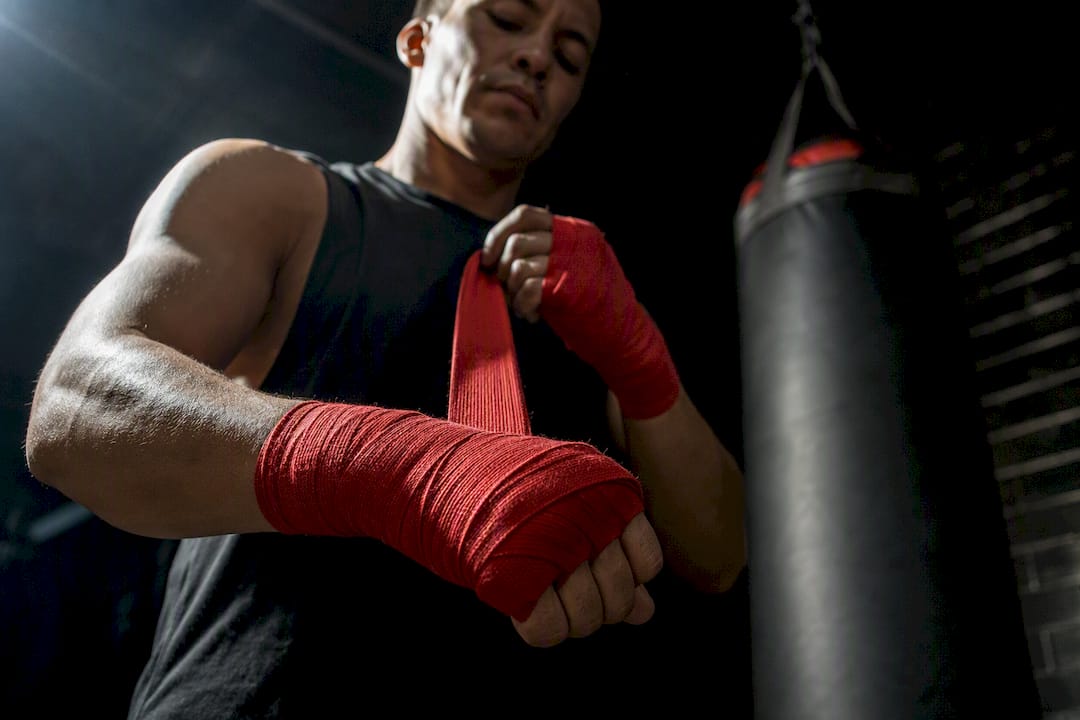
The standard 180" wrap follows a repeatable sequence. Muscle memory here isn’t optional. Boxers who skip functional bandaging entirely show up more often in wrist injury data than those who wrap consistently.
- Slide the thumb loop over your thumb and pull the wrap across the back of your hand.
- Wrap around the wrist three to four times, snug but not cutting off circulation.
- Cross over the back of the hand and go around the palm once to anchor.
- Wrap the knuckles three to four times, building a flat, even pad.
- Weave between each finger through the webbing to lock the lower wraps in place.
- Finish with two to three more wrist passes and secure the velcro flat against your forearm.
For 120" wraps, cut the wrist passes down to two and the knuckle passes to two or three; there’s simply less material to work with. Gel/quick wraps skip steps 2 through 5 entirely, but slide the strap tight enough that it doesn’t shift once gloves go on.
Three mistakes show up constantly with beginners: jamming the thumb loop too tight (loosen it, your thumb needs to move freely), wrapping the wrist so hard it goes numb (back off one full loop), and stacking too much bulk over the knuckles so gloves won’t close (thin the wraps and rewrap). Testing on impact found that adding rigid tape over a bandage cut wrist motion by roughly 25 to 30%, with the biggest gains on straight punches like the jab and cross, which tells you exactly where extra wrist passes pay off most.
How Do You Wash and Store Hand Wraps?
Wraps absorb sweat every session, and skipping laundry day is how elastic dies early. Wash cold, velcro closed, inside a mesh bag to stop the fabric from tangling, and always air-dry rather than using heat, since dryer heat breaks down the elastic fibers fast.
- Own one more pair than your training days per week so a wet set never forces a rewrap in a damp wrap.
- Semi-elastic wraps typically last 6 to 12 months with regular washing; cotton can last over a year with less stretch to degrade.
- Check velcro grip monthly. If it stops catching cleanly, that pair is close to done.
- Replace a wrap once fabric thins at the knuckle or the seams start fraying, both signs the padding you’re counting on is gone.
Which Wraps Work Best for Bag Work, Sparring, and Competition?
Bag work rewards knuckle cushioning since every punch sends force straight back into your hand. A 180" Mexican-style wrap with two or three extra knuckle passes handles that shock better than a thinner cotton wrap, a distinction that lines up with heavy bag training mechanics.
- Sparring: Wrist stability matters more than cushioning here, since you’re absorbing counters at odd angles. Go 180" with extra wrist passes, or traditional cotton if you want maximum lock.
- Competition: Sanctioned bouts commonly require gauze and tape rather than reusable wraps, largely because hand and wrist injuries remain common at the elite level and taped bandaging offers the most consistent support. Amateur rules vary, so check with your commission before fight night.
- Fitness classes: Lower punching power means gel/quick wraps or 120" wraps are perfectly fine for a 45-minute class.
Coach Tips: What Beginners Get Wrong With Hand Wraps
The thumb loop trips up more beginners than anything else. Pull it too tight and your thumb can’t move; leave it loose and the whole wrap shifts mid-round. Aim for snug enough to anchor, loose enough to wiggle your thumb freely.
Excess bulk over the knuckles is the second most common issue. If your glove won’t close all the way, you’ve wrapped too many layers in one spot. Thin it out and spread the wraps more evenly across the hand.
Build habits around your gear, not just your technique: roll wraps loosely after every session (never stuff them in a bag), rotate between pairs so nothing goes on wet, and check your velcro before it fails on you mid-round. Own one more pair than your weekly training days.
Persistent wrist pain that doesn’t ease up after a few rest days isn’t something to wrap around and push through. Get a coach to check your technique first, and see a sports physiotherapist if the pain sticks around.
If you’re new to structured training, our first month of boxing guide covers what else to expect early on.
What Actually Matters Most When Buying Hand Wraps
Most buying guides treat hand wraps as an afterthought to gloves, and that’s backwards. The research is fairly consistent: wraps that support the wrist reduce motion on impact more than any glove padding does, and boxers who skip functional bandaging show up disproportionately in wrist injury numbers. That should reorder your priorities. Buy the wrap first, then match gloves to it.
The conventional advice to “just get gel wraps, they’re easier” undersells what you give up. Gel wraps cushion knuckles well but do a weaker job locking the wrist, and wrist injuries, not knuckle injuries, are what sideline most recreational boxers for weeks. If you’re only hitting mitts occasionally, that tradeoff barely matters. If you’re sparring or hitting a bag several times a week, it matters a lot.
Prioritize wrapping technique over the wrap itself for the first month. A great 180" wrap put on poorly protects you less than a basic cotton wrap put on correctly. Get the technique right, then upgrade materials.
— Malcolm
Learn Proper Wrapping Technique at Level Up Gym
Reading about wrist passes only gets you so far. Some gyms offer hands-on checking of your wrapping technique, with coaches watching you wrap, round after round, until it’s automatic. Our boxing classes build wrapping technique into the 6-week beginner onramp, and our small-group training keeps class sizes tight enough that coaches catch the thumb-loop and wrist-tension mistakes that lead to nagging pain down the line.
If you want hands-on coaching instead of trial and error, you can book a free boxing class to get your wrapping technique checked in your first session. Prefer a structured path with strength work built in? Our boxing classes page has the full schedule and program details.
Sources
- The importance of functional taping in preventing wrist injuries in boxing: A medical view
- Hand and wrist injuries in elite boxing
- Effects of bandaging techniques on wrist motion on impact (2023)
- Thesis on wrap materials and force transmission (University of Western Ontario)
FAQ
Are hand wraps necessary for boxing?
Yes. Boxers who skip functional bandaging show up more often in wrist injury studies, and wraps stabilize the wrist joint in ways gloves alone can’t.
Should I get 120" or 180" hand wraps?
180" fits most adult hands better and allows more wrist passes for support; sizing guides generally recommend 120" only for smaller hands or shorter training sessions.
What do boxers wrap their hands in?
Most training sessions use Mexican-style semi-elastic or traditional cotton wraps, while sanctioned competition typically requires gauze and tape applied fresh before each bout, as documented in research on elite boxing hand injuries.
What is the best type of hand wrap for boxing?
For regular training, a 180" Mexican-style semi-elastic wrap from a brand like Hayabusa or Everlast balances wrist support and knuckle cushioning better than gel wraps, which trade wrist stability for convenience.
Can I learn to wrap my hands properly at a gym?
Yes. Many boxing classes and beginner onramp programs include hands-on coaching so new trainees get their wrapping technique corrected in real time rather than guessing from a video.