15 to 20 Minute Day One Plan for Beginners With Gym Anxiety
If gym anxiety has kept you stuck at home, stop planning and start smaller: show up with a two-move, 15 to 20 minute workout already decided, or book a single intro session with a coach. Pack your gym bag tonight and pick an off-peak hour for your first visit. That’s it. Everyone in that room started exactly where you are.
TL;DR:
- Showing up with a short, pre-planned workout reduces decision fatigue and lowers anxiety by making initial gym visits straightforward.
- Using sensory grounding techniques like the 3-3-3 rule or breathing exercises can calm nerves within a minute during panicky moments.
- Booking beginner sessions with certified trainers or group classes increases confidence by ensuring proper form and reducing fear of doing exercises wrong.
- Most beginners start feeling comfortable between weeks 2 and 6, especially if they track progress with simple metrics and maintain consistency.
- Wearing comfortable, moisture-wicking clothes and bringing essential gear minimizes physical discomfort and self-consciousness during workouts.
Level Up Gym
Start With Coaching, Not Pressure
Level Up Gym offers coached fat loss, strength, and boxing for beginners across Stratford and Bridgeport, with no contracts.
Table of Contents
- What Is Gym Anxiety, and Why Do Beginners Feel It?
- What Triggers Gym Anxiety Most Often?
- How Do You Get Through Your First Week at the Gym?
- What Are Some Quick Techniques to Calm Gym Nerves?
- How Do Trainers and Beginner Programs Speed Up Confidence?
- How Long Does It Take to Feel Comfortable at the Gym?
- What Should You Wear to Feel More Comfortable at the Gym?
- Can Apps Help You Navigate the Gym as a Beginner?
- A Coach’s Note on Starting Small
- Start Your Beginner Onramp at Level Up Gym
- Sources
- FAQ
What Is Gym Anxiety, and Why Do Beginners Feel It?
Gym anxiety, often called “gymtimidation,” is the nervousness or dread people feel about working out in front of others, usually rooted in fear of judgment or looking incompetent. It’s not a character flaw. Researchers using the Power-Threat-Meaning Framework describe it as a normal threat response: your brain reads an unfamiliar space full of strangers, mirrors, and social hierarchy as a low-grade danger, even though nothing is actually wrong.
That framing matters because it shifts the fix. You’re not broken, and you don’t need more willpower. You need fewer unknowns. Nearly every regular gym member remembers their own awkward first week, even if they never mention it.
What Triggers Gym Anxiety Most Often?
Different people get stuck on different things, so matching your trigger to a tactic saves you from generic advice that doesn’t apply to your situation.
- Situational: Crowded floors, open layouts with no privacy, and mirror-heavy weight rooms that make you feel watched.
- Skill-based: Not knowing how a machine works or fearing you’ll do an exercise wrong in front of someone.
- Social: Comparing your body or strength to others, worrying about judgment, or dreading the locker room.
- Physical: A racing heart, sweaty palms, or sensory overload from music and clanging weights before you’ve even started.
Most beginners deal with two or three of these at once. Naming yours is the first real step toward overcoming gym anxiety, because it tells you exactly which section below to lean on hardest.
How Do You Get Through Your First Week at the Gym?
The fastest way to beat gym stress is to remove decisions. Uncertainty, not the gym itself, is usually what spikes your heart rate, and planning a short workout in advance cuts that uncertainty down fast.
Before you go:
- Check the gym’s website or call to find slow hours, usually early morning or mid-afternoon on weekdays.
- Pack your bag the night before: comfortable clothes, a water bottle, headphones, and a towel.
- Write down two exercises on your phone. That’s your whole workout.
- If you can, bring a friend for your first visit or two. Having a familiar face nearby measurably lowers social pressure.
Your first session (15 to 20 minutes):
- Walk in, find the restroom and water fountain, and locate your two pieces of equipment. This alone helps you feel oriented instead of lost.
- Warm up for 3 to 5 minutes: brisk walk, bodyweight squats, arm circles.
- Do your first move: something bodyweight like push-ups or squats, 2 sets of 10.
- Do your second move: one machine or dumbbell exercise, 2 sets of 10 to 12.
- Cool down with a short stretch and leave.
- Record one small win the moment you get home. “I showed up” counts.
Over the next 4 to 6 weeks, add one new exercise every week or two instead of overhauling your whole routine. This slow build keeps early sessions low pressure while your skill and familiarity grow in parallel, and it lines up with the kind of goal-setting approach that actually sticks past month one.
Pro Tip: Book your first three visits as calendar appointments before you ever set foot in the gym. Treat each one as a separate mini-goal, tour, first workout, first class, so you’re never deciding whether to go, only when.
What Are Some Quick Techniques to Calm Gym Nerves?
You don’t need a therapist’s toolkit to get through a panicky moment on the gym floor. You need two or three tools you can use in under a minute.
- The 3-3-3 rule: Name three things you can see (a clock, a water fountain, a poster), three things you can hear (music, a fan, weights clanking), and three things you can touch (the bench, your shoes, a dumbbell). This sensory reset interrupts the anxious thought spiral by pulling your attention into the present moment.
- Box breathing: Inhale for 4 counts, hold for 4, exhale for 4, hold for 4. Repeat three times before you start your set.
- A 5-5-5 variant: Inhale for 5, hold for 5, exhale for 5. Simpler to remember mid-workout.
- Micro progressive muscle relaxation: Clench your fists for 5 seconds, then release. Do the same with your shoulders. It takes 20 seconds and gives your nervous system a clear “stand down” signal.
- Cognitive reframe: Swap “I have to perform well” for “I’m just building a habit today.” That single mental shift takes the pressure off the actual reps.
Clinical trials on cognitive-behavioral techniques paired with structured exercise show real reductions in anxiety and better long-term adherence, meaning these aren’t just feel-good tricks. They’re the same mechanisms therapists use, applied to a gym floor instead of a couch.
How Do Trainers and Beginner Programs Speed Up Confidence?
A short session with a certified trainer removes the single biggest fear most beginners carry: doing something wrong in public. A good orientation covers proper form, machine setup, and a simple starting plan, which turns guesswork into a checklist you can follow on your own.
Beginner-focused group classes at Level Up Gym have shown a 64% boost in beginner attendance compared to jumping straight into open gym time, and its 6-week beginner onramp is built specifically around building confidence before performance.
When vetting help anywhere, ask about:
- Certification (NASM, ACE, or NSCA are common credentials to ask about)
- Whether a trial or single intro session is available before you commit
- Group size for beginner classes, smaller is usually less intimidating
- Whether the first session includes an equipment walkthrough, not just a workout
If a full trainer package isn’t in the budget, a free staff orientation or a beginner-tagged small-group class covers most of the same ground.
How Long Does It Take to Feel Comfortable at the Gym?
Your first visit is just acclimation. Don’t judge it by how strong or graceful you felt. Most beginners report a clear jump in comfort somewhere between weeks 2 and 6, once the layout, staff, and routine start feeling familiar instead of foreign.
Setbacks happen. Missing a day or walking into a packed gym doesn’t erase progress, it’s just a data point. Track something simple like total minutes present or a comfort rating out of 10 instead of performance numbers. If avoidance keeps growing instead of shrinking after several weeks of consistent effort, that’s a signal worth taking seriously, and professional support for anxiety is a reasonable next step, not a failure.
What Should You Wear to Feel More Comfortable at the Gym?
Clothing choices sound trivial until you’re standing in a locker room second-guessing an outfit. Comfort and fit do real psychological work here, not just physical.
Pick fabric that wicks sweat and moves with you. Cotton clings and shows sweat marks fast, which feeds self-consciousness for a lot of beginners. A moisture-wicking blend keeps you cooler and looking more put-together after 20 minutes on a treadmill.
Fit matters more than style. Clothes that are too tight can feel exposing; clothes that are too loose can catch on equipment or make certain movements awkward. Aim for something snug enough to move freely in but loose enough that you’re not constantly adjusting it.
Footwear is not optional gear to skip. Cross-trainers or flat-soled shoes give you stability for both strength work and light cardio. Running shoes with a lot of heel cushioning can actually make squats and lunges feel unstable, which adds one more thing to worry about.
A few practical additions lower friction on day one: a small towel for wiping down machines, a water bottle so you’re not hunting for a fountain, and headphones if music helps you tune out a crowded room. None of this needs to be expensive or brand-name. The goal is simply removing anything that pulls your attention away from the two moves you came to do.
Can Apps Help You Navigate the Gym as a Beginner?
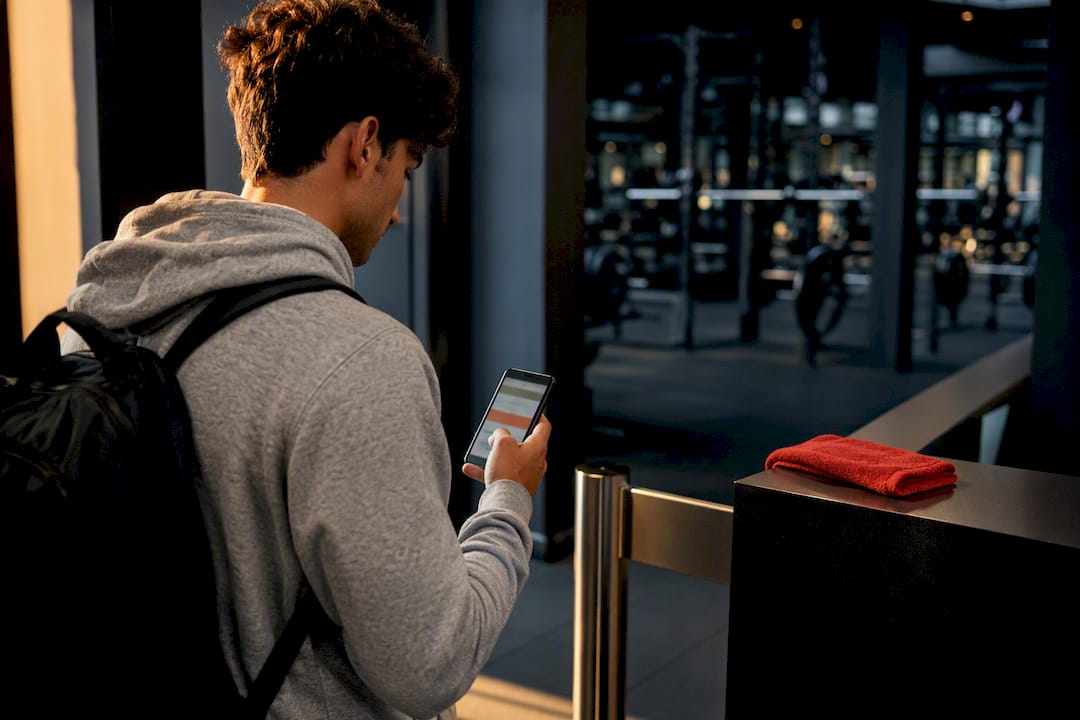
A workout app takes the same uncertainty-reduction approach as a written plan and puts it in your pocket. Many popular fitness apps let you build a short routine in advance, complete with video demonstrations for machines and lifts you’ve never touched.
That preview matters. Watching a 15 second clip of proper form before you approach a piece of equipment cuts down the fear of doing it wrong in front of people, one of the most common triggers beginners report. Some apps also include gym layout guides or equipment finders for specific chains, which shortens the awkward wandering-around phase.
Digital logs give you a low-pressure way to track the metrics that actually matter early on: minutes spent at the gym, exercises completed, or a simple comfort rating. Watching those numbers move over two or three weeks builds evidence that you’re adapting, even on days that felt clumsy in the moment.
If you’d rather skip equipment entirely while you build confidence, a resource like Gripnatic’s beginner calisthenics guide offers simple bodyweight progressions you can practice at home between gym visits. That’s a solid bridge for anyone who wants extra reps on movement basics before tackling a crowded floor.
Whatever app or tool you pick, treat it as training wheels, not a permanent crutch. The goal is walking in with a plan already decided, not staring at your phone the whole session.
A Coach’s Note on Starting Small
Nearly every trainer has watched someone freeze at the door on day one, and nearly every one of those people came back and eventually stopped noticing the room at all. The pattern is consistent enough to trust. My one habit recommendation: log a single sentence after each visit, not a workout log, just one honest line about how you felt. That record becomes proof, on the days you doubt yourself, that you’re already moving forward.
— Malcolm
Start Your Beginner Onramp at Level Up Gym
You’ve got the tools now: a starter plan, breathing techniques, and a way to track real progress. If you’d rather skip the trial-and-error and start with structure already built in, Level Up Gym is the direct alternative to figuring it out solo.
The hybrid training programs at Level Up Gym’s Stratford and Bridgeport, Connecticut locations are built around a 6-week beginner onramp, meaning your first sessions focus on form, orientation, and comfort before anyone talks about intensity. Prefer a smaller setting over a packed class? The small-group personal training option gives you coached guidance without the price tag of one-on-one sessions, and there’s no long-term contract locking you in while you decide if it’s the right fit. If boxing sounds more approachable than a weight room, the beginner boxing classes offer a structured, group-based entry point instead.
Book an intro session and show up with nothing decided except the time. A coach handles the rest of the plan.
Sources
- Urmc
- Gym Anxiety: Strategies to Overcome Gymtimidation - Healthline
- Exercise anxiety and adherence — randomized controlled trial evidence - PubMed
- The 3-3-3 rule for anxiety - Verywell Mind
- Power-Threat-Meaning Framework and gym anxiety - Frontiers in Sports and Active Living
FAQ
Why Am I So Anxious at the Gym?
Gym anxiety usually comes from uncertainty, unfamiliar equipment, fear of judgment, or crowded spaces, and researchers frame it as a normal threat response rather than a personal flaw.
What Is the 3-3-3 Rule for Anxiety?
The 3-3-3 rule asks you to name three things you can see, three things you can hear, and three things you can touch to pull your focus into the present moment and interrupt anxious thinking.
What Does the 3-3-3 Rule Mean Specifically at the Gym?
At the gym, you might notice the clock, a water fountain, and a poster, then the music, a fan, and clanging weights, then the bench, your shoes, and a dumbbell, grounding you before your set.
How Do You Release Anxiety From Your Body Before a Workout?
Box breathing, a short progressive muscle relaxation sequence, and light movement like a brisk walk all help discharge physical tension before you start your main exercises.
How Long Until Gym Anxiety Fades for Beginners?
Most beginners notice a real jump in comfort somewhere between two and six weeks of consistent visits, especially when paired with a structured beginner program like a 6-week onramp.