Lunch Break Workout: A 30-Minute Plan That Fits Your Day
The best lunch break workout is a 30-minute session: 5 minutes of warm-up, a 20-minute main set and 5 minutes of cooldown, done at an effort where you can still talk. That leaves time to change and eat without being late to your desk or your next class. Below you get three ready-to-use sessions, a clock for a 60-minute break, and a plan for sweat, clothes and food.
Level Up Gym
Make Short Workouts Count
Level Up Gym offers coached training in Stratford and Bridgeport, with options for adults building strength, pursuing fat loss, or learning boxing.
TL;DR
- Split a 30-minute session into 5 minutes warm-up, 20 minutes main work and 5 minutes cooldown.
- Keep the effort moderate: slightly out of breath, still able to hold a conversation. That keeps sweat and afternoon fatigue down.
- Pack a small kit (spare top, deodorant, wipes, towel) and prepare it the night before.
- Three sessions a week is a fine start. Five days of 30 minutes matches the common activity target.
- Beginners should start lower and build up. Scale every move to your body.
Table of Contents
- Why a lunch break workout works
- Plan the clock before you plan the workout
- The 30-minute structure
- Three 30-minute sessions
- Keep the effort right for the middle of the day
- Sweat, clothes and getting back to work
- Scale it if you are new
- A weekly rhythm that sticks
- Our perspective on lunch workouts
- Train with a coach near you
- FAQ
- Sources
Why a lunch break workout works
Most people who say they have no time to train actually have an hour in the middle of the day that they spend sitting. Using it solves the usual problems: you do not have to wake up earlier, you do not arrive at a gym tired after work, and the afternoon starts with a reset.
The numbers back up short sessions. The federal guidelines recommend at least 150 minutes of moderate or 75 minutes of vigorous aerobic activity each week, and short periods of activity during the day can add up toward that total. Mayo Clinic Health System suggests aiming for 30 minutes of activity five days a week, scheduling it like a work meeting, and splitting it into 10- or 15-minute segments if that is all you can get.
The CDC also makes a point that matters if you work somewhere without a gym: employers do not need an onsite gym to give people chances to move, and its guide includes stretching and office workouts. You do not need one either.
If you want the longer argument for why short sessions count, we wrote it up in why short workouts still work.
Plan the clock before you plan the workout
The workout is rarely what makes a lunch session fail. The clock is. A 60-minute lunch is not 60 minutes of training: travel, changing, warm-up, the workout, cooldown and eating all have to fit inside it.
Here is how a 60-minute break usually divides when you train at a nearby gym or a park:
BlockMinutesNotes
Travel or walk to the spot
5
Walk it if you can; it counts as part of your warm-up
Change
3
Wear your workout top under a jacket to save time
Warm-up
5
Light sets of the moves you will do
Main set
20
The part that counts
Cooldown
5
Walk, then easy stretching
Freshen up
7
Wipes, deodorant, fresh top
Eat
10 to 15
Lunch already prepared
That adds up to about an hour, which is why 30 minutes of actual training is the practical ceiling for most people. If your break is 45 minutes, shorten the main set to 15 minutes and skip the travel by training at the office, in a stairwell or outside.
The 30-minute structure
A practical session uses a 5-minute warm-up, a 20-minute main set and a 5-minute cooldown. Everything below fits that frame.
Warm-up (5 minutes)
You do not need a long routine. Muscle & Fitness suggests warming up with a few light sets of each exercise you plan to do, and skipping separate stretching or foam rolling, or doing it between warm-up sets. A simple version:
- 1 minute of marching or easy jogging in place
- 10 arm circles each way
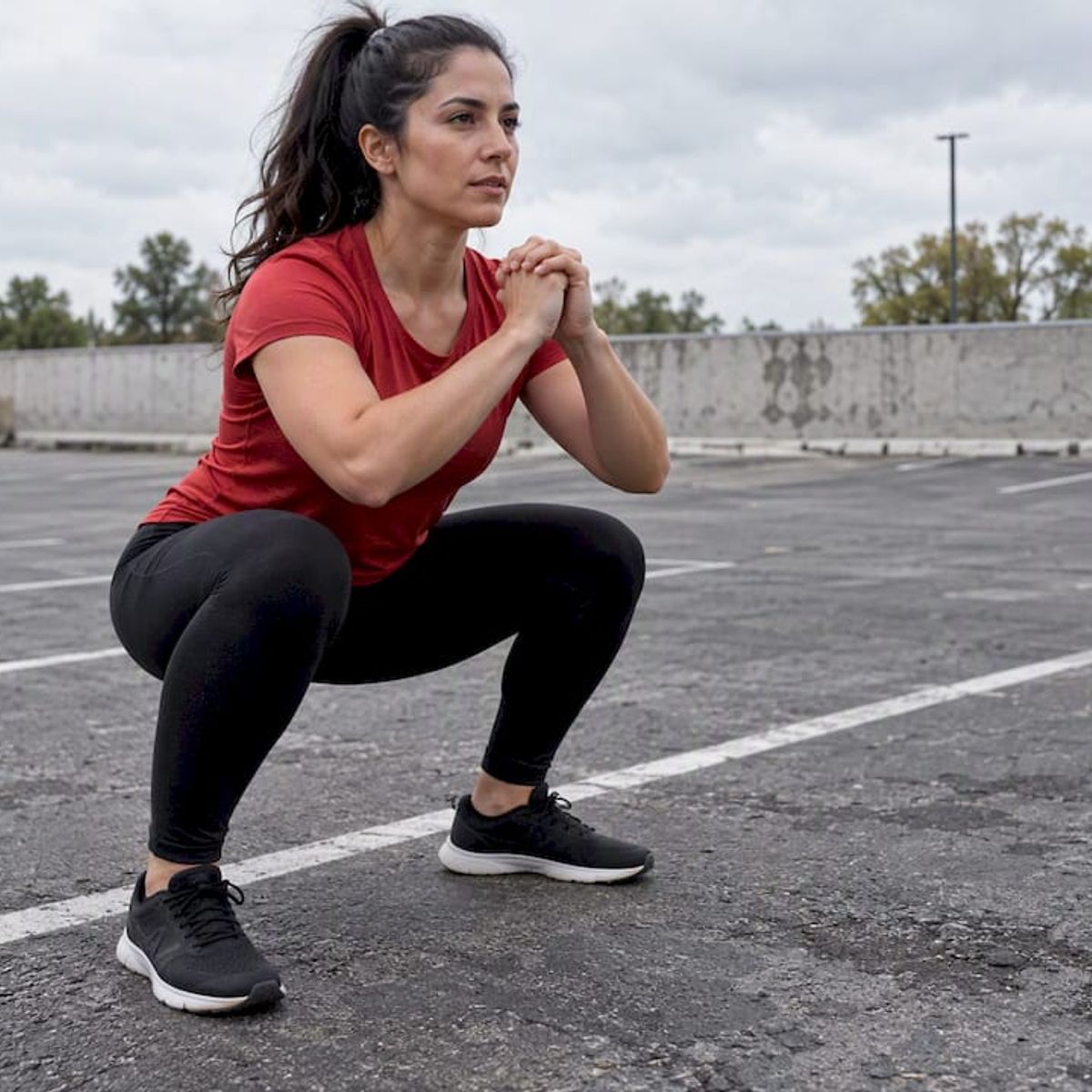
- 10 bodyweight squats
- 8 hip hinges (push your hips back, flat back, stand tall)
- 10 slow inchworms or 10 push-ups on an elevated surface
For a fuller version that comes from boxing, our coaches built a 10 to 15 minute boxing warm-up. Trim it to five minutes for lunch by keeping the shoulder and hip drills.
Cooldown (5 minutes)
Walk for two to three minutes until your breathing settles, then stretch calves, hips and chest for the rest. A cooldown walk also helps with sweat: you finish cooler, so you spend less time freshening up.
Three 30-minute sessions
Pick one per day. Rotate through them across the week so you are not hitting the same muscles every time.
Session A: Bodyweight intervals (no equipment)
This one works in an office corner, a hotel room or a dorm. The bodyweight HIIT format uses 30 seconds on and 30 seconds off.
After your warm-up, do each move for 30 seconds, rest for 30 seconds, and move to the next. Go through the list four times, resting 60 seconds between rounds. Four rounds of five moves at one minute each is 20 minutes with the round rests included, so you will finish right on schedule.
- Squats
- Push-ups (hands on a desk or wall if needed)
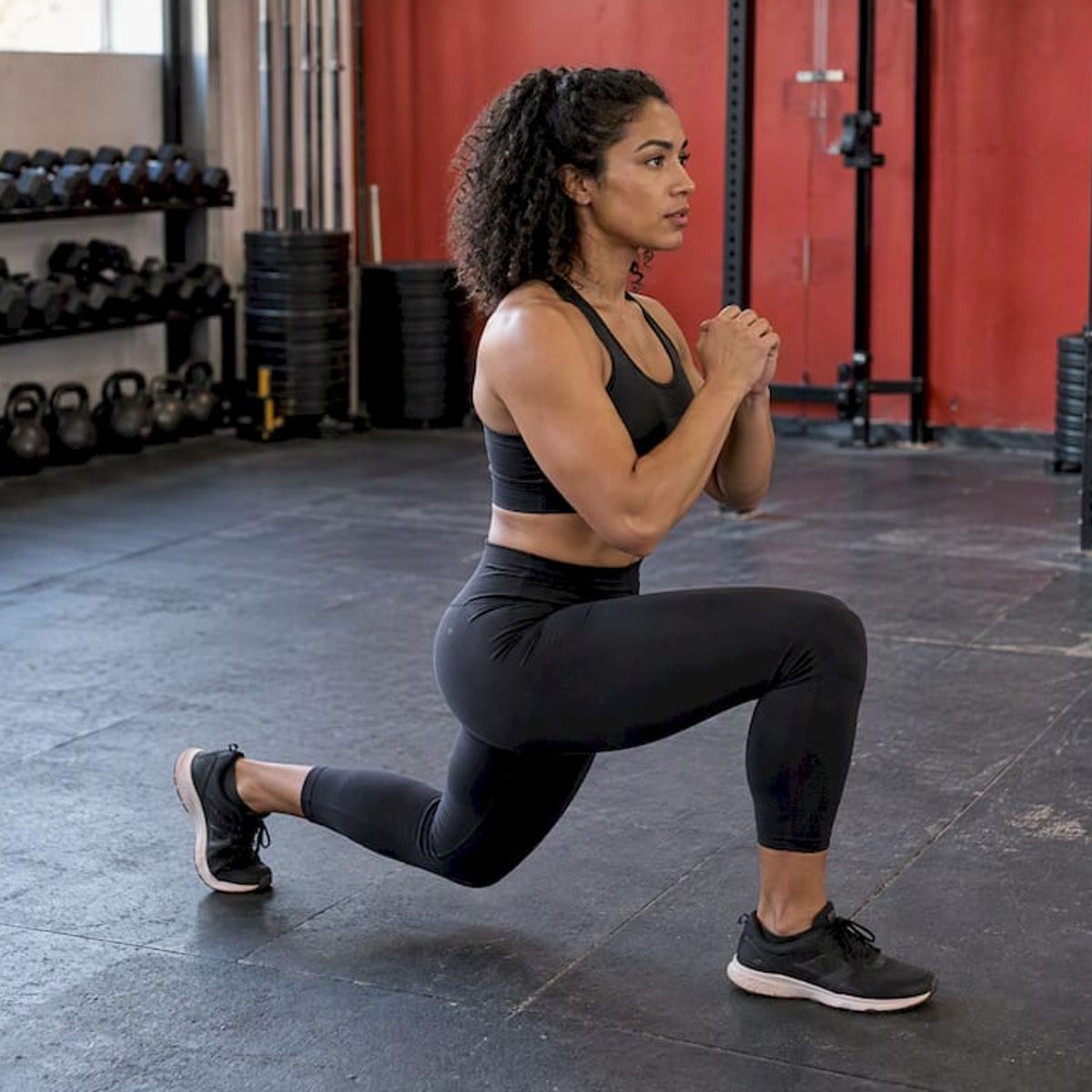
- Reverse lunges, alternating legs
- Plank hold
- Fast marching or high knees
These are the same kinds of moves Nutracheck uses in its time-efficient compound circuit: squats, rows, push-ups, hip hinges and planks. If you want to go further with nothing but a mat and a pair of dumbbells, see how to build strength with limited equipment.
Session B: Dumbbell supersets (gym or home)
When you have weights, supersets are the best use of 20 minutes. Pairing exercises back-to-back cuts rest time while keeping training quality. Muscle & Fitness says to prioritize big lifts that recruit more muscle, such as squats, deadlifts, lunges, presses, chin-ups and rows.
Do each pair for 3 rounds, resting about 60 seconds after both moves:
PairMove 1Move 2Reps
1
Goblet squat
Dumbbell row
10 each
2
Dumbbell Romanian deadlift
Overhead press
10 each
3
Reverse lunge
Push-up
8 per leg, 10 push-ups
That is nine sets of two moves, which usually runs 18 to 22 minutes at a steady pace. Choose a weight where the last two reps are hard but your form stays clean. Keep a note on your phone of the weights, and add a little when all reps feel solid. If you want to turn this into a longer-term routine, our guide to strength training three days a week covers how to progress it. For those wanting a structured path, an 8 to 12 week strength plan shows how progressive loading can be laid out week by week.
Session C: Brisk walk and mobility (low-sweat day)
Not every day needs to be hard. Walk briskly for 20 minutes, then spend the last 10 on mobility: hip circles, thoracic rotations, calf stretches and a few slow bodyweight squats. This session produces almost no sweat, and you can do it in work clothes with comfortable shoes. Plan ahead the way Mayo Clinic Health System suggests: keep shoes, an extra jacket and mittens handy for a cold-weather walk, which is useful in a Connecticut winter.
Keep the effort right for the middle of the day
Your afternoon still has to happen. One guide to office workouts says lunch exercise should leave you slightly out of breath but still able to hold a conversation, because harder effort risks heavy sweating or afternoon fatigue.
In practice:
- Use the talk test on your main set. If you cannot say a short sentence, ease off for a round.
- Save your all-out sessions for evenings or weekends.
- If you have a meeting right after, choose Session C or cut the intervals to 20 seconds on.
A light snack before can help if you train hungry, and having lunch ready for afterward matters: protein and fiber help you stay full into the afternoon. Make your lunch the night before so eating does not eat into your break. Our meal planning can take that off your plate if you want someone to build it for you.
Sweat, clothes and getting back to work
This is the part nobody warns beginners about, and it is the main reason people give up on lunch workouts. A few fixes:
- Lower the intensity a notch and finish with a cooldown walk. Nutracheck’s tips on managing sweat include exactly this.
- Pack a small kit: deodorant, wipes, a spare shirt and dry shampoo. Add a small towel.
- Keep the kit at work. A drawer with sneakers, a spare top and a towel means you never forget it. Set a reminder the night before and find a colleague to hold you to it.
- Keep a bag in the car. Mayo Clinic Health System recommends a gym bag with shower supplies in your vehicle if you drive.
- Wear layers. A breathable top under a jacket lets you walk to the gym without overheating and change in two minutes.
Hair is the other sticking point. If you do not have a shower, this post-workout hair routine walks through getting presentable again without a second wash.
Scale it if you are new
If you have not trained in a while, you do not need to match anyone else’s session. The CDC guide advises starting at lower intensity, gradually increasing activity and adapting movements to fit your body. ACE agrees that adjusting HIIT to your energy level or injuries is appropriate and recommended.
Here is what that looks like:
- Week 1 to 2: 15 to 20 minutes. Two rounds of Session A, with 20 seconds on and 40 seconds off.
- Week 3 to 4: 25 minutes. Three rounds, with 30 seconds on and 30 seconds off.
- Week 5 onward: The full 30-minute session, three days a week.
Swap push-ups for wall or desk push-ups, squats for sit-to-stands from a chair, and lunges for split squats holding a rail. If a move hurts (sharp pain, not effort), stop and swap it. If you have a medical condition, are pregnant, or have not exercised for a long time, check with your doctor or physical therapist before starting a vigorous routine.
Walking into a gym for the first time can be the real barrier. Our day-one plan for beginners with gym anxiety lays out what to do in the first 15 to 20 minutes.
A weekly rhythm that sticks
Consistency beats a perfect program. A simple week for a 9-to-5 worker:
DaySession
Monday
Session B (dumbbell supersets)
Tuesday
Session C (walk and mobility)
Wednesday
Session A (bodyweight intervals)
Thursday
Session C
Friday
Session B, or a class if your gym offers one at midday
Block the time in your calendar as you would a meeting, as Mayo Clinic Health System advises. If a meeting wipes out the slot, do 10 minutes: one round of Session A in a conference room or a hallway walk. Ten minutes still counts, and it keeps the habit alive. Tired by the end of the day anyway? Our 10 to 30 minute workouts for tired days are the backup for evenings, and fitting a workout into a full-time schedule covers the wider picture.
Students have a similar puzzle between classes. For that version see quick gym sessions between classes.
Our perspective on lunch workouts
We coach adults in Stratford and Bridgeport who work, commute and study, and the same pattern shows up again and again. People do not fail because the workout is too short. They fail because it is too hard to start, too sweaty to recover from, or too complicated to repeat on a Wednesday when the day goes sideways.
So we ask for less than most programs do. Keep it to 30 minutes. Use moves you can do well. Finish with something left in the tank. A session you repeat three times a week for a year will beat a brutal one you do twice and drop.
We also think a coach is worth more in short sessions than in long ones. When you only have 20 minutes, there is no time to waste on the wrong exercise, the wrong weight or a warm-up that does not fit. A written plan with your exact moves, sets and loads removes the guesswork. That is why every new member of Level Up Gym starts with a free class or consult and a written, individualized plan, and why our classes are capped in size so a coach can see your form.
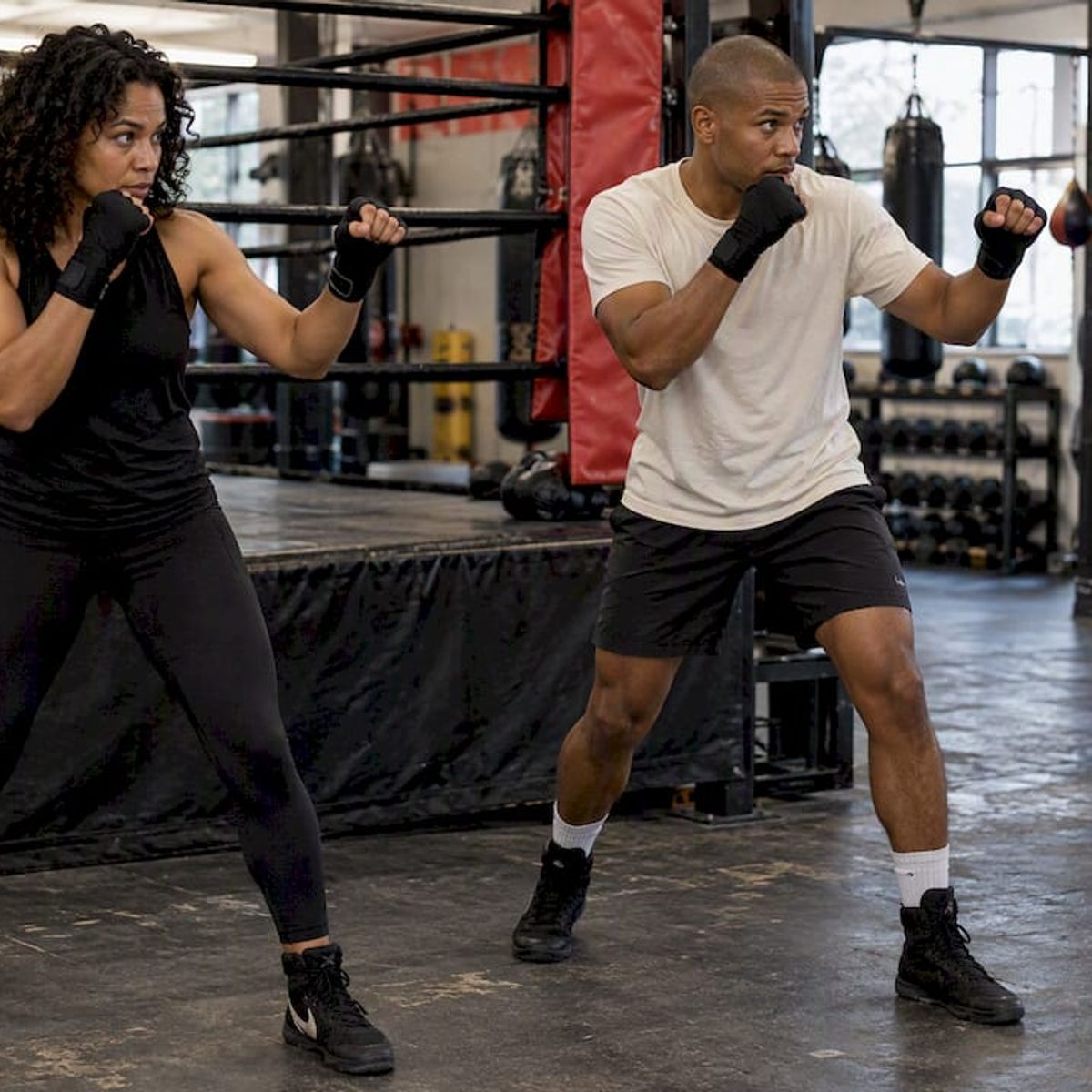
If you box, the same logic applies. A good boxing session can be built into 30 minutes with real technique work, and our boxing warm-up drills show how fighters prepare quickly.
— Malcolm
Train with a coach near you
If you live or work around Stratford or Bridgeport and want your lunch workout planned for you, we can build it. Our membership options include large group classes from $24.99 to $59.99 per week, small group personal training for two to four people from $74.99 to $174.99 per week per person, and 1-on-1 personal training from $149.99 to $359.99 per week. There are no contracts, and beginners are welcome.
New to structured training? The 6-week Onramp is a $699 one-off program that walks you through the basics with a coach. You can also try us first with a free boxing class in Stratford. If your employer wants to bring movement to the workplace, ask about corporate wellness programs.
FAQ
How long should a lunch break workout be?
Thirty minutes is a good target: 5 minutes of warm-up, 20 of main work and 5 of cooldown. If you only have 15 minutes, do 10 minutes of work and treat it as a full session. Short segments of 10 or 15 minutes still add up toward a weekly total.
Can I work out on my lunch break without getting sweaty?
Yes. Lower the intensity slightly, finish with a cooldown walk and keep wipes, deodorant and a spare shirt at work. A brisk walk with mobility work (Session C above) produces very little sweat. Save hard intervals for days when you have time to freshen up.
How many times a week should I train at lunch?
Three days is a realistic start. The common target is 150 minutes of moderate activity a week, which five 30-minute sessions would meet. Build up slowly rather than jumping straight to five.
What should I eat before and after a lunchtime workout?
If you are hungry, a light snack before training is enough. Have your lunch ready afterward with protein and fiber to keep you full. Eating a big meal right before a hard set tends to feel bad, so eat after.
Is a 30-minute lunch workout enough to build strength?
It can be. Thirty minutes is enough for a solid session when you focus on big compound lifts and use supersets to save rest time. Add weight or reps gradually over weeks, and pair it with a few longer sessions on weekends if you can.
Sources
- Fit a workout into any schedule, Mayo Clinic Health System
- Exercise intensity: How to measure it, Mayo Clinic
- Physical Activity Breaks for the Workplace, CDC
- 30 Minute HIIT Workout You Can Do at Home, ACE
- How To Effectively Workout During Lunch Break, Muscle & Fitness
- Office Lunch Workout: A 30-Minute Plan, CIRIUS
- 3 workouts you can do on your lunch break, Nutracheck
- The 30-Minute Lunch Break Workout, Find Your Edge
- Lunch Break Express: 30-Minute Workout, LiftStrong
- Post Workout Hair: 4 Steps, No Second Shower
- 8 to 12 Week Strength Plan for Menopause