
150 Minutes: How Online Personal Training Helps Adults Hit CDC Targets
Online personal training delivers real, measurable benefits when it includes proper intake and progress tracking: better accountability, workouts tailored to your equipment and schedule, and the flexibility to train on your own time. Research on remote coaching backs this up, and public-health guidance supports the health outcomes as long as the program tracks adherence and progression rather than just handing you a video library.
TL;DR:
- Online personal training is most effective when it includes detailed intake assessments, personalized programs, and consistent tracking of progress and adherence.
- The evidence shows online programs can outperform doing nothing and often match in-person results, especially when they actively monitor performance metrics.
- Synchronous coaching offers real-time correction suited for beginners or those with health conditions, while asynchronous programs appeal to busy, experienced athletes seeking flexibility.
- Safety relies on proper load progression, objective data review, and modifications for complex lifts, as remote coaching limits physical spotting and immediate intervention.
- Successful online training depends on clear communication, goal-specific plans, and proper space setup, not just a subscription to workout videos.
Level Up Gym
Train With Coaching That Fits
Level Up Gym helps Fairfield County adults pursue fat loss, strength, or boxing with coached training and no contracts.
Table of Contents
- What Are the Real Benefits of Online Personal Training?
- Is Online Personal Training Effective? Here’s the Evidence
- How Online Personal Training Actually Works
- Live Coaching vs. App-Based Training: Which Fits You?
- Safety Considerations for Remote Coaching
- How to Choose an Online Trainer Without Wasting Money
- Setting Up Your Space for Online Training Success
- Level Up Gym on What Actually Makes Remote Coaching Work
- Try Online Training With a Coach Who Actually Tracks Your Progress
- Sources
- FAQ
What Are the Real Benefits of Online Personal Training?
The biggest advantage isn’t the video call. It’s the structure that keeps you showing up when motivation runs out.
Online coaching works because it attacks the actual reason most people quit exercising: nobody is watching. A coach who checks your session logs, asks about your soreness, and adjusts next week’s plan based on what you actually did creates a loop that a workout app alone can’t replicate. That accountability layer is one reason structured coaching improves adherence compared to going it alone.
Here’s what shows up consistently across quality programs:
- Accountability and adherence: scheduled check-ins, logged sessions, and a coach who notices when you skip three workouts in a row.
- Personalization: your plan gets adjusted for injuries, available equipment, and how your body actually responds, not a generic template.
- Convenience: no commute, no waiting for a squat rack, and sessions that fit a 6 AM slot before work or a 9 PM slot after the kids are asleep.
- Lower per-session cost: remote delivery cuts facility overhead, which often makes ongoing coaching more affordable than comparable in-person packages.
- Access to specialized expertise: you’re not limited to whoever happens to work at the gym down the street.
- Stronger self-efficacy: consistent small wins, tracked and reflected back to you, build the confidence that keeps people training past month one.
Pro Tip: Ask any prospective online trainer how they track your progression, not just your attendance. A coach who only logs “showed up” is missing the metric that actually predicts results.
That cost and scalability advantage isn’t just anecdotal. Evidence on online exercise programs points to streamed and app-based delivery reaching more people at lower direct cost than in-person-only models, which matters if you’re comparing a monthly training budget against a full-time gym membership plus a trainer’s hourly rate.
Is Online Personal Training Effective? Here’s the Evidence
Yes, and the data is more specific than most people expect. A 2025 systematic review and meta-analysis found online exercise programs outperformed no exercise across strength, endurance, physical activity levels, mood, and self-efficacy. In most of those categories, online programs were also noninferior to face-to-face training, meaning the remote format didn’t produce worse outcomes.
That’s a meaningful finding, but it comes with caveats. Evidence certainty for several outcomes ranged from low to moderate, and the studies included varied widely in population, program length, and how “online” was defined. A 12-week trial of app-based strength work and a year of live video coaching aren’t measuring the same thing, even if both get labeled “online exercise.”
Public-health guidance gives online coaching a concrete target to hit. The CDC recommends adults get 150 minutes of moderate aerobic activity weekly plus muscle-strengthening work on at least two days. A coach can structure a remote program specifically around those minutes, scaling intensity for someone who hasn’t exercised in years or ramping volume for someone chasing a strength goal. The CDC also lists immediate payoffs like better sleep and reduced anxiety alongside long-term reductions in heart disease, type 2 diabetes, and depression risk.
Behavior change research backs this up outside the gym context, too. A low-contact coaching trial called Healthy 4 U-2 used phone-based coaching calls and found participants increased their moderate-to-vigorous physical activity, with the gains still holding at a nine-month follow-up. That’s a low-touch format, arguably less immersive than a live video session, and it still produced sustained behavior change.
The practical takeaway: expect real gains from online training, but only from programs that actually track what you do and adjust it. A coach who never asks for your numbers isn’t running the kind of program these studies describe.
How Online Personal Training Actually Works
A legitimate online training program follows a predictable sequence, and skipping steps is usually where things go wrong.
- Intake assessment. Your coach should ask about training history, current goals, available equipment, schedule constraints, and any injuries or health conditions before writing a single workout.
- Individualized plan. You get a program built around what you actually have access to, whether that’s a full home gym or a resistance band and a doorway.
- Demonstrations and substitution rules. Good coaches provide clear video demos and specify exactly what to swap in if you don’t have a piece of equipment, rather than leaving you to guess.
- Progressive overload tracking. Your plan should get harder on a schedule tied to your logged performance, not on a fixed calendar.
- Scheduled reviews. Expect a check-in cadence, weekly or biweekly, where the coach looks at your actual data and revises volume or intensity.
Delivery channels vary, including options built by a health & fitness app developer in Australia that enable asynchronous delivery and detailed tracking. Some coaches run live video sessions, others build out app-based programming with recorded demonstrations, and many blend both with ongoing messaging for form checks. What matters more than the channel is whether camera setup, substitution clarity, and consistent tracking are built into the process. Without those three things, remote coaching turns into a video library with a subscription fee attached.
Live Coaching vs. App-Based Training: Which Fits You?
Synchronous coaching (live video sessions) and asynchronous coaching (app-based or recorded programming) solve different problems, and picking the wrong one is a common reason people quit.
- Synchronous format: you get real-time form correction and a fixed appointment that forces accountability, but you’re locked into a schedule and it typically costs more per session.
- Asynchronous format: you get maximum flexibility and usually a lower price point, but corrections happen after the fact, often through a video you send in rather than live feedback.
- Beginners and people managing a health condition generally do better with more synchronous oversight, at least early on, since real-time correction catches problems before they become habits.
- Busy professionals with solid training experience often thrive with asynchronous programming, since they already know what proper form feels like and just need the plan and the tracking.
A Frontiers review of tele-exercise research found synchronous interventions produced stronger results on several fitness measures, particularly in populations that needed more hands-on correction. Asynchronous programs still helped sedentary adults, but the design mattered enormously, especially whether the program built in adherence supports rather than just delivering content and hoping for the best.
Safety Considerations for Remote Coaching
Online training isn’t automatically safer or riskier than in-person work, but it does shift where the risks show up. A coach can’t physically spot you on a heavy squat or grab a bar if your form breaks down mid-lift, and that limitation matters more for certain exercises and certain people than others.
Camera angle and internet quality are real technique-correction limits, not minor inconveniences. Research on tele-exercise programs points to these constraints as genuine safety factors, particularly for people learning complex lifts for the first time.
The CDC’s guidance is direct on this point: adults with chronic conditions, a history of inactivity, or plans to jump into vigorous exercise should talk to a clinician before starting. That advice applies to any training format, but it carries extra weight remotely, since a coach can’t take your blood pressure or watch you struggle to catch your breath the way they could in person.
Quality programs mitigate these limits with a few concrete practices:
- Progressive load prescriptions instead of jumping straight to heavy weight.
- Objective tracking (reps, load, RPE) reviewed on a set schedule, not just vibes.
- A clear escalation plan for pain, dizziness, or anything that doesn’t feel right.
- Avoidance or heavy modification of movements that genuinely require a physical spotter, like max-effort barbell lifts.
Pro Tip: If a movement in your program requires someone standing behind you with their hands ready to catch a bar, that’s a signal to either modify the exercise or find in-person supervision for that specific lift.
Red flags that suggest you need an in-person assessment instead: persistent pain that a coach can’t diagnose from a video, a health condition your coach hasn’t asked follow-up questions about, or a training plan that never changes no matter what you report.
How to Choose an Online Trainer Without Wasting Money
Most disappointing online training experiences trace back to skipping questions before signing up, not to the format itself.
Before committing, ask these:
- What certifications do you hold, and can I see a sample program you’ve built for someone with goals similar to mine?
- How do you track my progress, and how often will we review the data together?
- Is live feedback available if I send a form-check video, and how fast do you typically respond?
- What’s your substitution policy if I don’t have a piece of equipment listed in my program?
- What’s your cancellation or refund policy if the format isn’t working for me?
Beyond the direct questions, watch for these warning signs:
- No structured intake before your first workout arrives.
- Goals that stay vague (“get fit”) instead of measurable (“add 20 pounds to your squat in 8 weeks”).
- Progress reviews that never reference actual numbers, just general check-ins.
- No clear plan for what happens if you report pain or a medical concern.
A coach who can’t answer the tracking question specifically is telling you something important about how the rest of the relationship will go. For more on setting expectations with any coach, this guide on working with a fitness coach effectively covers the communication side that makes remote programs succeed.
Setting Up Your Space for Online Training Success
A few small setup choices determine whether your online sessions actually work or become a source of friction.
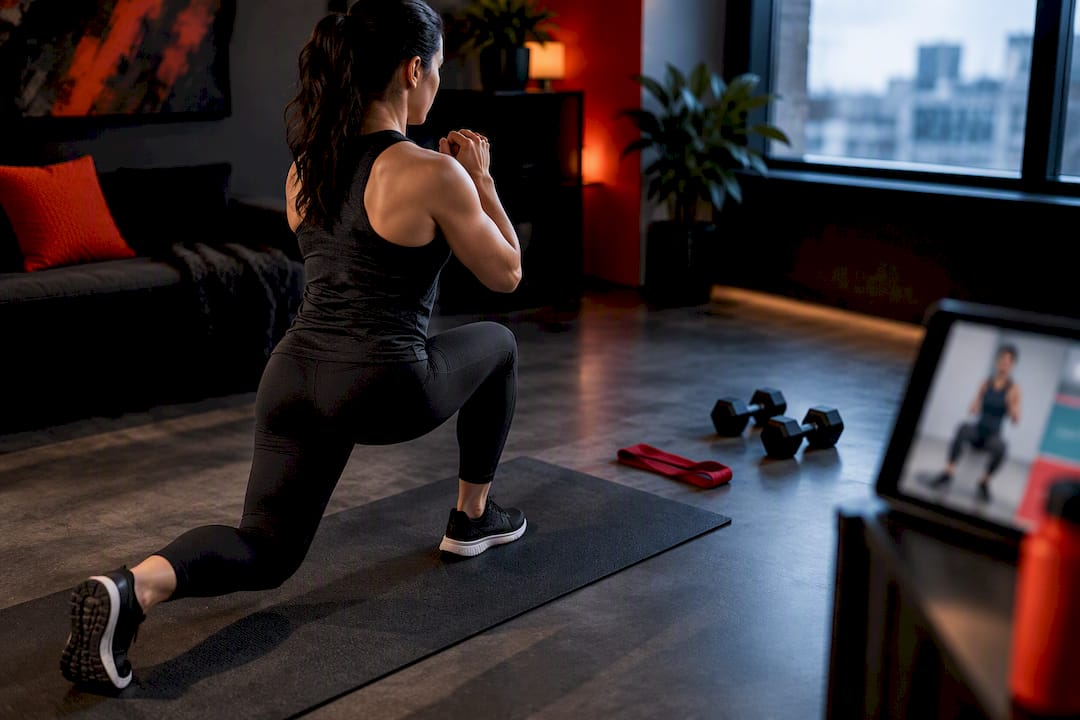
- Position your camera at hip height, angled to capture your full body during compound lifts like squats and deadlifts.
- Keep the space well lit, ideally with a light source in front of you rather than behind, so your coach can actually see your form.
- Stock minimal equipment (resistance bands, adjustable dumbbells, a mat) and confirm substitution options for anything you’re missing.
- Block your calendar for sessions the same way you’d block a work meeting, and mix live check-ins with async workouts to balance flexibility and accountability.
- Log every session: reps, weight, and a simple effort rating, then share screenshots with your coach weekly.
Pro Tip: Pick one accountability partner, whether that’s your coach or a friend doing the same program, and text them your workout log the moment you finish. That small habit closes the gap between “I meant to work out” and “I did.”
Level Up Gym on What Actually Makes Remote Coaching Work
Most of the friction in online training doesn’t come from the format. It comes from vague plans and coaches who mistake attendance for progress. A client who shows up to every live session but never gets their load adjusted isn’t actually progressing. They’re just maintaining.
At Level Up Gym, we treat online coaching as an extension of the same hybrid model we run in Stratford and Bridgeport: certified coaches, capped attention, and a written plan that changes based on what a client actually reports back. Beginners especially need someone reviewing their numbers, not just their calendar. That’s true whether they’re training in our facility or checking in from a home gym setup. If you want to see how coached programming translates into a full plan, our breakdown of structured workout program benefits covers the progression logic we build every client’s plan around.
— Malcolm
Try Online Training With a Coach Who Actually Tracks Your Progress
Level Up Gym’s online training gives you the same individualized planning and progression tracking our Stratford and Bridgeport members get, without needing to be in either location. It fits people who travel for work, live outside Fairfield County, or just want the flexibility of training on their own schedule while still having a certified coach reviewing their numbers every week.
Many programs offer an initial free consult or class and provide individualized plans rather than generic templates. Some programs do not require contracts, allowing for flexibility if the program does not meet your needs. If you’re weighing online coaching against a traditional gym membership, check current membership options and book your free consult to get a plan built around your actual goals and schedule.
This article is general information, not a substitute for advice from a qualified doctor. Consult a qualified healthcare professional about your own circumstances before acting on anything here.
Sources
- Adult activity: An overview | Physical Activity Basics | CDC
- The Effectiveness of Online Exercise on Physical Activity, Motor Function, and Mental Health: Systematic Review and Meta-Analysis
- Tele-exercise / remote exercise reviews (PubMed entry)
- Healthy 4 U-2 study (telephone-based PA coaching trial)
FAQ
Is It Worth Getting an Online Personal Trainer?
For most adults, yes, provided the program includes a real intake process and ongoing progress tracking rather than just a library of workout videos. Evidence shows online exercise programs outperform no exercise on strength, endurance, mood, and self-efficacy, and are often comparable to in-person training.
What Is the 3-3-3 Rule in the Gym?
Definitions of this rule vary across fitness content, and there’s no single standardized version backed by major health authorities. Rather than repeat an unverified rule, focus on the CDC’s actual benchmark: 150 minutes of moderate activity weekly plus strength work on two or more days.
How Much Money Do Online Personal Trainers Make?
Trainer income varies widely based on client volume, specialization, and whether they work independently or through a gym, and no single figure applies across the industry. Pricing for a client’s own online coaching, like the plans through Level Up Gym, depends on the specific service and session format chosen.
Is 30 Minutes With a Personal Trainer Enough?
Short sessions can be effective for focused strength work or targeted skill training, especially for experienced clients, but beginners often benefit from more time to cover warmup, technique instruction, and cool-down. What matters more than session length is whether the coach tracks your reps, load, and effort consistently so your program can progress.
Does Online Training Work for Beginners?
Yes, but beginners typically need more synchronous, real-time feedback than experienced clients since they’re still learning proper form. A program that pairs live check-ins with clear video demonstrations and a structured intake process, the kind of setup Level Up Gym’s online training provides, tends to work better for someone new to structured exercise than a purely video-library approach.