Pre-Workout Meal Ideas: What to Eat Before Lifting, Cardio or Boxing
The best pre-workout meal is built on carbohydrates with a moderate amount of lean protein, and what you pick depends on how much time you have. With 2 to 4 hours, eat a small balanced meal such as chicken with rice. With an hour or less, eat a simple carbohydrate snack such as a banana. Below you will find ideas for each window, for early mornings and for boxing. At Level Up Gym we coach strength, conditioning and boxing in Stratford and Bridgeport, CT, and we pair training with nutrition coaching so the food fits the workout.
Level Up Gym
levelupgym.app
Pair Nutrition With Your Training
Level Up Gym coaches strength, conditioning and boxing in Stratford and Bridgeport, and pairs training with nutrition coaching to fit the workout.
TL;DR
- Eat a small meal 2 to 4 hours before training: carbohydrates first, some lean protein, little fat and fiber.
- Within 30 to 60 minutes of the session, choose a quick carbohydrate snack like a banana, crackers or applesauce.
- Early workout? A piece of fruit or a granola bar is enough to get going.
- Before boxing, put your main meal 3 to 4 hours out and keep a light snack for the final hour.
- Drink 16 to 20 ounces of water about an hour before, and never try a brand-new food on a hard training day.
Table of Contents
- What a pre-workout meal actually does
- Match the meal to your timing
- Pre-workout meal ideas 2 to 4 hours before
- Snacks 30 to 60 minutes before
- Early-morning workouts
- What to eat before boxing
- Foods to skip or limit before you train
- Water before you train
- Sample pre-workout meal ideas by goal
- Our point of view
- Get the food and the training working together
- FAQ
- Sources
What a pre-workout meal actually does
Your muscles run on carbohydrate during hard training. Protein plays a different role. Cleveland Clinic explains that carbohydrates supply the energy for your workout, while protein supplies the amino acids your body uses to repair and build muscle. That is why a good pre-workout plate is not a protein shake alone, and not a bowl of pasta alone. It is both, in the right proportions.
Healthline’s dietitian-reviewed guidance adds detail: carbohydrates support glycogen availability for short, high-intensity exercise, and protein eaten beforehand supports muscle-protein synthesis and may help recovery and performance. If your sessions mix lifting, intervals and bag work, as ours do, both matter.
Two practical points follow from this:
- Carbohydrate is the star. Protein is the supporting actor.
- Fat and fiber are fine in your day, but they slow digestion, so they belong further from the start of your session.
No single food beats all others here. Verywell Fit notes that no one food or food group works better than another, and that the goal is to find the foods and timing that suit your body. Use the ideas below as a menu to rotate through, not a rulebook.
Match the meal to your timing
Timing is the biggest variable, and it changes what belongs on the plate. UCSF Health recommends a small meal 2 to 4 hours before activity that is high in complex carbohydrates, moderate in protein and low in fat. For the last hour, the meal gets lighter and lower in fat and fiber.
Time before trainingWhat to eatExamples
3 to 4 hours
Balanced meal: complex carbs, moderate lean protein, low fat and fiber
Turkey and cheese sandwich with fruit and milk; chicken with rice; pasta with lean meat
1 to 3 hours
Smaller meal or substantial snack
Oatmeal with banana; Greek yogurt with berries; eggs with toast
30 to 60 minutes
Quick carbohydrate, minimal fat and fiber
Banana, crackers, applesauce, a small granola bar
Under 30 minutes
Only if hungry: a few bites of simple carbohydrate
Half a banana, a few crackers, a sip of juice
If your day is busy, our guide to meal timing for workouts goes deeper on how to schedule these windows around work and class.
Pre-workout meal ideas 2 to 4 hours before
This is the window where you can eat a real meal. Aim for a plate that is mostly carbohydrate with a palm-sized portion of lean protein. Nationwide Children’s Hospital suggests a 3 to 4 hour meal that is high in carbohydrate, contains some protein and is low in fat and fiber, with examples such as whole-grain bread, pasta, oatmeal, brown rice, potatoes, fruit, chicken, fish, milk and eggs.
Putting that into actual meals:
- Turkey and cheese sandwich with an orange or banana and a glass of milk. This is the combination an Ohio State dietitian gives for a meal 3 to 4 hours out.
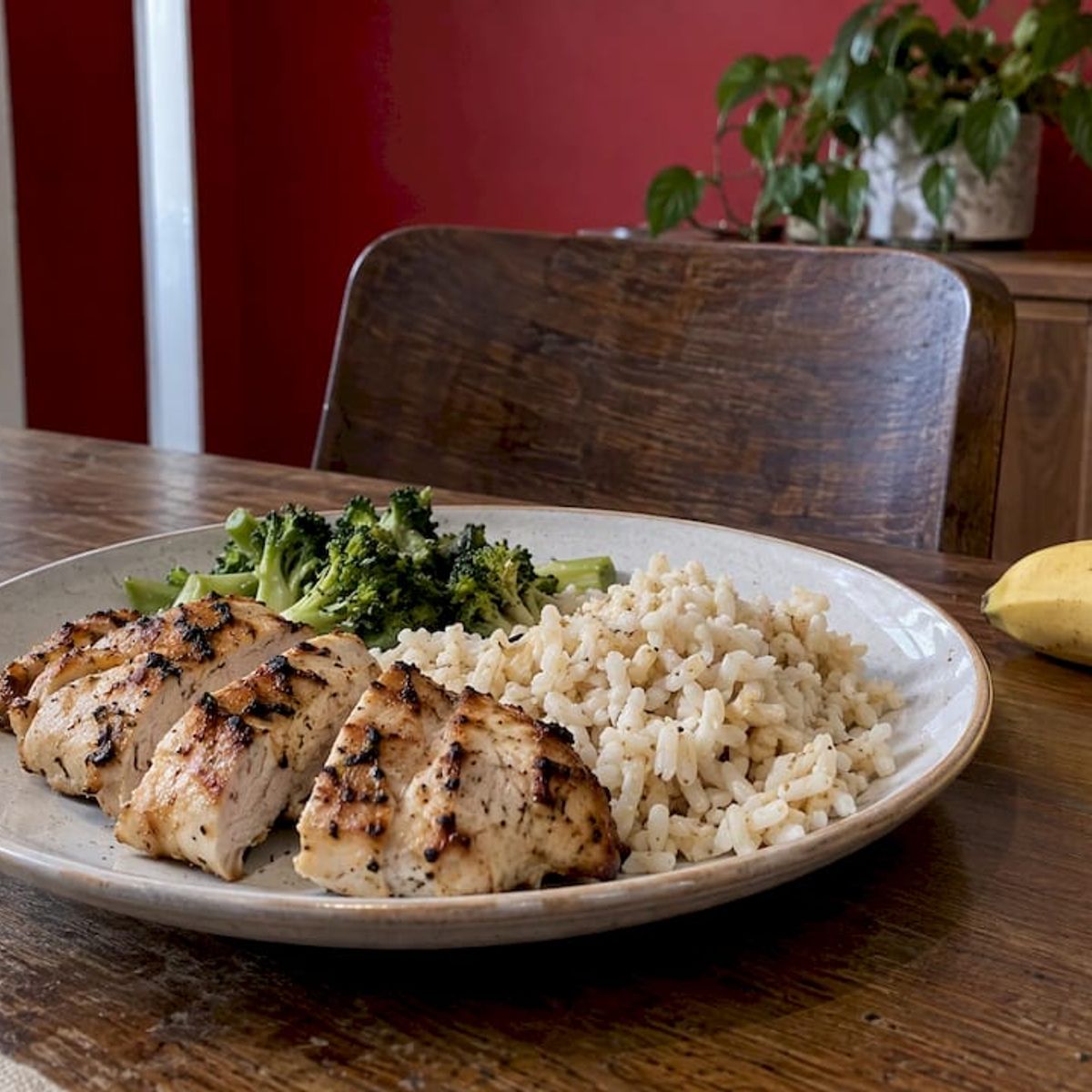
- Chicken, rice and a side of cooked vegetables. UCLA Health lists chicken with rice as a strength-training option 1 to 3 hours before.
- Eggs on whole-grain toast with fruit. Easy, cheap and reliable for lifting days.
- Pasta with a lean meat sauce. Pasta is a classic complex-carbohydrate pick that UCSF Health names directly.
- Baked potato or small sweet potato with a lean protein. Gentle on most stomachs when you keep the toppings light.
- Overnight oats with strawberries and a few walnuts. Prepare it the night before; it is one of the options on Verywell Fit’s list.
A simple plate formula
If you do not want to memorize recipes, use this formula: one big scoop of a carbohydrate (rice, pasta, potato, oats, bread), one palm of lean protein (chicken, turkey, eggs, yogurt, fish), one piece of fruit, and go easy on butter, oil, cheese and raw vegetables. Cleveland Clinic’s dietitian recommends limiting fat and fiber in a meal 3 to 4 hours before exercise because they digest more slowly and may upset your stomach.
For a deeper look at where protein lands in your day, see our high-protein breakfast ideas, which work well as a pre-workout meal on morning-lifting days when you have a bit of time.
Snacks 30 to 60 minutes before
When you are closer to the session, shift from “meal” to “fuel.” Nationwide Children’s Hospital recommends a carbohydrate-rich snack 30 to 60 minutes before exercise. Keep fat, fiber and large amounts of protein low, because they sit in your stomach.
Good choices:
- A banana, on its own or with a thin spread of peanut butter
- Crackers (the Ohio State dietitian uses these as a top-up about 30 minutes before)
- Applesauce pouch
- A granola bar with at least 7 grams of protein, per Verywell Fit
- A pear with string cheese
- Low-fat chocolate milk
- Greek yogurt with a spoonful of granola
For cardio, UCLA Health suggests an energy bar or banana in that 30 to 60 minute window. For strength training, it describes a snack about 30 minutes beforehand as optional if you are hungry. That is a useful rule: if you ate a meal two hours ago and feel fine, you do not have to eat again.
To see how your food choices shift on training days versus rest days, this piece on adjusting your diet on training days is a helpful companion.
Early-morning workouts
Many of our members train before work or class, and most do not want to wake up four hours early to eat. The good news is that you do not have to. Cleveland Clinic notes that when a meal several hours beforehand is impractical, a piece of fruit or a granola bar can give you the boost you need.
Some easy morning options:
- A banana and a small handful of crackers
- Toast with jam or honey
- A small cup of yogurt with a spoonful of granola
- Half a bagel with a thin layer of nut butter
- Oatmeal made with milk, if you have 60 to 90 minutes
If you wake up with 2 to 3 hours to spare, eggs, toast and fruit make a strong, steady meal. If you wake up with 20 minutes, eat something small and sweet, and plan a bigger breakfast afterward. Our guide to post-workout carbs covers what that second meal can look like.
If you train at lunch or after class, our plans for a lunch break workout and workouts after work on tired days show how to fit food around a tight schedule.
What to eat before boxing
Boxing is a stop-and-go sport with sustained effort: rounds on the bag, footwork, pad work, conditioning. You burn through carbohydrate quickly and you sweat a lot, so the pre-workout meal matters more than for a casual walk on the treadmill.
A registered dietitian interviewed by FightTV says the main meal should come 3 to 4 hours before the fight, with carbohydrates, moderate protein and moderate fats. If you need more, a light carbohydrate snack 30 to 60 minutes before works; quick options include a banana, honey or maple syrup with a little salt, dates, applesauce or fruit puree, and dried mango. The same source recommends 16 to 20 ounces of water with the meal and continued sipping afterward.
For a normal boxing class, here is how that looks:
Evening class at 6:30 p.m.
- 2:30 to 3:30 p.m.: chicken or turkey, rice or potato, some cooked vegetables, a piece of fruit
- 5:30 to 6 p.m.: banana or a few crackers, and a glass of water
Morning class at 7 a.m.
- 6:15 a.m.: banana and toast with honey, plus water
- After class: a full breakfast with protein, such as eggs and oatmeal
Midday class at noon
- 8:30 to 9 a.m.: oatmeal with fruit and yogurt
- 11:15 a.m.: applesauce pouch or half a granola bar
Punching with a full stomach is miserable, and so is punching on empty. If you feel sloshy on the bag, move the meal earlier and keep the snack smaller. If you feel shaky in round three, add 15 to 20 grams of carbohydrate in the last hour.
We lay out the bigger picture, including how to eat across training and rest days, in our boxing diet plan. And if you want to try real boxing coaching rather than cardio boxing, you can start with a free boxing class in Stratford.
Foods to skip or limit before you train
The goal of a pre-workout meal is to feel light and energized, not heavy. Most trouble comes from fat, fiber and foods you are not used to.
- High-fiber foods. UCSF Health advises avoiding especially high-fiber foods such as raw vegetables, dried fruit and nuts right before exercise.
- Greasy or heavy meals. An Ohio State dietitian points out that fat and fiber stay in the digestive system longer than carbohydrate and protein, which makes them more likely to cause stomach distress during intense activity.
- Spicy foods. Healthline lists high-fat, high-fiber and spicy foods as common culprits for fullness, gas, bloating, indigestion or heartburn, and says individual tolerance decides what you should avoid.
- Anything brand new. UCSF Health also cautions against trying a new food on a race or performance day. Test new foods on an easy day first.
These are not hard bans. A handful of almonds at lunch is fine if your workout is at 6 p.m. The point is to keep the foods that digest slowly further from the start of your session.
Water before you train
Food gets the attention, but dehydration can ruin a workout just as quickly. Cleveland Clinic recommends at least 16 to 20 ounces of water an hour before working out, then staying hydrated during exercise. Nationwide Children’s Hospital gives a similar range of 8 to 20 ounces in the 30 to 60 minutes before.
A PubMed-indexed review recommends 400 to 600 mL (roughly 14 to 20 ounces) of fluid about 2 hours before exercise, then 150 to 300 mL every 15 to 20 minutes during exercise, adjusted to how much you sweat. It says plain water is enough for sessions under 90 minutes, while carbohydrate-electrolyte drinks may be considered for longer ones. If you train longer than that, our piece on when electrolyte drinks beat water explains the switch.
Sample pre-workout meal ideas by goal
The same food rules apply to everyone, but your goal changes the portion and the protein.
Strength and muscle. Choose a 3-hour meal like chicken and rice, or eggs, toast and fruit. UCLA Health lists Greek yogurt with berries, chicken with rice or eggs with toast for strength training 1 to 3 hours before. Keep the protein moderate and the carbohydrate generous.
Fat loss. You do not need to skip the pre-workout meal to lose fat. A smaller version of the same plate (a banana and Greek yogurt, or a slice of toast with an egg) gives you the energy to train hard, which is what makes the workout worth doing. Trim the portion, not the carbohydrate timing.
Cardio and conditioning. Lean toward carbohydrate: oatmeal with a banana or toast with peanut butter 1 to 3 hours before, as UCLA Health suggests, then a banana or energy bar closer to the start.
Busy schedule. Batch-cook rice, chicken and roasted potatoes on Sunday so you can assemble a pre-workout plate in five minutes. Our guide on two 45-minute prep sessions a week shows how.
For the full picture of how food and training fit together, read our 2026 guide to the role of nutrition in training.
Our point of view
Most people who walk into our gym are not under-motivated. They are under-fueled, or fueled at the wrong time. Someone eats a big lunch at 1 p.m., trains at 6, and wonders why the session feels flat. Someone else skips food all day, comes in for boxing, and gets dizzy in round two.
The fix is rarely a supplement or a complicated plan. It is a small, repeatable routine: a carbohydrate-based meal a few hours out, a light snack if you need it, water along the way, and a bigger meal afterward. Then you adjust.
That is why every new member at Level Up Gym starts with a free class or consult and a written, individualized plan. Our classes are capped in size, our coaches are certified (some of them are pro boxers), and beginners come first, so we can see how you actually move and how you feel in the session, then help you tune what you eat to match. Food and training work best when they are planned together.
Start with the simple version on this page. If you want it built around your schedule, your goals and your stomach, we will do that with you.
Malcolm
Get the food and the training working together
If you would like help turning these ideas into a weekly routine, we offer meal planning and nutrition coaching alongside our coached training. Sessions are led by certified coaches at our Stratford and Bridgeport locations, with no contracts. If you are new to all of this, the 6-Week Onramp is a one-off $699 program built for beginners.
You can see class options and weekly pricing on our membership page, or start with a free class or consult to get a written plan for your own schedule.
FAQ
What is the best pre-workout meal?
The best pre-workout meal is built around carbohydrates with a moderate amount of lean protein, and low in fat and fiber. Examples include chicken with rice, a turkey sandwich with fruit, or oatmeal with a banana and yogurt. Eat it 2 to 4 hours before training, and pick foods you already know sit well.
What is best to eat 30 minutes before a workout?
Choose a small, quick-digesting carbohydrate such as a banana, crackers, applesauce or a small granola bar. Keep fat, fiber and big portions of protein low so food does not sit in your stomach. If you ate a meal a couple of hours ago and feel fine, you can skip the snack.
Can I work out on an empty stomach?
Some people feel fine training first thing in the morning with nothing in their stomach, but many feel stronger with a little fuel. If you are going early and cannot eat a full meal, a piece of fruit or a granola bar is a simple option, as Cleveland Clinic notes. If you feel dizzy or unwell during exercise, stop, sit down and drink water. People with diabetes or other medical conditions should ask their doctor how to time food around exercise.
What should I eat before boxing?
Have your main meal 3 to 4 hours before class, with carbohydrates, moderate protein and moderate fat. In the last 30 to 60 minutes, add a light carbohydrate snack like a banana, dates or applesauce if you need it. Drink 16 to 20 ounces of water with your meal and keep sipping before you start.
Is 7 p.m. too late for a pre-workout meal?
No. The right time is relative to your session, not the clock. If you train at 8 p.m., eat a small balanced meal around 5 p.m. and a light snack near 7 if you need one. If you train at 7 p.m., use the same plan shifted an hour earlier. Eating dinner afterward is fine too.
Sources
- What to eat before and after a workout, based on your workout type (UCLA Health)
- Sports nutrition and performance (Ohio State Health & Discovery)
- Pre-Workout Meals & Snack Ideas (Verywell Fit)
- Should You Eat Before or After a Workout? (Cleveland Clinic)
- Pre-Workout Nutrition: What to Eat Before a Workout (Healthline)
- Winning Sports Nutrition (UCSF Health)
- Fueling and Hydrating Before, During and After Exercise (Nationwide Children’s Hospital)
- What Should You Eat Before A Fight? (FightTV)
- What to Eat Before Running (Healthline)
- Water and electrolyte requirements for exercise (PubMed)
- Nutrition periodization on rest and training days