20–25 Minute Starter Plan: Boxing for Adults 50+ (Research Backed)
Coached, non-contact boxing is appropriate for most adults 50 and older, and often improves cardio fitness, balance, and mood faster than typical gym routines. It works because it’s scalable: shorter rounds, no sparring, and pad or bag work instead of contact. Anyone with heart disease, uncontrolled blood pressure, or a recent major surgery should clear it with a doctor first. Programs like Level Up Gym’s beginner classes show how accessible a well-coached version of this workout can be.
TL;DR:
- Most seniors can safely participate in coached, non-contact boxing, which can improve strength, balance, and mood with minimal equipment and modifications.
- High adherence rates in boxing programs are linked to social interaction and skill progression, outperforming traditional senior exercise routines.
- Dose and consistency are critical, with weekly sessions likely insufficient for meaningful gains, and aim for two to three sessions weekly for best results.
- Proper medical screening and tailored modifications, such as seated shadowboxing and shorter rounds, reduce injury risk for individuals with health issues.
- Finding a certified, experience coach with a structured beginner program is essential to ensure safe, scalable training, especially for first-time boxers over 50.
Table of Contents
- What Research Says About Boxing for Older Adults
- Safety Checklist and Easy Modifications
- Try This 20 to 25 Minute Beginner Boxing Session
- Minimal Equipment and Safe Home or Gym Setup
- How to Find a Senior-Friendly Boxing Class or Coach
- Why the Conventional Advice on Senior Boxing Gets It Backward
- Ready to Try Boxing Training Built for Real Beginners
- Sources
- FAQ
What Research Says About Boxing for Older Adults
The evidence is more solid than most people expect. A systematic review of Olympic combat sports training, including non-contact boxing, in adults 45 and older found consistent gains in physical-functional status, muscle strength, and psychoemotional health, with adherence rates frequently reported to be high. That adherence number matters more than it sounds like it should. Most exercise programs lose participants within weeks. Boxing classes, especially group formats, seem to retain them better.
High adherence is uncommon in senior fitness research. Walking programs, home exercise DVDs, even standard strength training routines typically see steep drop-off by month two. Boxing’s combination of structure, social contact, and visible skill progress appears to change that pattern.
The physical gains show up in specific, measurable ways: better chair-stand test scores, longer 6-minute walk distances, improved agility, and gains on some balance measures. A 12-week randomized trial using an adapted, low-impact boxing movement pattern found significant improvements in walk distance, sit-to-stand performance, timed up-and-go scores, and balance compared to a control group.
Not every study paints an uncomplicated picture. Research on boxing interventions for older adults with Parkinson’s disease found functional improvements that were sometimes small to moderate in size and not always statistically significant, depending heavily on how often participants trained. The takeaway isn’t that boxing doesn’t work. It’s that dose matters, and once weekly probably isn’t enough for meaningful change.
The mental side deserves equal weight. Trials report improved attention, memory, and self-reported mood, likely because throwing accurate combinations while moving your feet is a genuine cognitive task, not just a physical one. Pairing that cognitive demand with strength training builds functional fitness that carries into everyday movement.
Safety Checklist and Easy Modifications
Boxing is low-risk for most seniors when it’s coached and non-contact, but a few groups need to talk to a doctor before starting: anyone with a cardiac history, uncontrolled hypertension, a recent joint replacement, or a neurological condition affecting balance. A good balance-training program already screens for fall risk, and a good boxing coach should do the same before your first class.
A quality program will ask before you ever throw a punch:
- Do you have any heart conditions or take blood pressure medication?
- Have you had joint replacements or surgeries in the past year?
- Do you experience dizziness or balance issues?
- What’s your current activity level?
Pro Tip: If a class doesn’t ask you a single health question before your trial session, that’s a red flag, not a convenience.
Modifications keep the workout effective without the strain. Seated shadowboxing works the shoulders and core without stressing the knees. Resistance bands replace bag work for anyone with wrist or shoulder issues. Shorter rounds of 30 to 45 seconds, instead of the standard 3 minutes, let you build stamina gradually. Sparring is off the table entirely, and lighter glove weight (10 to 12 ounces) reduces joint strain on impact.
Start with two sessions a week. Boxing recruits muscles most seniors haven’t used in years, and recovery matters as much as the workout itself, so treat rest days as part of the program, not an afterthought.
Try This 20 to 25 Minute Beginner Boxing Session
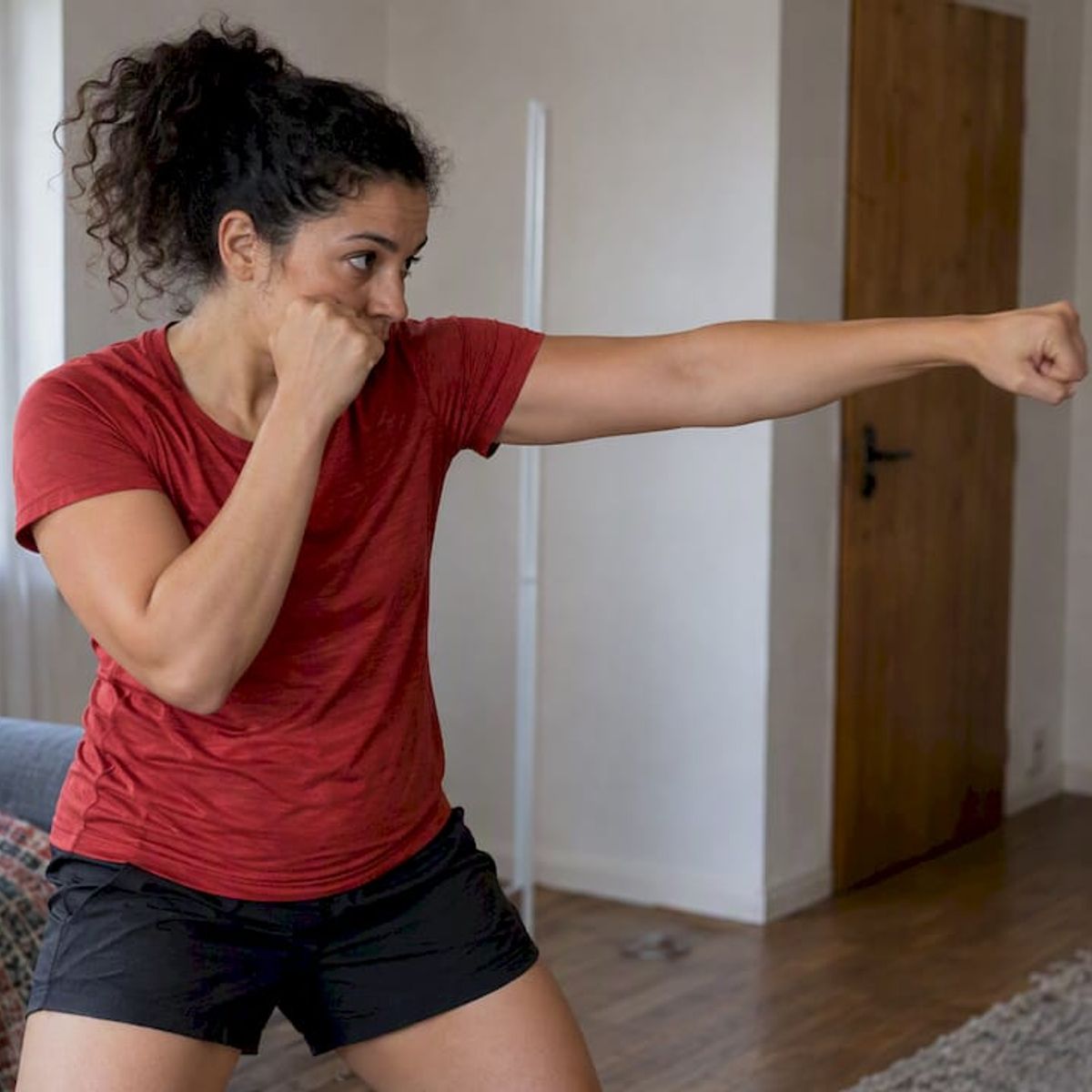
This session needs no boxing background and fits in a living room or a small gym floor.
- Warm-up (3 minutes): March in place with heel raises, then arm circles and slow trunk rotations to wake up the shoulders and spine.
- Round 1 (shadowboxing, 45 seconds): Throw slow, controlled jabs and crosses without weights, focusing on form over speed.
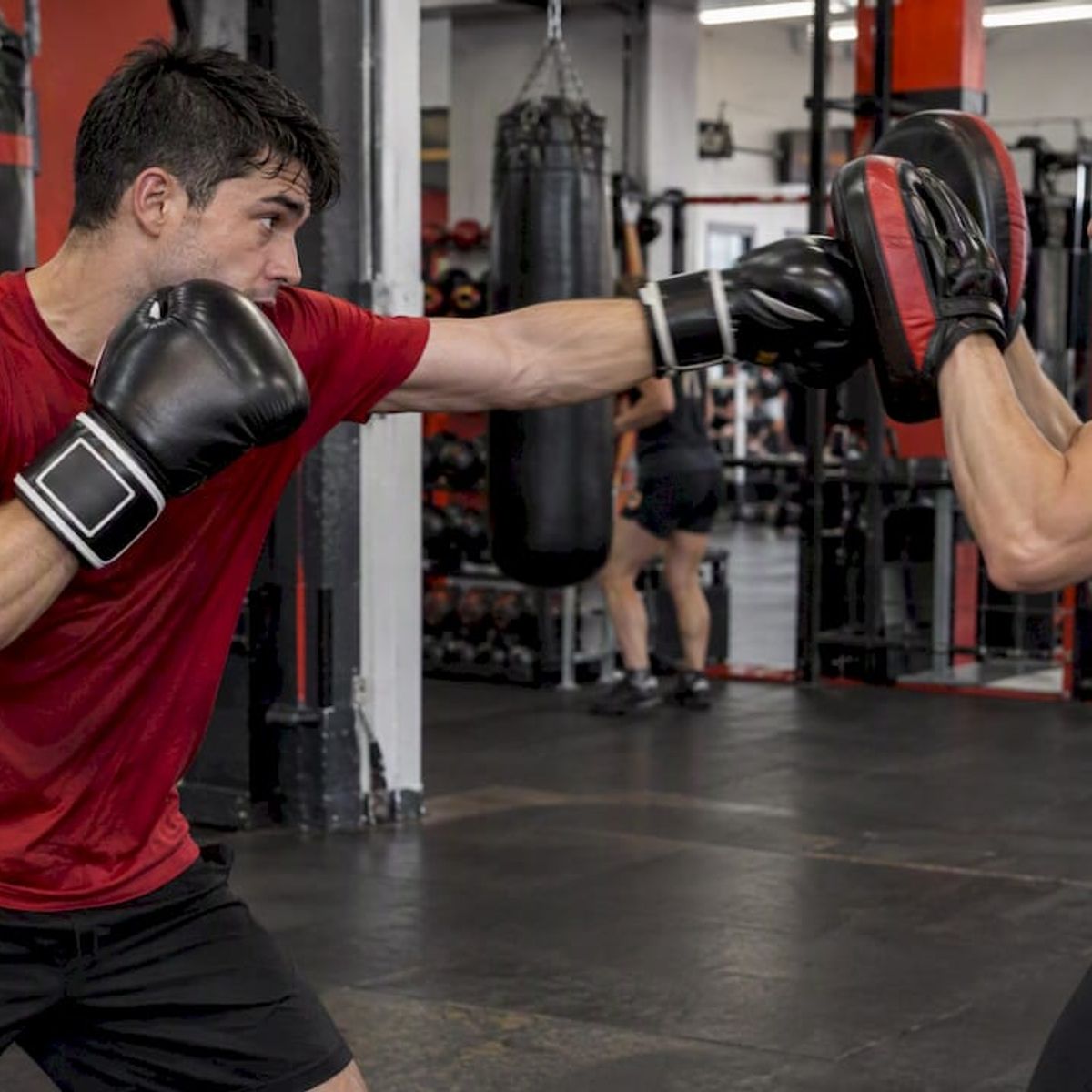
- Round 2 (jab-cross combos, 45 seconds): Add a partner mitt or just air, alternating jab and cross with a slight step forward on each punch.
- Round 3 (footwork, 30 seconds): Step side to side or forward and back, staying light on your feet, no punching involved.
- Round 4 (band or bag work, 45 seconds): Use a resistance band or light bag for controlled punches, keeping wrists straight.
- Rest 60 seconds, then repeat the four-station circuit two more times.
- Conditioning (1 to 2 sets): Sit-to-stand from a sturdy chair, or seated band rows, 8 to 10 reps.
- Cooldown (3 to 4 minutes): Slow breathing, shoulder stretches, and hip openers.
That’s the full 20 to 25 minutes. The 4-week progression matters as much as the session itself: week one, two light sessions; week two, bump to two or three moderate sessions; week three, three sessions with one longer round added; week four, bring what you’ve built into a small-group class or a session with a coach. Training more consistently, even at moderate intensity, tends to produce better balance and functional gains than sporadic, harder sessions.
Minimal Equipment and Safe Home or Gym Setup
You don’t need much to start, and buying the right gear matters more than buying a lot of it.
- 12 to 14 ounce gloves with good wrist support, since heavier isn’t necessarily safer for older hands.
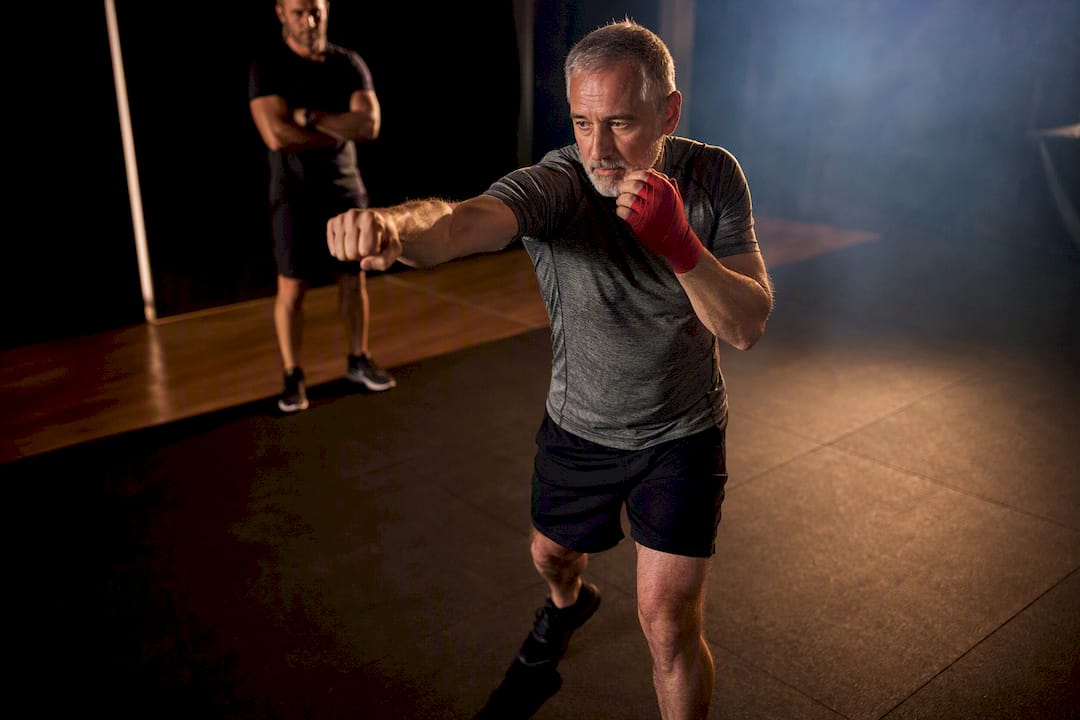
- Hand wraps to stabilize the wrist joint during any bag or mitt contact.
- Resistance bands for punch simulation without the impact of a bag.
- A stable, armless chair for seated drills and sit-to-stand work.
- A light heavy bag or a set of focus mitts, if a partner is available.
Glove sizing affects wrist alignment on impact, which is exactly where injuries happen if the fit is wrong. For space, clear a flat area free of rugs or clutter, wear non-slip shoes, and put down a soft mat or low-profile rubber flooring if you’re working on a hard surface. If you want to build technique on a real bag before joining a class, proper heavy bag fundamentals are worth learning early.
How to Find a Senior-Friendly Boxing Class or Coach
Look for non-contact, small-group formats led by certified instructors who run an actual beginner track, not a one-size-fits-all class where you’re thrown in with advanced members. Group formats aren’t just more fun. Research on Olympic combat sports training links group settings directly to higher adherence, since the social element keeps people coming back.
Before committing, ask a prospective gym:
- How much experience does the coach have training clients over 50?
- What certifications does the instructor hold?
- How many people are in a typical class?
- Is there a medical screening process before your first session?
- Is there a clear beginner-to-intermediate progression, or is everyone grouped together?
- Can I try a free class before committing?
Level Up Gym’s small-group boxing classes and six-week beginner onramp were built around exactly this kind of scaled entry point, with certified coaches guiding pace instead of pushing intensity.
Why the Conventional Advice on Senior Boxing Gets It Backward
Most fitness advice aimed at older adults treats boxing as an afterthought, something to try only after years of “safer” cardio machines. That’s backward. The systematic-review data on Olympic combat sports training shows better adherence than walking programs, and the functional gains, balance, grip strength, cognitive engagement, rival or beat what seniors get from generic circuit classes.
Where the conventional wisdom does get something right is the caution around dose and contact. Sparring has no place in this population, and once-weekly sessions probably won’t move the needle much on balance or strength. The real priority isn’t finding the perfect workout. It’s finding a coach who screens for health history, scales intensity honestly, and treats a 68-year-old differently than a 28-year-old.
Start slow, ask hard questions before your first class, and judge a gym by how carefully it says no to things, not by how hard it pushes you on day one.
— Malcolm
Ready to Try Boxing Training Built for Real Beginners
You’ve read the research. Now you need a place that actually applies it, not a gym that treats every member the same regardless of age or ability. Level Up Gym is built around exactly the model this article describes: small-group, non-contact boxing sessions led by certified coaches, with a structured six-week onramp designed for people who have never thrown a punch, in Stratford and Bridgeport, Connecticut.
There’s no long-term contract to sign before you know if it fits. You can start with a beginner-friendly class, get a coach who scales pace to your fitness level, and progress at the rhythm that’s actually right for your body, not a generic program timeline. Curious what a starting week could look like alongside your goals? Check out the hybrid training and boxing programs or find the location nearest you and book a trial session.
Sources
- Interventions with Olympic combat sports in older adults (systematic review) — PMC8769282
- Effects of boxing interventions on fitness and HRQoL in older people with Parkinson’s disease — Frontiers in Public Health (2025)
- Ancient Thai boxing exercise improves physical functions and QoL in elderly (RCT, 2018)
FAQ
Is 70 too late to start boxing?
No. Research on combat sports training in adults 45 and older shows meaningful gains in strength, balance, and mood regardless of starting age, as long as the program is non-contact and coached to your fitness level.
Is boxing a good exercise for seniors?
Yes, for most people. Trials show improvements in walk distance, sit-to-stand performance, and balance, with adherence rates often exceeding 80 percent, higher than most standard exercise programs for older adults.
Is 60 too old to learn boxing?
Not at all. Sixty is a common starting age in the research studies showing functional and cognitive benefits from boxing-style training, and beginner programs are specifically designed for exactly this stage of life.
Does boxing help with balance and fall prevention?
Yes. A 12-week randomized trial using adapted boxing movement patterns found significant improvements in balance scores and timed up-and-go tests compared to a control group.