10 to 15 Minute Coach Validated Boxing Warm Up for Power and Speed
A proper boxing warm up follows one sequence: general aerobic work, then dynamic mobility, then activation, then progressive shadowboxing, done in 10 to 15 minutes total. The goal is a warmer body, a primed nervous system, and a few minutes rehearsing the actual movements you’re about to throw. Do dynamic drills. Skip static stretches until after training, when your muscles are already warm.
TL;DR:
- Dynamic mobility drills should comprise at least 7 to 10 minutes of the warm-up to effectively prepare muscles and joints for explosive boxing movements.
- Static stretching is best delayed until after training, as it can reduce power output and should only be used when muscles are already warm.
- The warm-up must include an aerobic component to raise body temperature, followed by activation and shadowboxing tailored to the session’s intensity.
- Incorporating brief potentiation exercises like jump jumps or medicine ball throws can enhance power and speed during planned sparring or high-intensity training.
- Common mistakes such as static stretching cold, heavy lifting, or rushing the sequence can impair performance and increase injury risk if not properly managed.
Level Up Gym
levelupgym.app
Build Better Boxing Fundamentals
Level Up Gym offers coached boxing and hybrid training for Fairfield County adults, with beginners welcome and no contracts.
Table of Contents
- The 10 to 15 Minute Boxing Warm Up Routine
- Why Warming Up Actually Changes How You Perform
- Dynamic Vs Static Stretching: When to Use Each
- Activation Drills for Shoulders, Hips, Core, and Ankles
- Progressing Shadowboxing to Match Session Intensity
- Three Warm Up Routines You Can Copy
- Common Warm Up Mistakes That Hurt More Than Help
- A common coach routine
- [How to cue warm-ups for beginners vs experienced fighters varies. Beginners often receive more coaching cues during mobility and activation phases because that is where common issues appear. Experienced individuals tend to move through the same drills faster and progressively increase shadowboxing intensity. Arriving early to start light mobility work before class begins is a beneficial habit. The breakdown of boxing class etiquette provides guidance on needed lead times.](#how-to-cue-warm-ups-for-beginners-vs-experienced-fighters-varies-beginners-often-receive-more-coaching-cues-during-mobility-and-activation-phases-because-that-is-where-common-issues-appear-experienced-individuals-tend-to-move-through-the-same-drills-faster-and-progressively-increase-shadowboxing-intensity-arriving-early-to-start-light-mobility-work-before-class-begins-is-a-beneficial-habit-the-breakdown-of-boxing-class-etiquettehttpslevelupgymappblogboxing-class-etiquette-provides-guidance-on-needed-lead-times)
- Practice these warm-ups with coached feedback whenever possible. Having a knowledgeable person watch your hip rotation, shoulder positioning, and shadowboxing form helps catch small errors invisible to self-assessment. Some gyms offer live coaching in capped classes for real-time correction rather than guessing at correct form.
- Sources
- FAQ
The 10 to 15 Minute Boxing Warm Up Routine
Most gyms run this in four blocks, and you can compress or stretch each one depending on how much time you’ve got before the bell rings.
- General aerobic (2 to 5 minutes). Jump rope, shadow jogging, or a rowing machine gets blood moving and your core temperature up. USA Boxing’s own strength and conditioning plan uses two rounds of 60 seconds of jump rope for exactly this purpose.
- Dynamic mobility (3 to 5 minutes). Leg swings, thoracic rotations, hip CARs (controlled articular rotations), and arm circles open up the joints you’re about to load.
- Activation (3 to 4 minutes). Band pull-aparts, plank clockface, glute bridges, and lateral plank walks wake up the stabilizer muscles that keep your punches sharp and your base solid.
- Progressive shadowboxing (2 to 3 minutes). Start slow and technical, pick up the tempo, then finish close to the intensity you’ll actually train at.
If you’re tight on time, compress the aerobic phase to two minutes and trim mobility to the joints you’ll use most (shoulders and hips). If you’re prepping for something demanding like sparring, stretch the shadowboxing phase closer to four minutes and add a short burst of explosive movement, like a few squat jumps, right before you start.
A few things to keep consistent no matter how you adjust:
- Never skip the aerobic phase entirely, even when you’re rushed.
- Keep dynamic mobility moving. Don’t hold any position for more than a couple of seconds.
- Match your shadowboxing intensity to what you’re about to do, not what you wish you were about to do.
Why Warming Up Actually Changes How You Perform
The physiology is straightforward. Warmer muscle tissue contracts faster and more forcefully, nerve conduction speeds up, and your rate of force development improves. That combination is why a properly warmed-up jab lands faster and a warmed-up hip turn generates more power than the same movement cold.
The research backs this up at scale. A systematic review with meta-analysis found that warming up improved performance in roughly 79% of the physical measures examined across the studies analyzed, with little evidence of harm when done correctly.
Key finding: Warm-ups improved performance in about 79% of the criteria measured across the reviewed studies, according to the meta-analysis on physical performance.
The type of warm-up matters as much as whether you do one. A systematic review on dynamic stretching found it outperforms static stretching for explosive output, improving countermovement jump height and sprint times where static stretching actually reduced them. That review points to 7 to 10 minutes of dynamic work as the sweet spot before activity. Other research on team-sport athletes found that adding brief potentiation exercises, like short jumps or medicine ball throws, to a warm-up and re-warm-up protocol produced small but real gains in power and speed.
Dynamic Vs Static Stretching: When to Use Each
Use dynamic stretching before you train. Save static stretching for afterward.
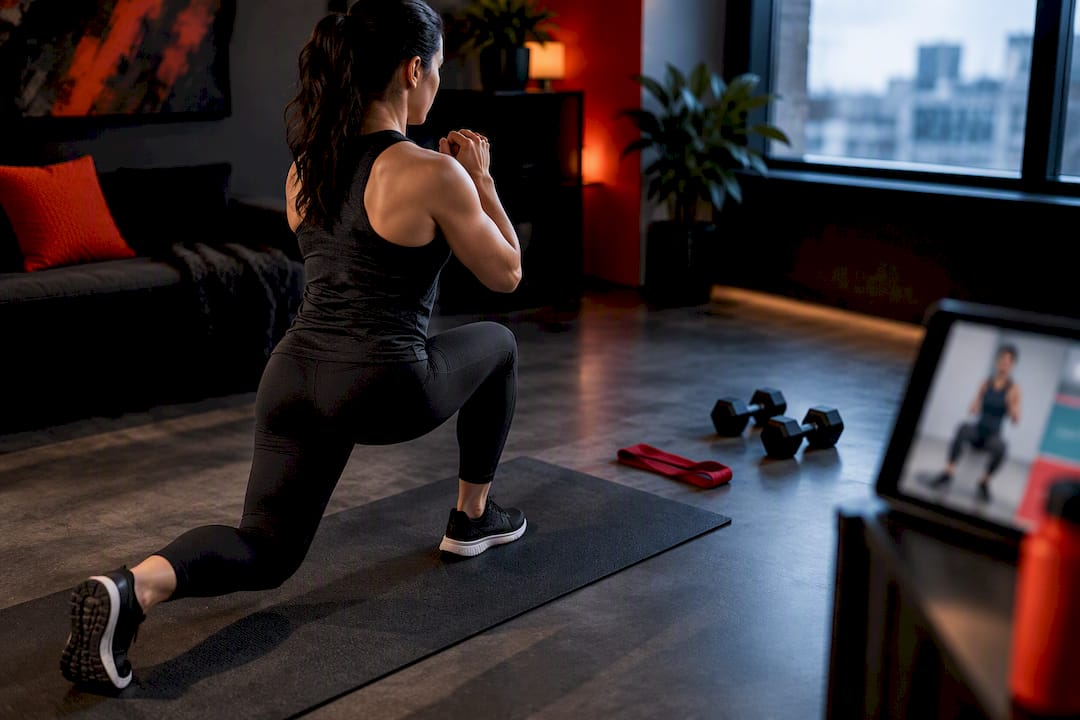
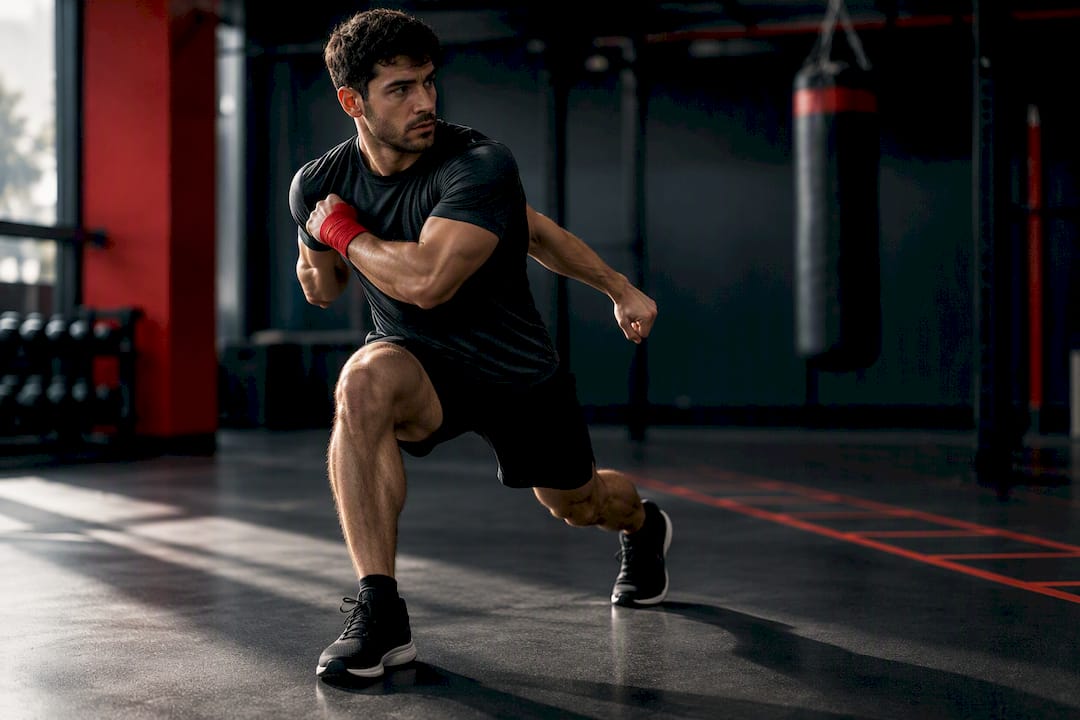
Dynamic mobility means moving through a range of motion under control instead of holding a stretch. Leg swings, walking lunges with a twist, arm circles, and hip CARs all count. They raise tissue temperature while you move, which is exactly what a warmup is supposed to do.
Static stretching, by contrast, means holding a muscle at length for 15 to 30 seconds or longer. It has real value, just not before you box. Mayo Clinic’s guidance is explicit on this point: dynamic warm-ups that mirror your sport’s movements come first, and static stretching belongs after your workout when muscles are already warm. Practitioner guidance echoes the same order, warning specifically against static stretching on cold muscle before any explosive activity.
Here’s how to split your time:
- Spend 7 to 10 minutes total on dynamic mobility before you box, per the systematic review’s recommended range.
- Add 2 to 3 minutes of joint-specific mobility (ankles, wrists, thoracic spine) if you’re feeling stiff in a particular area.
- Save any static holds for the 5 to 10 minutes after training, when flexibility gains actually stick.
Activation Drills for Shoulders, Hips, Core, and Ankles
These are the drills that make the difference between a warm-up that just raises your heart rate and one that actually preps you to throw and move like a boxer. Combination punches load your shoulder girdle, hips, and thoracic spine simultaneously, which is why effective boxing warm-ups emphasize those specific areas over generic full-body stretching.
Shoulders and upper body:
- Band pull-aparts, 2 sets of 15, to wake up the rear delts and rotator cuff.
- Y-T-I raises with a light band or no weight, 8 to 10 reps per position.
- Plank clockface, 30 to 45 seconds per side, for shoulder stability under load.
- Lateral plank walks, 6 to 8 steps each direction, for core and shoulder integration.
Hips and rotation:
- Glute bridges, 2 sets of 12, to fire the posterior chain before you pivot on punches.
- Monster walks with a mini band, 10 steps forward and back.
- Hip CARs, 5 slow controlled circles per leg, for rotational range.
- Standing leg swings, front-to-back and side-to-side, 10 reps each direction.
Ankles and footwork prep:
- Ankle circles, 10 per direction, per foot.
- Calf bounces, 20 to 30 seconds, light and springy.
- Boxer bounce (staying on the balls of your feet while shifting weight side to side) for 30 seconds to prime your base.
Pro Tip: Keep every activation drill light enough that you finish feeling looser, not tired. If your legs feel heavy going into shadowboxing, you overshot the intensity. The warm-up should spend energy, not drain it.
Progressing Shadowboxing to Match Session Intensity
Shadowboxing is where the warm-up stops being generic and starts becoming boxing. Run it in three stages.
- Technical (45 to 60 seconds). Throw slow, deliberate combinations, focusing on form: hands up, chin tucked, feet under you. This is where you groove the pattern before speed enters the picture.
- Tempo (45 to 60 seconds). Pick up the pace to roughly 70% of your normal output. Start adding head movement and footwork between combinations.
- Power and defense (45 to 90 seconds). Throw at close to full session intensity, mixing offense with slips, rolls, and pivots, so your body has already rehearsed the exact demands coming next.
Footwork deserves its own attention inside this progression. Practice pivoting off your lead foot, a lateral shuffle in both directions, and stepping in and out of range with your lead leg staying controlled rather than reaching. These are the same patterns covered in a breakdown of footwork drills that build real ring movement, and rehearsing them cold, before contact work, means your feet aren’t the weak link once things speed up.
If your session includes mitts or partner drills, let the last 2 to 3 minutes of your warm-up bleed directly into that work. Start with slow, cooperative combinations on the mitts or with a partner holding a loose guard, then build intensity together rather than jumping straight into hard contact. A beginner’s guide to shadowboxing technique covers the specific cues coaches use to catch bad habits before they become sparring habits.
Three Warm Up Routines You Can Copy
Different situations call for different time budgets. Here are three that cover most of what you’ll actually face in a gym.
- Full 10 to 15 minute class warm-up. Two minutes of jump rope, four minutes of dynamic mobility (leg swings, hip CARs, thoracic rotations, arm circles), three minutes of activation (band pull-aparts, glute bridges, plank clockface), and three to five minutes of progressive shadowboxing ending near full intensity. This is the standard pre-training or pre-class sequence.
- Pre-sparring warm-up. Run the full sequence above, then add 60 to 90 seconds of short explosive work, like squat jumps or medicine ball slams, right before gloving up. Between rounds, use 20 to 30 seconds of light bouncing and arm shakes to keep blood flowing without draining your legs. This “re-warm” between breaks matters more in sparring than in bag work because the stop-start pace lets your body cool faster than you’d expect.
- 5-minute emergency warm-up. One minute of jumping jacks or jogging in place, ninety seconds of hip CARs and arm circles, ninety seconds of activation (glute bridges and band pull-aparts if you have a band handy), and one minute of shadowboxing that ramps straight to near-session intensity. It skips depth, not the essentials: raise temperature, open the hips and shoulders, and rehearse the movement once before you start.
Adding a few rounds of light conditioning work, similar to what’s outlined in this breakdown of boxing conditioning drills, can round out a pre-sparring warm-up if your session calls for extended output.
Common Warm Up Mistakes That Hurt More Than Help
A warm-up should leave you energized, not tired. If you’re breathing hard and your legs feel loaded before the actual training starts, you’ve turned a warm-up into a workout, and that’s backwards.
Watch for these mistakes:
- Static stretching cold. Holding a hamstring or shoulder stretch before you’ve raised your body temperature does little for flexibility and can actually reduce short-term power output.
- Heavy lifting before boxing work. Loading up on strength movements pre-session taxes your central nervous system and leaves you flat for the technical work that follows.
- Overdoing high-intensity reps. Sprinting through burpees or all-out jump rope intervals for five straight minutes spends energy you need for the main session.
- Rushing the sequence. Skipping straight from a cold start to shadowboxing skips the mobility and activation work that actually protects your shoulders and hips.
Use a simple gut check before you start any session: rate your effort on a 1 to 10 scale (rate of perceived exertion, or RPE) and aim to finish the warm-up around a 4 or 5, not a 7 or 8.
Pro Tip: If you show up already sore or tight from a previous session, extend the mobility phase by a minute or two rather than cutting it short. A slightly longer warm-up beats walking into training stiff.
A common coach routine
Coaches at Level Up Gym run a version of this sequence with every class, and the logic behind it is simple: drills need to transfer directly to what happens once gloves go on, and the warm-up needs to leave fighters sharp, not spent. The published version of the 10 to 15 minute warm-up coaches use to prep fighters breaks down into:
- 2 minutes of jump rope or shadow jogging to raise temperature.
- 4 minutes of dynamic mobility, prioritizing hip rotation and thoracic spine work since those directly affect punch velocity.
- 3 minutes of activation drills targeting shoulders and glutes.
- 3 to 5 minutes of shadowboxing that ramps to the pace of that day’s session.
Coaches select this order because it matches how the body actually needs to be prepared for combinations, pivots, and defensive movement, not because it’s the easiest sequence to lead from the front of a room.
How to cue warm-ups for beginners vs experienced fighters varies. Beginners often receive more coaching cues during mobility and activation phases because that is where common issues appear. Experienced individuals tend to move through the same drills faster and progressively increase shadowboxing intensity. Arriving early to start light mobility work before class begins is a beneficial habit. The breakdown of boxing class etiquette provides guidance on needed lead times.
Practice these warm-ups with coached feedback whenever possible. Having a knowledgeable person watch your hip rotation, shoulder positioning, and shadowboxing form helps catch small errors invisible to self-assessment. Some gyms offer live coaching in capped classes for real-time correction rather than guessing at correct form.
If you’re new to boxing entirely, the 6-Week Onramp builds warm-up habits and fundamentals together from day one for $699 one-off. If you already know the basics and want to train them regularly, Boxing Classes at the Stratford and Bridgeport locations run this exact progression before every session. Can’t make it in person? Online Training covers the same coached approach remotely. New members start with a free first class and a written, individualized plan, so book that first session and see the routine run live before committing to anything.
Sources
- Effects of dynamic stretching systematic review (PMC)
- Effects of warming-up on physical performance: systematic review with meta-analysis
- Stretching: Focus on flexibility – Mayo Clinic
- USA Boxing strength & conditioning plan
FAQ
How Should I Warm Up Before Boxing?
Start with 2 to 5 minutes of light aerobic work like jump rope, move into dynamic mobility drills for your hips and shoulders, add a few minutes of activation work, then finish with progressive shadowboxing that builds toward your session’s intensity. The whole sequence should run 10 to 15 minutes and leave you loose, not tired.
What Are the Numbered Punches in Boxing?
Boxing gyms commonly number punches for quick calling during drills: 1 is the jab, 2 is the cross, 3 is the lead hook, 4 is the rear hook, 5 is the lead uppercut, and 6 is the rear uppercut. Numbering systems can vary slightly by gym or coach, but this sequence is the most widely used.
What Are Five Good Warm-Up Exercises for Boxing?
Jump rope, dynamic leg swings, arm circles, hip CARs (controlled articular rotations), and progressive shadowboxing cover the core bases: raising temperature, opening joints, and rehearsing movement patterns. Each takes only a minute or two and together they form the backbone of most gym warm-ups, including the routine Level Up Gym coaches run before class.
What Is the 80/20 Rule in Boxing?
Definitions of this rule vary by gym, so treat it as a general guideline rather than a fixed standard.
Does Level Up Gym Teach Warm-Up Technique to Beginners?
Yes. The 6-Week Onramp and regular Boxing Classes both include coached warm-up progressions as part of every session, with certified coaches correcting form in real time. Current pricing for these programs is listed on the membership page.