Small Group Strength Training: 2 Days a Week for Beginners
Small group strength training is a practical, coach-led way to build strength and consistency for most adults. It pairs supervised technique with a format that keeps you accountable, which research on resistance training adherence ties directly to results. If you want structure without the full cost of one-on-one coaching, a capped-size class like those at Level Up Gym is a reasonable next step.
TL;DR:
- The CDC recommends working all major muscle groups at least two days weekly, with sets of about 8 to 12 repetitions.
- Beginners should start with fundamentals, older adults should prioritize balance and function, and lifters with upper body injuries should consult a coach before boxing.
- Before enrolling, confirm coach credentials, participant cap, progress tracking, schedule, and pricing, then ask whether a trial or beginner onramp is available.
- Level Up Gym caps groups at 2 to 4 people per coach; its beginner onramp lasts six weeks and costs $699.
- Log weights, reps, and sets, then review your plan with a coach every four to six weeks; soreness lasting days can indicate excessive load.
Level Up Gym
levelupgym.app
Build Strength With Coaching
Level Up Gym offers hybrid training and boxing in Stratford and Bridgeport, with beginners welcome and no contracts.
Table of Contents
- What is small group strength training?
- Evidence-backed benefits: strength, function, and adherence
- Who benefits most and which formats suit different goals
- What a typical session looks like, step by step
- How to pick the right small group strength class
- How Level Up Gym runs small group strength training
- Tracking progress and measuring results
- Pairing nutrition with your strength training
- Tips for maximizing results and staying motivated
- When small group training is the practical best choice
- Start with a free class or consult at Level Up Gym
- FAQ
- Sources
What is small group strength training?
Small group strength training is coached resistance exercise done in sessions capped at a handful of participants rather than a full room. Classes typically run 2 to 8 people per coach, last 45 to 60 minutes, and use free weights, resistance bands, machines, or body weight to train major muscle groups. The format sits between private coaching and large group fitness: you get individual cues without paying for exclusive coach time.
Common formats include:
- Circuit-based sessions: stations rotate through strength movements with short rest periods.
- Team training: partners or small teams share equipment and push each other through sets.
- Onramp programs: structured beginner tracks that build technique before adding load.
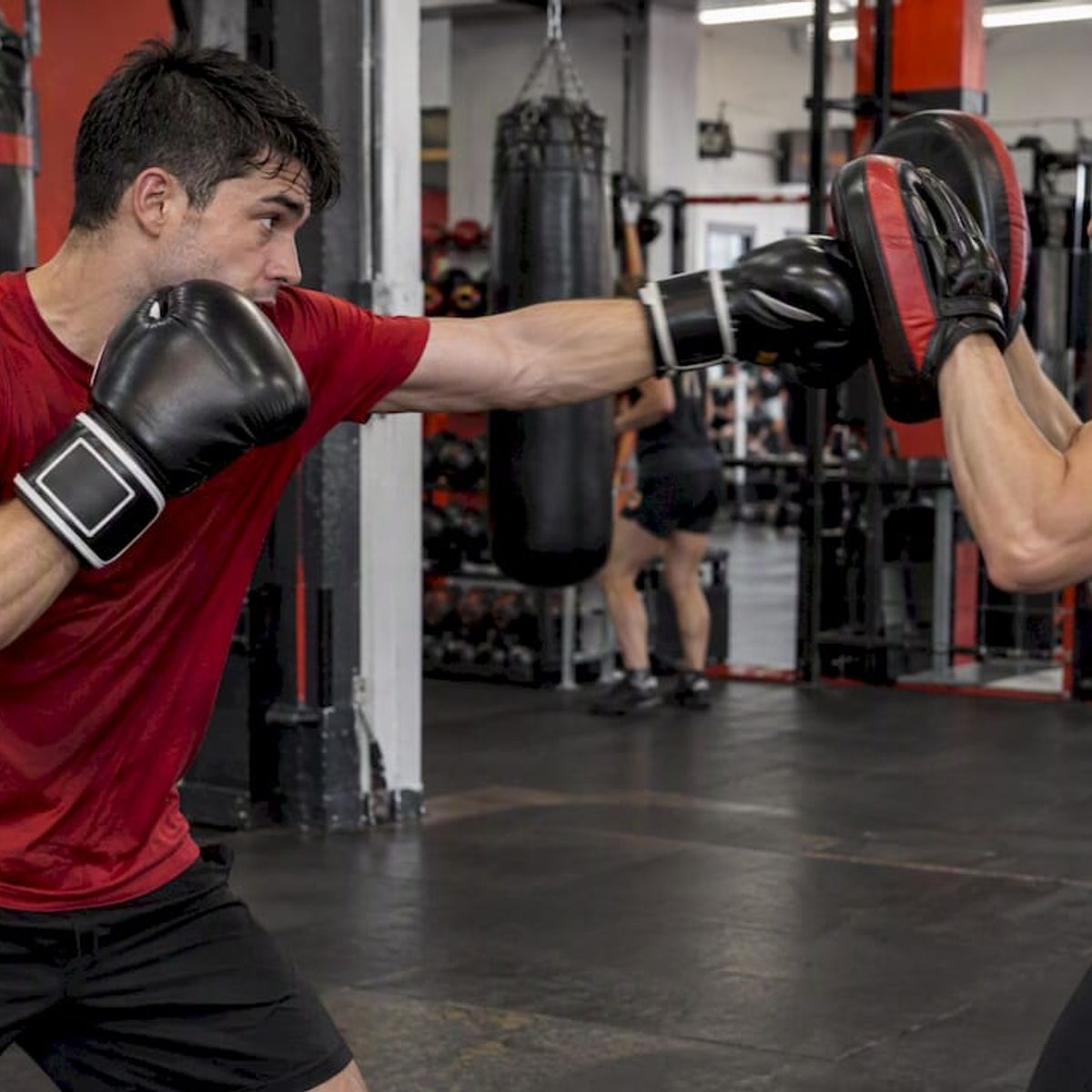
- Hybrid strength and skill classes: resistance work combined with boxing or other skill-based conditioning.
Coach-led progression matters because a trained eye can adjust your grip, stance, or range of motion in real time, something a workout app or solo routine cannot replicate.
Evidence-backed benefits: strength, function, and adherence
The CDC recommends muscle-strengthening activity that works all major muscle groups at least two days a week, with sets of about 8 to 12 repetitions. Small group classes are built around that exact structure, which makes them a natural fit for meeting the guideline without designing a program yourself.
Coached, consistent resistance training built around major muscle groups twice weekly is the foundation public health guidance recommends, according to the CDC, and small group formats are designed to deliver exactly that structure session after session.
Beyond strength, the benefits include:
- Functional gains: balance and mobility improvements that matter most for older adults maintaining independence.
- Adherence support: systematic review evidence links participation in resistance training to instruction quality, graded tasks, and goal setting, all of which small groups provide naturally.
- Cost efficiency: splitting coach attention across a few people brings the price well below private sessions while keeping real supervision.
Who benefits most and which formats suit different goals
Not every small group format fits every goal. Matching your starting point to the right class saves frustration and lowers injury risk.
- Beginners: fundamentals-first onramps that teach movement patterns before adding meaningful load.
- Older adults: function-focused classes emphasizing balance and lower-intensity resistance work; NIA guidance notes that trainer-led small group sessions combining resistance training and walking can improve physical function and support independence.
- Intermediate and advanced lifters: heavier-load small groups or progressive circuits that let you push intensity with a coach watching form.
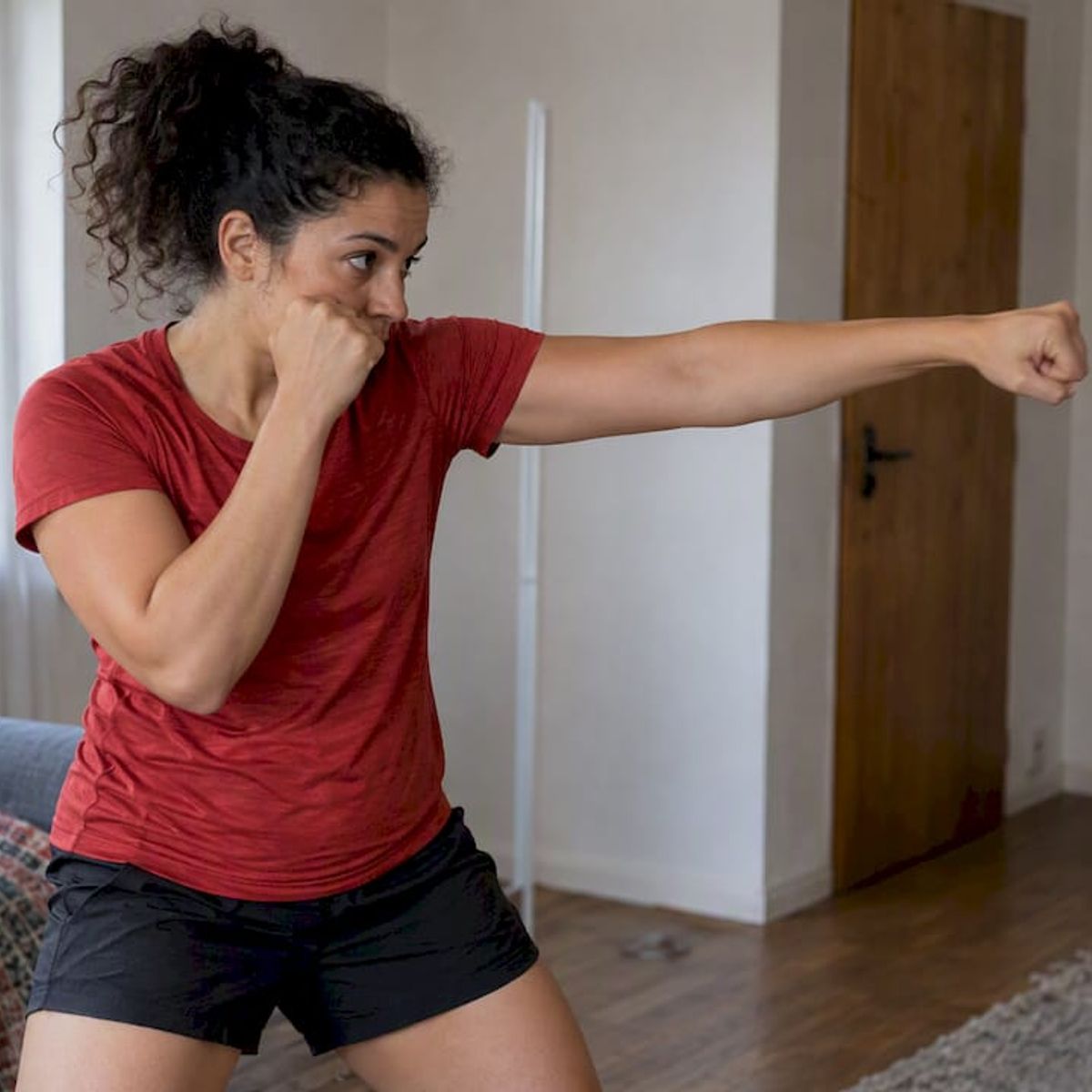
- Hybrid strength and boxing classes: a good fit for people who want variety and skill development, though anyone recovering from an upper-body injury should check with a coach before adding striking work.
If you are unsure where you land, our guide to strength training program types breaks down how programs map to different goals.
What a typical session looks like, step by step
A well-run small group session follows a predictable arc, which is part of why it works for beginners and busy adults alike.
- Check-in and quick movement screen: the coach notes any injuries or limitations before the session starts.
- Warm-up and technique demo: five to ten minutes of mobility work followed by a demonstration of the main lifts.
- Main sets: typically 8 to 12 reps per set across two or three sets per exercise, following the structure the CDC outlines, delivered as straight sets or rotating circuits depending on the format.
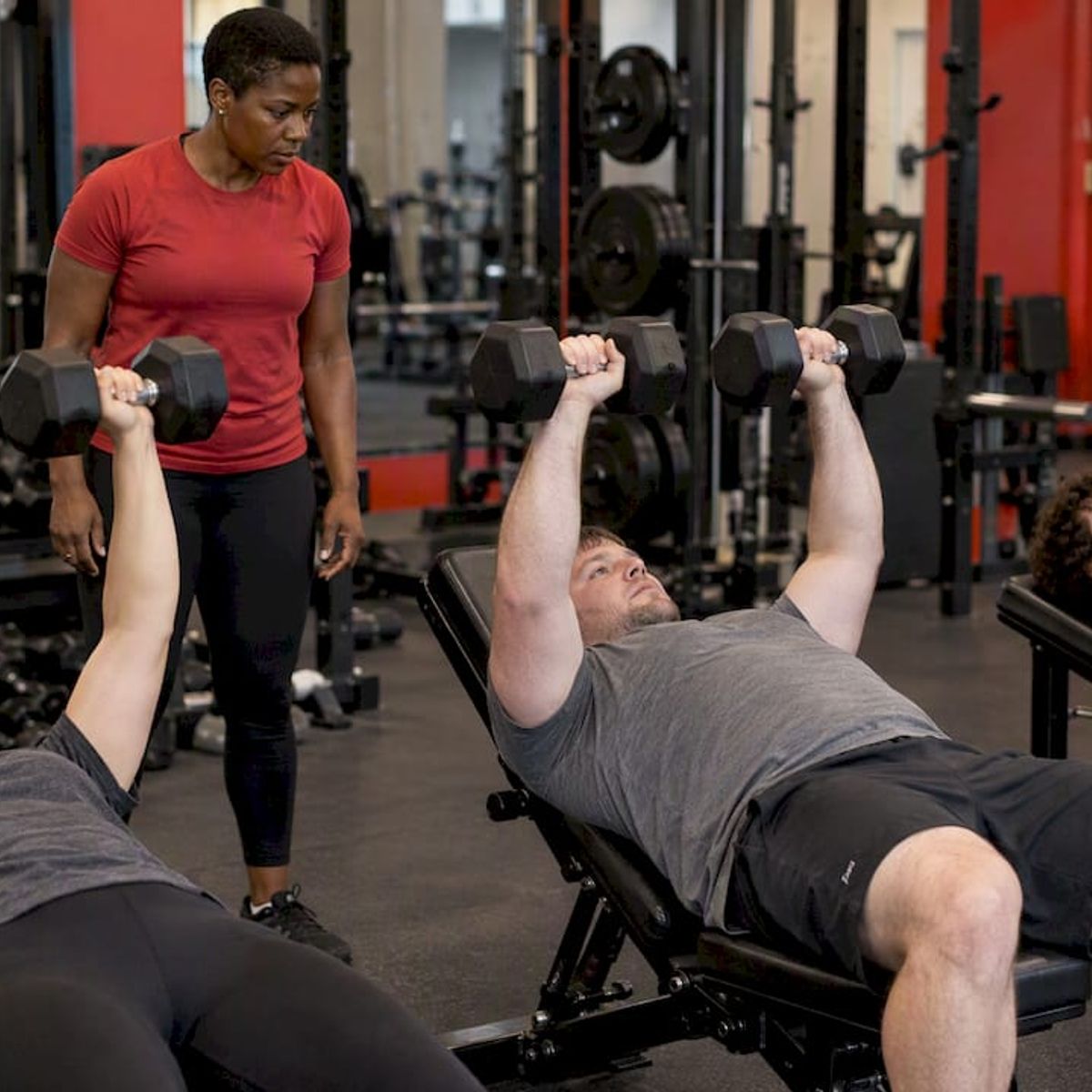
- Coaching touches: spotting, load adjustments, and form cues happen throughout, not just at the start.
- Cooldown: a few minutes of stretching or breathing work to close the session.
Equipment commonly includes dumbbells, barbells, kettlebells, resistance bands, and basic machines.
Pro Tip: Arrive 10 minutes early for your first class so the coach can walk you through unfamiliar equipment before the group warm-up starts.
How to pick the right small group strength class
A few concrete checks separate a well-run class from one that will not hold your interest past the first month.
- Coach credentials: ask what certifications the coaches hold and whether they specialize in beginner progressions.
- Class cap: confirm the maximum group size so you know how much individual attention to expect.
- Trial or onramp option: a structured introduction period signals a program built for retention, not just sign-ups.
- Progress tracking: ask how the gym measures improvement over time, whether through logged lifts, periodic assessments, or check-ins.
- Schedule and location fit: a class that conflicts with your routine will not survive contact with a busy week.
- Pricing model: understand whether you are paying per session, per week, or on a membership basis.
Before committing, ask these questions during a trial class:
- How many coaches are on the floor per group, and what is the cap?
- What does progression look like after the first month?
- Is there a lower-cost way to try the program before committing long term?
Our piece on working with a fitness coach covers how to get the most из each session once you have picked a class.
How Level Up Gym runs small group strength training
Our small group personal training sessions cap at 2 to 4 people per coach, which keeps the coaching real instead of symbolic. Coaches bring precision to strength and conditioning work.
- Capped group sizes: small enough that coaches catch form issues before they become habits.
- Hybrid programming: strength and conditioning blended with real boxing coaching, not cardio boxing.
- 6-Week Onramp: a structured beginner pathway for anyone who wants fundamentals before joining ongoing group classes.
- New member path: every new member starts with a free class or consult and leaves with a written, individualized plan.
This structure lines up with the ACSM 2026 position, which stresses that consistency and adherence matter more than program complexity, and that the best program is the one you will actually stick with.
Tracking progress and measuring results
Progress in small group strength training shows up in a few measurable ways, and a good coach will help you track more than just the number on a barbell. Strength itself is the most direct measure: are you adding weight, reps, or sets to the same movements over weeks and months.
Function matters just as much, especially for older adults or anyone returning from injury. Can you get up from a chair without using your hands, carry groceries without strain, or climb stairs without winded pauses. The NIA points to these daily-function improvements as a core benefit of group-based resistance and balance work, particularly for older adults.
A few practical tracking habits:
- Log your main lifts: weight, reps, and sets for the two or three exercises you repeat most often.
- Note how recovery feels: persistent soreness that does not fade within a couple of days can signal the load is outpacing recovery.
- Reassess every four to six weeks: a short check-in with your coach to confirm the program still matches your goals.
Our notes on goal-setting for fitness go deeper into setting benchmarks that actually hold you accountable instead of vague intentions like “get stronger.”
Pairing nutrition with your strength training
Strength training builds the stimulus, but nutrition determines how much of that stimulus turns into visible progress. Protein intake supports muscle repair after resistance sessions, and consistent overall eating patterns matter more than any single meal.
A practical starting point is tracking macronutrients, protein, carbohydrates, and fat, relative to your body weight and training volume, rather than guessing. Our macro calculator gives a starting split based on your goals, which you can adjust as you see how your body responds to training.
For people who want more structure than self-tracking provides, meal planning support can remove the daily decision fatigue around what to eat before and after sessions. This matters most in the first few months of a new program, when habit formation around both training and eating determines whether the routine sticks past the initial motivation.
Tips for maximizing results and staying motivated
Small group settings carry a built-in advantage: you are rarely training alone, which research on resistance training adherence ties to instruction quality, graded tasks, and social reinforcement. A few habits make the most of that structure.
- Show up on a fixed schedule: the same two or three days each week builds the habit faster than sporadic sessions.
- Set a short-term goal with your coach: a specific target, like adding 10 pounds to a lift in six weeks, gives sessions direction.
- Use the group, not just the coach: pushing alongside others in the same session adds accountability that solo workouts lack.
- Track visible progress: logged lifts or periodic reassessments keep motivation grounded in evidence rather than how a single workout felt.
If you want variety alongside strength work, some people pair small group resistance training with other coached formats, like reformer pilates classes, which build core strength and flexibility in a different training context. Combat-sport athletes often take a similar approach, layering two to three weekly strength sessions around their primary sport without sacrificing recovery.
When small group training is the practical best choice
The honest trade-off is personalization against cost, and social accountability against privacy. One-on-one coaching gives more individual attention; solo training gives more privacy. Small group training sits in the middle, and for most adults who struggle to stay consistent on their own, that middle ground is where results actually happen. I recommend it whenever cost-effectiveness and adherence matter more than maximum customization.
— Malcolm
Start with a free class or consult at Level Up Gym
If the format above sounds like what you need, the easiest next step is a free class or consult, no contract required. We build a written, individualized plan for every new member before you commit to anything ongoing.
Our small group personal training program keeps groups at 2 to 4 people per coach, and our 6-Week Onramp is built for anyone who wants fundamentals first at $699 one-off. If group classes fit your schedule better, check our group training options or browse full membership pricing. Bring workout clothes and a water bottle to your first session; everything else is provided.
FAQ
What is the 3-3-3 rule for training?
Definitions of the “3-3-3 rule” vary across fitness sources and it is not a term defined by major public health bodies like the CDC or ACSM. A common informal version suggests three strength sessions, three cardio sessions, and three mobility or flexibility sessions per week, but no standardized or research-backed definition exists.
What are the 5 basic strength trainings?
Most strength programs build around five foundational movement patterns: squat, hinge, push, pull, and carry. Coached small group classes typically cycle through these patterns using free weights, bands, or body weight to train the major muscle groups the CDC recommends working at least twice weekly.
What is considered small group training?
Small group training generally means coached resistance sessions capped at a handful of participants, often between 2 and 8 people per coach, rather than large open classes. The smaller size allows more individual feedback on form and load than you would get in a full-room fitness class.
What are some ideas for group PT sessions?
Effective small group sessions often include circuit-based strength stations, partner-based team training, or hybrid formats that blend resistance work with skill-based conditioning like boxing. The best structure depends on group goals, but most follow the CDC’s guidance of training major muscle groups with sets of about 8 to 12 repetitions.
How is small group training different from one-on-one coaching?
One-on-one personal training gives you full coach attention for the entire session, while small group training splits that attention across a few participants at a lower price point. Both formats offer supervised technique and progression, but small group classes add social accountability that solo sessions do not provide.
Sources
- ACSM Publishes Updated Resistance Training Guidelines
- What Counts as Physical Activity for Adults | Physical Activity Basics | CDC
- How can strength training build healthier bodies as we age? | NIA
- Factors associated with participation in resistance training: a systematic review