Boxing Without Sparring: Coach Led 4 Week Plan for Skill and Fitness
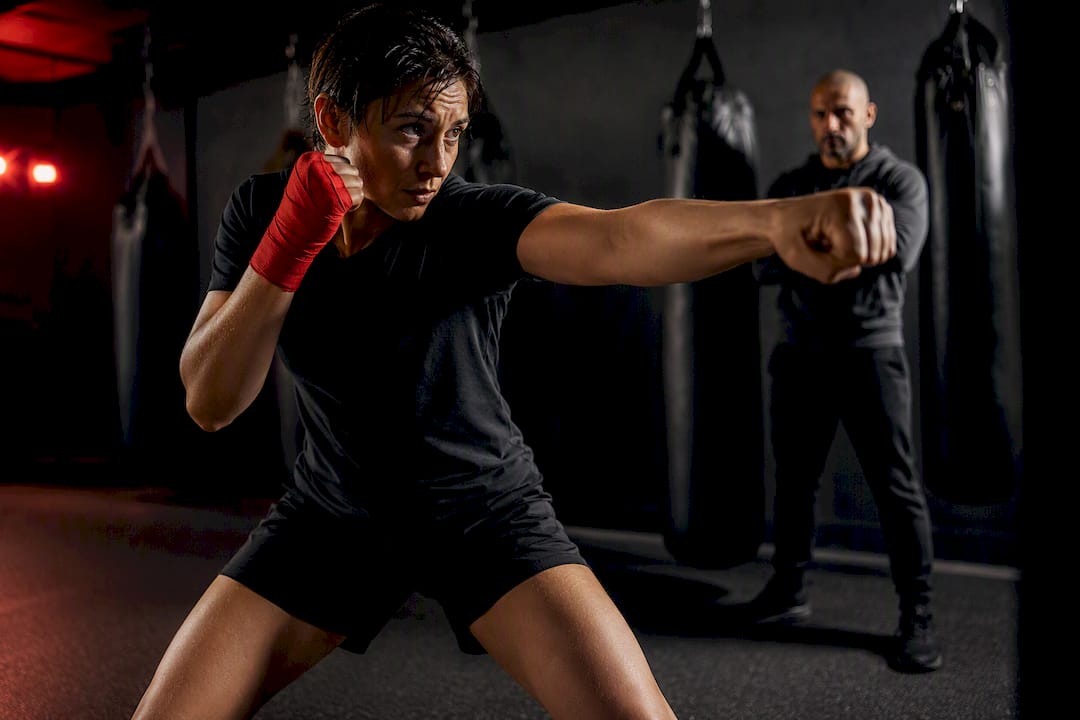
Yes: you can meaningfully improve boxing technique, punch power, and conditioning without sparring. Opponent-reading and live decision-making remain the main gaps that non-contact training cannot close on its own. The methods that get you closest are shadowboxing, heavy bag work, coach-fed pad drills, footwork training, and dedicated strength and conditioning, each covered below with practical progressions.
TL;DR:
- Non-contact boxing training effectively improves mechanics, punch power, and conditioning but cannot replicate opponent unpredictability needed for live reaction skills.
- Research indicates pad and bag work produce a higher physiological response and lower injury risk than sparring, with sparring exposure linked to worse cognitive and balance outcomes.
- Shadowboxing enhances technique and combo fluency, while footwork and defense drills can be accurately measured and progressed without live opponents.
- Combining resistance training, plyometrics, and core work supports punch power and round endurance, with scheduling at least one rest day between heavy strength and technical sessions.
- Controlled drills like slow partner probing and reactive pad work are safe alternatives for testing pressure and timing without head contact, suitable for most non-competitors and those wary of repeated injuries.
Level Up Gym
Build Boxing Skills Without Sparring
Level Up Gym combines coached boxing, strength, and conditioning for beginners and experienced adults in Stratford and Bridgeport.
Table of Contents
- What a no-sparring program actually improves (and what it can’t)
- Evidence and safety: what research says about non-contact training and sparring risks
- Shadowboxing: drills, objectives, and progression
- Heavy bag work and conditioning formats
- Pad work and coach-fed reaction drills without uncontrolled contact
- Footwork, defense drills, and measurement of progress
- Strength and conditioning to complement no-sparring boxing
- Sample 4-week no-sparring training plan (beginner to intermediate templates)
- Safety checklist and concussion guidance
- Coaching background behind this no-sparring approach
- Alternative competitive activities: controlled drills and light contact work
- When non-sparring is the right long-term choice
- How Level Up Gym helps you progress without sparring
- Sources
- FAQ
What a no-sparring program actually improves (and what it can’t)
Non-contact training builds the physical and technical foundation of boxing extremely well. What it struggles to replicate is the unpredictability of a live opponent.
- Mechanics and form: stance, hip rotation, and punch technique sharpen fastest without the chaos of an opponent reacting.
- Punch quality and power: bag and pad work let you groove full-force mechanics safely.
- Conditioning and endurance: rounds-based drills build the same cardiovascular base sparring would.
- Combination fluency: repeating sequences until they’re automatic happens better in a controlled setting.
- Opponent-reading and live timing: reacting to real feints, angles, and pressure requires an unpredictable partner.
Before choosing a plan, decide whether your goal is general fitness and skill or eventual competition. That choice shapes how far you push the non-contact approach.
Evidence and safety: what research says about non-contact training and sparring risks
The physiological case for pad and bag work is solid. A 2020 comparison of pad- and bag-based training found that pad routines produce a higher physiological response than bag work, and both allow boxers to train hard with less injury risk than contact sparring.
The safety case against heavy sparring exposure is just as clear.
- A 2014 review of sparring and neurological function in professional boxers found that higher cumulative sparring exposure correlated with worse scores on cognitive and balance tests.
- The Association of Ringside Physicians’ position statement notes that headguards reduce facial lacerations but have not been shown to reliably prevent concussion.
- CDC concussion guidance calls for immediate removal from activity and a stepwise, medically supervised return.
Coaches who limit sparring tend to lean harder on balance, footwork, defense, bag work, and combination drills, which is essentially the structure of a deliberate no-sparring curriculum, supported by that same research.
Shadowboxing: drills, objectives, and progression
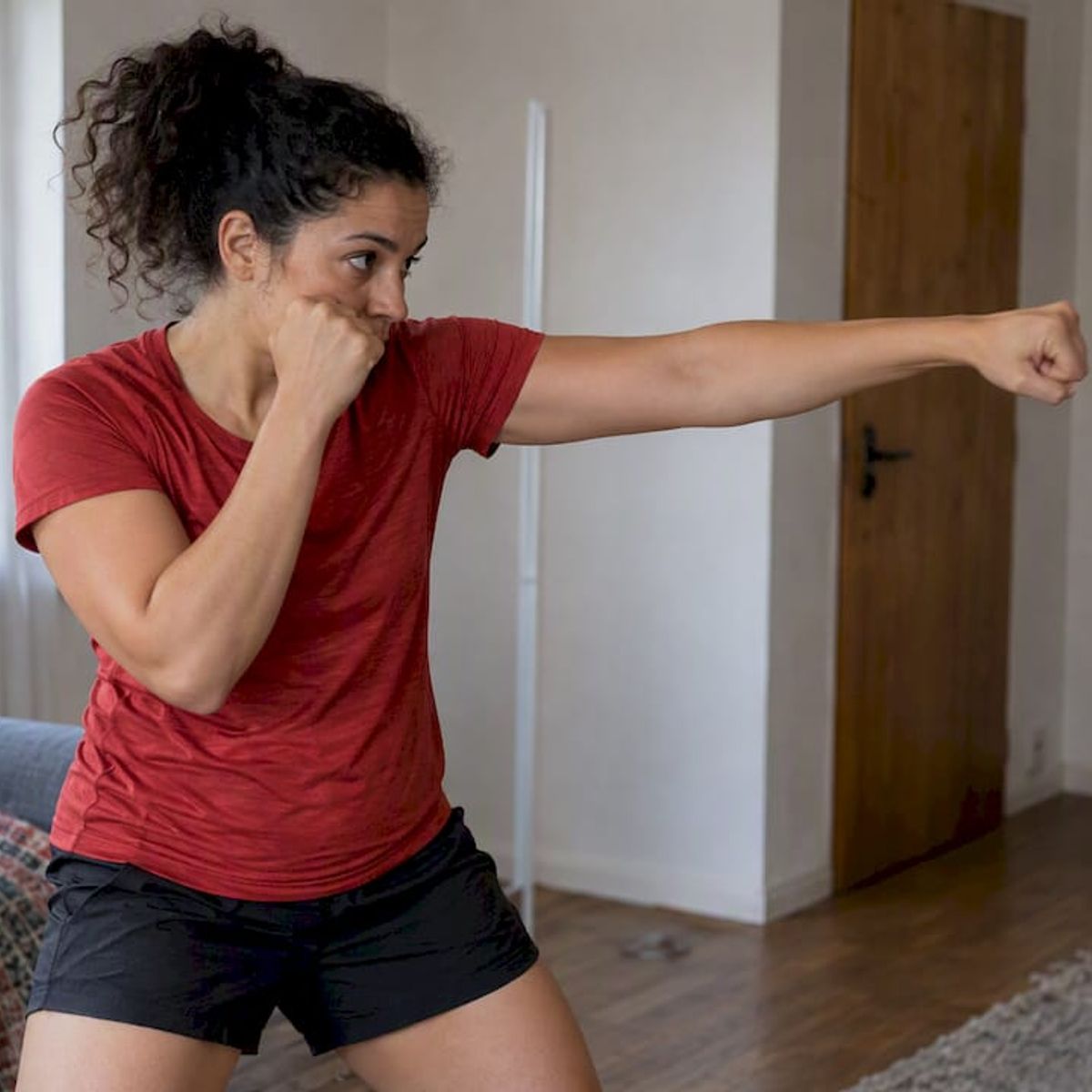
Shadowboxing is where mechanics get built and rehearsed before they ever touch equipment. Our complete shadowboxing guide breaks down a full beginner progression, but the core template looks like this:
- Warm-up: two to three minutes of loose movement and joint mobility.
- Technique rounds: isolate one skill, like the jab or pivot, for two-minute rounds.
- Combination volume: string learned punches into three- and four-punch sequences.
- Footwork rounds: move continuously while throwing, never planting flat-footed.
- Cool-down: slow shadow movement with breathing focus.
Mix in mirror shadowing to check form, cue-response rounds where a partner calls out combinations, and dedicated defense-only rounds where you slip and roll without throwing back. Add rounds or complexity only once your current form holds up under fatigue, then layer in tempo changes and imagined counters.
Pro Tip: Film one round a week from the same angle. Small technical drift shows up on camera long before it shows up in the mirror.
Heavy bag work and conditioning formats
The bag is where power mechanics and conditioning meet. Different session types train different qualities, as covered in our heavy bag fitness guide.
- Technical sessions: slower pace, focused on placement, footwork around the bag, and clean recoil.
- Power sessions: short, all-out sets of six to ten punches, followed by full recovery.
- Interval cardio sessions: HIIT-style rounds, like 30 seconds of work to 15 seconds of rest, repeated for volume.
Power comes from hip torque and leg drive, not arm strength, and posture control keeps the lower back and shoulders safe under repeated impact. For cardio goals, monitor intensity by rounds completed at a sustainable pace. For power goals, monitor by punch quality: if form breaks down, the set is over regardless of the clock.
Pad work and coach-fed reaction drills without uncontrolled contact
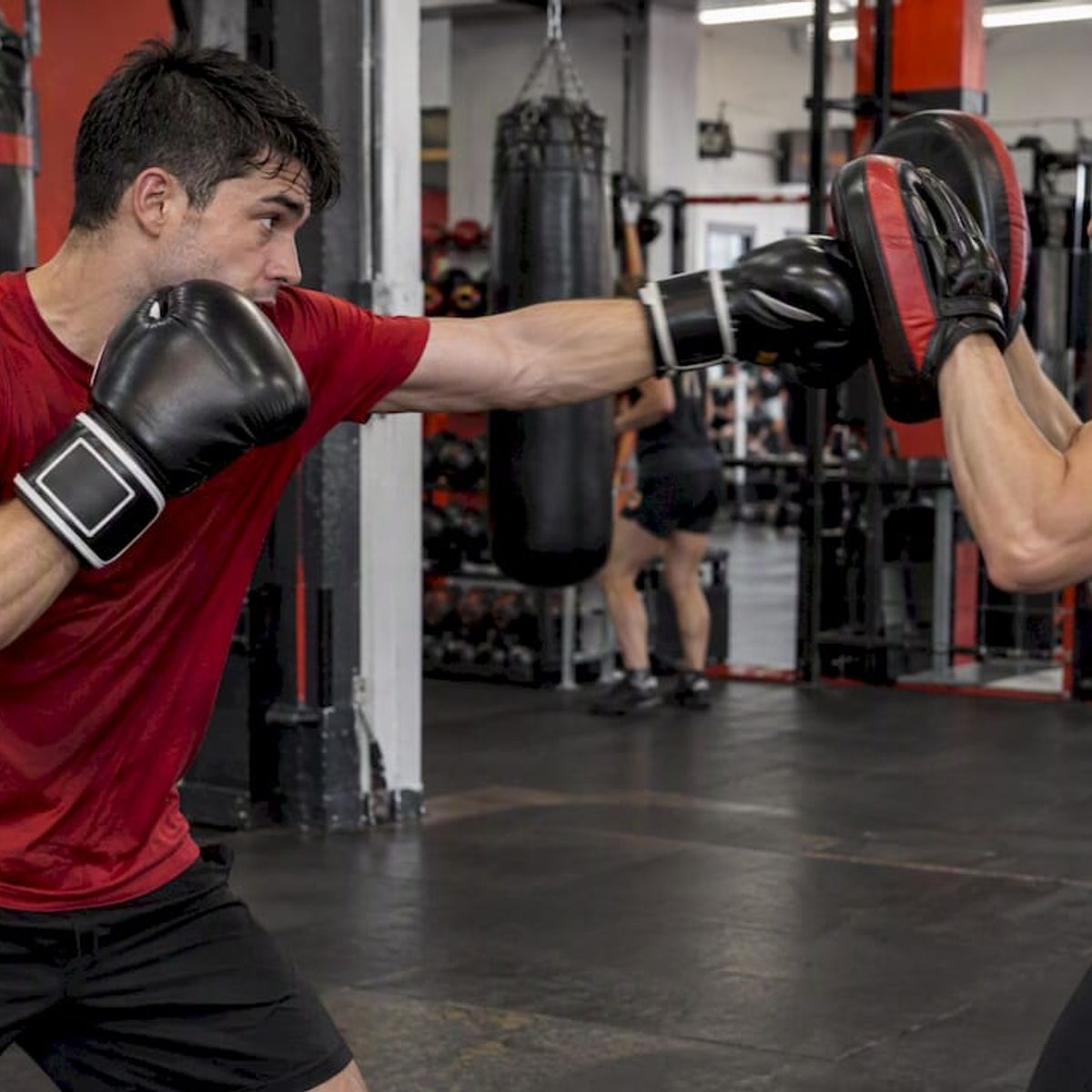
Pad work is the closest a boxer gets to sparring’s demands without taking a punch. The 2020 pad-versus-bag study found pad work elicits a higher physiological response than the bag, largely because a coach moves the target and forces real-time adjustment.
- Timed counters: coach throws a combination, you counter within a set window.
- Half-speed reaction progressions: slow feeds that gradually increase in speed as accuracy holds.
- Directional pad feeds: coach moves laterally, forcing footwork adjustments mid-combination.
A coach should cap intensity based on your conditioning, not the clock, and stop the round the moment form or focus slips.
Pro Tip: Ask your coach to call combinations you haven’t drilled that day. Unscripted calls train adaptability without any contact.
Footwork, defense drills, and measurement of progress
Footwork and defense are trainable without a live opponent, and progress here is easy to measure. Our footwork drills breakdown covers the ladder and cone patterns referenced below.
- Ladder drills: build foot speed and coordination independent of punching.
- Cone patterns: practice angle changes and pivots under a simple visual cue.
- Shadow footwork with counters: combine movement patterns with punch responses.
- Slip-to-counter drills: slip an imagined jab, then return fire immediately.
- Parry sequences: practice redirecting a partner’s slow, controlled jab.
- Low-intensity partner probing: a partner extends light, predictable jabs so you practice real distance judgment.
Track progress with periodic video review, counts of clean drill repetitions versus mistakes, and regular coach checkpoints rather than guesswork.
Strength and conditioning to complement no-sparring boxing
Boxing-specific work alone rarely builds the strength base that supports punch power and round-after-round output. The 2026 ACSM resistance training update recommends combining resistance training with aerobic work using individualized, progressive overload rather than treating either as optional.
- Resistance training: two to three sessions a week, progressing load gradually as technique holds.
- Plyometrics: bounds, jump squats, and rotational medicine ball throws build the leg drive and hip speed behind a punch.
- Core-transfer work: rotational cable work and anti-rotation holds connect lower-body power to the fist.
- PAPE-style warm-ups: brief isometric holds or elastic-resistance activation before technical rounds can enhance punch force for some athletes, though responses vary by individual.
Our strength training for boxers guide covers scheduling in more detail, but the short version: place heavy S&C sessions at least a day apart from high-volume technical work so recovery doesn’t compromise either.
Sample 4-week no-sparring training plan (beginner to intermediate templates)
A workable week mixes technical, power, and recovery sessions rather than repeating the same format daily. Our conditioning drills guide has templates you can plug straight into this structure.
- Day 1, Technique: shadowboxing and pad work focused on form.
- Day 2, Bag power: short, high-effort combinations with full recovery.
- Day 3, S&C: resistance training plus plyometrics.
- Day 4, Footwork: ladder, cone, and shadow footwork drills.
- Day 5, Pad/reactive: coach-fed combinations and directional feeds.
- Day 6, Active recovery: light mobility work or a slow shadow session.
Each week, increase either volume, intensity, or combination complexity, never all three at once. Beginners and older adults should scale duration first: our 20-25 minute starter plan for adults 50 and older shows how shorter, well-structured sessions still produce steady progress.
Safety checklist and concussion guidance
Avoiding intentional head contact is the entire point of a no-sparring approach, and it needs a real protocol, not just good intentions.
- Suspected concussion: remove the person immediately and get a healthcare evaluation before any return to activity, following CDC guidance on stepwise return with at least 24 hours per step.
- Headgear isn’t a solution: the Association of Ringside Physicians notes headguards cut lacerations but don’t reliably prevent concussion, which is why controlled, non-contact options stay preferable.
- Medical clearance first: any light-contact drill needs a coach present and, after any head injury, sign-off from a healthcare provider.
More on how gyms structure this is in our contact sport safety explainer.
Coaching background behind this no-sparring approach
Malcolm writes on training methods for Level Up Gym, a hybrid training and boxing gym with locations in Stratford and Bridgeport, Connecticut. Programs there are built around certified coaches, including pro boxers, running capped-size classes so beginners get real attention rather than getting lost in a crowd. New members start with a free class or consult and leave with a written, individualized plan rather than a generic template. That structure, coach-led, progression-based, and free of contracts, is the same approach reflected in the plans above.
Alternative competitive activities: controlled drills and light contact work
Skipping sparring doesn’t mean skipping every form of live pressure. Controlled drills sit between shadowboxing and full sparring, and they’re where a lot of technical skill actually gets tested.
Light, low-intensity partner probing, where one person throws only a slow jab and the other practices distance and timing, gives real feedback without real risk. Reactive pad rounds where a coach calls unscripted combinations serve a similar purpose: they force adaptation without contact. Some gyms also run “touch” drills, where partners work at reduced speed and stop on contact rather than punching through, which builds timing awareness while keeping intensity capped.
These formats work as a middle step for someone curious about competition but not ready, or not interested, in full sparring. They also give coaches a low-stakes way to see how a student handles pressure, which shapes what technical work comes next. The key is that intensity stays coach-controlled at every stage: light contact only escalates when form, composure, and defensive habits are already solid in drills, never as a shortcut past them. For most people training for fitness and skill rather than competition, this level is as far as the ladder needs to go.
When non-sparring is the right long-term choice
For fitness goals, novices, older adults, or anyone wary of repeated head contact, staying non-contact isn’t a compromise, it’s the smarter default. If competition eventually becomes the goal, supervised light-contact work can be introduced gradually and cautiously. Otherwise, keep cycling through non-contact skill work and let a coach’s feedback, not ego, decide if and when to escalate.
— Malcolm
How Level Up Gym helps you progress without sparring
Level Up Gym runs its programs around exactly the structure this article describes: technical coaching, real bag and pad work, and strength and conditioning, without treating sparring as a requirement to get better.
- Boxing Classes: coach-led group sessions built around pad and bag work rather than cardio-boxing filler.
- 6-Week Onramp: a structured starting program for beginners who want a clear entry point; current pricing is available on the Level Up Gym website.
- 1-on-1 Personal Training: individualized coaching with pricing details available on the Level Up Gym website for readers who want a plan built around their own goals.
- Online Training: remote coaching for readers outside Stratford or Bridgeport who still want structured, coach-guided progress.
If you’re local, the easiest first step is booking a free boxing class or checking the membership options to see what fits your schedule.
Sources
- Physical response to pad- and bag-based boxing-specific training modalities
- Sparring and neurological function in professional boxers
- Headguard use in combat sports: position statement of the Association of Ringside Physicians
- ACSM resistance training guidelines update 2026
- CDC concussion response guidance
FAQ
What is the 80/20 rule in boxing?
Definitions vary by gym, but the principle supports building a no-sparring foundation first.
Is it better to spar without headgear?
Neither option is clearly safer for concussion risk. The Association of Ringside Physicians notes headguards reduce facial cuts but haven’t been shown to reliably prevent concussion, so the choice mainly affects lacerations, not brain injury risk.
What is the point of sparring in boxing?
Sparring exists to train opponent-reading, timing, and decision-making under pressure, the skills a bag or pads can’t fully replicate. That said, research on sparring exposure links higher cumulative sparring exposure with worsened cognitive and balance test outcomes, which is why many coaches limit it.
What martial art is practiced without sparring?
Some traditional martial arts and many fitness-focused boxing programs rely primarily on forms, drills, and pad or bag work rather than live sparring. Non-contact boxing training follows the same logic: build technique and conditioning through structured drills instead of live exchanges.
Can you get fit from boxing without ever sparring?
Yes. Shadowboxing, bag work, pad drills, footwork training, and strength and conditioning together build real cardiovascular fitness, punch power, and coordination without any sparring required.